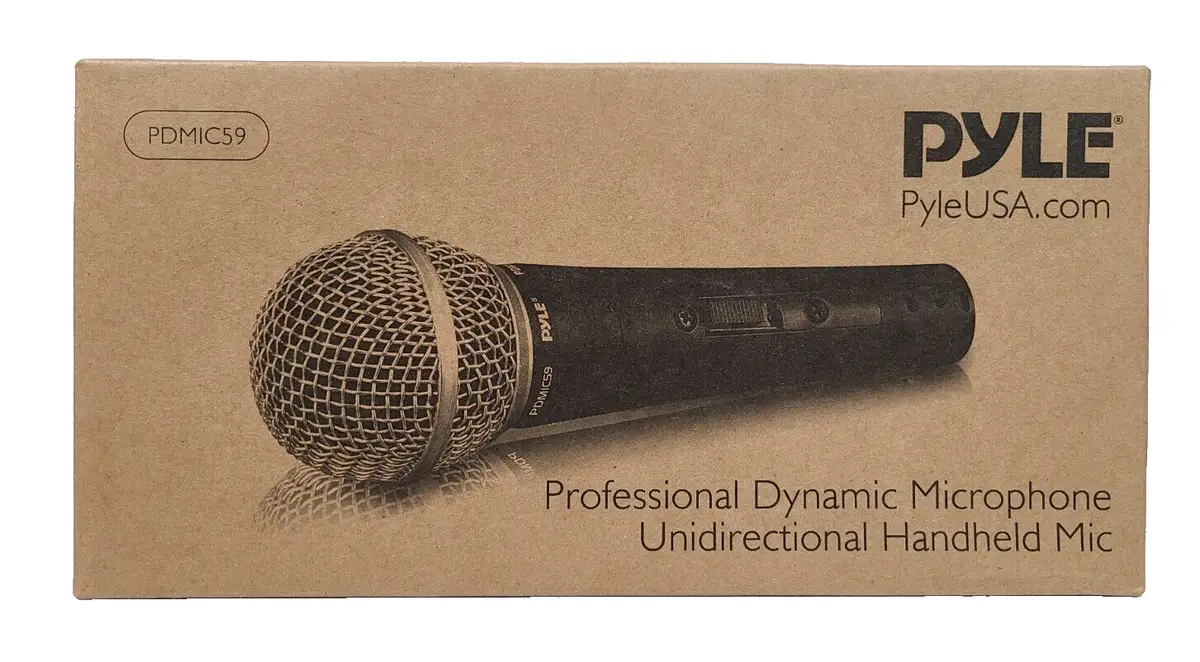
Pyle Professional Dynamic Vocal Microphone Review: Budget Win
“Honestly, i think this is a great starter microphone… just keep in mind what you are buying; a $4 microphone.” That blunt framing from a video reviewer sets the tone for what people actually experience with the Pyle Professional Dynamic Vocal Microphone: a bargain workhorse with real limits. Across retail and community posts, the mic earns praise for sounding far better than its price suggests, while accessories and long‑term toughness remain the friction points. Verdict: strong budget pick with caveats, 7.2/10 based on aggregated user sentiment.
Quick Verdict
Conditional yes: good if you want an inexpensive, plug‑and‑play dynamic mic for karaoke, practice, or casual stage use; avoid if you need durable pro‑tour hardware or hate buying add‑ons.
| What users liked | Evidence | What users disliked | Evidence |
|---|---|---|---|
| Clear, surprisingly good sound | Review Index quotes: “sound is clear and no distortion at all.” | Plosives / needs pop filter | Podcastage: “picks up lots of plosives… little to no built in filter.” |
| Great value for money | Review Index: “great mike for the price!” | Included cable/stand quality varies | Review Index: some replaced cable; Best Buy: stand “wimpy/flimsy.” |
| Solid mic body feel for price | Best Buy: “high quality, heavy duty… made of metal.” | Durability concerns on cheapest models | Podcastage: “it’s built like it… chances are it will not be very durable.” |
| Good background noise rejection | Podcastage: “picks up very little room noise.” | Occasional dead-on-arrival reports | Best Buy user Steve: “microphone is trash… fell apart.” |
Claims vs Reality
Marketing claim 1: wide frequency response and “brilliant, transparent sound.” Official Amazon specs list a 50 Hz–15 kHz response, and that tracks with many user impressions that vocals come through cleanly. A verified buyer summary on TheReviewIndex captures the dominant sentiment: “the sound is much better than other microphones i have used… clear and no distortion at all.” Another reviewer compared it to pricier Shure models: “the shure sm58 has a balanced tone and is smoother but you do pay for it,” implying Pyle gets close enough for casual use.
Digging deeper into user reports, clarity isn’t universal across every source. The Podcastage reviewer felt some tonal compromise on certain instruments: “lacking a bit of presence when i tested out the acoustic guitar… for voice it sounds decent.” So while the published response range is broad for the price, multiple users hint that “transparent” depends on what you’re recording and how picky your ear is.
Marketing claim 2: built‑in pop filter reduces popping sounds. The mic is marketed with an “acoustic pop filter,” but several users say plosives still cut through. The Podcastage reviewer was explicit: “i do highly recommend getting a pop filter though as there is little to no built in filter to keep the mic from picking up every plosive.” Review Index comments back that up indirectly; one buyer mentioned using “a screen to prevent the popping p’s on my podcast,” suggesting the built‑in solution isn’t enough for close‑talking podcasters.
For singers practicing at home or doing karaoke a bit farther from the capsule, this gap matters less. But for anyone recording vocals up close, the lived reality is that you should budget for an external windscreen or pop filter even if the listing implies you’re covered.
Marketing claim 3: rugged construction and stage‑tested reliability. Many users do feel the mic body is sturdy relative to cost. A verified Best Buy buyer named Quaint Jade wrote: “this microphone is great!… made of metal. feels professional!” Review Index buyers echo that with lines like “the build quality is no joke… it seems durable.”
At the same time, other accounts warn that durability is not pro‑grade, especially for the cheapest Pyle variants. The Podcastage reviewer said: “it is a $4 microphone and it’s built like it. i would not test this mics durability.” One Best Buy reviewer, Steve, was harsher: “i got this and it fell apart… the microphone is trash.” While officially positioned as rugged, real use shows mixed longevity depending on unit and expectations.
Cross-Platform Consensus
Universally Praised
“Shocker for under 30” is how some owners describe the sound‑to‑price ratio. A recurring pattern emerged across Review Index and Best Buy: people bought it expecting a throwaway mic and got something usable. A verified buyer on TheReviewIndex wrote: “this is a great mike for the price!” Another added a comparison that matters to budget musicians: “sounds better than some that are much more expensive.” For hobby singers, that translates into a low‑risk way to practice vocals through an amp or PA without the harshness typical of toy karaoke mics.
Families and casual performers repeatedly frame the mic as a confidence booster. One Review Index story said: “we ordered this for our daughter to practice singing for a talent show, and it is perfect… daughter nailed the talent show.” Another buyer described using it at home events: “we use it to sing karaoke and have tons of family fun and entertainment.” The implication is clear: for home karaoke nights or school talent shows, users feel it performs “good enough to shine.”
Noise rejection also gets consistent nods from those recording in imperfect spaces. The Podcastage reviewer noted that, as a unidirectional dynamic mic, “it picks up very little room noise… you could hardly hear the keyboard over my voice.” That kind of isolation is especially valuable for podcasters in bedrooms or musicians rehearsing in noisy rooms, where background bleed ruins takes.
Common Complaints
Plosives and breath noise sit at the top of frustration lists. Even when users like the tone, they note extra gear is needed for clean close vocals. Podcastage stated plainly: “picks up lots of plosives.” A Review Index buyer implied the same workaround by praising the mic after adding their own screen. For podcast beginners, that means the “cheap mic” purchase can creep upward once you add a pop filter and stand.
Accessories are another sore spot, especially stands and cables in bundles. Best Buy reviews about the PMKSM20 kit repeatedly complain about the stand: a verified buyer named Noki said: “it’s missing the component to connect the mic to the stand, so it’s pretty much useless.” Another buyer summarized the trade‑off: “the microphone stand is… on the cheap side.” Review Index cable sentiment is more mixed; one reviewer said the “15' cable included is really nice,” while another kept the mic but “ordered another cable,” implying occasional quality variance.
Finally, there are sporadic reports of defective units. Best Buy’s Steve wrote: “i got this and it fell apart.” Another short Best Buy note said: “mic not good… how it is delivered!” These aren’t the majority, but they show that at this price tier, quality control can be inconsistent.
Divisive Features
Build quality splits users by expectations. Some owners treat it as metal‑bodied and “professional feeling,” like Quaint Jade’s comment: “high quality, heavy duty.” Review Index also includes “quality workmanship and lightweight.” Others view it as fragile, especially on the ultra‑budget PDMIK1 line. Podcastage framed it as disposable‑level plastic: “built like it… chances are it will not be very durable.”
The included cable is similarly polarizing. A verified buyer on Review Index praised that “even the cable is more than adequate… it’s a steal for a great quality microphone and a cable.” Another buyer felt the opposite, replacing it despite still liking the mic. So if you’re a gigging singer relying on the bundle cable nightly, experiences suggest a backup is wise; for home users, it’s often fine out of the box.

Trust & Reliability
Best Buy’s small review set shows a noticeable cluster of complaints aimed less at the mic and more at bundled hardware. The stand is described as “wimpy” or missing parts, creating a trust ding for kits even when sound is praised. David Kade summarized the imbalance: “pleasantly surprised by the quality of the sound… stand… on the cheap side.” That pattern suggests the brand’s weakest link in trust is accessory QC, not necessarily the capsule itself.
Long‑term reliability stories are sparse in this dataset, but the available durability narratives trend cautious. Podcastage warns that owners should “be careful with it” because it likely won’t survive rough handling. Meanwhile, positive owners frame it as sturdy enough for routine family and light stage use. So the trust takeaway is conditional: dependable for low‑stress environments, less so for heavy touring or careless transport.
Alternatives
The only named competitor in user comparisons is Shure. Multiple Review Index buyers benchmarked against the SM58/SM57 line. One verified buyer said: “the shure sm58 has a balanced tone and is smoother but you do pay for it.” Another noted Pyle “sounds as good as my sm57’s and my sm58’s but hotter in the mids.” That sets the alternative framing: Shure is treated as the smoother, more refined standard; Pyle is the cheaper option that some feel gets close enough, sometimes with a mid‑forward character.
For performers who already know what an SM58 sounds like, these comments imply a practical choice: pay more for consistency and polish, or accept a slightly rougher but workable Pyle sound to save money.
Price & Value
Price is the mic’s central story. Amazon bundles list around $32.94 with windscreen and 15‑ft cable, while community listings and eBay show frequent discounts and low resale baselines. Users repeatedly anchor their satisfaction to cost. The Podcastage reviewer emphasized the extreme budget tier: “seriously! it’s only $4!” Review Index buyers echo that framing with “does the job for a great price” and “amazing quality for the price.”
Resale data on eBay shows the mic commonly moving in the $8–$35 range depending on model and bundle, which reinforces that most buyers treat it as a low‑investment tool rather than an asset. Buying tips embedded in user stories are straightforward: if you need it for karaoke or practice, the bundle is a steal; if you plan to gig or record closely, expect to add a better cable and pop filter, but many still say it remains “a good deal” even after upgrades.
FAQ
Q: Does the Pyle dynamic vocal mic sound good for singing and karaoke?
A: Yes for casual to mid‑level use. Review Index buyers said it “sounds great” for singing and karaoke, and one wrote it was “perfect” for a daughter’s talent‑show practice. Several compared it favorably to more expensive mics, though not as smooth as a Shure SM58.
Q: Do I need a pop filter or windscreen?
A: Most likely yes if you speak or sing close to the grille. The Podcastage reviewer warned it “picks up lots of plosives” and recommended adding a pop filter. Users who added a screen for podcasting said it solved popping “p’s.”
Q: Is the included cable reliable?
A: Mixed feedback. Some Review Index buyers praised the 15‑ft cable as “more than adequate,” while another kept the mic but “ordered another cable.” For home use it’s often fine, but gigging users may want a backup or upgrade.
Q: How durable is it for stage use?
A: Users disagree. Best Buy buyers called the mic “heavy duty” and “made of metal,” but Podcastage cautioned it’s “built like” a $4 mic and may not survive abuse. Occasional reports mention units failing early, so durability seems inconsistent.
Q: How does it compare to a Shure SM58?
A: Users see it as cheaper and slightly less refined. One Review Index buyer said SM58 is “smoother” but costs more, while another felt Pyle sounded “as good” but “hotter in the mids.” Expect usable vocals, not the same polish or consistency.
Final Verdict
Buy if you’re a budget‑minded singer, parent setting up karaoke nights, or a beginner podcaster who’s okay adding a pop filter. Avoid if you need a tour‑ready mic with reliable bundled accessories or want SM58‑level smoothness without compromises. Pro tip from the community: treat the mic as the bargain core, then upgrade the cable and pop filter only if your use demands it.