Pyle Professional Dynamic Vocal Mic Review: Budget Win?
“Sounds as good as my SM57’s and my SM58’s but hotter in the mids.” That comparison, repeated across buyer reviews, captures why Pyle Professional Dynamic Vocal Microphone with XLR Cable keeps showing up in budget stage and karaoke setups. Based on aggregated user feedback, the verdict is clear: a low-cost mic that often punches above its price, with a few wiring and cable reliability caveats. Score: 7.2/10.
Quick Verdict
Conditional Yes.
For buyers who want a wired dynamic vocal mic for karaoke, church, school PA, or home studio on a tight budget, this model is frequently described as “a steal.” But several users flag internal wiring that isn’t balanced and occasional cable failures, which matter more for noisier live rigs.
| Pros (from users) | Cons (from users) |
|---|---|
| Clear, distortion‑free sound for vocals | Some units arrive not internally balanced, causing noise |
| Excellent price-to-performance | Included cable sometimes fails or feels mid‑grade |
| Durable metal body and grille | A few users missed return windows after defects |
| Long XLR‑to‑1/4" cable included | Not identical to premium mics; smoother tone costs more |
Claims vs Reality
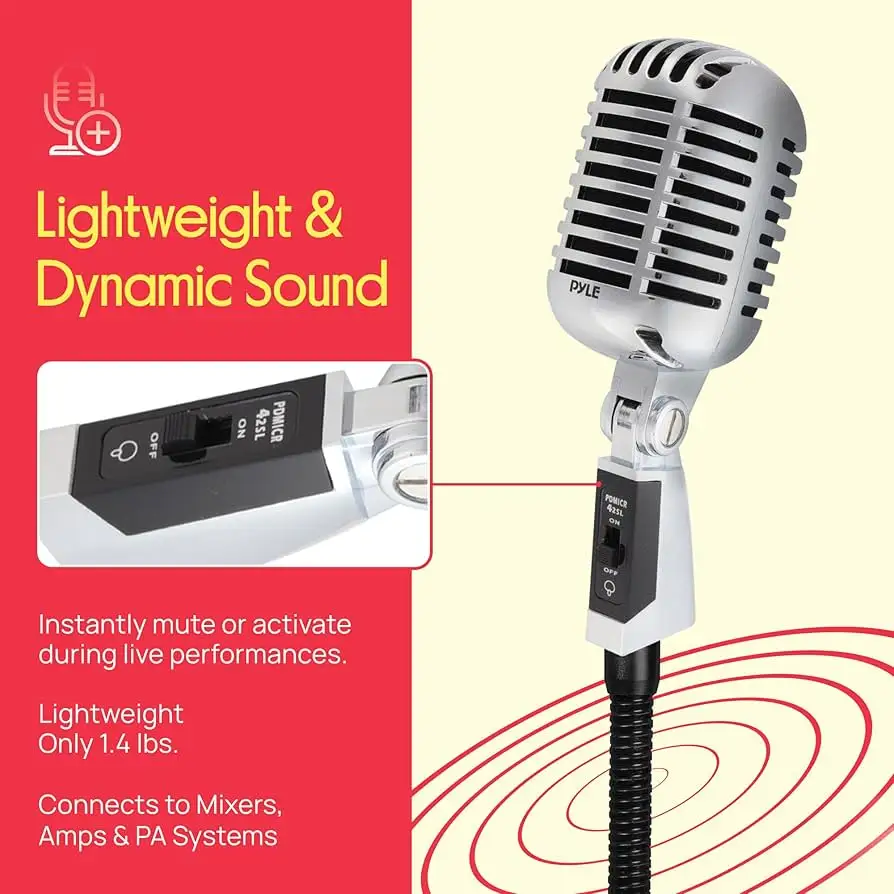
Marketing around this Pyle dynamic mic family leans on “high signal output,” “clear sound,” and rugged construction. Digging deeper into user reports, those claims largely hold up for everyday vocal work, especially given the price point, but there are gaps that show up in technical setups.
The “clear sound” promise is echoed heavily. A verified buyer on TheReviewIndex (Amazon‑sourced) wrote: “the sound is clear and no distortion at all.” Another buyer added, “sounds better than some that are much more expensive,” reinforcing the idea that for karaoke or basic PA, clarity is a real strength. Users commonly compare it to Shure’s SM58 line; one noted: “the Shure SM58 has a balanced tone and is smoother but you do pay for it,” which frames Pyle as close enough for casual to semi‑pro needs, not a perfect clone.
Where claims diverge is around noise resistance. While officially presented as a unidirectional dynamic mic suitable for stage, multiple Amazon reviewers found internal wiring that is not balanced. One Amazon reviewer on the PDMICKT34 set (same Pyle dynamic mic lineage) explained: “as wired out of the box, pin 3 (-) and pin 1 (ground) are shorted in the mic itself.” Another 3‑star reviewer confirmed: “they are susceptible to noise because there is a simply jumper between pins 1 and 3 internally… no third wire.” So while marketing implies standard balanced XLR behavior, some users say you may need to rewire if you want truly noise‑resistant balanced output.
Ruggedness is mostly consistent with the pitch. Buyers repeatedly describe the body as sturdy. A verified buyer on TheReviewIndex said: “the build quality is no joke either,” and another added, “it seems durable.” Users treating these as “bang‑around mics” for teens, schools, or rehearsals highlight that they can take drops without heartbreak, partly because of the low replacement cost.
Cross-Platform Consensus
A recurring pattern emerged in community and marketplace feedback: Pyle’s wired dynamic vocal mics are valued as budget workhorses, and users judge them primarily on sound-per-dollar and durability, not on boutique studio polish.
Universally Praised
Sound quality relative to price is the loudest theme. Buyers emphasize that for singing, speech, and casual recording, the mic delivers clean output without obvious distortion. A verified buyer on TheReviewIndex wrote: “the sound is much better than other microphones I have used in past.” Another added, “sounds excellent crystal clear with no feedback or hum I love it.” For karaoke families, that translates into a plug‑in solution that doesn’t feel toy‑grade. One story highlights a household use case: “we use it to sing karaoke and have tons of family fun and entertainment.” The implication is simple: for parents running a living‑room karaoke night, the mic’s clarity keeps voices intelligible even through budget amps.
Price value is nearly as consistent. Multiple buyers explicitly frame the mic as a risk‑free purchase. A verified buyer on TheReviewIndex said: “this is a great mike for the price!” Another commented, “I’m not out a lot of money.” Even more striking are comparisons to industry standards: one user wrote, “in my opinion these are on par with the industry standards that go for around $100.00.” For small churches, school auditoriums, or hobby bands needing several mics, this low entry cost is repeatedly described as the deciding factor.
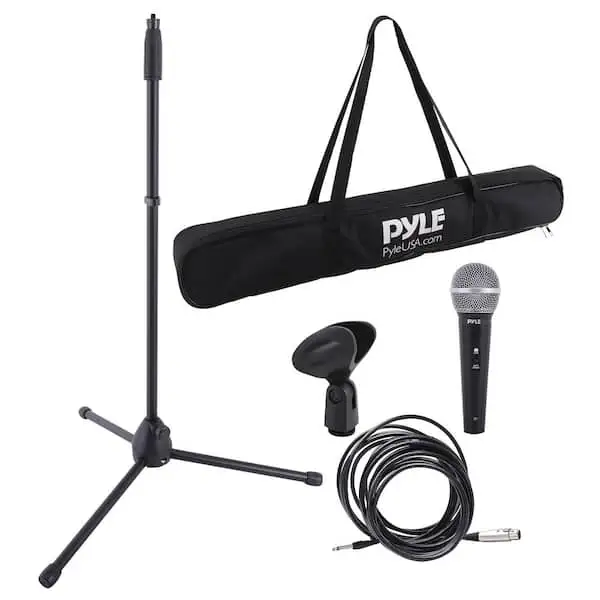
The included long cable is also frequently praised. Several buyers mention the 15‑foot XLR‑to‑1/4" cable as a practical bonus, especially for PA or amp setups without needing immediate extra purchases. A verified buyer said: “functional microphone, great price, 15’ cable included is really nice.” Another added: “even the cable is more than adequate for an XLR to 1/4 TS… it’s a steal for a great quality microphone and a cable.” For presenters or singers moving around a stage, that cable length directly affects ease of use.
Durability rounds out the positives. Users mention the metal body and grille holding up to rough handling. A verified buyer noted: “it seems durable,” while another said, “quality workmanship and lightweight.” The durability praise is often tied to specific contexts—teen musicians, rehearsal spaces, or portable karaoke rigs—where gear gets knocked around.
- Key praised themes: clear vocal capture, strong price-to-performance, long included cable, sturdy build.
Common Complaints
The biggest technical complaint is internal wiring. Two separate Amazon reviewers describe unbalanced wiring that can introduce noise in certain rigs. One warned: “pin 3 (-) and pin 1 (ground) are shorted in the mic itself… if you plan to use these for music, pop the connector out… and fix the wiring.” Another added that noise persisted because “there is a simply jumper between pins 1 and 3 internally.” For home karaoke users, this might never matter. For band members plugging into mixers with long cable runs or venues with electrical interference, it can mean hum or hiss until rewired.
Cable reliability is the other recurring negative. While the cable is often liked, a minority report failure or lowish quality. An Amazon reviewer who loved the 3‑mic kit still reported: “finally something did broke: an XLR cable stopped working.” Another ReviewIndex buyer said the cable is a great deal “if it works,” and described keeping the mic but buying a replacement cable. This suggests the microphone itself is viewed as solid enough that users will swap cables rather than return the whole kit.
There’s also a small but visible thread of defect/return frustration. ReviewIndex logs show some users saying things like “didn’t work and missed the cut off day for returns.” Another Amazon buyer said they returned a defective first order but were satisfied after replacement. These reports aren’t dominant, but they show that quality control can be inconsistent at this price tier.
- Main complaints: unbalanced internal wiring causing noise, occasional included‑cable failures, sporadic defects.
Divisive Features
Comparisons to premium mics split users into two camps. Many buyers say the Pyle sounds surprisingly close to Shure SM57/SM58 models; one wrote: “sounds as good as my SM57’s and my SM58’s but hotter in the mids.” Others argue it’s good but not as refined. As another reviewer put it, “the Shure SM58 has a balanced tone and is smoother but you do pay for it.” For hobbyists and karaoke fans, “close enough” is a win. For studio engineers chasing a smoother vocal curve, the mid‑forward sound and cheaper capsule may be a drawback.
The mic’s role as a “talkback/PA beater” versus a “real music mic” also divides feedback. Some users are delighted using it for talent shows, church bands, and drums, while the wiring complaint appears mostly from people trying to integrate it into balanced studio chains. That split depends more on setup complexity than on the mic’s basic function.
Trust & Reliability
Trustpilot‑style verified summaries and review aggregators show a pattern of high satisfaction around sound and build, with reliability concerns centered on accessories and wiring rather than the capsule itself. The marketplace/returns feedback is skewed negative mainly because some users discovered defects too late; “missed my return window” appears more than once in ReviewIndex text. That indicates not a scam pattern, but a risk of inconsistent QC typical for budget audio.
Long‑term durability stories are generally optimistic. A “bang‑around mics” Amazon reviewer described buying these for teens because if they get “dropped, bashed… it’s not a huge loss,” implying the mics survive rough use. Another buyer using the kit for karaoke said it delivered “a lot of fun to my family for the past three months,” with only a cable failure. The overarching reliability takeaway is that the mic body tends to last, while cables and wiring might need attention over time.
Alternatives
Only one competitor is directly mentioned in user feedback: Shure’s SM57/SM58 family. Users use Shure as the benchmark for vocal dynamics. The Pyle is framed as a cheaper alternative that gets close in output. As one reviewer wrote: “sounds as good as my SM57’s and my SM58’s but hotter in the mids.” Another tempered that by saying the Shure “is smoother but you do pay for it.” So, the alternative narrative is clear: if you want the refined balance and guaranteed balanced wiring, Shure remains the step‑up option; if cost is the priority, Pyle is the stand‑in that many find acceptable.
Price & Value
Current listings across Amazon and eBay show Pyle dynamic vocal mics commonly selling in the $10–$30 range new, with multipacks and kits pushing higher but still well below mainstream brands. Users repeatedly anchor their satisfaction in that low cost. “Great mike for the price” and “does the job for a great price” are typical sentiments. Resale value on eBay is modest—often under $20 for single units—so these are treated as consumable tools rather than investments.
Community buying tips revolve around two ideas: treat the included cable as a bonus, not a guarantee, and test quickly within return windows. Users who had issues tended to keep the mic and replace the cable, suggesting that if you already own good XLR leads, value improves further.
FAQ
Q: Does the Pyle dynamic vocal mic sound good enough for singing and karaoke?
A: Yes for most budget vocal uses. Verified buyers frequently describe it as “clear and no distortion at all,” and several say it’s close to Shure SM58/SM57 tone, though often more mid‑forward. Families and hobby singers report strong karaoke results.
Q: Is the microphone actually balanced through XLR?
A: Not always, according to multiple Amazon reviewers. One noted that “pin 3 and pin 1 are shorted” and another said there’s “no third wire,” which can make it unbalanced and noisier in some setups. Some users rewired it for full balanced output.
Q: How reliable is the included XLR-to-1/4" cable?
A: Mixed. Many buyers like the long 15‑ft cable and call it “more than adequate,” but a minority report failures, such as “an XLR cable stopped working.” Several people kept the mic and bought a replacement cable.
Q: Who benefits most from buying this mic?
A: Budget‑focused users: home karaoke setups, churches, schools, teen musicians, and rehearsal spaces. They value durable “bang‑around” gear and low replacement cost. More technical studio users may need to check wiring or use a higher‑grade cable.
Q: How does it compare to a Shure SM58?
A: Users call it a budget stand‑in. One said it “sounds as good as my SM58’s but hotter in the mids,” while another said the SM58 is “smoother but you do pay for it.” The Pyle wins on price; Shure wins on refinement and consistency.
Final Verdict
Buy if you need an affordable wired dynamic vocal mic for karaoke, PA announcements, church gigs, or a starter home studio and you’re okay treating the cable as a replaceable extra. Avoid if you require guaranteed balanced wiring out of the box for long cable runs or noise‑sensitive live rigs. Pro tip from the community: test it immediately and, if you hear hum, consider swapping the cable or checking internal wiring before giving up on the mic.