Pyle Adjustable Microphone Stand Review: Worth It? 7.9/10
A “sturdy” stand that some people still had to “macgyver” to keep a mic from drooping—that tension defines the Pyle Adjustable Microphone Stand experience. Verdict: strong budget value if your setup matches its limits, but quality control and fit issues show up often enough to matter. Score: 7.9/10.
Quick Verdict
For the Pyle Adjustable Microphone Stand, the buy decision is conditional: it’s a “great stand for the price” for budget home recording and light stage use, but risky if you need guaranteed fit, reliable height locks, or a durable mic clip.
| Decision | Who it’s for | Evidence from users |
|---|---|---|
| Conditional Yes | Budget home/studio users | “...great stands for the money...” (Review analysis aggregation via TheReviewIndex) |
| Yes | People who move gear often | “...we love the way it reduces down for easy transport...” (TheReviewIndex) |
| No | Users needing secure mic angle/clip | “...the screw will not hold the mic from rotating down...” (TheReviewIndex) |
| No | Anyone sensitive to fit/threads issues | “...the pole does not fit the base ! ...” (TheReviewIndex) |
| Conditional | Desk/office users (tripod model) | Best Buy reviewers call the desktop version “pretty solid,” but one says “not as advertised” |
Claims vs Reality
Claim 1: “Sturdy metal base” and “die-cast and steel construction” (Pyle/Amazon specs for PMKS5).
Digging deeper into user reports, many people echo that the stand can feel stable when everything is assembled and tightened correctly. One reviewer in the aggregated feedback said: “...sturdy mike stand. ... if assembled correctly using lock nuts (provided) it stays tight and sturdy....” Another added: “...the stand on the bottom is weighted and holds the whole thing in place....” For home studio owners using heavier mics, that stability is a major selling point.
But the “sturdy” claim runs into a recurring caveat: the weakest link often isn’t the base—it’s the parts that hold position. A frustrated reviewer warned: “...it wouldn't stay in the same place.... then the part that adjusts the height also stopped holding its grip....” For performers who reposition frequently between songs or speakers adjusting between guests, that kind of slippage turns “sturdy base” into only half the story.
Claim 2: “Height adjustable tightening clamp” and “lock-tight knob” style positioning (Pyle product pages).
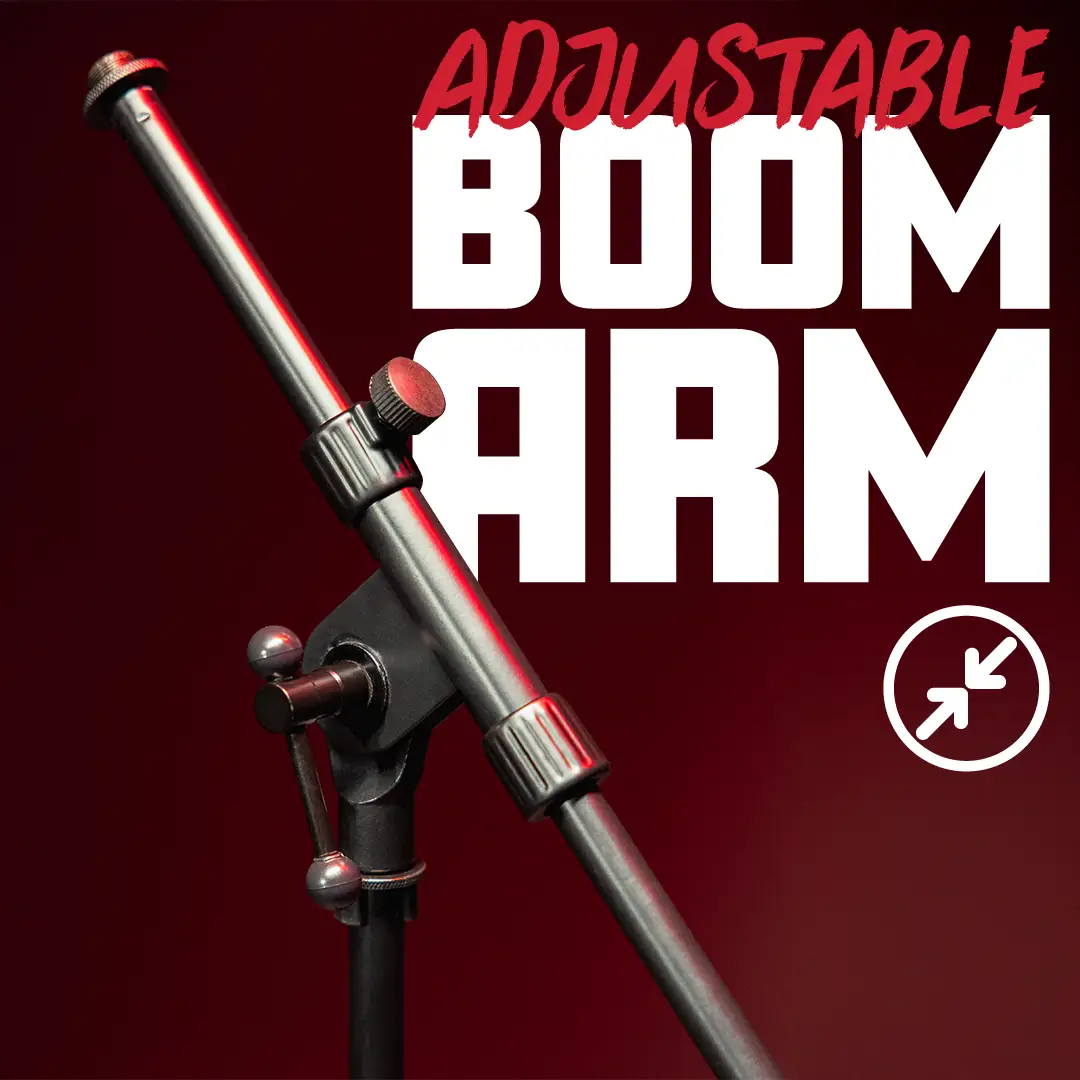
On paper, adjustability is central: the PMKS5 spec says height adjustment from about 33.5" to 60.24" and a boom length around 33.46". User feedback sometimes lines up with that promise—one reviewer said: “...easy to use, adjust, nothing is bad about this....” Another noted it’s “...stable and yet easy to move about the stage....” For casual gigging musicians and rehearsal spaces, that convenience is exactly what they want.
While marketing claims a reliable lock, multiple users report drift and droop under real microphone weight or after minimal use. The same pool of reviews includes: “...after i brought the next day, the middle knob to tighten the stand got loose and won't hold my condenser microphone....” For podcasters and streamers who need consistent mic placement at mouth level, this gap between “lock-tight” language and real-world grip is a practical dealbreaker.
Claim 3: “Universal handheld microphone compatibility” and standard threading (Pyle/Amazon specs).
The official specs emphasize standard 5/8" threading and a universal clip, suggesting broad compatibility. That matters for buyers mixing gear—older dynamic mics, newer condensers, or swapping mounts between stands.
Yet compatibility is one of the most sharply disputed realities. In the aggregated review excerpts, one user said: “...sturdy stand but doesn't fit any of the three microphones we tried in it....” Another complaint goes even more fundamental: “...the threads on the base stripped and wouldn't screw in....” For users buying this as a plug-and-play solution, the “universal” claim can feel more like a gamble.
Cross-Platform Consensus
Universally Praised
A recurring pattern emerged around the Pyle Adjustable Microphone Stand being “good enough” hardware when expectations match the price. Value-focused buyers consistently frame it as a budget win rather than a forever stand. One reviewer put it plainly: “...good stand for the price....” Another said: “...excellent stand at an excellent price....” For beginners building a home recording corner or musicians outfitting a practice space with multiple stands, that price-to-function ratio is the main hook.
Stability—especially from the weighted base on the compact-base style—shows up as a frequent positive. Users describe the base as doing its job even when the mic is not tiny. A reviewer wrote: “...this stand is sturdy and reliable when holding large microphones such as the mxl v900 and rca 77 dx....” For voiceover artists using larger studio mics, that kind of testimony signals it can work—at least for some setups.
Portability and convenience also land well with people moving between rooms or venues. A user story captures why: “...we love the way it reduces down for easy transport....” Another echoed stage usability: “...it is stable and yet easy to move about the stage....” For church sound teams, community theater, or small bands that load in and out often, compact storage and quick repositioning matter almost as much as raw sturdiness.
Across Best Buy’s desktop tripod stand reviews (a different Pyle stand model, but still relevant to the brand’s stand ecosystem), the tone is similarly practical: “pretty solid base and holder for usb microphone,” and “very nice and easy to install and use.” Office users even mention aesthetics and workflow: “...feet slide underneath keyboard for closer reach....” That’s a very specific desk-user benefit: closer mic placement without rearranging the whole workspace.
After these stories, the praise narrows into a few common themes:
- Budget-friendly performance for basic recording and light use
- Stable-feeling base on some units/setups
- Portable design that’s easy to move and store
Common Complaints
The most consistent complaint cluster is about parts that don’t hold position—especially mic angle and height locks. Even when the stand itself feels solid, users get stuck fighting the holder or adjustment points. One reviewer described the core frustration: “...all metal hardware except the microphone holder is plastic and the screw will not hold the mic from rotating down....” For streamers using side-address condensers or heavier microphones that amplify torque, “rotating down” means constantly re-aiming the mic mid-session.
Another pattern is users improvising fixes, which is telling: “...i had to macgyver a way to get the mic to stay....” That kind of workaround culture suggests the stand can be made functional, but not always out of the box. It especially affects beginners who don’t have spare adapters, replacement clips, or the patience to diagnose why the boom droops.
Fit and assembly problems show up frequently enough to be a reliability warning. Some users report the most basic mismatch: “...the pole does not fit the base ! ...” Others point to thread failures: “...the threads on the base stripped and wouldn't screw in....” For buyers expecting a quick setup before a rehearsal, livestream, or recording session, this is the nightmare scenario—an otherwise inexpensive purchase turns into downtime.
Even on the desktop tripod side at Best Buy, there are fit/expectation problems: one reviewer rated it 1/5 and said: “does not come as pictured... completely different.” Another user found it workable but mismatched to their needs: “...the stands were too small for the mics that i had here....” That theme—“works, but only if it fits your exact situation”—repeats across platforms.
After these stories, the complaints consolidate into:
- Height/boom adjustment that slips over time
- Plastic mic clip/holder that can’t reliably hold angle
- Fit/threads/assembly issues that feel like quality control risk
Divisive Features
“Sturdy” is both the selling point and the argument. Some users sound pleasantly surprised: “...i was actually very surprised to get such quality at such a low price....” Others frame it as fragile unless treated carefully: “...yes it is a cheap aluminum stand, if you treat it with respect....” For touring musicians or busy rehearsal spaces, “treat it with respect” may not be realistic; for a home studio owner who rarely moves it, it might be fine.
The microphone clip experience is similarly split. One reviewer tolerates the maintenance: “...the mic clip is thin and requires tightening just about every time but at this price i can live with that....” Another describes a failure mode where tightening isn’t enough and breakage feels inevitable: “...i did tighten the screw but eventually it will break being the holder is plastic....” For users swapping mics frequently (podcast studios, shared practice rooms), that difference matters: the same design can feel “fine” or “unusable” depending on frequency of adjustments and mic weight.
Trust & Reliability
Trust signals in the provided dataset come mainly through aggregated “verified review analysis” (TheReviewIndex) rather than direct long-term Reddit threads with timestamps. Even so, durability anxiety is visible in how users talk about the future, not just the first day. One reviewer said: “...the metal shaft itself is pretty sturdy but time will tell how it holds up....” That “time will tell” sentiment is a red flag for people who want a stand they never think about again.
Another reliability thread is that failures can happen quickly or at stress points: “...it broke off from the bottom, right after she started using it....” Combined with reports of stripped threads and slipping adjustment points, the pattern suggests inconsistency between units. For cautious buyers, the most reliable “strategy” implied by user stories is to expect you may need to re-tighten frequently, avoid over-torquing plastic parts, and be prepared to replace the mic clip.
Alternatives
Only a few alternatives appear in the provided data, and they’re mostly other Pyle models or bundled listings rather than competing brands with reviews.
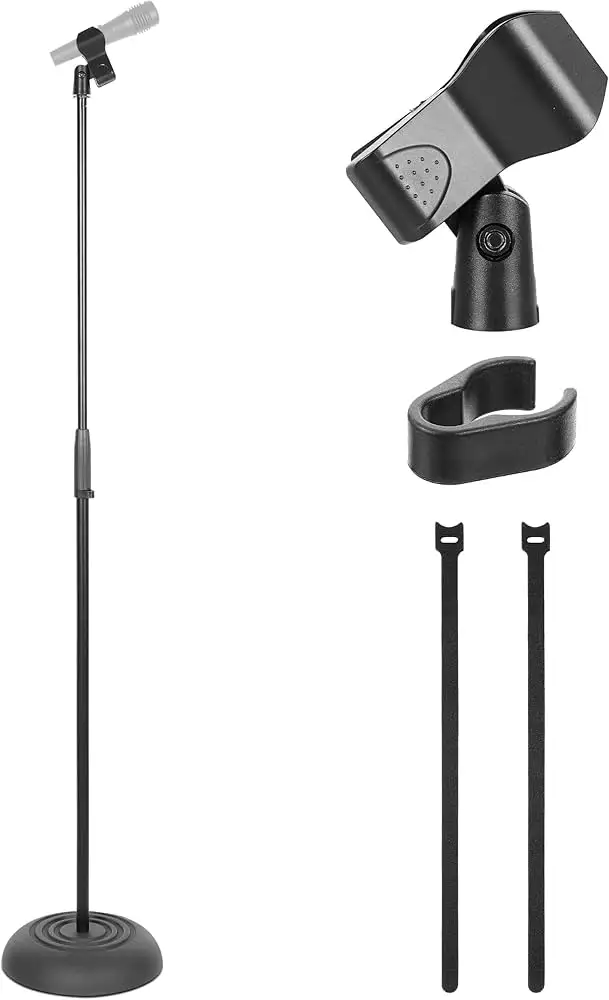
Within Pyle’s lineup, the Pyle PMKS56 heavy-duty tripod boom stand (Amazon listing text and eBay market listing) positions itself as more “professional,” with enlarged tubing and a tripod base. If your main fear is the compact-base model tipping or having limited stance options, the tripod form factor may feel safer. The listing emphasizes “stable tripod leg base,” and for musicians moving on stage, a tripod can offer better balance on uneven surfaces—at the cost of more floor footprint.
For desk and office users, the Pyle PMKS8 adjustable desktop tripod (Best Buy) has multiple positive stories around stability and convenience: “pretty solid base and holder for usb microphone,” and “very nice and easy to install and use.” But it also has an expectation-management warning: “does not come as pictured... completely different.” So even the desk alternative carries presentation risk.
For streamers and podcasters wanting a scissor arm setup, the review-analysis snippets for Pyle PMKSH01 are generally favorable about staying in place: “...it stays where it's put, the mounting base is strong enough....” Yet even there, users caution against overtightening: “...if you put a cheater bar... it will also....” That suggests the brand’s theme: good value, but not indestructible.
Price & Value
The Amazon specs section for the compact base adjustable stand lists pricing around $44.79 (with a “reg $55.99” and “20%” framing). Digging into sentiment, that price point is exactly why many buyers forgive flaws. Users repeatedly anchor their satisfaction in budget logic: “...great stands for the money...,” “...would recommend for those trying to record on a budget...,” and “...this works fine and isn't too expensive....” For a beginner outfitting a home studio on a tight budget, that’s the core value proposition.
Resale and market pricing shows up via eBay listings, which imply the stands are common and price-competitive. A new PMKS56 listing sits around the mid-$40s, while a bundled mic-and-stand listing costs more (plus shipping). There’s also an auction example where a two-pack compact base stand lot sold very cheaply relative to MSRP, hinting that resale/secondary-market value can vary widely depending on condition and venue.
Buying tips from the “community” tone embedded in reviews are practical rather than strategic: don’t over-tighten, expect to tighten often, and treat the clip gently. The most useful implicit advice comes from the reviewer who said the stand stays solid “if assembled correctly using lock nuts (provided).” For buyers, that translates to: assembly quality directly affects satisfaction.
FAQ
Q: Will the Pyle stand hold heavier microphones securely?
A: Sometimes, but not consistently. One reviewer said it was “...sturdy and reliable when holding large microphones such as the mxl v900 and rca 77 dx....” Others report slipping: “...the middle knob... won't hold my condenser microphone....” Heavier mics may stress the angle/height locks.
Q: Does the mic clip/holder actually stay in position?
A: Not always. A reviewer complained: “...the screw will not hold the mic from rotating down....” Another tolerated it: “...requires tightening just about every time but at this price i can live with that....” If you adjust often, expect maintenance or replacement.
Q: Is assembly straightforward?
A: Many find it easy, but some run into missing-instructions confusion and fit issues. Users say it’s “...very sturdy and easy to put together....” Yet others report basic problems like “...the pole does not fit the base ! ...” Assembly success appears inconsistent across units.
Q: Is it good for travel or gigging?
A: For light gigging and frequent transport, portability is a strong plus. A reviewer noted: “...we love the way it reduces down for easy transport....” Another said: “...stable and yet easy to move about the stage....” Reliability concerns remain if locks loosen mid-use.
Q: Will it fit any microphone like the listing suggests?
A: Compatibility is a common pain point. One reviewer reported: “...doesn't fit any of the three microphones we tried in it....” Even when the stand itself works, the clip can be the limiting factor, especially for larger bodies or unusual mounts.
Final Verdict
Buy the Pyle Adjustable Microphone Stand if you’re a budget-focused home recorder, casual performer, or someone who values portability and can tolerate occasional re-tightening—because many users call it “...great stands for the money...” and praise that it “...reduces down for easy transport....”
Avoid it if your setup demands dependable locking under load, guaranteed fit across multiple mics, or you can’t risk thread/assembly issues—because some users report “...the screw will not hold the mic from rotating down....” and even “...the pole does not fit the base ! ...”
Pro tip from the community: assemble carefully and use the included hardware properly—one reviewer credits stability to doing it right: “...if assembled correctly using lock nuts (provided) it stays tight and sturdy....”