Panasonic Super Heavy Duty D Batteries Review: 7.4/10
“10/10 will be buying again” sits right next to “you’ll be replacing them faster than not”—and that whiplash is the most honest snapshot of Panasonic Super Heavy Duty D Batteries. Verdict: a budget, carbon-zinc D-cell option that many people like for the price, but some warn isn’t built for “crazy longevity.” Score: 7.4/10.
Quick Verdict
Conditional — worth it for low-drain or “it just needs to work” use-cases; less compelling if you expect alkaline-like runtime.
| What real buyers emphasize | What that means | Evidence (platform) |
|---|---|---|
| Strong value per battery | Good fit for bulk buying | A verified Amazon reviewer: “great batteries for the price” (Amazon reviews) |
| Not alkaline longevity | Expect more frequent swaps | A verified Amazon reviewer warned: “these are not alkaline… you’ll be replacing them faster” (Amazon reviews) |
| Some devices “picky” about batteries | Works where others fail | A verified Amazon reviewer: “the only type of batteries that work in my very expensive clock” (Amazon reviews) |
| Long-enough for certain installs | Some report surprisingly long use | A verified Amazon reviewer: “replace… after over a year… in my tankless water heater” (Amazon reviews) |
| Leak anxiety exists | A small but severe failure mode | A reviewer on RevDex alleged batteries “have leaked out thus destroying my flashlight” (RevDex) |
Claims vs Reality
Panasonic positions its Super Heavy Duty line as “clean, safe, budget-friendly,” and best suited for “energy-efficient devices… like a tv remote control… or continuously, like a clock,” while also emphasizing “anti-leak protection” and a “tough zinc-alloy can” (Panasonic Battery Products pages). Digging deeper into buyer commentary, the “budget-friendly” and “general purpose” framing largely matches what people say—especially when they explicitly compare these to alkaline expectations.
One verified Amazon reviewer framed it bluntly as a trade: “they are general purpose batteries… remember that these are not alkaline… you won’t be getting crazy longevity at all.” That same reviewer still defended the point of buying a big count: “what you get, are batteries that work and a lot of them… you’ll be replacing them faster… budget batteries still work though” (Amazon reviews). In other words, the reality aligns with Panasonic’s own positioning toward lower-drain, economical usage—so long as shoppers don’t read “Super Heavy Duty” as “high-drain powerhouse.”
Where reality gets spikier is reliability at the extremes. Panasonic’s marketing leans heavily on leak protection (Panasonic Battery Products pages), but one RevDex complainant described a worst-case scenario: they put D-cells into a Maglite, then “noticed that the batteries have leaked out thus destroying my flashlight,” and even alleged “the rest of the batteries still in their packages have started to leak out as well” (RevDex). That’s one report, but it directly contradicts the “far lower chance… of leakage” messaging—so leak protection may be improved versus “conventional carbon zinc,” yet not universally problem-free in the field.
Finally, Panasonic’s “best suited for… clocks” claim gets a real-world echo from Amazon. One reviewer said: “these are the only type of batteries that work in my very expensive clock,” adding they can be found cheaply elsewhere (Amazon reviews). That’s a very specific, device-based endorsement that supports the “low-drain/clock” narrative—even if it doesn’t guarantee broad superiority.
Cross-Platform Consensus
Universally Praised
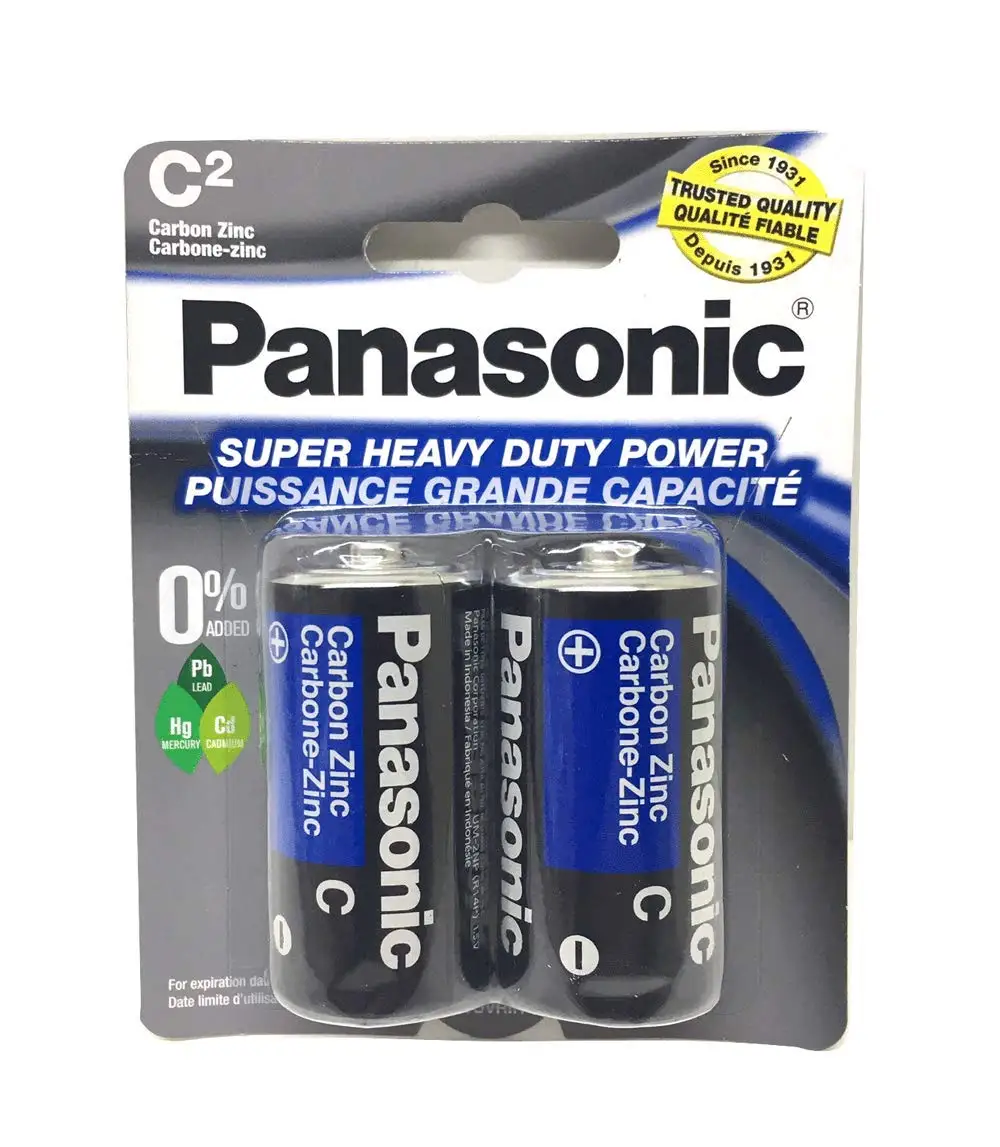
A recurring pattern emerged across buyer ratings and comments: people are buying Panasonic Super Heavy Duty D Batteries because they want acceptable performance at a low per-cell cost, especially in bulk. On Amazon, the listing carries a high headline rating (4.6/5 across thousands of reviews for the 24-pack product page) and multiple reviewers reduce their experience to price-to-performance. One verified Amazon reviewer wrote: “great batteries for the price” (Amazon reviews). Another simply said: “good batteries” (Amazon reviews). The shared theme is not technical benchmarking; it’s relief that the batteries are “good enough” without premium pricing.
For “set-and-forget” devices, some users describe surprisingly durable outcomes for a carbon-zinc style battery. A verified Amazon reviewer reported: “I jest recently had to replace these same batteries after over a year of using them in my tankless water heater. 10/10 will be buying again” (Amazon reviews). That kind of anecdote resonates with homeowners who want a battery swap to be rare and predictable—especially if the device is inconvenient to service.
Other praise centers on compatibility—specifically, cases where a device seems finicky. A verified Amazon reviewer claimed: “these are the only type of batteries that work in my very expensive clock” (Amazon reviews). For someone troubleshooting a clock that refuses to run reliably, that’s not a small detail; it’s the difference between a functional appliance and ongoing frustration. Panasonic’s own product positioning toward clocks and low-drain devices (Panasonic Battery Products pages) aligns with that buyer’s experience.
Outside of Amazon, ChickAdvisor shows more moderate sentiment (3.4/5 overall). Still, positive reviewers talk in the same “value and comparability” language. One ChickAdvisor reviewer called it a “great deal,” saying the Panasonic battery was “comparable with the other more expensive brands” and used them in “my air freshener an tv controller” (ChickAdvisor). That’s exactly the low-drain, intermittent-use scenario Panasonic says these are designed for.
What people like most (recurring praise)
- Price/value in bulk: “great batteries for the price” (Amazon reviews)
- Works reliably in certain low-drain devices: “only type… that work in my… clock” (Amazon reviews)
- Some long-duration anecdotes: “after over a year… tankless water heater” (Amazon reviews)
Common Complaints
The most consistent complaint isn’t that the batteries don’t work—it’s that they don’t last like alkaline, and buyers feel that difference in everyday devices. One ChickAdvisor reviewer summed it up: “the batteries do not last as long as more exspensive brands. i found my lights went dim pretty quickly using these batteries” (ChickAdvisor). For flashlight users, “dim pretty quickly” is a practical failure: it changes whether the light is dependable during an outage, in a garage, or on a night walk.
Verified Amazon reviewers often pre-empt this complaint by setting expectations. One wrote: “remember that these are not alkaline… you won’t be getting crazy longevity at all… you’ll be replacing them faster” (Amazon reviews). That’s still a negative for people who hate maintenance, but it doubles as community advice: buy them when you can tolerate more frequent swaps, or when you’re stocking up for multiple devices.
Then there’s the high-severity, lower-frequency concern: leakage. A RevDex complainant alleged that D batteries “have leaked out thus destroying my flashlight,” and also claimed additional units “still in their packages have started to leak out” (RevDex). For people storing spare D-cells for emergencies, that kind of story hits hard—because it suggests the worst moment (needing the flashlight) could coincide with damage.
What frustrates buyers most (recurring complaints)
- Shorter runtime vs premium/alkaline: “lights went dim pretty quickly” (ChickAdvisor)
- Expectation mismatch: “not alkaline… replacing them faster” (Amazon reviews)
- Leak fears (severe when it happens): “leaked out thus destroying my flashlight” (RevDex)
Divisive Features
The biggest divide is what “Super Heavy Duty” means in practice. For bargain hunters or bulk buyers, “heavy duty” seems to mean “dependable enough and cheap.” For others, the name invites a performance expectation closer to alkaline. That’s why one verified Amazon reviewer frames them as practical but limited: “general purpose batteries… not alkaline… you won’t be getting crazy longevity” (Amazon reviews). Meanwhile, other buyers use simpler language—“awesome batteries,” “great product… quality, durability” (Amazon reviews)—suggesting their use-cases don’t stress the battery in the same way.
Another subtle dividing line: where they “work” best. Panasonic’s own guidance says these are “best suited for efficient devices” like remotes and clocks (Panasonic Battery Products pages). Buyers echo that with remote/air freshener use (ChickAdvisor) and a clock-specific endorsement (Amazon reviews). But when moved into more demanding scenarios (like lights that “went dim pretty quickly”), satisfaction drops (ChickAdvisor). The product isn’t universally bad or good; it’s polarizing based on drain profile and expectations.
Trust & Reliability
Trust issues show up in two different ways: performance trust (will it leak or die early?) and purchase trust (is this a legitimate Panasonic product, fairly represented?). On the product-performance side, the harshest reliability story in the dataset is the RevDex complaint about leakage damaging a Maglite: “batteries have leaked out thus destroying my flashlight” (RevDex). That kind of incident can permanently change a buyer’s willingness to store carbon-zinc batteries in expensive gear.
On the other hand, many verified Amazon comments describe plain reliability—“they worked great” and “works like they should” (Amazon reviews). The contrast suggests that for most buyers the baseline is met, but a minority report failures severe enough to outweigh the savings. While Panasonic marketing emphasizes “anti-leak protection” (Panasonic Battery Products pages), at least one consumer story alleges the opposite outcome in the real world (RevDex), so risk-averse users may be cautious about leaving them installed long-term in valuable flashlights.
Long-term anecdotes are limited in the provided community sources for this specific D-cell product, but Amazon includes at least one “over a year” usage story in a tankless water heater (Amazon reviews). That’s the kind of slow-burn reliability account that matters to homeowners who rarely want to open compartments or reconfigure batteries.
Alternatives
Only a few alternatives are explicitly mentioned in the user data, and they mostly come as categories rather than named competitors. The clearest comparison is between Panasonic Super Heavy Duty D Batteries and “alkaline” batteries as a class. A verified Amazon reviewer spelled out the trade-off: “these are not alkaline… you won’t be getting crazy longevity… if it’s a device you count on daily, better go with the top 3 brands” (Amazon reviews). That’s not a brand callout, but it is a buyer-driven decision rule: if runtime and fewer swaps matter more than cost, many people mentally bucket these as “backup” or “bulk” batteries rather than premium daily drivers.
Another quasi-alternative shows up as a retail channel suggestion rather than a product: a verified Amazon reviewer noted they “can be purchased at the dollar tree, 2 for $1.25” (Amazon reviews). That implies some buyers cross-shop by price-per-cell rather than chemistry or brand model.
Price & Value
The Amazon product page positions this as a bulk value buy: a 24-pack around $24.03, roughly $1.00 per count, with thousands of reviews and an “Amazon’s Choice” badge (Amazon specs). For shoppers building emergency kits, powering multiple clocks, or stocking replacements for intermittent-use devices, that per-cell math is the core appeal—and it’s exactly why reviewers repeat lines like “great batteries for the price” (Amazon reviews).
Resale/market pricing signals on eBay suggest active bulk trading and frequent listings for “super heavy duty” Panasonic D batteries with long expiry dates (eBay market results). While those listings don’t provide user satisfaction, they do reinforce that these are often treated as commodity consumables—bought in quantity, rotated by expiry, and compared primarily on cost and availability.
Buying tips in the feedback revolve around expectation-setting. The most practical guidance comes straight from a verified Amazon review: “remember that these are not alkaline… you’ll be replacing them faster” (Amazon reviews). If you buy them under that mental model—budget carbon-zinc for low-drain devices—the value perception rises; if you expect premium longevity, disappointment is more likely.
FAQ
Q: Are Panasonic Super Heavy Duty D batteries alkaline?
A: No. A verified Amazon reviewer cautioned, “these are not alkaline,” and warned you “won’t be getting crazy longevity” compared with alkaline options (Amazon reviews). Panasonic’s Super Heavy Duty line is marketed for low-drain, energy-efficient devices like clocks and remotes (Panasonic Battery Products pages).
Q: Do they actually last a long time?
A: It depends on the device. One verified Amazon reviewer said they replaced them “after over a year… in my tankless water heater” (Amazon reviews). But a ChickAdvisor reviewer felt they “do not last as long as more exspensive brands” and that lights “went dim pretty quickly” (ChickAdvisor).
Q: Are these good for clocks and low-drain devices?
A: Many comments suggest yes. A verified Amazon reviewer said they’re “the only type of batteries that work in my very expensive clock” (Amazon reviews). Panasonic’s own guidance also says Super Heavy Duty batteries are “best suited” for devices like clocks and TV remotes (Panasonic Battery Products pages).
Q: Do users report leakage issues?
A: Some do. A complaint on RevDex alleged the D batteries “have leaked out thus destroying my flashlight,” and claimed others “still in their packages have started to leak out” (RevDex). Panasonic marketing emphasizes “anti-leak protection,” but at least one consumer report contradicts that outcome (Panasonic Battery Products pages; RevDex).
Q: Are they worth it for flashlights?
A: Feedback is split by expectations and use-case. A ChickAdvisor reviewer said lights “went dim pretty quickly” (ChickAdvisor), and a RevDex complainant alleged leakage damaged a Maglite (RevDex). Meanwhile, other verified Amazon reviewers say they “worked great” and are “great batteries for the price” (Amazon reviews).
Final Verdict
Buy if you’re a bulk buyer powering low-drain devices (clocks, remotes, air fresheners) and you’re okay trading runtime for price—because one verified Amazon reviewer framed them as “general purpose” and “not alkaline” (Amazon reviews).
Avoid if you need maximum longevity in higher-drain gear or you’re storing batteries in expensive flashlights for emergencies, since at least one consumer alleged a leak that “destroy[ed] my flashlight” (RevDex).
Pro tip from the community: set expectations early—“you won’t be getting crazy longevity… you’ll be replacing them faster,” but “budget batteries still work” (Amazon reviews).