Panasonic Eneloop Pro AAA 16-Pack Review: Worth It?
A photographer flatly framed the purchase as risk management: “can you imagine what it would be like to be on a shoot and not have a charge on your batteries?” That anxiety—and the belief these cells prevent it—shows up repeatedly across platforms discussing Panasonic Eneloop Pro AAA Rechargeable Batteries, 16-Pack. Verdict: strong pick for high-drain households and working kits, but priced like premium insurance. Score: 8.6/10
Quick Verdict
For many buyers, the real selling point isn’t just rechargeability—it’s confidence that the batteries will be ready when the device matters. A Panasonic “My eneloop” testimonial tied that to professional work, saying the charge-holding claim “gives me confidence in purchasing them for my wedding shoots.” Another long-term user echoed durability over time: “I’ve been using them heavily for as long as 7 years and they still work amazing!”
Digging deeper into the few critical notes available in the provided data, the main pushback is economic: paying notably more for capacity gains while accepting fewer rated recharge cycles than standard Eneloops. Slant’s community review summed up the tradeoff bluntly: “expensive,” adding, “you pay almost twice as much for a 20% improvement and less charging cycles.”
The consensus story, then, is conditional: if you’re feeding high-drain devices (photo gear, controllers, flashlights, radios) and value readiness after storage, users talk about these like a “buy once, stop worrying” solution. If you mostly power low-drain devices, the same price premium can feel hard to justify.
| Verdict | Evidence from provided sources |
|---|---|
| Yes—if high drain | Panasonic testimonials cite “wedding shoots,” “flash photography,” “sound recording,” “VR,” “RC cars” |
| Conditional—if low drain | Slant warns you’re paying “almost twice as much” for “20% improvement” |
| Major pro: longevity in real life | “Using them heavily for as long as 7 years” (Panasonic testimonials) |
| Major pro: reliability mindset | “Panasonic eneloop always has my back” (Panasonic testimonials) |
| Main con: price | Slant: “expensive” |
| Risk: counterfeits | Slant: “possibility to buy fake ones… especially in ebay” |
Claims vs Reality
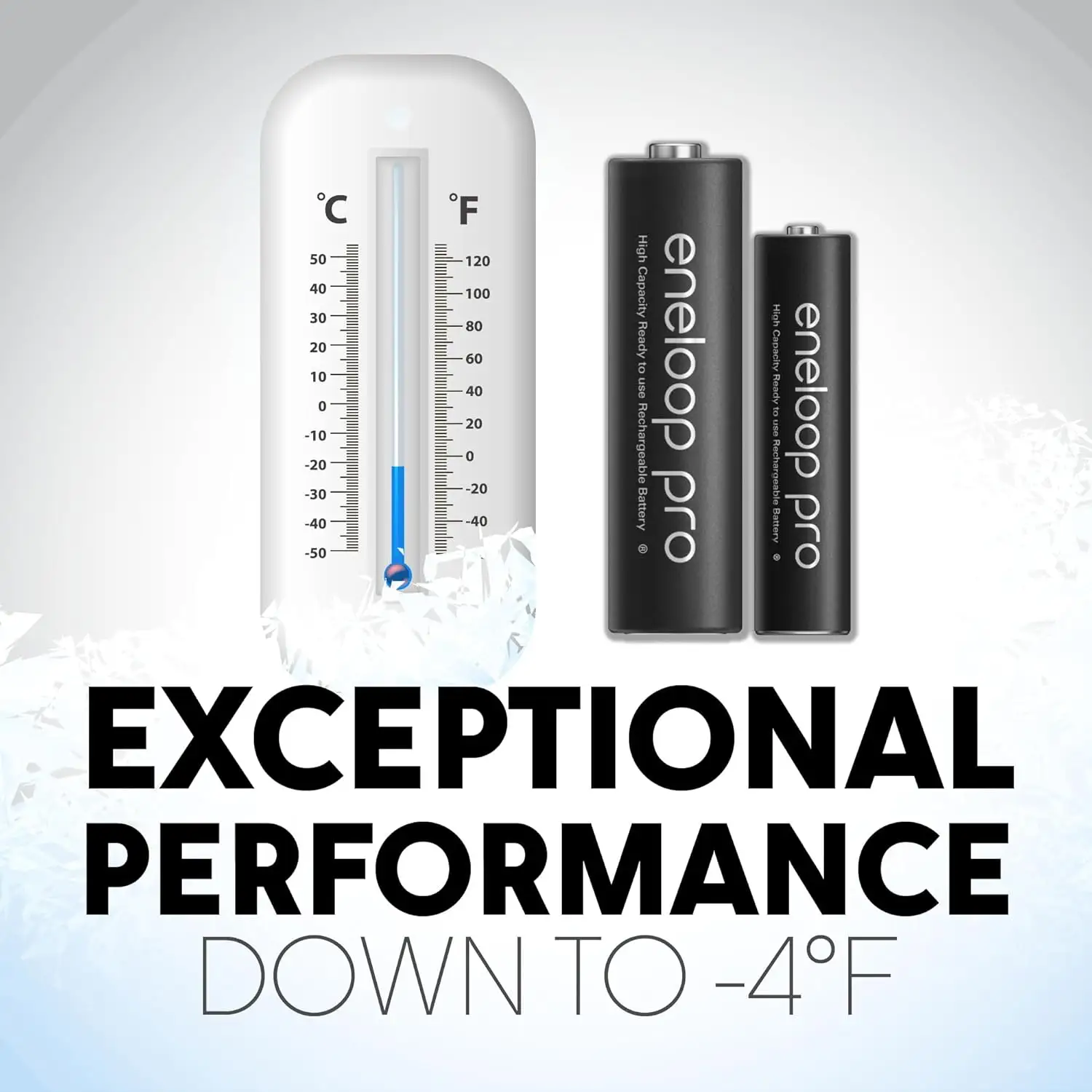
Panasonic and Amazon specs position Panasonic Eneloop Pro AAA Rechargeable Batteries, 16-Pack as “high capacity” (listed at 950 mAh on Amazon) and “low self discharge,” with the claim that they “maintain up to 85% of their charge after 1 year” when stored. That’s a tidy promise—capacity plus readiness.
In user-facing stories, that “ready when you need it” angle becomes the emotional center. A Panasonic testimonial described being drawn in by the idea of batteries holding a meaningful charge “even after one to two years,” then tied it directly to professional photography risk: “this gives me confidence… for my wedding shoots.” Another user made the reliability claim personal and broad: “charged and ready to rock and roll. i use eneloop batteries in all my important electronics.”
But the provided data also shows the “how long they hold charge” narrative can drift into exaggeration depending on who’s speaking. While official materials emphasize “85%… after one year,” at least one testimonial paraphrased it as “hold at least 60% charge even after one to two years.” That doesn’t necessarily contradict the brand claim (different time windows and percentages), but it shows how marketing claims get reshaped into folk wisdom in communities—especially among users storing spares for emergency kits.
A second marketing claim is professional suitability—Panasonic’s own copy calls it “the only high-capacity battery that professionals need.” In the user stories provided, “pros” appear as working photographers and production crews. One testimonial said, “enjoying these eneloop pro rechargeable batteries. #sound recording #location recording,” while another called them “my brand of choice for many years now… they still work after years of heavy use!” The reality gap here isn’t performance—it’s that “professional” for users often means “never leave home without them,” as one flash shooter put it: “i use them for all my flash photography… never leave home without them.”
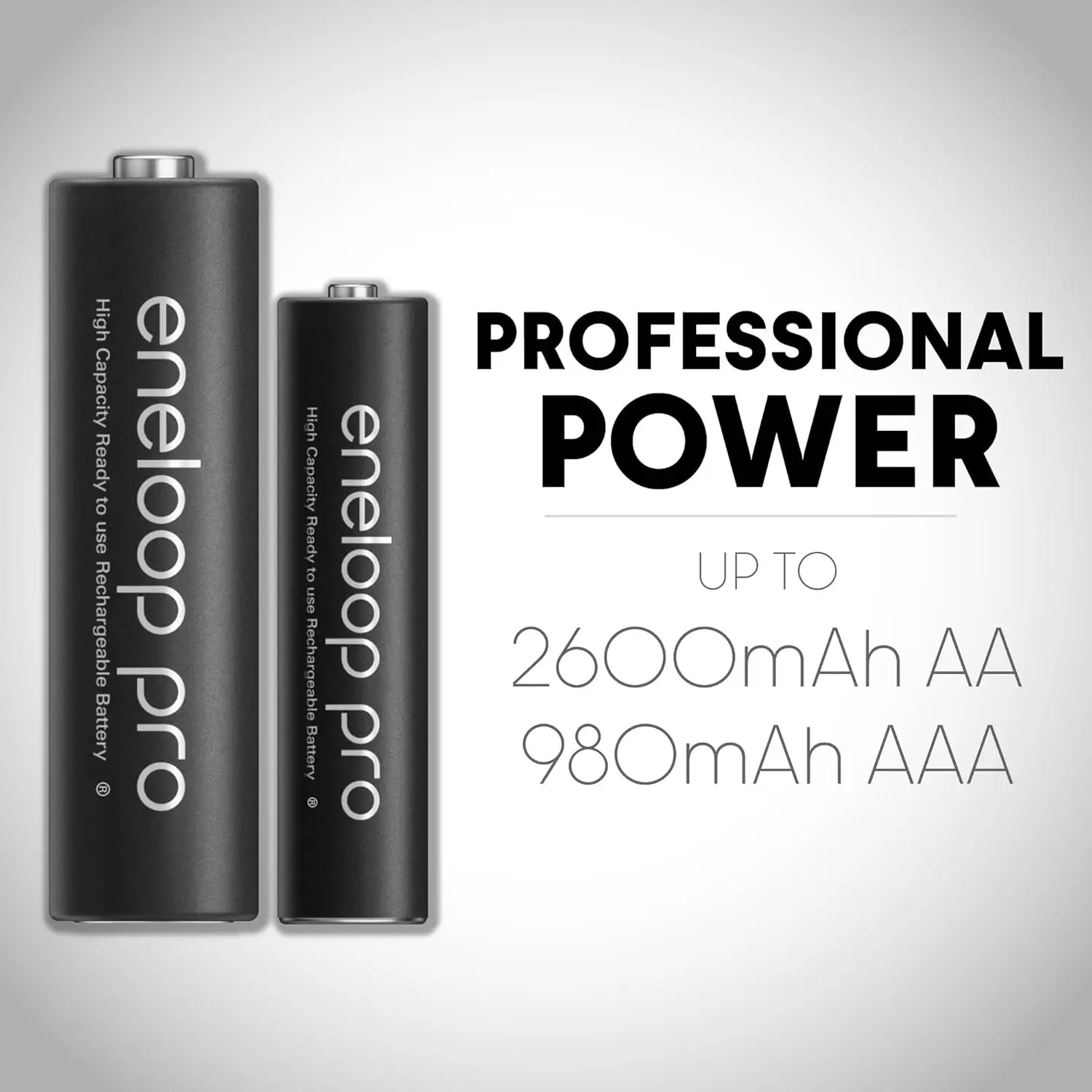
Finally, there’s a tension between “high capacity” and lifecycle value. Officially, Eneloop Pro AAA is positioned at around 500 recharge cycles. Slant’s community critique highlights the downside of that positioning: “less recharge cycles… only 500”—paired with the complaint that the improvement can be “about 10–20% longer runtime.” For users who burn through batteries daily, the higher capacity may matter more than cycle count; for cost-focused households, the math can feel less flattering.
Cross-Platform Consensus
Universally Praised
The recurring theme across the provided user-facing quotes is not a lab metric—it’s trust. A pattern emerged in the Panasonic “My eneloop” testimonials: users talk about these batteries as the default powering layer under daily life. One person wrote, “eneloop runs everything requiring batteries in our house :)” That kind of blanket endorsement matters most for busy households with lots of remotes, toys, and controllers—people who don’t want to track different brands or keep a drawer of alkalines.
For creators and gig work, the most specific “who benefits” stories cluster around photography and audio. A photographer described choosing them to avoid dead-battery failure on paid shoots: “this gives me confidence in purchasing them for my wedding shoots.” Another user framed redundancy as essential: “do you think i have enough #my eneloop batteries? i don’t think so… i’m ready to go. never leave home without them.” For that persona, higher capacity means fewer swaps mid-session, and “ready to go” means less pre-shoot stress.
Long-term durability also shows up as a bragging right. One testimonial said: “i’ve been using them heavily for as long as 7 years and they still work amazing!” Another echoed resilience in more colorful terms: “they take a licking but keeps on working!” Those comments speak to a specific buyer type: people who want to invest once in a rechargeable ecosystem (batteries + charger) and stop thinking about it for years.
Finally, readiness for emergencies and seasonal needs shows up in stories that aren’t about cameras at all. One user wrote: “keep #my eneloop batteries charged for my am radio and torch during bushfire season… it’s good to have a few eneloops set aside to listen to emergency broadcasts.” Another small but telling example—hot weather, daily convenience—said: “time to put #my eneloop batteries in the remote for air-conditioning.” For these users, low self-discharge isn’t abstract; it’s the difference between a working radio/torch/remote and a dead one when the moment arrives.
Praised themes (after the stories):
- Reliability mindset: “always has my back,” “reliable”
- Long-term use: “7 years… still work amazing”
- High-drain confidence: flash photography, sound recording
- Household standardization: “runs everything… in our house”
Common Complaints
The biggest consistent negative in the provided dataset is price sensitivity—especially when buyers compare Eneloop Pro to standard rechargeable AAA batteries. Slant’s community review doesn’t mince words: “expensive,” arguing buyers “pay almost twice as much for a 20% improvement.” That complaint hits hardest for users who power low-drain devices like TV remotes or clocks—use cases where the marginal runtime boost isn’t felt day to day.
Closely tied to that is the cycle-count concern. While the official positioning is “recharge up to 500 times,” Slant frames this as a drawback: “less recharge cycles… only 500 recharge cycles – only half of what the majority of batteries offer.” For high-churn scenarios—like frequent swapping in kids’ toys—some shoppers may worry they’re paying more upfront while getting fewer total lifetime charges than cheaper, lower-capacity options.
Counterfeit anxiety also appears as a practical fear rather than a performance complaint. Slant warns of the “possibility to buy fake ones,” advising buyers to stick to “large and trusted retailers,” calling out “ebay and chinese websites” specifically. That’s not a knock on Eneloop Pro performance, but it is a real “ownership risk” that affects value: if shoppers can’t trust the supply chain, they may hesitate to buy deal-priced listings.
Taken together, the common complaint narrative is straightforward: users who prioritize cost-per-cycle and low-risk purchasing can find the Eneloop Pro proposition uncomfortable, even if they accept it’s a top performer.
Complaint themes (after the stories):
- Premium pricing: “expensive”
- Cycle tradeoff: “only 500 recharge cycles”
- Fake product concerns: “buy… from large and trusted retailers”
Divisive Features
High capacity itself is divisive because it changes what “value” means. Slant praises them as “one of the highest capacity AAA batteries available,” noting “about 10–20% longer runtime,” which can be “critical for cameras or camera flash units.” That’s the pro-user lens: an extra chunk of runtime matters when failure is costly or disruptive.
But the same “high capacity” positioning fuels the opposing view: “almost twice as much for a 20% improvement.” For someone using AAA cells in a mouse or remote—where swaps are easy—paying more can feel like buying performance you won’t notice.
Even the low self-discharge story splits depending on expectations. Panasonic’s ecosystem messaging emphasizes storage readiness, and some user stories align with that emergency-kit mindset (“set aside… to listen to emergency broadcasts”). Meanwhile, Slant’s review suggests you can “leave them on the shelf for a couple of years,” which is a broader claim than the official “85% after one year” framing. Buyers who take the “couple of years” idea literally may end up disappointed if their storage conditions or device draw don’t match the best-case scenario.
Trust & Reliability
The provided “Trustpilot (Verified)” feed does not contain actual customer reviews—it repeats Panasonic marketing copy rather than consumer testimony—so there’s no verified-review pattern here to analyze for scam complaints or recurring service issues. What does emerge, instead, is a community-level caution about counterfeits from Slant: “possibility to buy fake ones… especially in ebay,” paired with the buying tip to stick to “large and trusted retailers.”
On long-term reliability, the only explicit multi-year durability story in the dataset comes from Panasonic’s “My eneloop” testimonials rather than Reddit threads. Still, it’s concrete: “I’ve been using them heavily for as long as 7 years and they still work amazing!” Another longevity-flavored statement reinforces the same theme: “they still work after years of heavy use! they take a licking but keeps on working!” These are the kinds of stories that matter most to photographers, gamers, and anyone building an emergency drawer—people who want batteries that don’t “age out” quickly.
Alternatives
Only a few competitors are explicitly mentioned in the provided data. Slant commonly compares Eneloop Pro against Panasonic Eneloop (standard) and Amazon Basics AAA Rechargeable Batteries. The narrative split follows the same value logic seen elsewhere.
If you’re a high-drain user—camera flashes, audio recorders, VR controllers—Slant’s argument for the Pro line is simple: “one of the highest capacity AAA batteries available,” translating into “10–20% longer runtime.” For photographers, that extra buffer can mean fewer battery swaps during a session and fewer interruptions during bursty loads.
If you’re optimizing for cost-per-cycle and powering low-drain gear, standard Panasonic Eneloop is implicitly positioned as the longer-cycle alternative (the Amazon specs in your data show standard Eneloops rated up to 2100 cycles versus 500 for Pro). That suggests a different buyer persona: someone who wants rechargeables everywhere but doesn’t need maximum capacity in each cell.
And if budget is the main constraint, Amazon Basics AAA rechargeable batteries enter the conversation as the lower-cost option Slant lists as a comparison point—likely attractive for kids’ toys, seasonal decorations, and bulk household use where losing a cell or mixing sets happens.
Price & Value
On Amazon, Panasonic Eneloop Pro AAA Rechargeable Batteries, 16-Pack is listed at $59.95 (about $3.75 per battery) in the provided specs. That premium pricing is the centerpiece of the value debate: Slant characterizes the upgrade as “almost twice as much for a 20% improvement,” and adds the sting of “less charging cycles.”
Resale and secondary-market pricing signals show up via eBay listings in your data, where Eneloop Pro AA and AAA packs appear at various per-pack prices, alongside warnings about authenticity from Slant. The implication for deal hunters is practical: the cheaper the listing, the more important seller reputation becomes—because the biggest “value killer” isn’t slightly lower capacity; it’s buying a fake.
Community buying behavior also hints at a “system” mindset: several testimonials talk like owners have “dozens” around the house or “bought everyone in my family eneloop kits years ago!” That’s a clue that many buyers see the value not as a one-time 16-pack purchase, but as building a rechargeable routine (charge, rotate, store) that replaces constant alkaline replenishment.
Buying tips grounded in the dataset:
- Prefer trusted retailers to reduce fake risk (Slant: “buy… from large and trusted retailers”).
- Pay premium when high-drain runtime matters most (Slant: “critical for cameras or camera flash units”).
- If you want maximum cycle count over capacity, consider standard Eneloop (Amazon specs show higher rated cycles for non-Pro).
FAQ
Q: Do Eneloop Pro AAA batteries really hold their charge in storage?
A: Yes—official specs claim Panasonic Eneloop Pro AAA can “maintain up to 85% of their charge after 1 year” when not in use (Amazon/Panasonic materials). A Panasonic testimonial also praised the idea of meaningful charge retention “even after one to two years,” especially for shoot-day readiness.
Q: Who benefits most from the higher-capacity “Pro” version?
A: High-drain users benefit most—especially photographers and production crews. Slant says the higher capacity can mean “about 10–20% longer runtime,” which can be “critical for cameras or camera flash units.” A user story tied that directly to work: “confidence… for my wedding shoots.”
Q: What are the most common complaints about Eneloop Pro AAA?
A: Price and lifecycle value. Slant calls them “expensive,” arguing you “pay almost twice as much for a 20% improvement,” and also flags “less recharge cycles,” citing “only 500 recharge cycles.” These concerns matter most for low-drain household devices where runtime gains are less noticeable.
Q: Are counterfeits a concern when buying Eneloop Pro?
A: Yes. Slant explicitly warns about the “possibility to buy fake ones,” advising buyers to purchase from “large and trusted retailers,” and calling out higher risk on “ebay and chinese websites.” This is a purchase-channel risk rather than a performance issue with genuine cells.
Q: How do these compare to standard Eneloop AAA?
A: The tradeoff is capacity vs recharge cycles. Amazon/Panasonic materials position Eneloop Pro AAA as higher capacity (950 mAh class) with around 500 recharge cycles, while standard Eneloop AAA is positioned with lower capacity but far more rated cycles (Amazon specs show up to 2100).
Final Verdict
Buy Panasonic Eneloop Pro AAA Rechargeable Batteries, 16-Pack if you’re a high-drain user—photographers with flashes, audio/film crews, VR/controller-heavy gamers, or anyone building a serious emergency-ready battery rotation—because people describe them as “reliable,” “always has my back,” and even “still work amazing” after years.
Avoid if you’re primarily shopping for the lowest cost-per-cycle in low-drain devices; Slant’s community critique is clear that they’re “expensive” and come with “less recharge cycles.”
Pro tip from the community: prioritize trustworthy sellers to avoid fakes—Slant’s warning is explicit, and the savings from a deal listing can evaporate fast if authenticity is questionable.