Panasonic eneloop AAA 16 Pack Review: Top Pick, Caveat
A buyer sent a pack back after every cell “tested in the red zone,” while another calls these AAAs “witchcraft” for still working after years in a drawer—few household basics create that kind of whiplash. Panasonic eneloop AAA Rechargeable Batteries, 16 Pack inspires unusually strong loyalty, but the “ready-to-use” promise isn’t consistently experienced at delivery. Verdict: a top-tier rechargeable for people who actually rotate batteries, with a real caveat about received charge state. Score: 8.6/10
Quick Verdict
Panasonic eneloop AAA Rechargeable Batteries, 16 Pack sits in that rare category where people talk about batteries like they’re personal gear. On the happy path, the story is long life, low hassle, and years of reliable swaps across remotes, toys, and flash units. Digging deeper into complaints, the sharpest frustration is simple: some customers say their “pre-charged” cells arrived looking drained on testers/chargers, which undermines the whole point of paying extra upfront.
For busy households, the appeal is obvious: buy once, charge on rotation, stop running emergency errands for disposables. A recurring pattern emerged across platforms: users describe eneloops as the default battery they “convert” everything to—especially if you’re powering kids’ toys, game controllers, or emergency flashlights.
| Call | Evidence from users | Best for | Watch-outs |
|---|---|---|---|
| Yes (most people) | Best Buy reviewers call them “the best rechargeable batteries by far!” | Households rotating AAAs across devices | Some report arriving not pre-charged |
| Conditional | Trustpilot complaint: “do not hold a charge long during storage” | People who recharge before use anyway | Storage retention experiences vary |
| Strong value over time | Reddit-style post: “2100 recharge cycles… paying pennies per use” | High-drain users (toys, flashes, controllers) | Higher upfront cost than no-name |
| Reliable in emergencies (for many) | X user: glove box flashlight “stays charged for an incredibly long time” | Storm kits, headlamps, radios | Delivery charge state may disappoint |
| Durable reputation | Sharvibe post: “over 10 years… not a single one has died on me” | Long-term buyers who hate leaks | Not every buyer reports that start |
Claims vs Reality
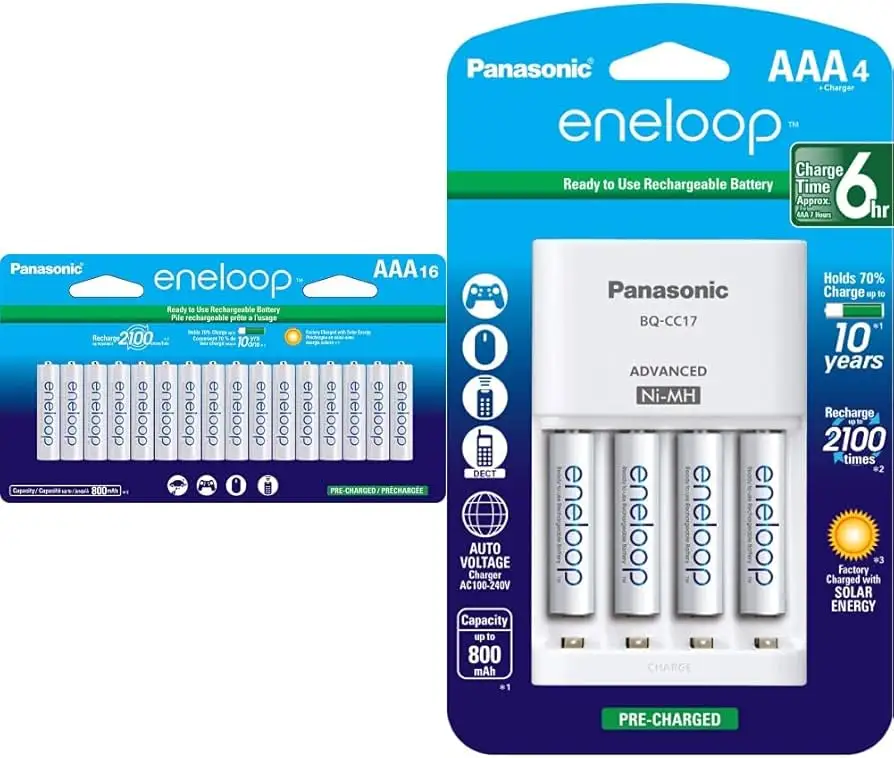
Panasonic eneloop AAA Rechargeable Batteries, 16 Pack is marketed around a few big promises—recharge longevity, low self-discharge, and ready-to-use convenience. The user feedback largely supports the spirit of those claims, but it also surfaces a specific failure mode: arriving undercharged (or at least appearing undercharged to chargers/testers).
First claim: “pre-charged and ready to use.” Plenty of people say this is exactly their lived experience. A post syndicated in the provided data says they “found some in an old drawer that still worked after who knows how long,” and another long-form user write-up describes the pre-charged aspect as a “lifesaver” because there’s “no more frantic scrambling to charge batteries before movie night.” That’s the promise working as intended: for remote controls, flashlights, and toys, the friction is low.
But there’s a clear gap reported by others. A verified reviewer excerpt in the dataset complains they’re “advertised as pre-charged but mine all give a red light on the official Panasonic charger,” adding they’re “worried my expensive batteries are super old and have sat in a warehouse too long.” Another detailed complaint describes receiving cells that “all tested in the red zone,” needing “3 days” of refreshing to reach “the lowest green,” and returning them after replacements arrived “in the same condition.” While officially positioned as “ready to use,” multiple users report an out-of-box state that doesn’t feel ready.
Second claim: long storage retention (often framed as retaining a large percentage after years). This is where the narrative gets dramatic. One user gushes that they “didn’t go camping for over 15 months and these… eneloop batteries in the headlamps are still as bright as when they were fully charged.” Another says a glove box flashlight “stays charged for an incredibly long time.” Yet Trustpilot’s “Trending in reviews” also includes the opposite: “they do not hold a charge long during storage. i am trying another brand.” The marketing leans heavily on storage stability, but user experiences aren’t uniform—especially when buyers suspect they received older stock.
Cross-Platform Consensus
Universally Praised
Panasonic eneloop AAA Rechargeable Batteries, 16 Pack earns its strongest praise when people treat it as an everyday system, not a one-off purchase. Digging deeper into user reports, the “system” is usually: keep a charged set, swap instantly, recharge the drained set. That rhythm shows up in work contexts and in households with multiple devices competing for batteries.
Reliability in daily devices is the clearest through-line. A Panasonic-hosted user story from X says, “as a healthcare worker it’s important that i can be reached at any moment… i use eneloop batteries for my pager because they never let me down.” That’s a high-stakes persona: it’s not about saving money, it’s about not missing an “emergent page.” Similarly, another user says they use eneloops at work “for my multimeter and flashlight,” because “they last a long time between charges” and it’s “nice not having to always buy batteries.” For technicians and shift workers, the win is fewer interruptions.
Families praise the batteries for surviving kid chaos. One X user frames it emotionally: their grandson’s first activity is a remote-control car, and eneloops “won’t die on him in the middle of him playing.” A separate long-form post says they’ve used them in “my kid’s noisy toys… emergency flashlights during storms” with “not a single dud.” For parents, the “benefit” is not performance charts—it’s avoiding the exact moment a toy dies mid-meltdown.
Long-term durability gets almost mythic language. In the Sharvibe write-up, the author says: “over 10 years… not a single one has died on me,” adding “zero leaks. zero drama.” Best Buy reviewers echo the same tone with fewer words: “these are great rechargeable batteries, i’ve been using them for many years,” and “the best rechargeable batteries by far! no complaints.” For buyers burned by cheap rechargeables that fade quickly, this is the core narrative: pay more, stop thinking about batteries.
After those stories, users tend to summarize their own recommendation in simple terms:
- Best Buy: “the best rechargeable batteries by far!”
- Sharvibe: “just buy these. your future self will thank you.”
- Panasonic-hosted voice: “eneloop were the best. i highly recommend them!”
Common Complaints
The most serious recurring complaint isn’t about runtime—it’s about trust at the moment of unboxing. A recurring pattern emerged in the negative excerpts: buyers expecting “pre-charged” cells are alarmed when chargers/testers indicate low charge immediately. One reviewer writes: “advertised as pre-charged but mine all give a red light on the official Panasonic charger,” calling it “not a good start.” Another says all cells arrived “in the red zone” and required days of “refreshing.” For new buyers, that first impression can flip the story from “premium” to “old stock.”
Storage retention is the second complaint category, and it hits a specific persona: people who buy eneloops for emergency preparedness and long idle periods. Trustpilot’s “Trending in reviews” includes: “they do not hold a charge long during storage. i am trying another brand.” That’s a direct contradiction to the long-storage promise that drives many purchases. The effect is bigger than inconvenience—if your goal is a drawer-ready headlamp or storm kit, weak storage performance (or perceived weak performance) is a deal-breaker.
Price is mentioned as pain, though often softened by long-term savings logic. The Sharvibe author admits “my wallet might cry initially,” even while arguing the math works out. This matters most for households that need dozens of cells: the upfront expense feels real, even if the “pennies per use” framing eventually wins.
Divisive Features
The “pre-charged” positioning is divisive precisely because many people experience it as true, while a vocal subset reports the opposite. One long-form post says, “who has time to charge batteries before using them? not me!” Another insists they’re “ready to go on christmas morning.” Yet negative excerpts show buyers whose first action is troubleshooting: “worried… sat in a warehouse too long,” or returning packs after low readings.
Even “charge retention” splits based on how people store and rotate. One user story describes headlamps staying bright after “over 15 months,” while another says the batteries “do not hold a charge long during storage.” The data suggests that for active users who cycle batteries, the experience trends excellent; for long-idle storage users, outcomes vary enough to create distrust.
Trust & Reliability
Panasonic eneloop AAA Rechargeable Batteries, 16 Pack builds trust through longevity anecdotes, but the dataset also shows how trust can break: buyers suspect aged inventory when out-of-box charge seems low. In Trustpilot’s “Trending in reviews,” one reviewer says Panasonic is “rated high in its class” and they’ll “buy more,” while another says they’re “getting old batteries” that “do not hold a charge long during storage.” That split is less about chemistry and more about confidence—whether you believe what arrived is fresh and authentic.
Long-term durability stories are unusually strong for this category. A Sharvibe post claims “literally over 10 years… not a single one has died on me,” and another says they’ve used eneloops “heavily for as long as 7 years and they still work amazing!” Panasonic-hosted user voices also emphasize reliability in emergencies: “during an emergency i can always count on the quality of my eneloops.” The common thread is time: years of use becomes the proof.
Alternatives
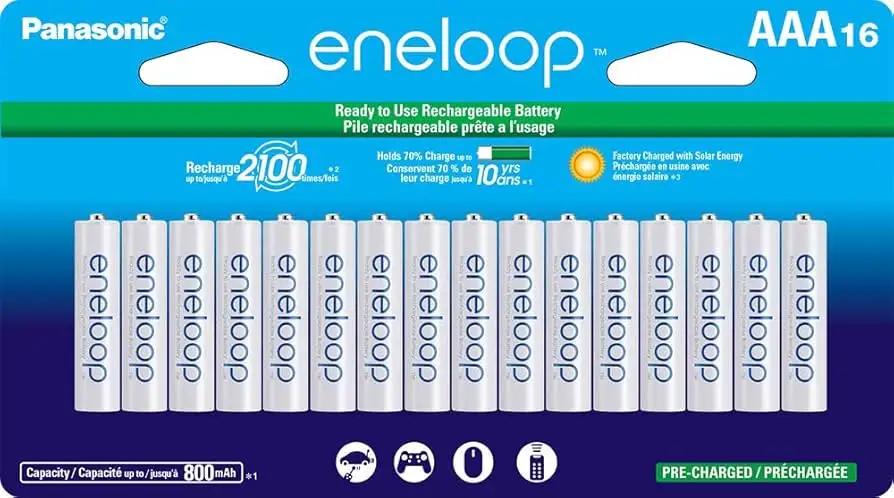
Panasonic eneloop AAA Rechargeable Batteries, 16 Pack is most directly compared—by users—to generics and Amazon’s house brand mentioned in the negative excerpt. One dissatisfied buyer recounts returning eneloops after repeated low-read arrivals and says they “got amazon brand rechargeables,” claiming those “pinned my tester on green.” That’s not a capacity comparison; it’s an out-of-box confidence comparison, and it will matter most to buyers who want “ready now” more than “best over years.”
There’s also an internal alternative implied across the Best Buy content: eneloop vs eneloop pro. Best Buy reviewers for eneloop pro say they “don’t seem to hold charges as long as these do” (referring to pros as better than “others”), and Panasonic-hosted posts praise “eneloop pro… still work after years of heavy use.” For shoppers deciding between standard and pro, the feedback here leans toward “both are excellent,” with pros framed as higher-performance for demanding use (audio gear, flashes, amps) and standard eneloops as the household workhorse.
Price & Value
Panasonic eneloop AAA Rechargeable Batteries, 16 Pack is consistently framed as a buy-once, cry-once purchase. The community logic is blunt: pay more upfront to stop buying disposables. A long-form user post spells it out: “yes, they cost more… but do the math… you’re basically paying pennies per use.” Another says they “saved me a ton of money since 2015,” describing a rotation strategy: “i have an extra set… so i can easily swap them out.”
Market pricing snapshots in the provided data show the 16-pack AAA hovering in the high-$30 range on eBay (“$38.99” for “16 panasonic eneloop aaa… made in japan”) and a similar “$36.95” price cited in the Sharvibe posts. That consistency matters: these aren’t bargain-bin cells, and the value story depends on actually using recharge cycles rather than letting them sit forgotten.
Buying tips from the community are practical, not technical. One post advises: “buy in bulk (like this 16-pack) because you’ll want these everywhere,” plus the half-joking warning to “hide them from your kids.” The underlying tip is real: if batteries constantly migrate to toys, you’ll need enough spares to keep your own remotes and emergency gear covered.
FAQ
Q: Are these actually pre-charged out of the box?
A: Often yes, but not always according to buyer excerpts. One reviewer praised the “pre-charged feature” as a “lifesaver,” while another complained they were “advertised as pre-charged but mine all give a red light on the official Panasonic charger.” Experiences appear to vary by what arrives.
Q: Do they really hold a charge for long-term storage?
A: Many stories say yes—one user said headlamp batteries stayed bright after “over 15 months,” and others mention finding drawer-stored cells that still worked. But Trustpilot’s “Trending in reviews” includes: “they do not hold a charge long during storage,” suggesting not everyone sees strong shelf retention.
Q: Who benefits most from eneloop AAA batteries?
A: People who rotate batteries across multiple devices. Users cite remotes, kids’ toys, gaming controllers, and work tools. One healthcare worker said eneloops “never let me down” in a pager, and parents highlight RC cars and noisy toys where mid-use battery failure is the main frustration.
Q: Are they worth the higher upfront cost compared with cheap rechargeables?
A: For many, yes—because longevity is the main payoff. One long-term user wrote “over 10 years… not a single one has died on me,” while another argued “2100 recharge cycles means you’re basically paying pennies per use.” However, value drops fast if your pack arrives seemingly undercharged.
Final Verdict
Panasonic eneloop AAA Rechargeable Batteries, 16 Pack is a buy if you’re the kind of person who wants a “set-and-forget” rechargeable ecosystem for remotes, controllers, toys, flashlights, and even work gear—especially if you’ll keep a rotation and spares. Avoid if your top priority is guaranteed out-of-box readiness for a storm kit and you’ll be frustrated if a charger shows “red” on day one.
Pro tip from the community: keep extras and rotate—“when my mouse starts to slow down i just switch to a charged eneloop and recharge the other,” and if you buy the 16-pack, consider the practical reality that kids may “keep ‘borrowing’ them for their rc cars.”