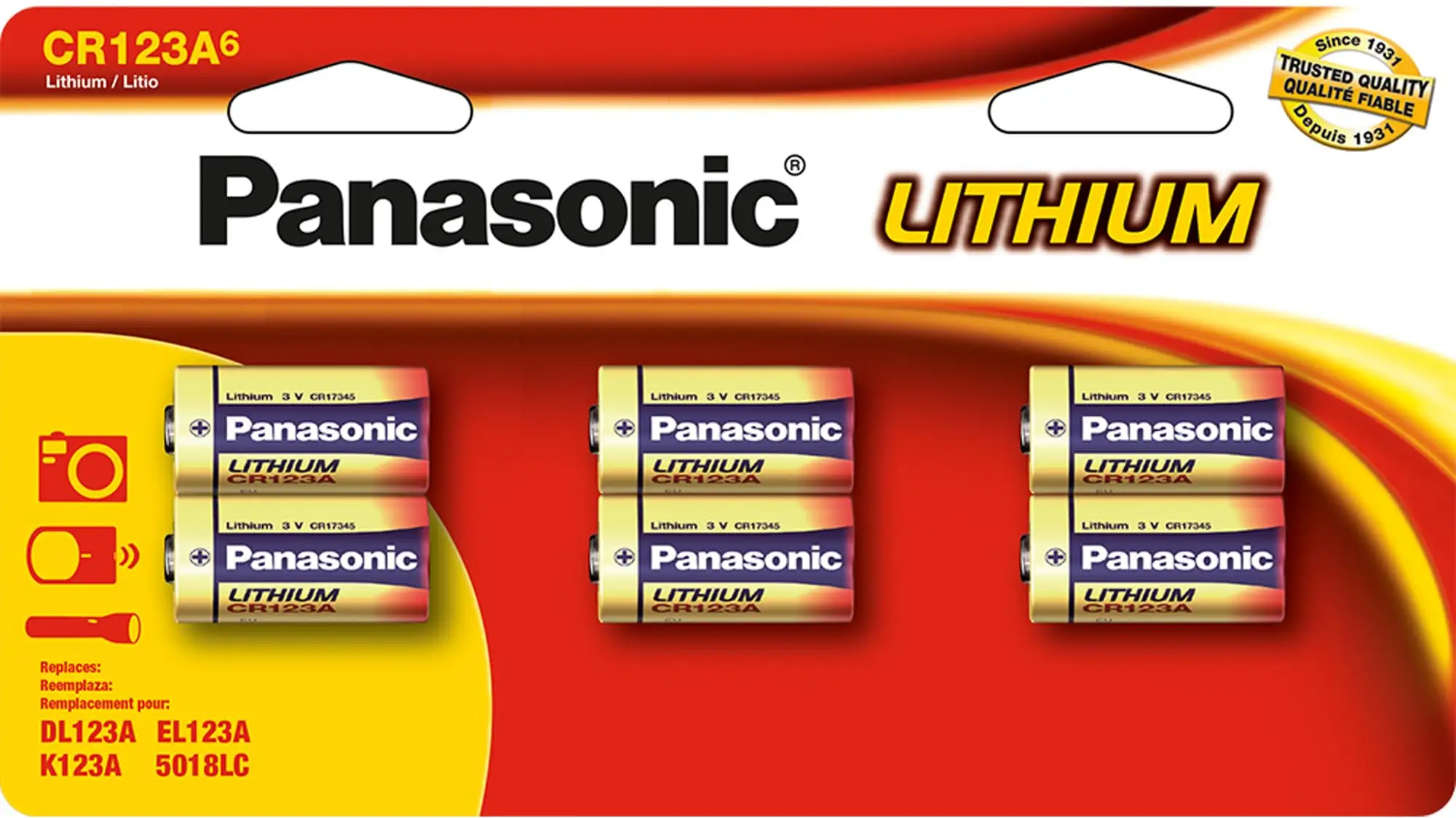
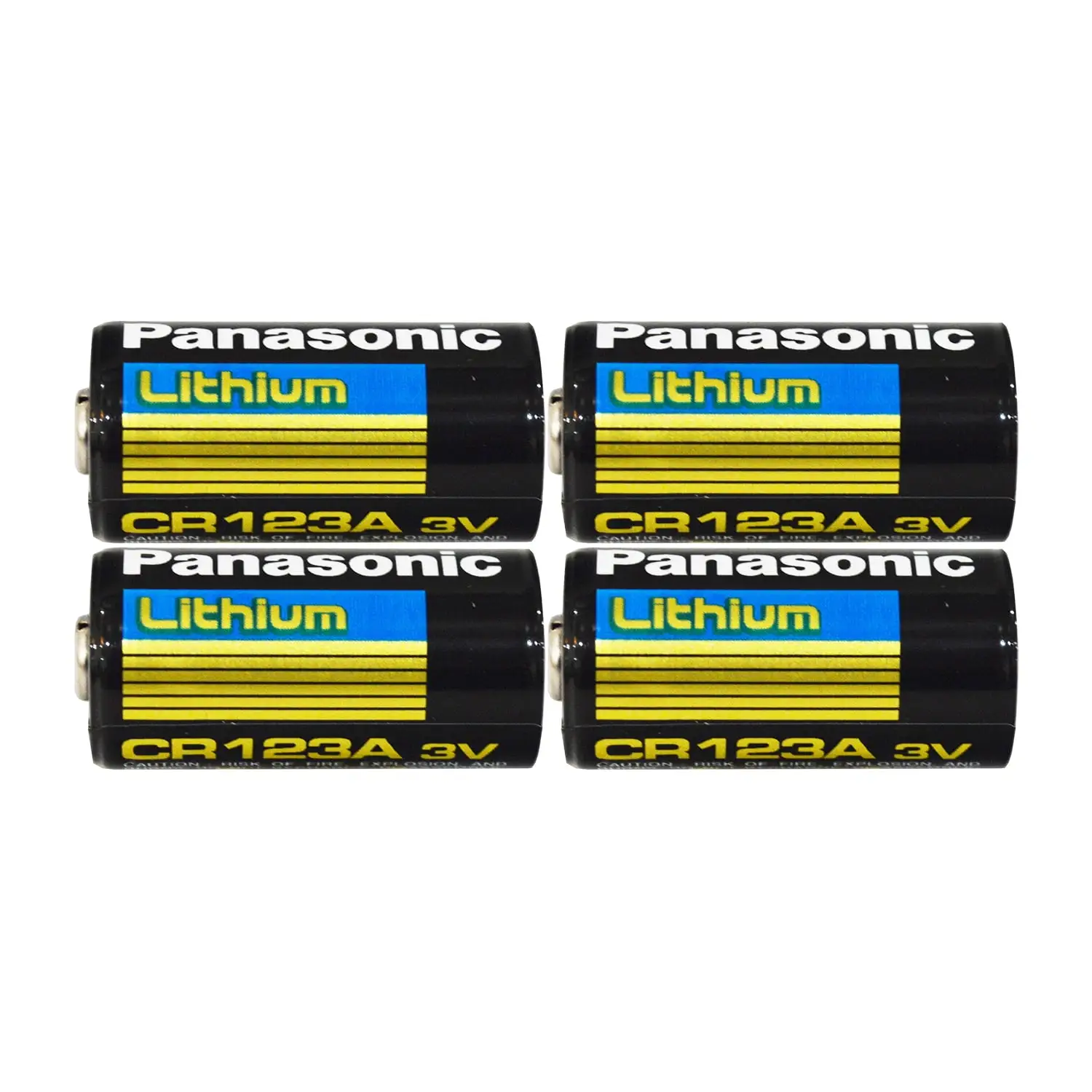
Panasonic CR123A 6-Pack Review: Conditional Buy (8.3/10)
“Most batteries will only last one year.” That blunt line shows up in the feedback trail around Panasonic CR123A Lithium Battery 6-Pack—and it’s exactly why people keep buying CR123A cells anyway: they’re often powering devices where a dead battery isn’t just annoying. Verdict: Conditional buy, 8.3/10—high trust for security, emergency, and cold-weather storage, but growing pushback from enthusiasts who think CR123A is “old technology” compared to modern rechargeables.
Quick Verdict
For households running smoke/heat detectors, alarm sensors, and wireless security devices, Panasonic CR123A Lithium Battery 6-Pack gets described as a dependable, easy swap. A common theme is replacing a whole set at once to avoid staggered failures. One review summary on Fakespot quotes a buyer: “as you know, once one battery fails, the rest will fail shortly after so i was able to replace all of them quickly, easily and cheaply with a quality battery.”
At the same time, Reddit threads repeatedly question whether CR123A is the best category of battery in 2025. One Reddit commenter argues that “modern lithium ion rechargeable cells beat them in capacity, current output, reliability, rechargeability,” and frames CR123A as a niche choice for “extremely cold” conditions or “storing batteries for like 10 years for emergency use.”
| Decision | Evidence from sources | What it means |
|---|---|---|
| Buy? | Conditional | Best when you need CR123A primary cells |
| Biggest pro | Reliability in security devices | Fewer risky “oops it died” moments |
| Biggest con | Category is expensive / dated | Rechargeable Li-ion may be better in compatible lights |
| Best for | Sensors, detectors, emergency kits | Long storage claims line up with why people stock them |
| Watch-outs | Bad batch / low initial life reports | One Groupon buyer called them “garbage” due to low remaining life |
Claims vs Reality
Claim 1: “Hold their charge for up to 10 years.”
The official messaging is very clear on long storage: Amazon specs state that “when unused and stored properly these lithium batteries will hold their charge for up to 10 years,” and Panasonic pages repeat a similar “10-year” storage story. Digging deeper into user feedback, that promise is mostly treated as a reason to choose this chemistry at all—especially for emergency spares and devices you don’t want to open often.
But the lived experience isn’t perfectly uniform. A sharp contradiction appears in the Groupon review: a buyer named Margaret wrote, “these batteries only had 45% life on them and within a few hours went down to 12% .. do not buy .. they are garbage.” While officially positioned as long-shelf-life cells, at least one purchaser story suggests receiving units that didn’t behave like fresh stock.
Claim 2: “Reliable performance for high-drain devices.”
Marketing language targets “tactical flashlights,” “home security cameras,” and other high-drain gear. Reddit commentary complicates that claim by arguing the format is falling behind. One Reddit user says: “cr123a’s really aren’t that great anymore… modern lithium ion rechargeable cells beat them in capacity… and they pay for themselves after 5-10 uses because cr123a’s are so expensive for single use cells.”
Still, the same Reddit voice carves out the exceptions where CR123A remains attractive: “extremely cold… environment,” “storing batteries for like 10 years,” or when the device “can possible use” nothing else. In other words, the reliability claim isn’t rejected outright; it’s narrowed to specific use cases where primary lithium makes sense.
Claim 3: “Safety features / safer to use.”
A recurring pattern emerged in Reddit discussions around flashlight incidents and series use. One comment claims, “the only cr123a’s i will buy are these panasonic ones because they have some significant safety features not present in any other cr123a’s.” The same thread warns that CR123A cells “used in series have a risk of reverse-charging and venting… especially when you mix different cells,” describing how pressure in a sealed flashlight tube can lead to catastrophic failure.
So while marketing highlights safety certifications and protective packaging, community feedback adds an important “how you use them” reality check: brand choice matters, and so does avoiding mixed or mismatched cells in series.
Cross-Platform Consensus
Universally Praised
A dominant “set it and forget it” theme shows up from buyers using these in security and safety hardware. On Fakespot’s highlights, one buyer summary reads: “worked perfectly in my adt ceiling smoke, heat, detector.” For homeowners, that kind of statement is less about squeezing maximum runtime and more about avoiding nuisance chirps, false trouble alerts, or ladder climbs at bad times.
Another widely praised point is convenience when replacing multiple devices at once. A Fakespot-highlighted line captures the scenario: “once one battery fails, the rest will fail shortly after… replace all of them quickly, easily.” For people managing multiple sensors—door contacts, motion detectors, smoke/heat units—that “swap them all” approach is a practical workflow, not a performance benchmark.
Value relative to retail pricing also comes up. One Fakespot-highlighted line says: “these are about 1/3 the price compared to buying in a retail store.” That matters most for users who treat CR123A as a recurring household maintenance item rather than a one-off purchase—especially if they’re maintaining multiple wireless security devices.
After the batteries arrive, some buyers focus on consistency and dating. A Fakespot highlight notes: “all (6)… were the same… ‘out of the box’ voltage readings… and all were dated 6/2036 as far as expiration dates.” For cautious buyers worried about old stock, that kind of “matched readings + far-out date” detail reads like reassurance.
- Most-cited wins: security-device compatibility, batch replacement convenience, perceived cost advantage vs retail, consistent “fresh” packaging/date signals.
Common Complaints
The biggest complaint isn’t always about Panasonic specifically—it’s about CR123A as a battery choice in 2025. Reddit sentiment is blunt: “cr123a’s are old technology and modern lithium-ion cells are a much better solution.” For flashlight enthusiasts and high-use scenarios, the frustration is economic and practical: single-use cells cost more over time, and rechargeables offer higher value if the device supports them.
Safety anxiety also appears—not as an accusation toward Panasonic, but as a warning about user behavior. In Reddit discussions of flashlight “explosions,” a commenter argues the real hazard is how CR123A cells behave “used in series,” especially if users “mix different cells.” For anyone running two cells in a flashlight, that’s a complaint about the risk profile of the setup and the diligence required to avoid mismatching.
There are also outlier experiences suggesting poor initial battery health. The Groupon review from Margaret is the harshest: “only had 45% life… within a few hours went down to 12%.” That kind of story hits hardest for buyers who are purchasing specifically to avoid surprises—emergency kits, detectors, or critical sensors—because it undermines trust in getting “fresh” product.
Finally, there’s a smaller but persistent worry about authenticity and exact fit labeling, reflected in a Fakespot-highlighted reassurance: “i can also confirm that these batteries are cr123a and not 123.” When buyers feel the need to confirm the designation, it implies a background fear of mix-ups, third-party stock, or confusing listings.
- Most-cited pain points: CR123A cost vs rechargeables, series-use safety concerns if mishandled, occasional “low life out of box” reports, and buyer anxiety about correct labeling/authenticity.
Divisive Features
The format itself is the dividing line. Some users treat CR123A as the “right tool” for long storage and cold-weather reliability; others see it as a legacy choice. One Reddit user defines the niche clearly: CR123A makes sense if “you’re in an extremely cold… environment” or “storing batteries for like 10 years,” but argues that otherwise Li-ion wins on “capacity… reliability… rechargeability.”
Even within that critique, Panasonic specifically gets a carve-out. The same Reddit thread includes: “it’s best to use us-made panasonic cr123a’s… they have extra protection… that makes them safer to use.” So the divisiveness isn’t “Panasonic good vs bad” so much as “CR123A worth it vs switch to Li-ion where possible.”
Trust & Reliability
Digging deeper into trust signals, third-party aggregation (Fakespot highlights) repeatedly emphasizes normal, boring success stories—exactly what buyers want for safety and monitoring gear. Lines like “worked perfectly in my adt ceiling smoke, heat, detector” and “the last pair lasted for 4 yrs in use” point to long-term, low-drama usage rather than peak performance tests.
Reddit discussions, meanwhile, frame reliability partly as risk management. The strongest reliability angle isn’t “it lasts longer,” but “it fails more predictably if you treat it correctly.” One commenter warns about series use: “cr123a’s used in series have a risk of reverse-charging and venting… especially when you mix different cells.” That’s effectively a community safety guideline: replace as a matched set, don’t mix old/new, and avoid mismatched brands.
At the extreme negative end, the Groupon review introduces a counterfeit/old-stock style fear without explicitly claiming fraud: “45% life… down to 12%… do not buy.” While that’s only one data point here, it’s the kind of story that pushes cautious buyers to prioritize reputable sellers, clear expiration dates, and consistent packaging.
Alternatives
Only a few competitors are explicitly mentioned in the provided data. Reddit repeatedly points not to another CR123A brand, but to a different category: “modern lithium ion rechargeable cells.” For frequent flashlight users, that’s the key alternative when devices accept similarly sized rechargeables. The same Reddit comment argues Li-ion wins on “capacity, current output… and… rechargeability,” claiming they “pay for themselves after 5-10 uses.”
Duracell CR123A appears in the dataset (via the quoted article-style content), positioned around “home safety and security devices.” But the strongest, most concrete comparative narrative here is still Reddit’s: if your device can take Li-ion, enthusiasts think it’s the better long-run choice; if it can’t—or if you prioritize cold storage and emergency readiness—CR123A stays in the conversation, and Panasonic is frequently the preferred pick.
Price & Value
On Amazon, the 6-pack is listed at $16.22 (about $2.70 per cell) in the provided specs. That price point becomes meaningful when compared to two different benchmarks users implicitly use: retail markups and rechargeable economics. A Fakespot-highlighted buyer line frames online value as “about 1/3 the price compared to buying in a retail store,” which reflects the “stock up” mentality for households maintaining multiple sensors.
Resale/market pricing snapshots align closely: an eBay listing shows $16.96 for a 6-pack, suggesting the market hovers in that mid-teens range for new packs. For practical buyers, the takeaway is that price doesn’t swing wildly—so waiting for a huge discount may not matter as much as buying from a source that reliably ships fresh-dated cells.
Community buying tips are less about coupon hunting and more about avoiding problems: check that all cells match, avoid mixing in series devices, and look for consistent voltage/expiration indicators. A Fakespot-highlighted reassurance about “out of the box voltage readings” and a far-out date (“6/2036”) shows what careful buyers pay attention to when they’re trying to protect against old inventory.
FAQ
Q: Are Panasonic CR123A batteries good for security devices and detectors?
A: Yes—when your device specifies CR123A. A buyer highlight on Fakespot says they “worked perfectly in my adt ceiling smoke, heat, detector,” and other notes mention using them in “wireless security devices.” The appeal is predictable operation and fewer urgent replacements.
Q: Do these really last “up to 10 years” in storage?
A: Conditional. Official specs claim “up to 10 years” when “unused and stored properly,” and Panasonic pages repeat similar storage guidance. However, one Groupon buyer reported unusually low remaining life on arrival: “only had 45% life… down to 12%,” so freshness of stock matters.
Q: Are CR123A batteries obsolete compared to rechargeables?
A: It depends on your device. One Reddit commenter says “cr123a’s are old technology” and claims “modern lithium ion rechargeable cells beat them” and pay off “after 5-10 uses.” But the same thread says CR123A still makes sense for cold weather or long emergency storage.
Q: Are CR123A batteries dangerous in flashlights?
A: They can be if misused in series. A Reddit user warns that CR123A cells “used in series have a risk of reverse-charging and venting,” especially when you “mix different cells.” The practical advice implied is to replace pairs together and avoid mixing old/new or different brands.
Q: How do buyers check they got the right type?
A: Some verify labeling and basic consistency. One Fakespot-highlighted line says: “i can also confirm that these batteries are cr123a and not 123,” and another mentions matching “out of the box voltage readings” and checking expiration dates like “6/2036.”
Final Verdict
Buy Panasonic CR123A Lithium Battery 6-Pack if you’re a homeowner maintaining alarm sensors, smoke/heat detectors, or wireless security devices and you want a straightforward, trusted CR123A option—echoing feedback like “worked perfectly in my adt ceiling smoke, heat, detector.”
Avoid if you’re a high-frequency flashlight user whose gear supports rechargeable Li-ion, because Reddit’s loudest refrain is cost and category fatigue: “modern lithium ion rechargeable cells beat them… and they pay for themselves after 5-10 uses.”
Pro tip from the community: don’t treat CR123A swaps as “one at a time” in multi-cell devices—“once one battery fails, the rest will fail shortly after,” so replace matched sets and don’t mix different cells.