OnStage MS7701B Review: Great Value, Parts Fall Off
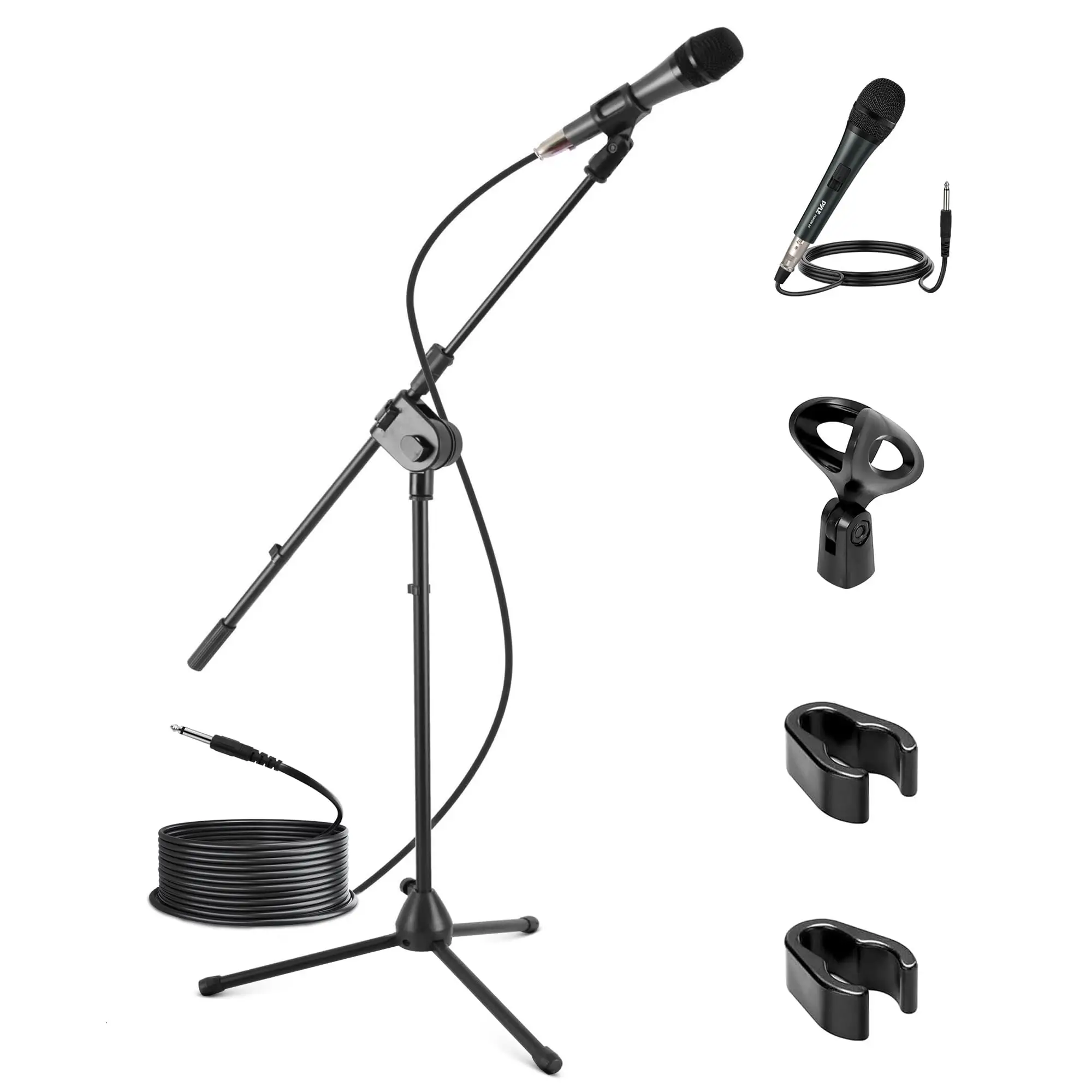
A mic stand that some people literally “super glue” together to keep it gig-ready: that’s the most telling through-line in the feedback on the OnStage MS7701B Tripod Microphone Boom Stand. Verdict: a strong budget pick with very real small-part durability complaints. Score: 7.4/10.
Quick Verdict
For budget home studios and light live use: Yes. For frequent gigging where small parts get abused: Conditional.
Digging deeper into cross-platform comments, the MS7701B gets praised as “serviceable” and adjustable enough for common setups (vocals, amps, streaming mics), but a recurring pattern emerged around little parts working loose over time. Some users treat it like a consumable: good performance until a pin, ball, or rubber foot disappears.
There’s also a clear split in expectations. People buying it because it’s inexpensive and widely available often call it “great” for the money. People expecting road-proof hardware report frustration—especially when they’re transporting it to gigs and noticing missing pieces after only a handful of outings.
While the product is marketed as stable and “ideal for the touring professional” (Amazon manufacturer copy), multiple gigging-oriented complaints focus on parts falling off and improvised fixes like tape, which is the opposite of “set-and-forget” reliability.
| What the data suggests | Pros (with sources) | Cons (with sources) |
|---|---|---|
| Value-focused mic stand | “awesome deal… you cant beat the price” (Sweetwater reviews) | “little plastic balls… keep falling off” (Sweetwater reviews) |
| Useful for streaming/desk-noise reduction | Reddit users describe reduced “desk noise” and “pounding” vs desk stands (RedditFavorites thread) | Reports of wobble and tipping risk in some setups (RedditFavorites thread) |
| Adjustable reach and height | Official: 32"–61.5" height, 30" boom (Amazon specs) | “wobbly after nearly 4 years of use” (RedditFavorites thread) |
| Easy setup | “serviceable and do what they’re supposed to do” (Sweetwater reviews) | DIY prevention: “put a couple drops of super glue” to avoid losing parts (Sweetwater reviews) |
Claims vs Reality
The marketing language leans hard on stability and pro readiness. Amazon’s manufacturer description calls it “ideal for the touring professional” and promises “exceptional stability in any setting, even on irregular surfaces.” In the real-world reports, stability is sometimes true in the basic sense—upright, adjustable, functional—but touring-style transport exposes a weak point: small components that can loosen, go missing, or require workarounds.
A verified Sweetwater reviewer describing institutional use at a music school framed the stand as workable but not foolproof, advising a preventive hack: “it’s highly recommended that before you put them out into the world, you put a couple drops of super glue in each ball for the joint tightener… you will inevitably lose the balls.” That “inevitably” is a sharp contrast to pro-grade expectations.
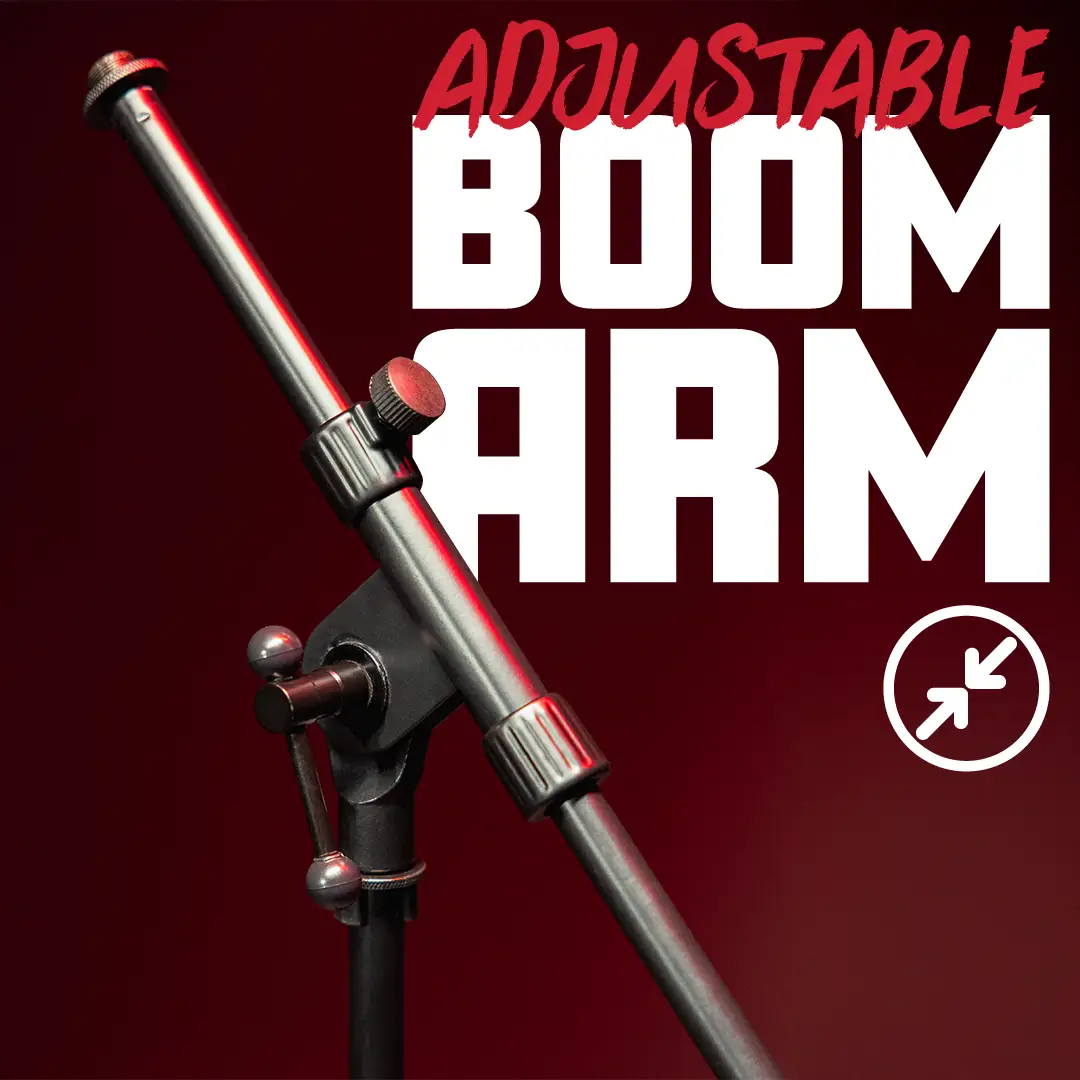
Another key claim is durability: the Amazon copy emphasizes “steel construction” and a “durable black finish resists chips and scratches.” Users do often treat it as a metal workhorse at the core, but the complaints don’t focus on the finish—they focus on plastic and attachment points. A Sweetwater reviewer warned: “do not buy these stands… little plastic balls on the pins that adjust the boom angle… keep falling off,” adding that after “maybe 8 gigs” two were “being held on with gaff tape.”
Finally, portability is marketed as a win: folds flat, quick load-in/load-out. User stories generally agree it’s convenient to move and reposition, but portability also means it’s handled a lot—and that handling seems to be where some people see parts walk away over time. One gigging user specifically emphasized careful transport “in an on-stage bag,” yet still reported missing pins, rubber feet, and repeated failures.
Cross-Platform Consensus
Universally Praised
A recurring pattern emerged around the stand simply doing the job for common, everyday setups—especially for home studios and streaming. In the RedditFavorites compilation, one Reddit user described using it with a Blue Yeti: “i bought this mic stand and have been using it with my blue yeti for almost a year now. absolutely love it,” framing it as practical not only at a desk but also when moving between rooms: “i just move the mic and stand to my living room and adjust the arm accordingly.”
That same cluster of Reddit comments repeatedly connects a floor stand to cleaner recordings. One user tied it directly to reduced noise transmission: “it works great and since it’s separate from my desk, there is no ‘pounding’ from me typing or bumping my desk.” For streamers and podcasters fighting keyboard thumps and desk vibrations, the benefit isn’t exotic—it’s immediate, and the story is specific: the stand changes what the mic physically couples to.
Users also praise basic adjustability and compatibility, especially for standard threading and mounting typical mics. In the Reddit thread, one person cautioned to “make sure it can work with yours,” then added they snagged a cheap stand that had “enough customization to place it in different angles and heights to match your needs.” Another explicitly mentions routing convenience: “best part is it screws in at the base of the yeti, and has clips to run the usb up to the port,” mirroring Amazon’s inclusion of cable clips as a small but appreciated detail.
Even the more critical Sweetwater commentary often starts with competence: “these stands are serviceable and do what they’re supposed to do.” That sentence captures the most consistent praise: for many buyers, the MS7701B is a utilitarian tool—quick to set up, easy to position, and good enough to buy multiples for a studio or school.
Key praised themes (from user stories):
- Floor isolation helps reduce desk/keyboard noise (RedditFavorites).
- Works well with popular mics like Blue Yeti for streaming/podcasting (RedditFavorites).
- “Serviceable” and straightforward for everyday mic placement (Sweetwater reviews).
Common Complaints
The most repeated complaint is not about the main tubes bending—it’s about small parts failing to stay attached. A Sweetwater reviewer described the culprit in detail: “little plastic balls on the pins that adjust the boom angle… keep falling off,” with the consequences escalating quickly: “by the next gig, another one is missing… at least one rubber foot has fallen off of 3 of the stands.” For gigging musicians or anyone loading in/out frequently, those tiny losses become a reliability crisis because they affect locking and stability.
Digging deeper into that same report, the frustration is amplified by how “normal” the use was. The reviewer emphasized: “i’m not doing anything crazy with these stands… transported in an on-stage bag to and from the gig… used normally.” The implied expectation is that a mic stand should tolerate basic gig transport without shedding functional pieces, and when it doesn’t, the user ends up improvising: “2 being held on with gaff tape.”
There are also longer-horizon complaints that suggest performance can degrade rather than fail instantly. One Reddit user noted: “although it is a bit wobbly after nearly 4 years of use.” That’s not catastrophic, but it matters for vocal work where mic angle consistency is part of performance and recording workflow. Another Reddit commenter described a different risk profile: “although it’s prone to tipping, it works out pretty well,” which reads like a warning for setups with extended booms, heavier mics, or tight floor space.
Common pain points (as described by users):
- Boom-angle adjustment hardware loses pieces over time (Sweetwater).
- Rubber feet can fall off, reducing stability (Sweetwater).
- Some users report wobble or tipping risk in certain configurations (RedditFavorites).
Divisive Features
Price and “cheap stand” expectations are the biggest divider. In one Reddit exchange, a user suggested “on stage stands are fine and about a third of the price” compared with a pricier alternative, framing the category as commoditized and the MS7701B as a sensible value choice. In the same broader discussion space, others take a harder line about cheap stands generally, implying the trade-off is unavoidable.
Longevity is also divisive. One Reddit user said clamps “still work fine after almost 6 months of constant use,” which supports the idea that for steady home use (less transport, fewer impacts), the stand can hold up well. Against that, the Sweetwater gigging report described parts falling off within “maybe 8 gigs,” suggesting that durability may depend less on the calendar and more on transport frequency, handling, and load conditions.
Finally, stability and noise reduction get celebrated by streamers but can be less convincing for people pushing the stand into non-standard roles. One Reddit post about using a mic stand as a tall overhead “tripod” for phone recording complained it “wasn’t as tall as i’d hoped” and that “the legs open up all the way with no way to stop them,” showing how a mismatch between use case and stand design can turn normal features into deal-breakers.
Trust & Reliability
Sweetwater’s reviews include both enthusiastic value takes and very pointed reliability warnings, which is important because it captures different user environments: stable indoor setups versus repeated gig transport. A Sweetwater reviewer who liked the deal said: “bought these stands for my studio last year and they’ve been nothing but great,” reinforcing that in a controlled home/studio context, the stand can feel like a bargain.
But the reliability narrative becomes more investigative when users describe preventive fixes as standard operating procedure. The music-school buyer wrote they “buy tons of these” and recommend “super glue” on the boom-angle joint-tightener balls because “you will inevitably lose the balls.” That’s not a scam concern—it’s a consistency concern: the stand may arrive functional, but many users treat it as needing reinforcement to stay functional over time.
Longer-term Reddit anecdotes add nuance rather than certainty. One Reddit user said: “clamps still work fine after almost 6 months of constant use.” Another reported: “a bit wobbly after nearly 4 years of use.” Together, these suggest that for stationary or gently handled setups, users do get meaningful lifespan—but it may slowly degrade, and it may not be the same experience for gigging players who are packing and unpacking regularly.
Alternatives
Only a few competitors are explicitly mentioned in the data, and the tone around them is blunt. In the RedditFavorites thread, one user cautioned: “don’t buy the amazon basics one though. that’ll tip over,” adding that “people have gotten scratches and dents on very expensive microphones” from tipping risk. That frames Amazon Basics as a perceived stability risk in community chatter, even if the MS7701B itself isn’t immune to tipping in certain setups.
Another alternative referenced is “hola! music hps-101tb professional tripod microphone mic stand with telescopic boom.” It’s recommended as an option, but without detailed performance stories in the provided data. The key takeaway is that when users recommend alternatives, they’re often reacting to the same fears: tipping, sagging, and hardware that can’t hold position under load.
Within the On-Stage ecosystem, the On-Stage site lists a “Telescoping Euro Boom Mic Stand” (MS7701TB) with a boom that adjusts in length, which may appeal to users who need more placement flexibility. However, the provided data doesn’t include user narratives comparing MS7701B vs MS7701TB—so the only grounded comparison is that the TB model’s boom range is described as adjustable (On-Stage product page), while the MS7701B’s boom is listed as 30" (Amazon specs).
Price & Value
At around $34.95 on Amazon in the provided listing (Amazon specs section), the MS7701B sits in the “buy a few for the studio” zone, and user behavior matches that. One Sweetwater reviewer framed the purchase as repeatable: “awesome deal… buying more soon!” That’s the clearest sign of value: not just satisfaction, but intent to scale.
At the same time, the value story has a hidden cost: replacement parts or improvised fixes. A Sweetwater reviewer described gaff tape repairs and missing components after a small number of gigs. Another described super-gluing components preemptively to avoid “tons of headaches.” For gigging musicians, the real price may include maintenance time, spare parts, or the decision to upgrade earlier than planned.
Resale and market signals in the provided data are scattered but telling. An eBay listing shows an “open box” unit priced around $37.95 (with unusually high shipping in the provided snippet), and an auction result shows a unit selling for $5.00 (BidFTA). Those extremes suggest that while the stand has a recognized “street price,” it can also be treated as low-stakes gear in secondary markets—consistent with users describing it as “good enough” and replaceable.
Buying tips implied by community stories:
- If you gig often, consider preventive securing of small joint parts (“super glue” suggestion) (Sweetwater).
- If your main goal is reducing desk noise for streaming, a floor stand can be a practical upgrade (RedditFavorites).
- If you’re mounting heavier mics or pushing long boom angles, expect more fiddling and stability trade-offs (RedditFavorites + Sweetwater complaints).
FAQ
Q: Does the OnStage MS7701B help reduce desk noise for streaming mics like the Blue Yeti?
A: Yes. Reddit users specifically describe switching to a floor stand to avoid desk vibration. Reddit user (name unavailable) said: “it works great and since it’s separate from my desk, there is no ‘pounding’ from me typing or bumping my desk.”
Q: Do parts really fall off during normal gig use?
A: Some buyers say yes. A Sweetwater reviewer noted: “little plastic balls on the pins that adjust the boom angle… keep falling off,” adding that after “maybe 8 gigs” they had stands “held on with gaff tape” and “rubber foot” losses.
Q: Is it durable enough for long-term home studio use?
A: Often, yes—especially if it isn’t constantly transported. Reddit user (name unavailable) said: “i have on stage stands ms 7701… clamps still work fine after almost 6 months of constant use.” Another Reddit user (name unavailable) added it was “a bit wobbly after nearly 4 years of use.”
Q: Is the height tall enough for overhead recording setups?
A: It depends on your target. One Reddit post from a buyer trying top-down piano video said it “wasn’t as tall as i’d hoped,” and criticized that “the legs open up all the way with no way to stop them,” suggesting limitations for improvised tripod-style overhead use.
Q: Should you avoid ultra-cheap alternatives like Amazon Basics stands?
A: Some community members recommend avoiding them due to tipping concerns. Reddit user (name unavailable) said: “don’t buy the amazon basics one though. that’ll tip over,” warning about damage risk to “very expensive microphones.”
Final Verdict
Buy if you’re a home-studio musician, streamer, or school program manager who wants an affordable, adjustable boom stand and can accept occasional tightening or maintenance. A Sweetwater reviewer summed up the baseline expectation: “serviceable and do what they’re supposed to do.”
Avoid if you’re gigging frequently and need hardware that won’t shed small pieces between load-in and showtime. Another Sweetwater reviewer’s blunt warning captures that fear: “do not buy these stands… parts keep falling off.”
Pro tip from the community: A Sweetwater reviewer who buys them in bulk recommends a preventive fix: “put a couple drops of super glue in each ball for the joint tightener… [it] will save you tons of headaches later on.”