Meta Quest 3 512GB Review: Strong Visuals, Mixed Verdict
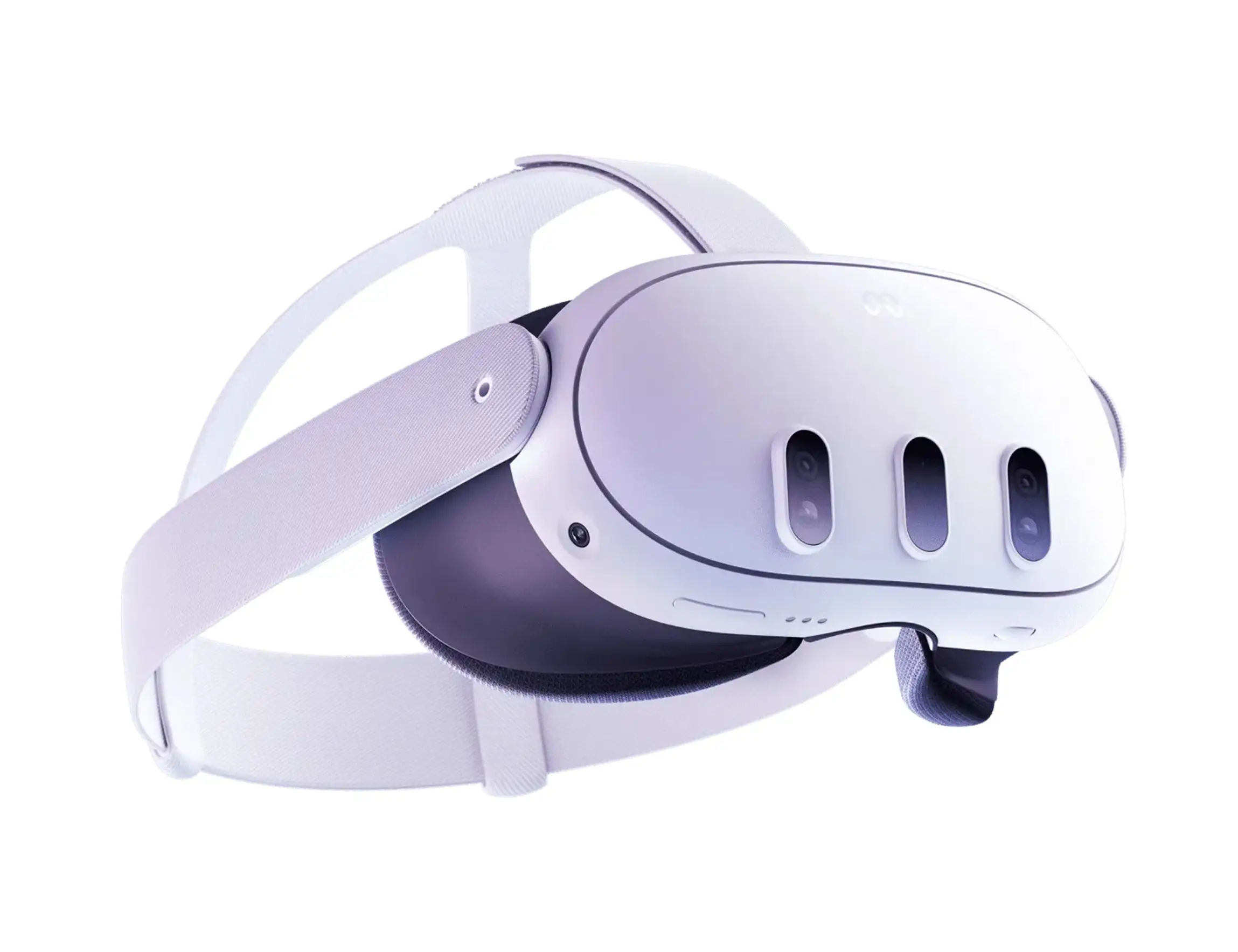
The Meta Quest 3 512GB has won over a large portion of the VR community for its sharper visuals, faster performance, and mixed reality upgrades—but user reports paint a more complex picture. While many call it “the best standalone VR headset yet,” recurring complaints about short battery life, panel imperfections, and comfort accessories suggest it’s not flawless. Across platforms, the consensus lands around 8.6/10, with value depending heavily on how—and how often—you use it.
Quick Verdict: Conditional buy for VR enthusiasts, mixed reality fans, and media consumers who want ample storage. More casual users or Quest 2 owners satisfied with current performance may not need the upgrade.
| Pros | Cons |
|---|---|
| Crisp 4K+ “infinite display” with wider sweet spot | Battery life often < 2 hours without accessories |
| Snapdragon XR2 Gen 2 delivers faster load times | Stock head strap widely disliked for comfort |
| Full‑color passthrough for MR apps | Reports of dead pixels, mura, and lens tint |
| 512GB storage prevents constant uninstalling | Controllers use AA batteries, not rechargeable |
| Backwards compatibility with Quest 2 library | Passthrough clarity still not “real‑world sharp” |
| Slimmer, better balanced than Quest 2 | Some mixed reality apps underutilize hardware |
Claims vs Reality
Meta markets the Quest 3 as “the most powerful Quest yet” with “more than double the graphic processing power of Quest 2” and “full‑color passthrough.” The Snapdragon XR2 Gen 2 chip does deliver faster scene rendering, but the “double” claim feels less dramatic in practice. A verified buyer on Best Buy noted: “Load times are faster, and everything runs incredibly smooth… but it wasn’t necessarily operating at twice the speed unless you compare side‑by‑side.”
The company also promises a “nearly 30% leap in resolution” and “dazzling visuals.” Here, feedback is more aligned. Best Buy reviewers consistently praise the 2064×2208 per‑eye resolution and pancake lenses. One user wrote: “The sweet spot is so dang big… these are the best pancakes yet!” However, on Reddit, one early adopter said, “Passthrough is like 360p… forget using your phone casually.”
Battery life is advertised as “up to 2.2 hours,” but multiple owners reported falling short. A Meta Community Forums post detailed: “After 45 minutes of Air Link, I was down to 25% battery… then it auto‑shut down.” This gap is most pronounced in MR titles and high‑refresh‑rate use.
Cross‑Platform Consensus
Universally Praised
The visual upgrade is the standout win. Users across Best Buy, Meta Forums, and Trustpilot call the display “sharper,” “more immersive,” and “way more detailed” than Quest 2. For sim racers, the clarity is transformative—one Best Buy reviewer using iRacing said it “makes the experience far less gimmicky.”
Mixed reality passthrough is the second most‑cited leap forward. For first‑time MR users, watching virtual aliens burst through real‑world walls feels magical. A Best Buy customer described mapping their living room: “It only took a few seconds of seeing virtual cracks on my ceiling to put a smile on my face.”
The 512GB storage is a lifestyle choice for heavy users. Many in the Meta Community Forums buy it to avoid “app musical chairs.” User occupunk said: “I stopped buying games on my Quest 2 because I was tired of uninstalling to make room… 128GB seems too close to 64.”
Common Complaints
Battery life is the number one frustration. Active players report 1–1.5 hours in demanding games. One Redditor comparing to Quest 2 said, “The battery died a lot sooner than I reckon my Quest 2 would.” Accessories like the Elite Strap with Battery are a near‑mandatory fix for long sessions.
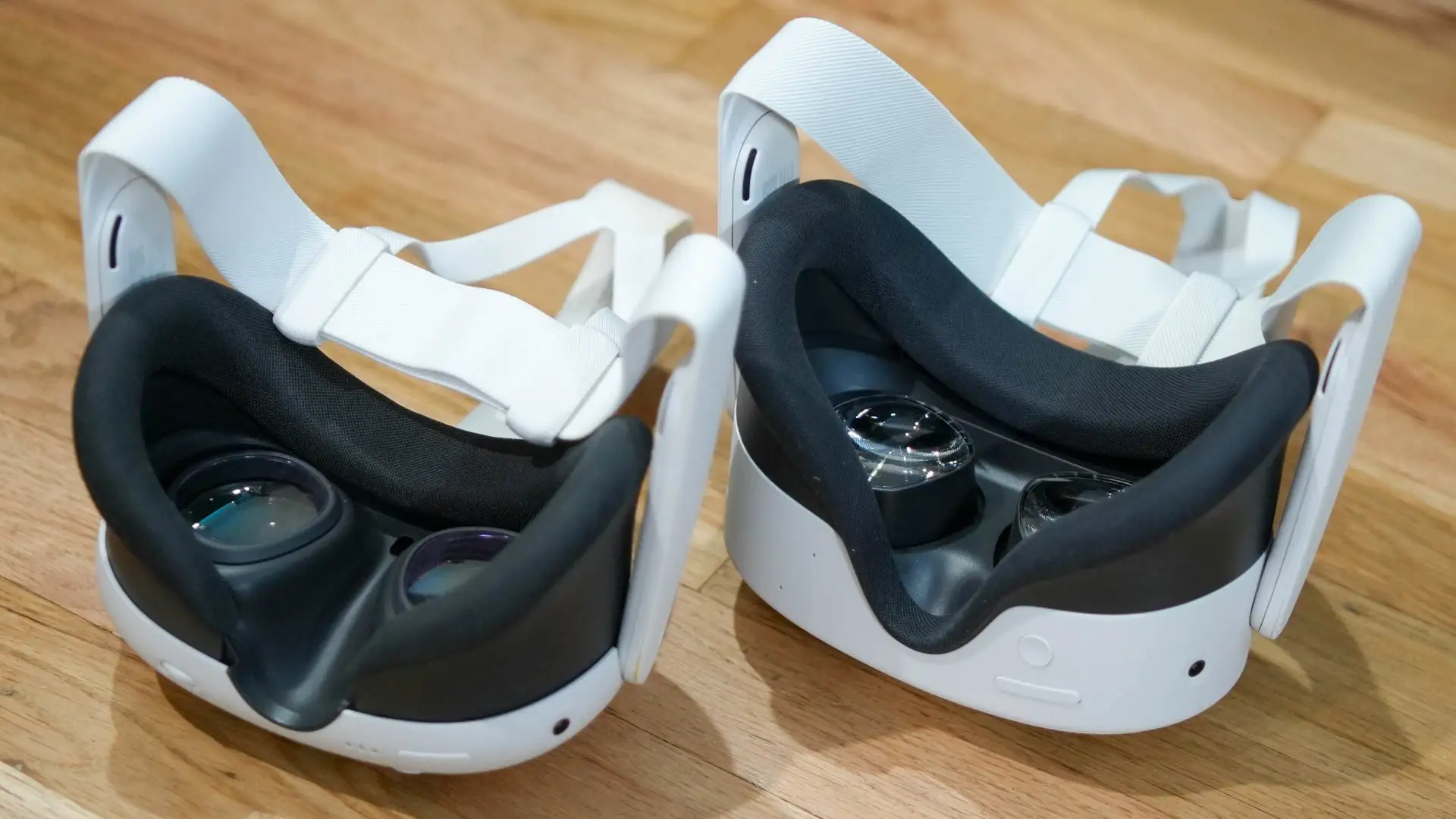
Panel and lens issues appear in multiple reports: dead pixels, “mura” (cloudy patterns), and edge tinting. A forum user described “a red/brown tint on the left edge” and “a cloudy pattern… like looking through a cheap plastic film.” While not universal, these defects are immersion‑breaking when present.
Comfort out of the box is divisive. The stock strap is “better than Quest 2’s” but still earns criticism. One Best Buy buyer noted, “The headset will rest on your cheeks, which could be uncomfortable after a few hours.” Aftermarket straps are widely recommended.
Divisive Features
Passthrough quality splits opinion. Some hail it as “a game‑changer” for blending MR apps into real space; others say it’s too grainy for reading text. As one Reddit user put it: “You can text if you really wanted to try, but it’s more convenient to lift the headset.”
Controller changes—the removal of the tracking ring—are applauded for comfort but criticized for using disposable AA batteries. Some users miss the Quest Pro’s rechargeable approach.
Trust & Reliability
Long‑term durability feedback is still forming, but early adopters have reported mixed experiences with Meta’s support. One forum user recounted: “Meta suggested a full refund… two glaring issues can’t be resolved by software.” Another had an Elite Battery Strap DOA and feared “the headset might brick the new strap.”
On the flip side, many buyers have used the headset for months without issue. Backward compatibility with Quest 2’s library has helped avoid early buyer’s remorse, as users can immediately tap into hundreds of titles.
Alternatives
For PS5 owners, the PlayStation VR2 offers strong visuals at a similar $499 price, but lacks PC VR support and standalone functionality. Apple’s Vision Pro sets a much higher bar for passthrough fidelity but at 7× the price, making the Quest 3 far more accessible. Owners upgrading from Quest 2 who primarily play seated PC VR may find less value—the Quest 2 remains viable for that use case.
Price & Value
At launch, the 512GB model retailed for $649 USD; it now often sells for $499 new, with renewed units around $449. eBay resale prices range from $369–$450 depending on condition. Community tips suggest grabbing the 512GB if you plan to store large MR apps, video files, or AAA‑scale VR titles like Asgard’s Wrath 2 (~31GB). For lighter use, the cheaper 128GB plus occasional deletes may suffice.
FAQ
Q: Is the 512GB worth it over 128GB?
A: Heavy users say yes—no need to delete games, store large MR maps, and keep videos locally. Casual users may save $150 by opting for 128GB.
Q: How long does the battery really last?
A: Reports range from 1–2 hours for active gaming, up to 3 for light media use. Most long‑session players invest in a battery strap.
Q: Can you read your phone through passthrough?
A: Some can, some can’t. Text is legible in good lighting, but blur and color tone shifts make longer tasks impractical.
Q: Does it work for PC VR?
A: Yes, via Meta Link cable or Air Link/Virtual Desktop. Performance is strong if your PC meets requirements.
Q: Are the dead pixel/mura issues common?
A: Not widespread, but enough reports exist that buying from a retailer with easy returns is wise.
Final Verdict
Buy if you’re a VR/MR enthusiast who values visual clarity, storage headroom, and wireless freedom for both gaming and media. Avoid if you’re satisfied with a Quest 2 for seated play, can’t tolerate potential panel defects, or need marathon battery life without accessories.
Pro tip from the community: Pair it with an Elite Strap with Battery from day one—your face and playtime will thank you.





