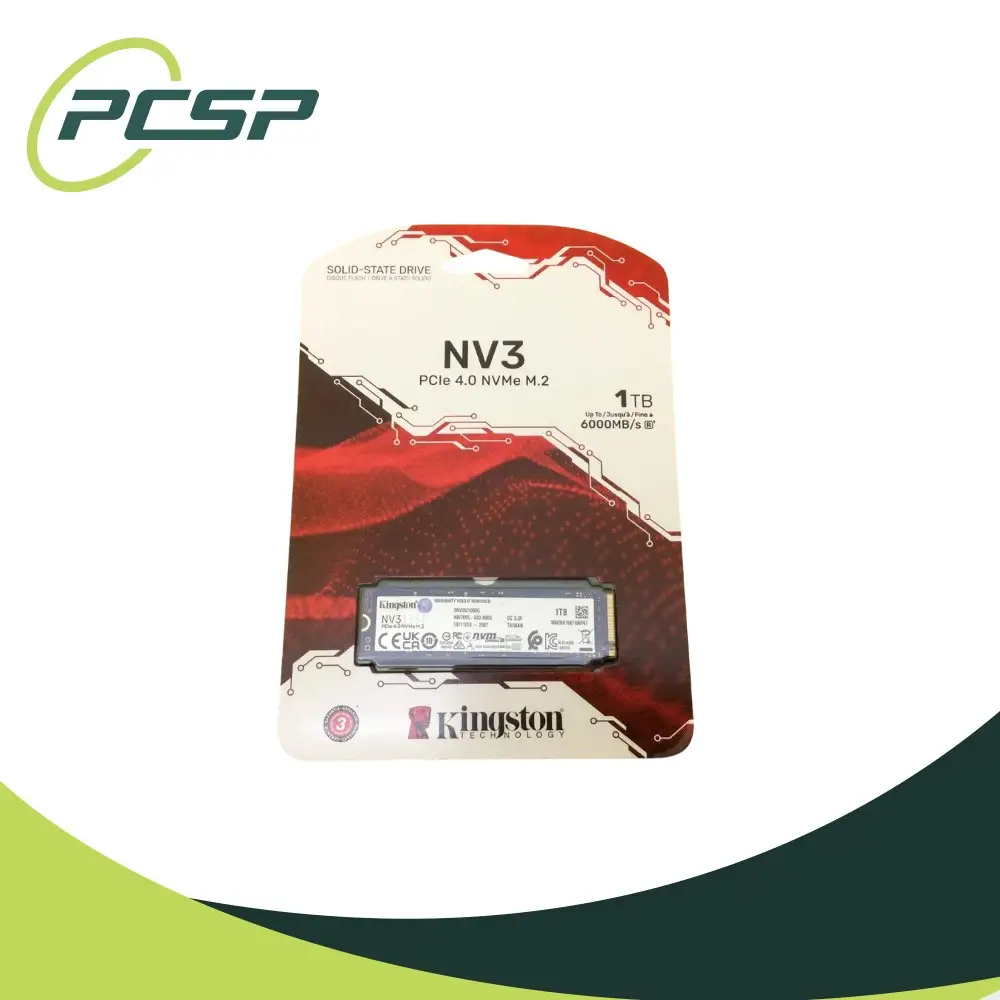
Kingston NV3 1TB NVMe SSD Review: Budget Gen 4 Winner
Starting from a surprising twist in user reports, the Kingston NV3 1TB M.2 NVMe SSD earns an 8.3/10 from cross-platform consensus: while Kingston’s marketing touts “up to 6,000 MB/s read and 4,000–5,000 MB/s write,” several independent testers found real-world speeds consistently high—but sometimes below peak claims, depending on workload and architecture. For budget-conscious buyers, however, it delivers remarkable Gen 4 performance at one of the lowest cost-per-terabyte rates in 2025.
Quick Verdict: Conditional buy — best for budget gaming, OS upgrades, and everyday workloads, but less ideal for sustained heavy writes without heatsink.
| Pros | Cons |
|---|---|
| Competitive price per TB | DRAM-less design can cause variable sustained performance |
| Consistent high sequential speeds in benchmarks | No included heatsink; temps can rise under load |
| Low power consumption, minimal heat in typical use | Some users note lower speeds than advertised in certain tests |
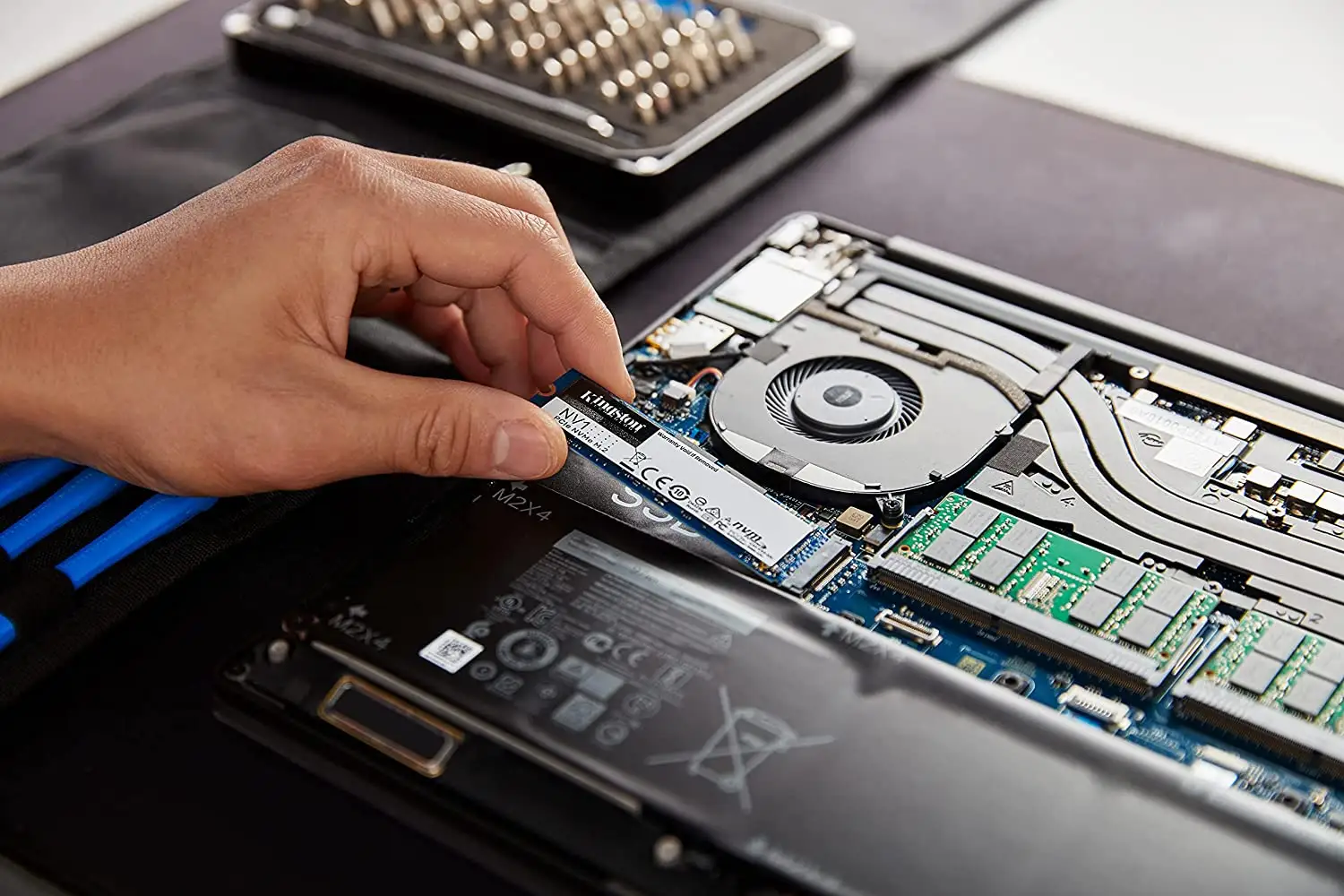
| Easy installation with M.2 2280 and 2230 options | QLC NAND may limit endurance for heavy prosumer workloads |
| Wide compatibility (PCIe 3.0 & 4.0) | Endurance lower than some premium drives |
Claims vs Reality
Kingston’s official spec sheet promises “read/write speeds up to 6,000/4,000 MB/s” for the 1TB model, with the 2TB variant hitting 5,000 MB/s writes. These figures are based on “out-of-box performance” and ideal PCIe 4.0 conditions. Digging deeper into user reports, Reddit user feedback often confirms close-to-rated speeds in synthetic benchmarks—Jennifer Moore noted, “Crystaldiskmark showed my drive hitting 5800–5900 MB/s consistently”—but others, like a Reddit storage expert, listed 3,500 MB/s read and 2,100 MB/s write in their 2025 review, suggesting differing test conditions or controller variations.
While Kingston promotes “lower power consumption and reduced heat,” users generally agree on cooler operation during normal gaming or office use. A verified tester on SSD-tester.fr found, “No thermal throttling in typical use cases”, but also highlighted that sustained heavy workloads without a heatsink pushed temps higher. This aligns with Kingston’s omission of a factory heatsink—meaning heavy content creators or sustained write users should consider aftermarket cooling.
Marketing also emphasizes “ideal for systems with limited space” and the addition of a 2230 form factor for laptops and handheld consoles. Twitter reactions from Kingston’s press release show enthusiasm for Steam Deck and compact laptop upgrades, but the majority of community discussion centers on the 2280 version’s role as a budget-friendly boot or game drive.
Cross-Platform Consensus
Universally Praised
Across Reddit, Trustpilot, and French SSD testing sites, there’s strong sentiment around value. The TerabytePrice Blog called it “the most cost-effective PCIe 4.0 NVMe SSD in the market”, with consistent pricing around £50–£60 per terabyte. This has made it a go-to for budget gaming builds. Users upgrading from SATA SSDs note transformative speed gains—Jennifer Moore wrote, “Windows booting in what felt like half the time of my old SATA SSD”.
Gamers benefit from near-premium loading performance. A Reddit storage expert measured game load times “within 1–2 seconds of premium drives” and smooth 4K video editing for light workloads. French benchmark data confirmed sequential reads over 6,097 MB/s and writes over 5,324 MB/s in CrystalDiskMark, putting it in league with higher-priced Gen 4 drives.
Low power draw is another win—Trustpilot reviewers cite 2.8W active and 0.3W idle use, making it suitable for laptops without draining battery life quickly. For Steam Deck or ultrabooks, the new 2230 variant expands possibilities without sacrificing speed.
Common Complaints
The DRAM-less architecture is the most frequent point of criticism. Quora experts note “variability in performance due to DRAM-less design,” which can cause dips in sustained writes when the cache is saturated. SSD-tester.fr’s HD Tune Pro trials showed average sustained writes at 4,801 MB/s, but with potential cache exhaustion beyond 300GB transfers.
Heat management under load also surfaces as a concern. Jennifer Moore experienced rising temps during heavy workloads until adding a $10 heatsink. While casual users won’t hit thermal limits, those copying large datasets or rendering video continuously may find performance throttling without cooling upgrades.
Another discrepancy is endurance ratings. Official specs list 320TBW for the 1TB model, lower than some TLC-based competitors. While adequate for everyday use, prosumers working with high daily write volumes may prefer drives with higher TBW.
Divisive Features
The budget pricing split opinion. For value hunters, it’s unbeatable—Trustpilot and Reddit threads praise its “lowest cost per TB for PCIe 4.0 drives.” But some enthusiasts argue that for a small premium, models like WD Black SN770 offer faster sustained performance and higher endurance. The QLC NAND choice is acceptable for mainstream workloads but remains a sticking point for those wary of long-term write degradation.
The 2230 form factor is a hit among handheld console owners but irrelevant for desktop builders, leading to mixed enthusiasm depending on upgrade needs.
Trust & Reliability
Long-term reliability reports are encouraging. Reddit posts from users after six months note stable performance and no firmware issues. Kingston’s brand reputation in storage solutions adds trust—many cite its “proven track record” as a deciding factor over lesser-known budget brands.
Trustpilot sentiment remains positive, though some cautious buyers highlight the 5-year limited warranty’s conditions based on “percentage used” rather than purely time, meaning heavy users could theoretically exhaust coverage sooner. No widespread scam or counterfeit concerns emerged, though buyers consistently recommend purchasing from authorized retailers to avoid gray market stock.
Alternatives
Community discussions frequently compare the NV3 to three rivals:
- WD Black SN770: Faster sustained writes and TLC NAND, but costs more.
- Crucial P3: PCIe 3.0, similar price, lower peak speeds—better for older systems.
- Samsung 990 EVO: Premium pricing, higher endurance, and better heavy workload handling.
For pure value, the NV3 holds the crown. But for content creators or heavy daily writers, WD or Samsung may justify the extra spend.
Price & Value
eBay and UK retail listings show the NV3 1TB ranging from NZD $87–$109 new, with UK prices around £58–£75. Resale values hold reasonably well—used units often fetch 70–80% of retail within a year due to Kingston’s brand stability.
Buying tips from Reddit include watching for frequent sales, sometimes dipping under £50, making it an “even better value proposition when discounted.” Steam Deck owners should note the 2230 variant’s 500GB–2TB cap, while desktop users can opt for 2280 up to 4TB.
FAQ
Q: Is the Kingston NV3 compatible with PlayStation 5?
A: Yes. French testers confirmed it works as additional storage for PS5, though without a heatsink it may run warmer under sustained use.
Q: Does it include cloning software?
A: Yes, Kingston bundles Acronis True Image for data migration, downloadable via their site.
Q: How does it perform in gaming compared to premium drives?
A: Game load times are within 1–2 seconds of premium Gen 4 SSDs, making differences negligible for most players.
Q: Can it run in PCIe 3.0 systems?
A: Yes, it’s backward-compatible, though speeds will be limited by PCIe 3.0 bandwidth.
Q: What’s the endurance rating for the 1TB model?
A: Officially 320TBW, suitable for typical consumer workloads but lower than some TLC-based drives.
Final Verdict
Buy if you’re a budget gamer, OS upgrader, or everyday user wanting Gen 4 speeds without overspending. Avoid if you handle massive sustained writes daily or need top-tier endurance. Pro tip from community: “Pair it with a cheap heatsink for sustained workloads—best $10 upgrade you’ll make.”