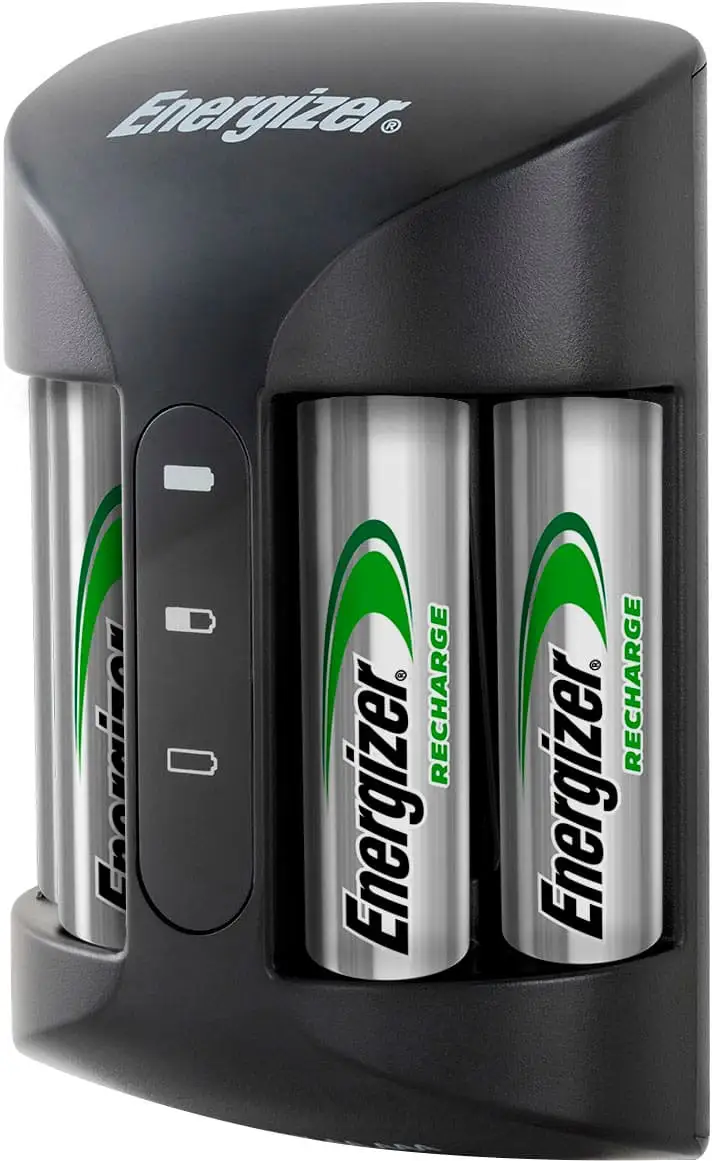
Energizer Rechargeable AA (8 Pack) Review: Worth It?
A verified buyer on Amazon put it bluntly: “these batteries just keep taking a charge years later.” That same theme—strong longevity with a few device-compatibility caveats—comes up repeatedly across platforms for Energizer Rechargeable AA Batteries (8 Pack). Verdict: strong pick for everyday household and moderate-drain devices, with a real-world gotcha for some gear that expects higher voltage. Score: 8.6/10
Quick Verdict
Conditional (Yes, for most devices; No, for voltage-sensitive gear).
Across Amazon and long-form user writeups, the strongest praise centers on convenience and lifespan—especially for controllers, flashlights, toys, and remotes. But a recurring warning appears: these are 1.2V NiMH cells, and some devices interpret that as “low battery” even when freshly charged.
| What matters | What users said | Best for | Watch-outs |
|---|---|---|---|
| Longevity over time | Amazon reviewer: “keep taking a charge years later.” | Households cycling AAs often | Doesn’t solve 1.2V compatibility |
| Convenience (pre-charged) | Sharvibe reviewer: “ready to use right out of the package” for a road trip | Parents, travel use | Still needs a charger long-term |
| Typical weekly cadence | Sharvibe reviewer: “in my xbox controller… charge them once a week.” | Gamers, controllers | Your mileage varies by device |
| Value vs disposables | Amazon reviewer: “definitely better then buying battery’s over and over.” | High AA consumption homes | Higher upfront cost |
| Voltage-sensitive devices | Sharvibe reviewer: “outdoor camera kept showing low battery warnings” | — | Some cameras/sensors may complain |
Claims vs Reality
Energizer’s Amazon listing positions these as reliable, long-lasting rechargeables: “come pre-charged,” “hold power up to 12 months in storage,” and “up to a 5 year battery life.” Digging deeper into user reports, some of those claims land exactly as intended—especially the “ready when you need them” aspect.
A verified buyer on Amazon praised long-term resilience: “these batteries just keep taking a charge years later,” specifically calling them “great for controllers and flashlights.” That’s the core reality users keep circling back to: for common household use, people aren’t babying these cells—they’re cycling them for years and still liking the performance.
But the “works everywhere” implication gets challenged by device behavior tied to voltage. One Sharvibe reviewer described learning “the hard way” that “they’re 1.2v instead of 1.5v,” saying their “outdoor camera kept showing low battery warnings even with freshly charged ones.” A verified buyer on Amazon echoed the same limitation: “there are things that require a higher voltage than the rechargeable put out… be aware if something doesn’t work… it might just require higher then the 1.3-1.4 volts these tend to put out.”
That gap isn’t a defect so much as a mismatch: while marketing emphasizes broad usefulness (“cameras, game systems and toys”), multiple users describe certain devices reacting poorly to the lower nominal voltage of NiMH. In other words: while the batteries may be charged and healthy, the device may still complain.
Cross-Platform Consensus
Universally Praised
One recurring pattern emerged: people who are tired of “last-minute store runs” and battery churn describe these rechargeables as a lifestyle shift. The Sharvibe reviewer captured the daily relief: “no more last-minute store runs when the tv remote dies!” For busy households, that translates into fewer interruptions and fewer emergency purchases. A verified Amazon buyer framed the same value proposition financially: “definitely better then buying battery’s over and over.”
For gamers and frequent-use electronics, the “steady routine” stories stand out. The Sharvibe reviewer gave a concrete cadence: “i use them in my xbox controller… i only need to charge them once a week.” That kind of predictability is what people are paying for—less about peak performance in a single session, more about consistent availability week after week.
Long-term durability is another theme that reads less like hype and more like lived experience. A verified buyer on Amazon said: “these batteries just keep taking a charge years later,” adding they were happy to have “new ones in packages because they are getting more expensive.” That comment pairs durability with a real-world market signal—price rising—suggesting that users who trust the product often “stock up” rather than switch brands.
Finally, users repeatedly frame rechargeables as a way to reduce mess and device damage. The Sharvibe reviewer celebrated: “plus, no more leaking battery acid in my devices!” Even when the Energizer listing talks about leak resistance, it’s the personal pain of past leaks that makes this resonate with buyers.
- Best-fit devices users repeatedly mention: controllers, flashlights, remotes, toys (Amazon + Sharvibe).
- Most common “why I switched” framing: fewer emergency purchases and less waste (Amazon + Sharvibe).
Common Complaints
The most consistent complaint isn’t subtle: voltage perception. A recurring pattern emerged where devices that are picky about input voltage throw warnings or underperform. The Sharvibe reviewer described: “my outdoor camera kept showing low battery warnings even with freshly charged ones.” For homeowners relying on outdoor cameras or sensors, that kind of false “low battery” alert can undermine trust—because it forces extra troubleshooting and potentially unnecessary swaps.
A verified Amazon buyer reinforced the same limitation in more general terms: “there are things that require a higher voltage than the rechargeable put out,” advising readers to consider voltage if a device “doesn’t work when you have put them in.” This complaint is especially relevant for users who assume “AA is AA,” then discover their device expects the 1.5V behavior of alkalines (or reads NiMH differently).
Price pressure also shows up indirectly: the Amazon reviewer who loved the batteries still noted, “they are getting more expensive.” That doesn’t negate value—many still call it worth it—but it changes the buying mindset: people talk about timing purchases and stocking up rather than casually replacing.
- Biggest risk area: voltage-sensitive devices that interpret 1.2V as “low.”
- Practical impact: extra alerts, early swapping, or device incompatibility.
Divisive Features
Rechargeables themselves are the dividing line for “critical” use cases. In the Best Buy review set (for Energizer Ultimate Lithium, a different battery type), one user wrote, “forget about rechargeables for critical work,” explaining they prefer primary lithium for reliability in demanding contexts. That isn’t a direct knock on these NiMH AAs—but it shows a real buyer mentality: some users separate “everyday household” from “mission-critical,” and reserve different chemistries accordingly.
On the other hand, people who use rechargeables daily often sound emphatic about the convenience. The Sharvibe reviewer called them a “perfect fit” for “remotes, toys, and led lights,” while flagging the camera warning issue. So the division isn’t “good vs bad,” but “which devices and expectations.”
Trust & Reliability
Digging deeper into trust signals, the most explicit “scam” concern in the provided data doesn’t target the rechargeable pack—it shows up around primary lithium purchases and sourcing. A Best Buy reviewer discussing lithium AAs warned: “looking closely, each pack was fake… just save yourself the headache and buy them from best buy.” That story is about counterfeits in the market and the importance of reputable sellers, even when the product itself is well-liked.
For rechargeables specifically, the reliability story is more about longevity than authenticity. A verified buyer on Amazon said they “keep taking a charge years later,” and the Sharvibe reviewer noted that “after six months of regular use and charging cycles, they’re still performing like new.” Those time markers—“years later,” “six months”—are the backbone of long-term trust here: consistent cycling without an obvious drop-off.
Alternatives
Only alternatives mentioned in the provided data were other Energizer lines, plus Duracell and Insignia in user anecdotes.
For buyers deciding between rechargeable NiMH and primary lithium, the Best Buy lithium reviews read like a different world: “keeps my camping lantern going for months on end,” “never leak,” and even a professional workflow case: “i can get approximately 20-30 hours of continuous use in my wireless mics.” That’s not a fair “better vs worse” comparison—it’s a chemistry swap aimed at high-drain and critical reliability scenarios.
If you’re choosing between Energizer rechargeables and disposable alkalines, the strongest “why switch” stories are about avoiding constant purchases. A verified Amazon buyer summed it up: “definitely better then buying battery’s over and over.” But if you’re powering devices that complain about 1.2V, those same users implicitly suggest a fallback: use a different chemistry for those particular devices.
Price & Value
On Amazon, the Energizer Rechargeable AA 8-pack is listed around $24.76 in the provided snapshot (with additional international shipping in the example). Value perception hinges on how many devices you’re cycling and how often. A verified Amazon buyer tied value directly to lifespan: “keep taking a charge years later,” while also acknowledging market movement: “they are getting more expensive… definitely still worth it.”
Resale/market pricing from eBay listings shows new 8-packs commonly appearing around the high teens to mid-20s depending on listing and shipping (for example, “lot of 8… $17.99” and “8 pack… $23.87”). That suggests the product maintains steady demand and a consistent secondhand/new marketplace, especially for sealed packs.
Buying tips in the feedback lean toward practicality: stock up when pricing is favorable, and match chemistry to device needs. The Amazon reviewer advice is the simplest: if something “doesn’t work,” it “might just require higher” voltage than NiMH provides.
- Best value scenario: households running AAs constantly (controllers, flashlights, toys).
- Worst value scenario: devices that trigger low-battery alerts immediately, causing early swaps.

FAQ
Q: Do these rechargeables work well in Xbox controllers?
A: Yes, multiple users specifically use them for controllers. A Sharvibe reviewer said: “i use them in my xbox controller… i only need to charge them once a week,” framing them as a convenient upgrade over disposables for frequent gaming sessions.
Q: Why does my camera or outdoor sensor say “low battery” with fresh rechargeables?
A: Some devices read NiMH’s lower nominal voltage as “low,” even when charged. One Sharvibe reviewer said: “they’re 1.2v instead of 1.5v… my outdoor camera kept showing low battery warnings,” and an Amazon reviewer warned that some devices “require a higher voltage.”
Q: Are they actually durable over years of charging?
A: Many buyers describe strong long-term endurance. A verified Amazon buyer reported: “these batteries just keep taking a charge years later,” suggesting continued usability over extended time, especially in common devices like “controllers and flashlights.”
Q: Are they good for remotes and kids’ toys right away?
A: Yes, users highlight the pre-charged convenience. The Sharvibe reviewer said they were “ready to use right out of the package” and called them a “perfect fit” for “remotes, toys, and led lights,” especially when a quick swap is needed.
Q: Is the higher upfront price worth it?
A: For frequent battery users, many say yes because it replaces repeated disposable purchases. A verified Amazon buyer wrote: “definitely better then buying battery’s over and over,” while another noted prices are rising but still “definitely still worth it.”
Final Verdict
Buy Energizer Rechargeable AA Batteries (8 Pack) if you’re powering everyday household gear—controllers, remotes, flashlights, toys—and want fewer emergency purchases, backed by reports like “keep taking a charge years later.” Avoid them for voltage-sensitive devices (notably some outdoor cameras) where users saw “low battery warnings even with freshly charged ones.” Pro tip from the community: if a device acts “low” immediately, it “might just require higher” voltage than NiMH provides.