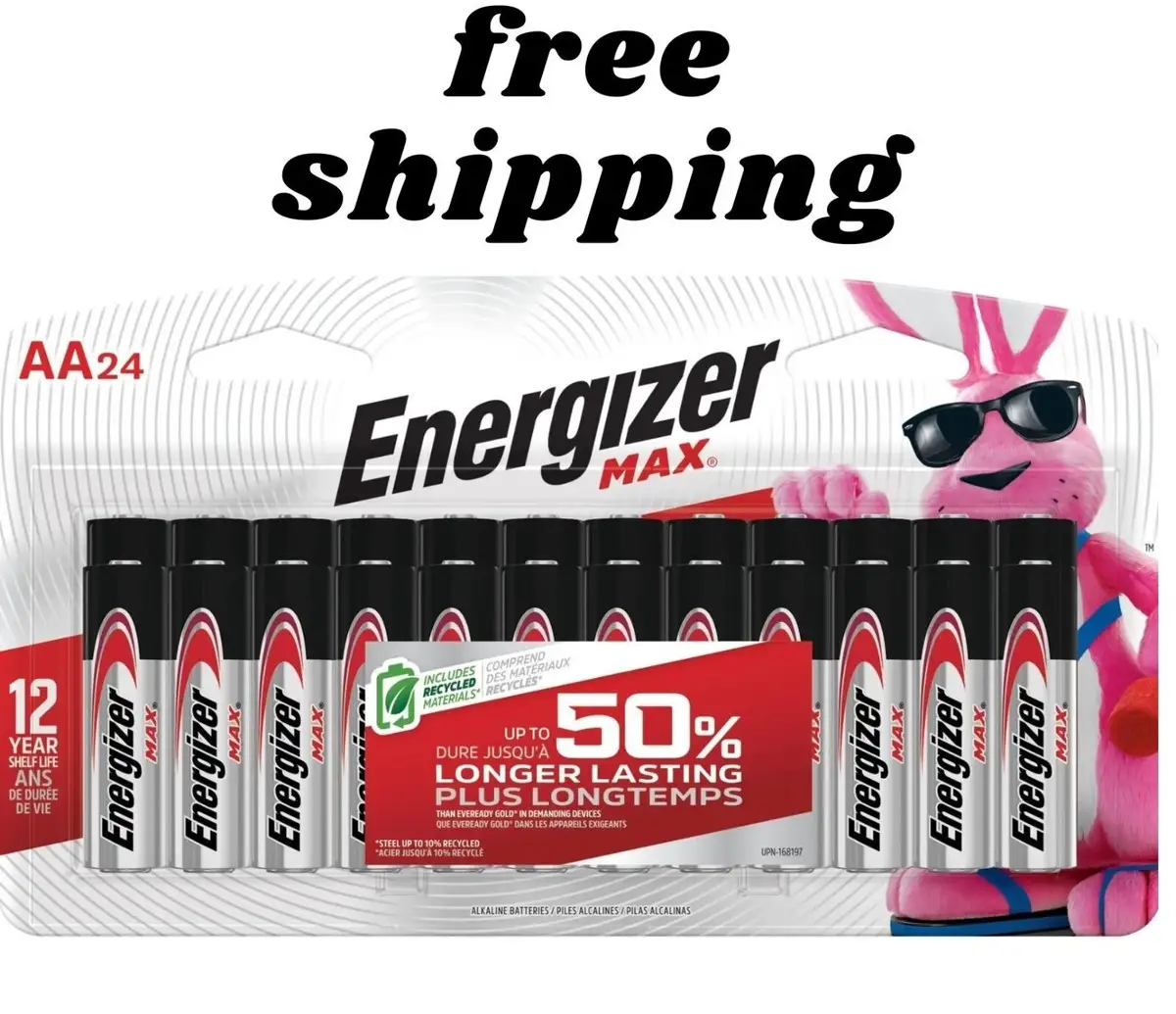
Energizer MAX D Batteries (4 Pack) Review: 7.9/10
“Best d batteries ever! turned my mag light into a weapon!”—that single Best Buy line captures the core theme around Energizer MAX D Batteries (4 Pack): when they hit, they hit hard, but a minority of buyers say they’ve been burned by short life, leaks, or questionable packaging. Verdict: Conditional buy — 7.9/10.
Quick Verdict
For shoppers who want reliable power in lanterns, flashlights, motion lights, and toys, Energizer MAX D Batteries (4 Pack) earns strong praise across retailer reviews. But if you’re extremely risk-averse about leaks, or you’ve had past “dead out of the package” experiences, user feedback suggests buying from a trusted seller and checking packaging immediately.
| Verdict | Why (from user feedback) |
|---|---|
| Conditional Yes | Many report long-lasting, reliable performance (Best Buy, ShopSavvy) |
| Pro | Brightness boost in flashlights (ShopSavvy; Best Buy anecdotes) |
| Pro | Good for emergency prep due to storage life claims (Zoro specs; Home Depot; ShopSavvy) |
| Con | Occasional leakage concerns still appear (Best Buy “leakage” cons; ProductReview complaints) |
| Con | Some reports of dead/low batteries or bad batches (ShopSavvy cons; ProductReview; Revain) |
| Watch-out | Packaging/quality-control complaints (Revain; ShopSavvy cons) |
Claims vs Reality
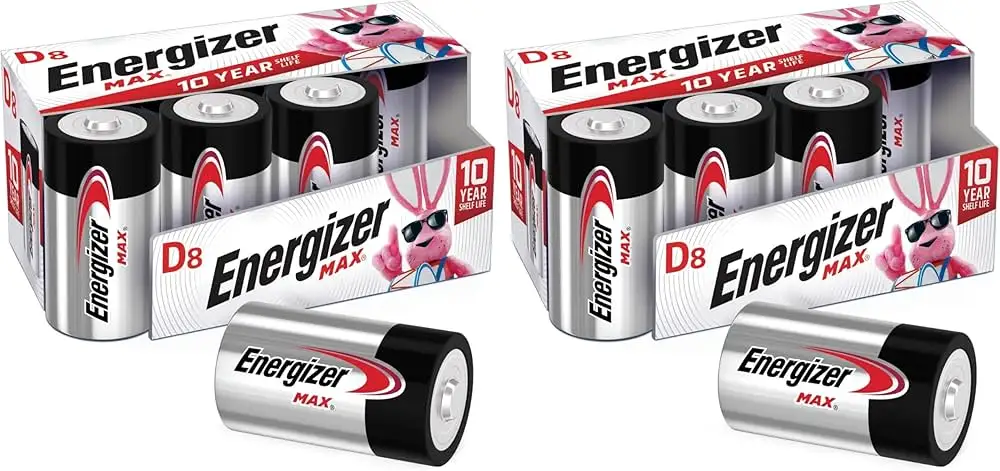
Digging into the official specs and listings, the headline promise is straightforward: Energizer MAX D Batteries (4 Pack) are positioned as “premium,” “made to last,” “not to leak,” and capable of holding power “up to 10 years in storage.” Zoro lists a “shelf life: 10 yr” and even a “capacity… 16,500 mah” for the E95BP-4 listing, while Home Depot Canada repeats “made to last, not to leak” and “hold power for up to 10 years in storage.” The marketing story is durability plus peace of mind—especially for emergency devices that sit idle until needed.
User feedback partly validates that promise—especially for flashlight and lantern use. One reviewer on Revain wrote a long-duration story: “we put batteries in the light in october 2019… when we replaced them… february 2021… the lights still worked but noticeably dimmer… still lasted more than a year!” For blackout-prep households or campers who want a lantern to stay bright season after season, those experiences match the “long-lasting power” pitch better than any spec sheet.
But the same datasets also show a sharp contradiction around reliability and leakage risk. While the product is described as “not to leak” (Home Depot Canada) and marketed as protective, complaints on ProductReview.com.au include severe reports: one user wrote, “my daughter got burns on her arm due to leaking batteries,” and another said, “put 2 energizer max aa cells in my tv remote control… after 2 months… one battery leaked all over, ruining the device.” Those examples are about AA/9V in that dataset, not explicitly D cells—but they create a credibility problem for the “leak free choice” theme across the MAX line. Even within the D-cell-specific retail page, Best Buy’s review rollup lists “leakage (3)” as a con mentioned, showing that leak anxiety still surfaces.
A second reality gap shows up in quality control and “dead on arrival” stories. ShopSavvy’s TLDR summary flags “instances of receiving dead batteries or products in opened packaging,” and Revain includes a pointed complaint: “this package was previously opened, taped back together… batteries appear to have some sort of crimp… i will not put them in the children’s toy.” For parents buying D cells for kids’ toys, that’s not an abstract worry—it’s a moment where the purchase stops feeling “premium,” even if other buyers report excellent runtime.
Cross-Platform Consensus
Universally Praised
A recurring pattern emerged across Best Buy and aggregated summaries: people buy Energizer MAX D Batteries (4 Pack) when they need dependable power in devices that are annoying—or urgent—to re-battery. In Best Buy reviews, one user kept it simple: “trusty batteries. needed them for my electric trash can.” That kind of device is a classic “set it and forget it” use case: you don’t want to realize the sensor is dead when your hands are full.
Another consistent theme is lanterns, flashlights, and emergency lighting. A Best Buy reviewer wrote: “i’m using them for a lantern and they seem to be working like they’re supposed to,” and another added: “nice batteries that should last a long time. the lantern i put them in is still very bright.” ShopSavvy’s summary pushes the same story from a different angle, claiming the batteries “perform well… in demanding devices” and deliver “strong performance boosts brightness in flashlights.” For campers and outage-prep households, that brightness emphasis matters: it’s less about lab measurements and more about whether the beam feels strong when you step outside at night.
Longevity stories—when positive—are unusually specific. On Revain, one reviewer anchored their experience over seasons: “we put batteries in the light in october 2019… replaced them… february 2021… still lasted more than a year!” That sort of timeline is exactly what emergency-prep buyers want to hear when the specs say “up to 10 years in storage” (Zoro; Home Depot Canada). Even if “up to” is a best-case, the lived experience of “more than a year” in a flashlight through “cold and hot weather” signals resilience for real-world use.
After those narratives, the quick, repetitive praise from Best Buy fills in the broader sentiment: “best ones out there. buy these if you need reliable,” and “energizer max is the way to go for d batteries.” For everyday shoppers powering motion detector lights, one person spelled out the implication: “i purchsed these d batteries for my motion detector lights… they last a lot longer than other brands do.” It’s not glamorous, but it’s the exact promise people pay a premium for.
Common Complaints
The most frequent negative theme isn’t performance failure—it’s price sensitivity. One Best Buy reviewer complained: “batteries ain't cheap at best buy… these are too expensive,” and another summed it up bluntly: “they’re batteries… they’re overpriced. that is all.” For budget-focused households buying D cells in bulk for decorations or multiple devices, this turns the decision into a value calculation rather than a brand-loyal purchase.
Quality-control and packaging issues are the second major complaint cluster, and they’re emotionally charged because they undermine trust. The Revain packaging report reads like a red flag for anyone buying batteries for children’s toys: “previously opened, taped back together… batteries appear to be used… i will not put them in the children’s toy.” ShopSavvy’s TLDR similarly mentions “opened packaging” and “concerns about quality control, especially during emergencies.” For people stocking batteries precisely for emergencies, the idea of discovering a dud during an outage is the nightmare scenario.
Short-life complaints also exist, and they’re starkly at odds with the premium positioning. One Revain reviewer compared directly against a rival: “the previous set… was duracell and lasted almost 2 years… these energizer max… ran out… after just 3 months.” On ProductReview.com.au, while much of the dataset is about other sizes in the MAX range, the pattern of “very bad battery, lasted for 3 days” and “expiry date cannot be trusted” reinforces why some users simply stop believing shelf-life claims after one bad experience.
Leakage is the most serious complaint where present. Best Buy’s page shows “leakage” as a con category (albeit low count), and ProductReview.com.au contains multiple angry narratives about leaks and the warranty experience. One wrote: “max models claim warranty against leaking = untrue… acid leak and they refuse to replace product by asking for more, and more.” For high-value devices—meters, weather stations, or anything that can be ruined by corrosion—these reports push some buyers toward either different brands or rechargeables.
Divisive Features
Even basic “reliability” is divisive depending on whether someone received a strong batch or a disappointing one. On one side, Best Buy reviewers write lines like “go with the bunny! best ones out there,” framing MAX D cells as the safe choice. On the other, Revain has “disappointing durability… ran out… after just 3 months,” which paints the same product line as inconsistent.
Value is similarly split. Some shoppers frame the purchase as a bargain when discounted—Best Buy reviews mention “got it on sale good price they work very well,” while others see any premium pricing as unjustified: “they’re… overpriced.” The practical takeaway from user narratives is that the experience changes dramatically depending on sale timing and retailer.
Trust & Reliability
A distrust theme shows up most clearly in ProductReview.com.au’s Energizer MAX discussions, where complaints are less about a single dead battery and more about a pattern of disappointment and friction when something goes wrong. One user wrote: “make a complaint and your asked for so many photo’s,” describing a back-and-forth that felt disproportionate to the issue. Another framed it as a broken promise: “max models claim warranty against leaking = untrue… they refuse… by asking for more, and more.”
On the flip side, long-duration stories—especially from Revain—act like the counterweight, suggesting some users experience exactly what the brand claims. “we put batteries in the light in october 2019… replaced them… february 2021… still lasted more than a year!” reads like the kind of “6 months later” reality check people search for when deciding whether to stock emergency supplies. The reliability picture that emerges isn’t uniformly bad or uniformly perfect—it’s that trust is high when the batteries arrive fresh and sealed, and collapses when buyers suspect mishandling, old inventory, or inconsistent batches.
Reddit in the provided data doesn’t discuss Energizer D cells directly; it focuses on “Max” vs “regular” batteries in a power-tool context, with users debating whether paying extra is worth it. Still, the meta-lesson echoes battery shopping everywhere: matching the premium option to the right use case. One Reddit user summarized that mindset as: “if you’re not using it on… high consumption equipment stick to regular batteries,” reinforcing the idea that “max” branding can be situational rather than universally necessary.
Alternatives
The only direct competitor repeatedly mentioned in the provided user feedback is Duracell, mainly as a comparison point for longevity. A reviewer on Revain said: “the previous set of batteries was duracell and lasted almost 2 years,” using that experience to argue Energizer MAX underperformed in their specific device. For shoppers who already have long-term success with Duracell in the same flashlight, toy, or lantern, that kind of side-by-side memory can outweigh star ratings.
There’s also an implicit “alternative” in the ProductReview.com.au comments: cheap generics. One user claimed, “dollar store batteries are better… tested… dollar store batteries… had more power than the energizer max.” That’s not a controlled test, but it’s a real user story that influences how budget buyers perceive value. The alternative, for them, isn’t another premium brand—it’s buying cheap and replacing more often, especially in kids’ devices that drain batteries quickly.
Price & Value
Current pricing signals are scattered but telling. Best Buy lists the 4-pack at “$9.49,” with many reviews praising “value for the price,” yet other buyers still call them “too expensive,” showing how sensitive battery value is to store pricing and sales. Zoro’s listing shows “$9.34 pk of 4,” while ShopSavvy’s roundup cites “lowest… $15.98 at amazon,” indicating that where you buy can swing the perceived “deal” dramatically.
Resale-market data (eBay) doesn’t read like typical used-goods value; it looks more like bulk/lot pricing and case packs. One eBay listing shows a “case pack of 12” priced at “$209.99,” while another shows multi-pack lots. For organizations or households that burn through D cells (camp gear, multiple lanterns, seasonal decorations), bulk buying may be the lever that turns “overpriced” into acceptable—especially if you’re trying to avoid the retailer markup that triggered reviews like “batteries ain't cheap at best buy.”
Buying tips embedded in user stories are practical: sale timing matters (“got it on sale good price”), and retailer trust matters when packaging concerns appear (“previously opened, taped back together”). The strongest value proposition appears when you can confirm sealed packaging and purchase during discounts, aligning with the crowd sentiment that MAX is “reliable” but not always “cheap.”
FAQ
Q: Do Energizer MAX D Batteries really last a long time in flashlights and lanterns?
A: Many users say yes. A reviewer on Revain noted: “we put batteries in the light in october 2019… replaced them… february 2021… still lasted more than a year!” Best Buy buyers also report lanterns staying “still very bright,” suggesting strong real-world endurance for emergency lighting.
Q: Are leakage problems common with Energizer MAX?
A: Leakage is not the dominant theme in D-cell retailer reviews, but it does appear. Best Buy’s review rollup lists “leakage” as a con category, and ProductReview.com.au includes severe leakage complaints in the broader Energizer MAX line, like “acid leak” and device damage reports. Risk-averse users often focus on this.
Q: Is the 10-year storage/shelf-life claim believable?
A: Official listings say “up to 10 years in storage” (Zoro; Home Depot Canada). Some user stories support long-term use, like the Revain flashlight example lasting over a year. But other platforms include complaints about low or dead batteries and distrust of expiry dates, so confidence varies by buyer experience.
Q: Are they worth paying more for versus cheaper batteries?
A: It depends on your use case and pricing. Some Best Buy reviewers call them “the best value for your buck” and praise reliability, while others say “they’re… overpriced.” One ProductReview.com.au user even claimed “dollar store batteries are better” after testing, so value perception hinges on device demands and sale pricing.
Q: What should I check when the batteries arrive?
A: Packaging integrity matters in user feedback. A reviewer on Revain warned: “this package was previously opened, taped back together… batteries appear to be used.” If your pack looks tampered with or batteries seem damaged, that’s where multiple complaint narratives begin.
Final Verdict
Buy Energizer MAX D Batteries (4 Pack) if you’re the kind of user powering lanterns, flashlights, motion lights, or household devices where reliability beats bargain hunting—Best Buy reviewers repeatedly call them “reliable” and “long-lasting,” and one even joked they “turned my mag light into a weapon!”
Avoid if you’ve had past issues with leaks or dead batteries and can’t tolerate any risk; the harshest complaints (especially on ProductReview.com.au and Revain) focus on leakage, “disappointing durability,” and packaging that “was previously opened.”
Pro tip from the community: time your purchase for discounts and inspect packaging immediately—because the happiest buyers say “got it on sale good price,” while the angriest stories often start with “opened packaging” or batteries that seem questionable out of the box.