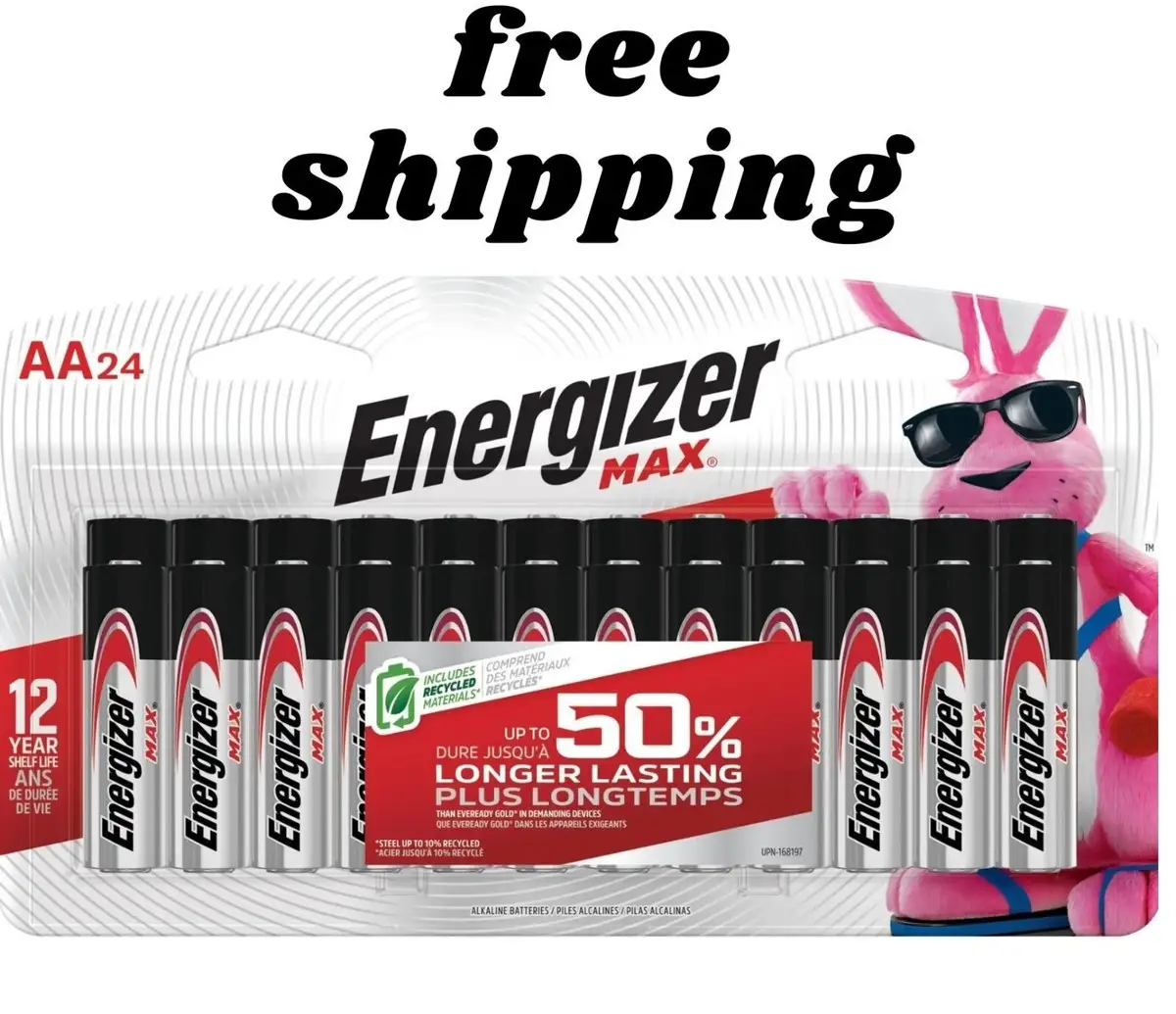
Energizer MAX AA Batteries Review: Worth It? 8.7/10
A kid’s “screaming unicorn” toy running “non-stop for weeks” is the kind of anecdote that keeps popping up around Energizer MAX AA Batteries—and it helps explain why the product sits at 4.8/5 stars across massive review counts on Amazon (79,236 reviews for the 48-pack listing; 44,150 reviews for the 24-pack listing) and Best Buy (11,401+ reviews on one listing and 12,354+ on another). The dominant story is straightforward: dependable, long-lasting power for everyday devices, with leak resistance that matters most when batteries get forgotten in flashlights, remotes, and controllers.
Digging deeper into user reports, though, the “MAX” label doesn’t land the same way for everyone. A recurring pattern emerged: people using medical devices and other sensitive electronics sometimes treat Energizer MAX as “good,” but not the longest-running option compared with lithium. Trustpilot-hosted reviews on Revain even include harsh outliers about short runtimes, old inventory close to expiration, and damaged packaging.
Verdict based on the provided feedback: Energizer MAX AA Batteries — 8.7/10.
Quick Verdict
Yes—conditional. For most households and offices, the prevailing feedback frames Energizer MAX AA Batteries as reliable, long-lasting alkaline power that’s easy to buy in bulk at a fair price. If you’re powering a medical device where runtime is critical, some users explicitly recommend stepping up to lithium instead.
| Decision | Evidence from users | Who it’s best for |
|---|---|---|
| Buy (Most people) | Best Buy reviewers repeatedly call them “reliable and long lasting.” | Remotes, toys, clocks, flashlights, controllers |
| Buy on sale | Multiple sources emphasize price advantage online. | Bulk buyers, families, small businesses |
| Conditional | Some medical-device users say MAX doesn’t last long enough. | Insulin pumps, critical devices |
| Watch packaging | Complaints include torn packs and resealed boxes. | Marketplace shoppers, gift/storage buyers |
| Check expiration | Reports mention boxes near expiration. | Emergency kits, long-term storage |
Claims vs Reality
Claim 1: “Holds power for up to 10 years in storage.”
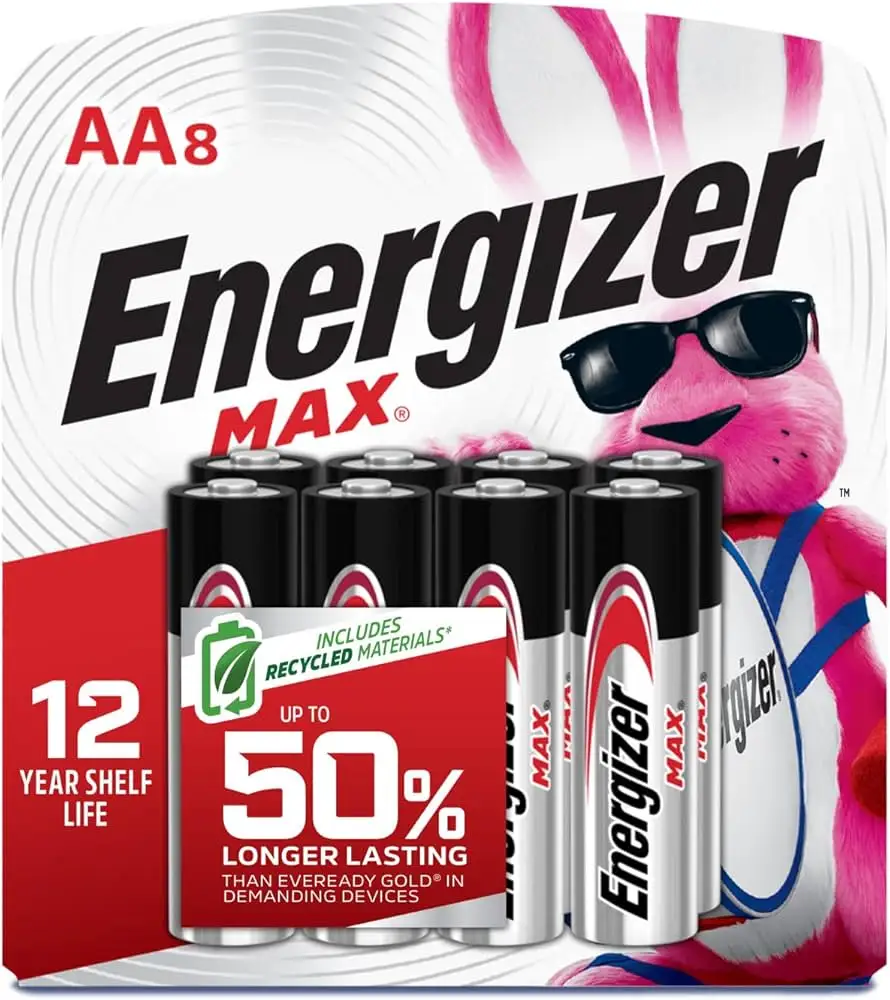
Amazon’s product copy stresses that Energizer MAX AA Batteries “hold power for up to 10 years in storage,” and Energizer’s industrial page repeats “holds power up to 10 years in storage.” That claim resonates most with people stocking up: Best Buy reviewer Oled 4 Ever highlighted storage confidence with “reliable and long-lasting” batteries and a “lengthy expiration date.”
But user feedback also suggests a practical caveat: storage performance depends on what actually arrives. On Revain, Dnasty J. complained: “The expiration date on the box was almost the same as the date of purchase,” adding that “just a few months later, two of them exploded in my expensive flashlight and corroded it beyond repair.” While the official story is long shelf life, this user’s experience centers on inventory age and what happens if older stock slips through.
Claim 2: “Leak-resistant… protects devices for up to 2 years after fully used.”
Leak protection is a marquee marketing point on Amazon: “designed to protect your devices against damaging leaks for up to two years after fully used.” Many buyers echo the value of that promise in everyday life. On Sharvibe, Ronald Martin wrote: “The leak-resistant thing is huge for me… These haven't leaked at all, even in our garage flashlights that sit unused for months.”
Still, the most severe leak-related story in the dataset comes from Revain and goes in the opposite direction. Dnasty J. described batteries that “exploded” and “corroded” a flashlight. That’s a sharp contradiction in outcomes: while many people buy MAX specifically to avoid leakage, at least one user report describes catastrophic failure—again tied to concerns about expiration date and inventory freshness rather than normal use.
Claim 3: “Up to 50% longer lasting” (in demanding devices).
Amazon states these are “up to 50% longer lasting than Eveready Gold in demanding devices.” The general customer narrative aligns with “lasts a long time,” especially for toys and controllers. A Best Buy reviewer said the batteries “last a long time in the kids oculus controllers and the xbox controllers,” reinforcing the high-drain use case.
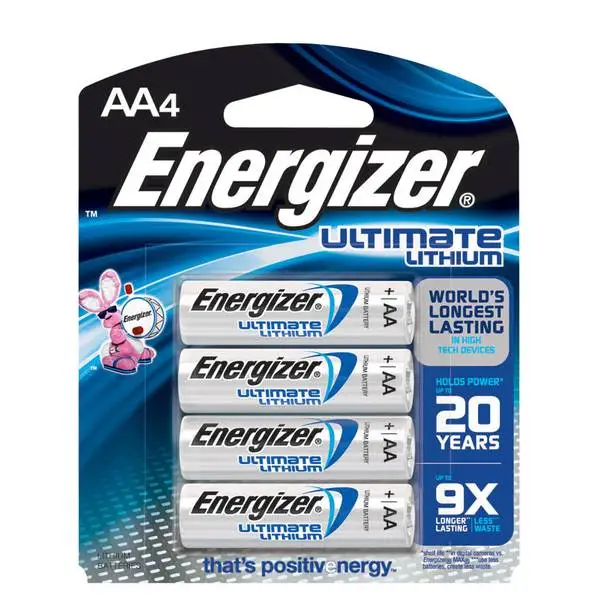
Yet performance expectations vary by device type. Revain reviewer Jill S. argued they’re “definitely not ‘max’ batteries” for her use case: “I use them for my insulin pump and each battery lasts 2 weeks!” She contrasted that with lithium: “Energizer ultimate lithium… last a month or more in my pump.” For medical-device users, the “longest-lasting” messaging seems to collide with real-world demands where lithium chemistry often wins.
Cross-Platform Consensus
Universally Praised
“Powerhouse” is the recurring word choice, especially on Best Buy. One Best Buy reviewer wrote: “these batteries are an absolute powerhouse,” while another summed it up simply: “Reliable and full of power!” That tone shows up again and again in the everyday-device crowd—people who just want their remotes, toys, and flashlights to stop dying at the worst time.
For parents dealing with battery-hungry toys, longevity is the headline. Sharvibe’s Ronald Martin framed it in lived frustration: “my kid’s toys kept dying mid-playtime,” and then praised the change: “they last forever… my daughter's screaming unicorn has been running non-stop for weeks now.” Best Buy reviewer Khush Boos echoed the same use case: “i bought it for my son’s toys… my son use toys almost everyday and still the battery is going good.” For this persona, the impact isn’t abstract capacity—it’s fewer tantrum-triggering shutdowns.
For gamers and households drowning in controllers, users emphasize steady performance. A Best Buy reviewer noted they “last a long time in the kids oculus controllers and the xbox controllers.” Ronald Martin also mentioned “xbox controllers (teenage boy approved),” framing MAX as a simple way to reduce controller battery churn.
Value narratives are also strong, particularly when buyers compare against local retail prices. Ronald Martin said: “the amazon price is insane compared to stores. i saved like $5 getting them here.” ReviewIndex’s summary quotes also lean into deal-hunting: “best deal around,” “cheaper than walmart,” and “can’t beat the price.” For bulk buyers, the “48 count” and other pack sizes become part of the satisfaction story, not just a spec.
Common praise, in users’ words:
- Best Buy reviewer: “Reliable and full of power!”
- Sharvibe author Ronald Martin: “they last forever… running non-stop for weeks”
- Best Buy reviewer: “never have had an issue with performance”
- ReviewIndex excerpt: “cheaper than walmart”
Common Complaints
The most consistent negative thread isn’t that the batteries don’t work—it’s marketplace and fulfillment issues that undermine trust. Revain reviewer Tiffany V. described receiving a damaged package: “sealed with tape… completely torn… batteries were sticking out… kicker! only 19 instead of 20.” This type of complaint hits hardest for people buying bulk specifically to avoid running out; short counts and messy packaging defeat the point of stocking up.
Another recurring anxiety is freshness and expiration dating, especially for shoppers treating MAX as emergency-kit inventory. Dnasty J. warned: “Check the date and return it if that is not reasonable.” The implied fear is that older stock compromises reliability—whether that’s reduced runtime, leakage risk, or both. For users storing batteries “for months” in garage flashlights (as Ronald Martin described), the line between “storage-ready” and “old inventory” becomes the difference between peace of mind and corroded devices.
Performance complaints concentrate in specialized devices where power draw and voltage behavior can be less forgiving. Jill S. on Revain said: “each battery lasts 2 weeks” in an insulin pump and concluded “max is not designed for a long time.” For this persona, the cost of a battery swap isn’t minor—it’s maintenance burden and potential anxiety, which is why her comparison to “ultimate lithium” is so pointed.
Common complaint themes:
- Packaging/count issues (Revain): “only 19 instead of 20”
- Freshness/expiration concerns (Revain): “expiration date… almost the same as the date of purchase”
- Not ideal for certain medical devices (Revain): “each battery lasts 2 weeks”
Divisive Features
Leak resistance is both a selling point and a fault line in user stories. Many buyers treat it as the main reason to choose Energizer MAX AA Batteries over cheaper brands. Ronald Martin called it “huge,” specifically because he’d had “so many devices ruined by battery acid,” then emphasized: “These haven't leaked at all.” That’s the experience people expect when they see “designed to protect devices.”
But the dataset includes at least one account of the opposite outcome, and it’s intense. Dnasty J. reported batteries that “exploded” and “corroded” a flashlight “beyond repair.” While that may be an outlier, it creates a divisive reality: some users experience “no leaks at all,” while another describes a failure severe enough to destroy an “expensive flashlight,” tied to concerns about near-expiration inventory.
High-drain performance is similarly split by device category. Trusted Reviews’ testing-oriented write-up argues the cells are “particularly well suited for high-drain loads,” calling results “superb performance” and concluding: “if you need high-performance batteries for more demanding applications, these are a great buy.” Yet Jill S.’s insulin-pump experience pushes back on “MAX” expectations, explicitly preferring lithium for longer runtime.
Trust & Reliability
Digging deeper into trust signals, the harshest reliability concerns in the provided data come from Trustpilot-hosted Revain reviews: packaging that looks resealed, missing batteries, and stock that appears close to expiration. Tiffany V. suspected a questionable supply chain: “Don't know if they were returned and used a little and the seller resealed the package… i will not buy from this seller again.” That’s less about Energizer’s chemistry and more about marketplace handling.
At the same time, long-running “still going” stories are common on mainstream retail platforms. ReviewIndex excerpts include: “these batteries are still going strong five months later,” and Best Buy’s Cap Tin Turbo offered the simple endurance refrain: “they keep going and going and going.” The overall trust picture becomes two-layered: people trust the brand’s baseline performance, but some don’t trust every seller or shipment.
Notably, Reddit in your dataset is represented by a Trusted Reviews-style test article rather than community comments, so long-term “6 months later” Reddit posts aren’t present as user quotes here. The long-term durability thread instead shows up via ReviewIndex’s aggregated excerpts and Best Buy’s ownership-duration notes.
Alternatives
The competitor most directly referenced by users is Energizer Ultimate Lithium. Revain reviewer Jill S. made the comparison in a medical-device context: “I need these energizer ultimate lithium… now they last a month or more in my pump.” For anyone running an insulin pump or similarly sensitive device, that’s not a marginal upgrade; it’s potentially half the battery swaps.
Trusted Reviews also mentions GP Ultra AA as a cheaper general-purpose option: “for more general-purpose batteries, the cheaper GP Ultra probably make more sense.” That frames a classic tradeoff: MAX is positioned as better for demanding/high-drain scenarios, while some users may prefer a cheaper alternative for clocks and remotes if performance parity is “good enough.”
Within Amazon’s own ecosystem, ReviewIndex excerpts include a comparison to store brands: “they work longer than the amazon brand ones i previously purchased.” That’s a direct alternative mention from the feedback stream: if you’ve been buying Amazon-branded batteries, some users claim MAX lasts longer.
Price & Value
Current Amazon pricing in the dataset highlights bulk economics: the 48-count listing shows $24.98 (about $0.52 per count). Reviewers repeatedly frame online buying as the value move. Ronald Martin said: “the amazon price is insane compared to stores… saved like $5 getting them here.” ReviewIndex snippets reinforce the bargain-hunter angle: “best deal around,” “can’t beat the price,” and “saved a dollar over picking them up.”
Resale/market pricing signals appear via eBay listings, which show a wide spread depending on pack size and expiration date (for example, listings calling out “expire 2035” or “exp 12/2030”). The existence of expiration-forward listings suggests buyers care about shelf life enough to make it a selling point, especially for bulk lots and emergency storage.
Buying tips implied by user stories are practical: check the expiration date on arrival (especially if you’re buying for storage), and pay attention to packaging integrity. The value proposition holds strongest when the shipment is fresh and intact—exactly what Revain’s complaints question in worst-case scenarios.
FAQ
Q: Do Energizer MAX AA batteries really last a long time in toys and controllers?
A: Yes, many buyers say they do. Sharvibe’s Ronald Martin wrote his kid’s toy ran “non-stop for weeks,” and a Best Buy reviewer said they “last a long time… in the kids oculus controllers and the xbox controllers.” The consistent theme is fewer mid-use failures in everyday devices.
Q: Are they leak-resistant in real life?
A: Often, yes—some users specifically buy them to avoid corrosion. Ronald Martin said: “These haven't leaked at all, even in our garage flashlights.” But there are also severe negative reports; Revain reviewer Dnasty J. said two batteries “exploded” and “corroded” a flashlight, tied to near-expiration stock.
Q: Are Energizer MAX AA batteries good for medical devices like insulin pumps?
A: It depends on expectations and device demands. Revain reviewer Jill S. said MAX batteries in her insulin pump lasted “2 weeks,” while “energizer ultimate lithium… last a month or more.” If minimizing swaps is critical, some users explicitly recommend lithium instead.
Q: Is buying in bulk on Amazon or Best Buy worth it?
A: Many shoppers think so, especially on sale. Amazon’s 48-pack is listed at $24.98 in the provided data, and multiple ReviewIndex excerpts highlight price wins like “cheaper than walmart.” Ronald Martin also said he “saved like $5” versus stores.
Q: What should I check when the package arrives?
A: Look at expiration dates and packaging condition. Revain reviewer Dnasty J. warned the box date was close to purchase, and Tiffany V. described a torn pack “sealed with tape” and being “only 19 instead of 20.” For long-term storage, freshness and intact packaging matter.
Final Verdict
Buy Energizer MAX AA Batteries if you’re the kind of household that’s constantly feeding remotes, toys, flashlights, and Xbox/Oculus controllers—and you want fewer interruptions, with many buyers praising long runtime and dependable power. Avoid them (or at least don’t expect miracles) if your priority is maximum runtime in a medical device; Revain reviewer Jill S. advised stepping up to lithium for that use case.
Pro tip from the community: Ronald Martin’s value-and-stock approach sums it up—he’d “buy another pack just to stock up at this price,” while Revain reviewers suggest a safeguard: check the expiration date and packaging the moment the shipment arrives.