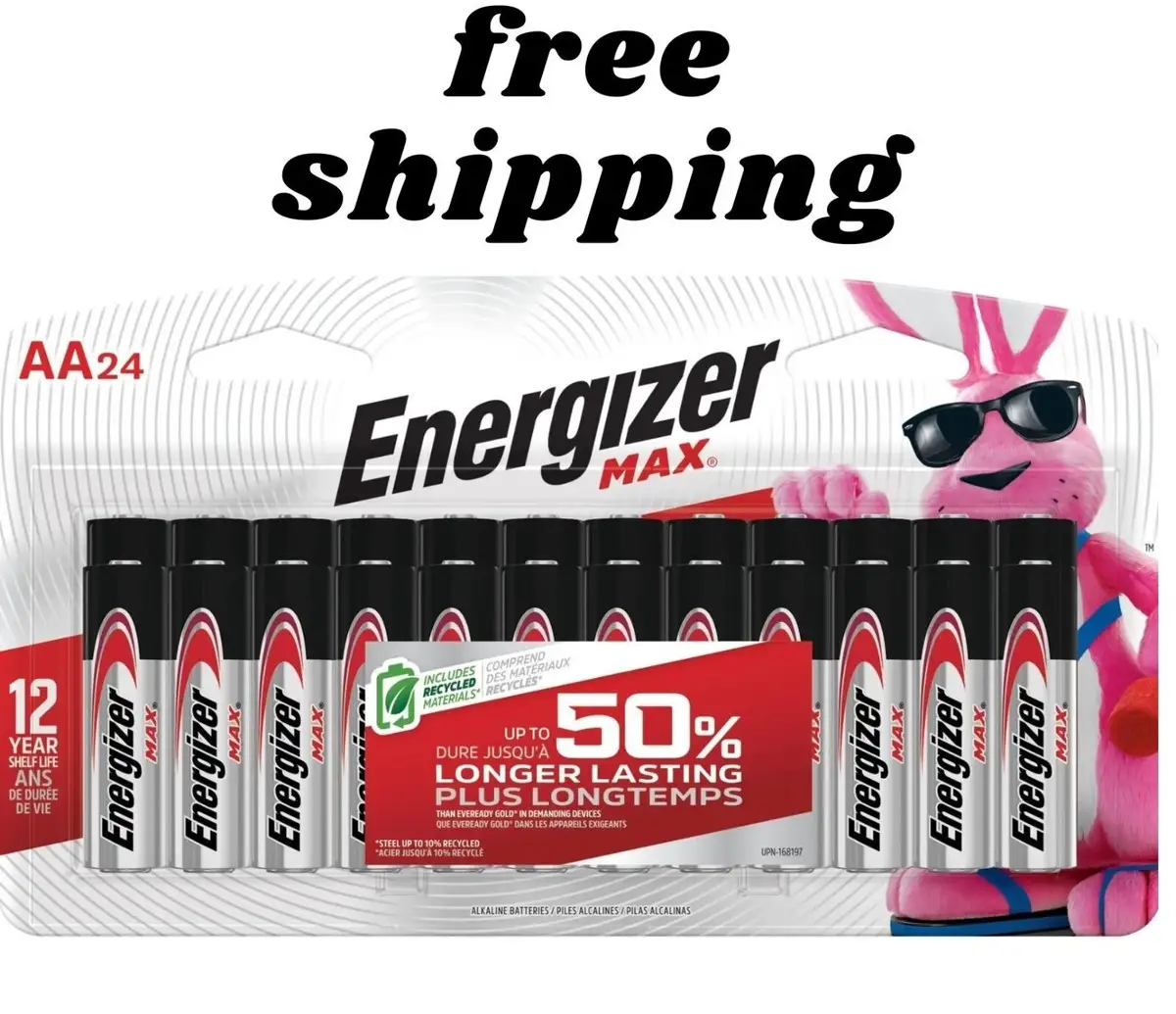
Energizer MAX AA Batteries Review: Strong, But Trust Gaps
A one-star reputation on one platform sits uncomfortably beside thousands of near-perfect ratings elsewhere—and that tension is the story of Energizer MAX AA Batteries. Verdict: strong everyday performance with a real trust gap around leakage and shelf-life claims depending on where you buy. Score: 7.8/10.
Quick Verdict (Definition)
Energizer MAX AA Batteries are single-use alkaline AA cells positioned for long-lasting power in everyday devices, plus storage longevity and leak protection. Across major retailers, many buyers praise dependable battery life and good value in bulk packs, while a smaller but intense set of complaints centers on leaks, early death, and hard-to-process warranty experiences.
| Decision | Evidence from users | Who it’s best/worst for |
|---|---|---|
| Buy? | Strong ratings on Amazon (4.8/5 from 79,236) and Best Buy (4.8/5 from 11k+); repeated “long lasting” praise | Families with toys/remotes, small businesses stocking AA |
| Biggest upside | Longevity in real devices (controllers, toys, flashlights) | Heavy AA households; office and classroom use |
| Biggest risk | Leakage and “dead before expiry” reports on ProductReview.com.au (1.6/5, 20 reviews) | Emergency gear owners, expensive devices you store long-term |
| Value story | Bulk pricing praised; “cheaper than Walmart” quoted in review analysis | Bulk buyers and stockpilers |
| Where confidence is highest | Major retailers with huge review volume (Amazon US, Best Buy) | People who replace batteries frequently anyway |
| Where caution spikes | Deal sites/third-party fulfillment incidents (Groupon mis-ship; leaking cells) | Anyone relying on a specific batch being authentic/fresh |
Claims vs Reality
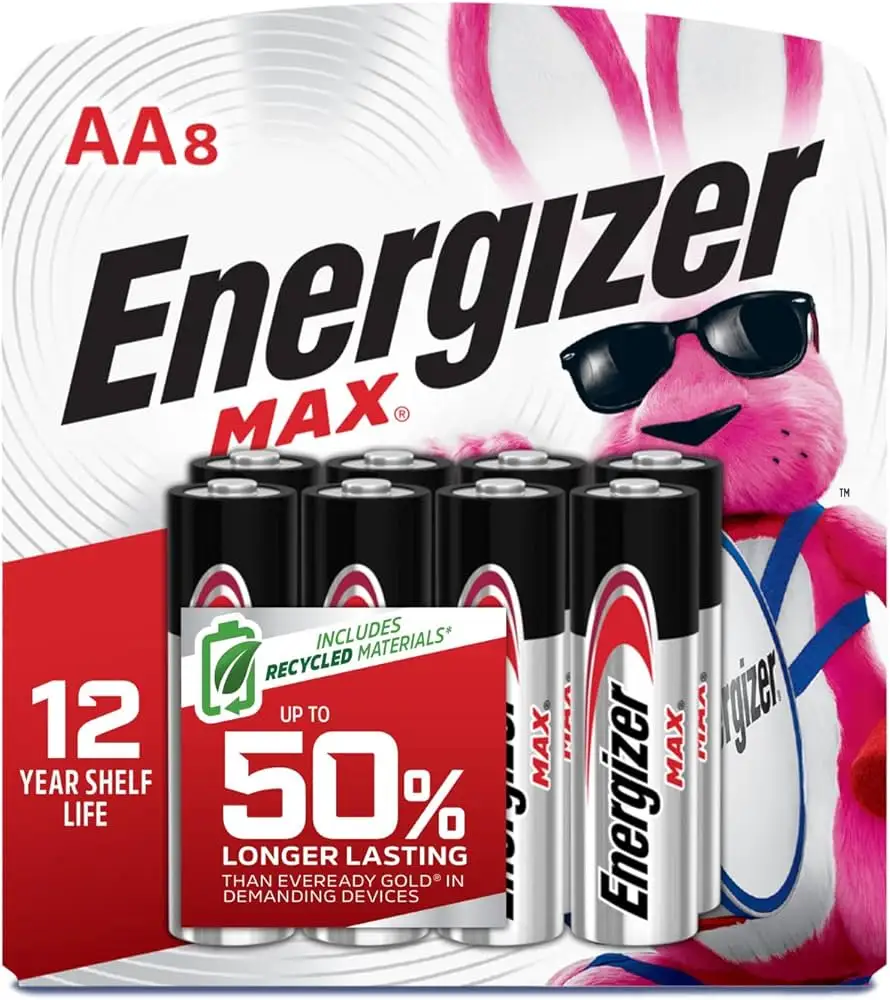
Claim 1: “Designed to protect devices from leakage… up to 2 years after fully used.” (Amazon specs / Energizer MAX marketing)
Digging deeper into user reports, plenty of shoppers echo the “no leaks” promise in day-to-day use. Reddit user Ronald Martin said: “The leak-resistant thing is huge for me… These haven't leaked at all, even in our garage flashlights that sit unused for months.” Best Buy reviewers repeatedly frame leak resistance as a reason to pay more; one reviewer wrote: “These batteries are built to last a long time... i like that fact that they don't leak.”
But the sharp contradiction is hard to ignore: multiple ProductReview.com.au posts describe leaks quickly, sometimes with damage. A reviewer on ProductReview.com.au wrote: “Put 2 energizer max aa cells in my tv remote control… after 2 months… one battery leaked all over, ruining the device.” Another claimed: “Energizer max plus aa batteries less than 6 months old leaked and ruined expensive… tester.” While marketing emphasizes protection, these experiences paint a scenario where certain users feel the exact weak point is leakage.
Claim 2: “Holds power up to 10 years in storage.” (Amazon specs / Energizer MAX marketing)
For buyers who churn through AAs constantly, “shelf life” is more a comfort than a tested reality—and many reviews read that way. Best Buy reviewer Humber Tom praised “exceptional shelf life” alongside “consistent and dependable power output.” In review-analysis snippets (TheReviewIndex), storage freshness shows up indirectly through satisfaction with reliability: “fresh batteries arrived quickly” and “worked as expected.”
Yet storage is where the harshest skepticism emerges in Australian reviews and emergency-prep use cases. One ProductReview.com.au reviewer wrote about 9V MAX cells: “advertised to have a five-year shelf life… expiration date of december 2026… however… all of them were already dead.” Another described emergency preparedness use and testing: “tested the two energizer batteries… just above the low battery level,” concluding “dollar store batteries are better.” While officially rated for long storage, these users argue real-world batches didn’t match the printed dates.
Claim 3: “Dependable power… up to 50% longer lasting…” (Amazon specs / Energizer MAX marketing)
On the “do they last?” question, high-volume retail feedback trends positive. Best Buy reviews repeatedly use phrases like “powerhouse” and “long lasting.” A Best Buy reviewer wrote: “Energizer batteries are my preferred… they last a long time in the kids oculus controllers and the xbox controllers.” Reddit user Ronald Martin described toy endurance: “my daughter's screaming unicorn has been running non-stop for weeks now.”
Still, a minority set of reports claims extremely short life. ProductReview.com.au includes: “Very bad battery, lasted for 3 days.” Another user describing a watering system said Energizer Max used to last “months… up to 12 months” but a newer batch “not able to operate the systems after about 8 days.” The gap suggests many buyers get exactly the long runtime they expect—while some suspect batch variability, storage/handling issues, or even mix-ups with what was actually shipped.
Cross-Platform Consensus
Universally Praised
The strongest through-line across large retailers is simple: dependable power for everyday electronics, especially the stuff that makes noise when it dies. For parents and toy-heavy households, longevity translates to fewer interruptions. Reddit user Ronald Martin tied his purchase directly to kid downtime: “my kid's toys kept dying mid-playtime… no more ‘mommy, it stopped working!’ every 2 days.” Best Buy reviewer Khush Boos echoed the same use case: “i bought it for my son’s toys… my son use toys almost everyday and still the battery is going good.”
Controllers and handheld devices come up as a repeat “stress test” in user stories. A Best Buy reviewer wrote: “they last a long time in the kids oculus controllers and the xbox controllers.” Ronald Martin also mentioned “xbox controllers (teenage boy approved).” For gamers and families, the implication is fewer dead-controller surprises mid-session and less frequent shopping runs.
Value—especially online pricing versus stores—is another widely repeated praise. Ronald Martin framed it as a clear win: “the amazon price is insane compared to stores… i saved like $5 getting them here.” In aggregated review quotes (TheReviewIndex), buyers keep it blunt: “best deal around,” “cheaper than walmart,” and “can’t beat the price.” For small businesses or households that burn through AAs (remotes, thermometers, mice), bulk pricing plus consistent performance is the story people keep telling.
After these narratives, the praise tends to condense into a few recurring points:
- Long runtime in toys, flashlights, and controllers (“running non-stop for weeks,” “awesome battery life”)
- Perceived reliability (“dependable,” “work as expected”)
- Strong value in multi-packs (“saved like $5,” “cheaper than walmart”)
Common Complaints
A recurring pattern emerged around leakage and device damage—but it shows up most intensely on ProductReview.com.au and in a Groupon incident rather than in the high-volume Best Buy/Amazon narratives provided here. On Groupon, one buyer reported an outright fulfillment mismatch: “groupon sent me the duracell procell… today… found them all leaking… opened the rest… they all leaked.” That story is less about Energizer performance and more about the risk of third-party substitution and storage conditions—yet it ends with the buyer’s takeaway: “not sure if i would order batteries online again.”
On ProductReview.com.au, the complaint isn’t subtle: users describe leaks in remotes, emergency torches, and even injury. One reviewer wrote: “my daughter got burns on her arm due to leaking batteries… [Energizer] rejected our claim… insulted us with a $20 voucher.” Another wrote: “batteries have leaked and destroyed the device… didn’t last 12 months let alone 10 years.” For people who use AAs in expensive testers, medical gear, or emergency lights stored long-term, the impact is high: it’s not just replacing batteries—it’s replacing equipment.
There’s also frustration with claims handling and proof requirements. One ProductReview.com.au reviewer said: “to consider replacing the device they want 8 more pictures… i’ll never buy another energizer battery.” Another described being asked for “so many photo’s” including pack, all batteries, receipt, and dates—framing it as burdensome even when they “only wanted to point out qa failure.” These stories turn a product issue into a trust issue.
After the narratives, the complaints cluster into:
- Leakage causing damage (remote controls, testers, emergency torches)
- “Dead before expiry” or unusually short life (days/weeks claims)
- Customer-service friction around warranty proof (numerous photos, receipts, details)
Divisive Features
Leak resistance is the most polarizing claim because it appears as both a reason people switch to Energizer and a reason others vow never to return. Ronald Martin celebrated: “These haven't leaked at all… even in our garage flashlights.” On the flip side, ProductReview.com.au includes: “these energizer max batteries leak… consider yourself warned.” The same feature—leak protection—becomes either the brand’s signature strength or its alleged weak point depending on the user and source.
Storage readiness is similarly split. Some buyers treat shelf life as a bonus and talk about “fresh batteries” and dependable power across devices. But emergency-prep and “kept unused” stories on ProductReview.com.au argue the opposite: “expiration date cannot be trusted.” This divide matters most for people who buy batteries to forget about them until a crisis—smoke alarms, emergency radios, torches—where “should work” is the entire job.
Trust & Reliability
A scam-like pattern doesn’t show up as “fake batteries” in the provided data, but trust concerns surface through fulfillment mix-ups and claim-handling experiences. On Groupon, one buyer’s complaint begins with receiving the wrong brand: “groupon sent me the duracell procell,” followed by the discovery that “they all leaked.” That kind of story can make shoppers question not just the battery, but the supply chain and storage conditions.
Long-term reliability stories do exist, but they’re unevenly distributed: the provided Reddit post is enthusiastically positive and focuses on weeks-long use, while the strongest “months later” narratives appear in aggregated review analysis. TheReviewIndex includes the quote: “these batteries are still going strong five months later.” Meanwhile, ProductReview.com.au presents the counterpoint with storage and early-death experiences, such as unused batteries being “already dead,” and devices failing in “under 12 months.”
Alternatives
The only clear competitor repeatedly named in user feedback is Duracell. The comparison isn’t framed through lab specs; it’s framed through lived frustration and switching behavior. Reddit user Ronald Martin vented broadly about other brands: “i’ve had so many devices ruined by battery acid—looking at you, other brand!” On ProductReview.com.au, one reviewer positioned Energizer as the escape hatch from Duracell leaks: “major issues with duracell… i’ve been using the energizer max range… without any form of issue or leak unlike duracell’s batteries.”
But the Groupon complaint flips that script unintentionally: the buyer received Duracell Procell instead of Energizer and reported widespread leaking. That’s still not a controlled head-to-head, but it reinforces how much battery reputation rides on leakage incidents and batch handling rather than small differences in voltage printed on the label.
Price & Value
At the time of the provided Amazon US listing, the 48-count pack is shown at $24.98 (about $0.52 per count) with a large review base (4.8/5 from 79,236). Buyers repeatedly frame online purchase as a cost play; Reddit user Ronald Martin said: “the amazon price is insane compared to stores… i saved like $5.” TheReviewIndex’s price snippets match that sentiment: “best deal around,” “can’t beat the price,” and “saved a dollar over picking them up.”
Resale/secondary-market pricing appears all over eBay listings, but the clearest takeaway is variability by pack size, shipping, and expiration date in the listing title (for example, “exp 2035,” “exp 2030”). That suggests a buyer tip implied by market behavior: shoppers care about printed expiry/freshness when buying from resellers, and sellers market it aggressively.
Community-flavored buying tips that show up implicitly in quotes:
- Buy in bulk when the “amazon price is insane compared to stores”
- Pay attention to listing details like expiry dates when buying outside major retailers
- If you’re stocking emergency devices, the “dead before expiry” complaints suggest testing a few cells early rather than assuming
FAQ
Q: Do Energizer MAX AA batteries really last longer in toys and controllers?
A: Yes, many retail reviewers describe strong longevity in common devices. Reddit user Ronald Martin said his kid’s toy ran “non-stop for weeks,” and a Best Buy reviewer said they “last a long time… in the kids oculus controllers and the xbox controllers.” A minority reports very short life on ProductReview.com.au.
Q: Are they actually leak-resistant?
A: Conditional. Some users praise zero leaks over months of storage; Reddit user Ronald Martin said: “These haven't leaked at all… even in our garage flashlights.” But ProductReview.com.au includes multiple leak-and-damage stories like “one battery leaked all over, ruining the device,” directly contradicting the leak-protection marketing claim.
Q: Are these good for smoke alarms and emergency preparedness kits?
A: Mixed signals from user feedback. Ronald Martin mentioned using them in “smoke alarms (no annoying midnight beeps yet).” But ProductReview.com.au includes emergency-use complaints like batteries testing low soon after purchase and a torch where cells “leaked and destroyed the device,” so some preparedness buyers recommend testing batches early.
Q: Is buying online worth it versus in-store?
A: Often yes, based on buyers focused on price. Ronald Martin said: “the amazon price is insane compared to stores,” and TheReviewIndex quotes include “cheaper than walmart” and “can’t beat the price.” However, a Groupon buyer’s mis-ship story suggests third-party deals can increase risk.
Q: What’s the main reason people avoid them?
A: Fear of leaks and trust issues around shelf life or warranty handling. ProductReview.com.au includes reports such as “expiration date cannot be trusted” and complaints that Energizer asked for “so many photo’s” or “8 more pictures” to consider device replacement, which left some users unwilling to buy again.
Final Verdict
Buy Energizer MAX AA Batteries if you’re a heavy everyday user—parents cycling through toys, households drowning in remotes, or gamers who want controllers that “last a long time.” Avoid if your priority is long-term, unattended storage in expensive gear where a leak would be catastrophic, because multiple ProductReview.com.au users describe leaks and “dead before expiry” outcomes despite marketing claims.
Pro tip from the community: Reddit user Ronald Martin’s stock-up mindset captures the bulk-buy appeal—“the amazon price is insane compared to stores”—but the harshest complaints cluster around questionable fulfillment and batch trust, so consider buying from major retailers and spot-checking a few cells before relying on them in emergency devices.