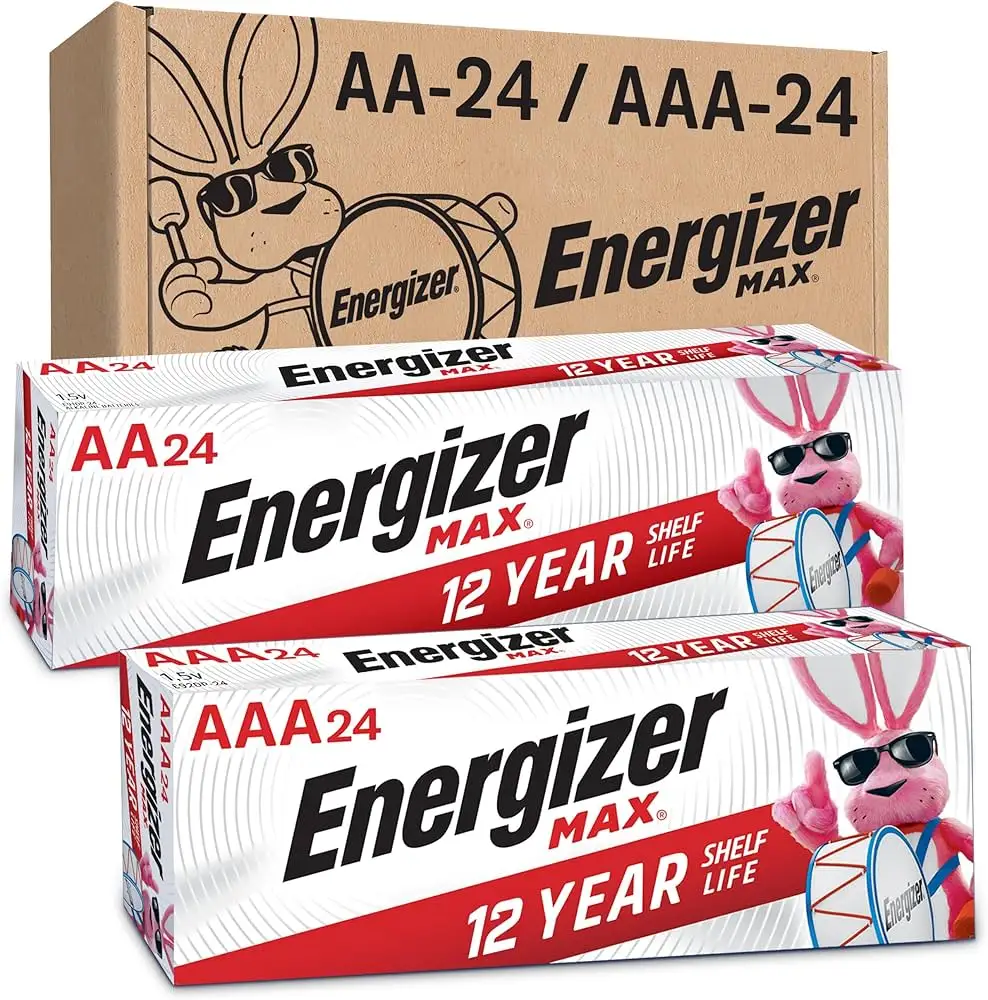
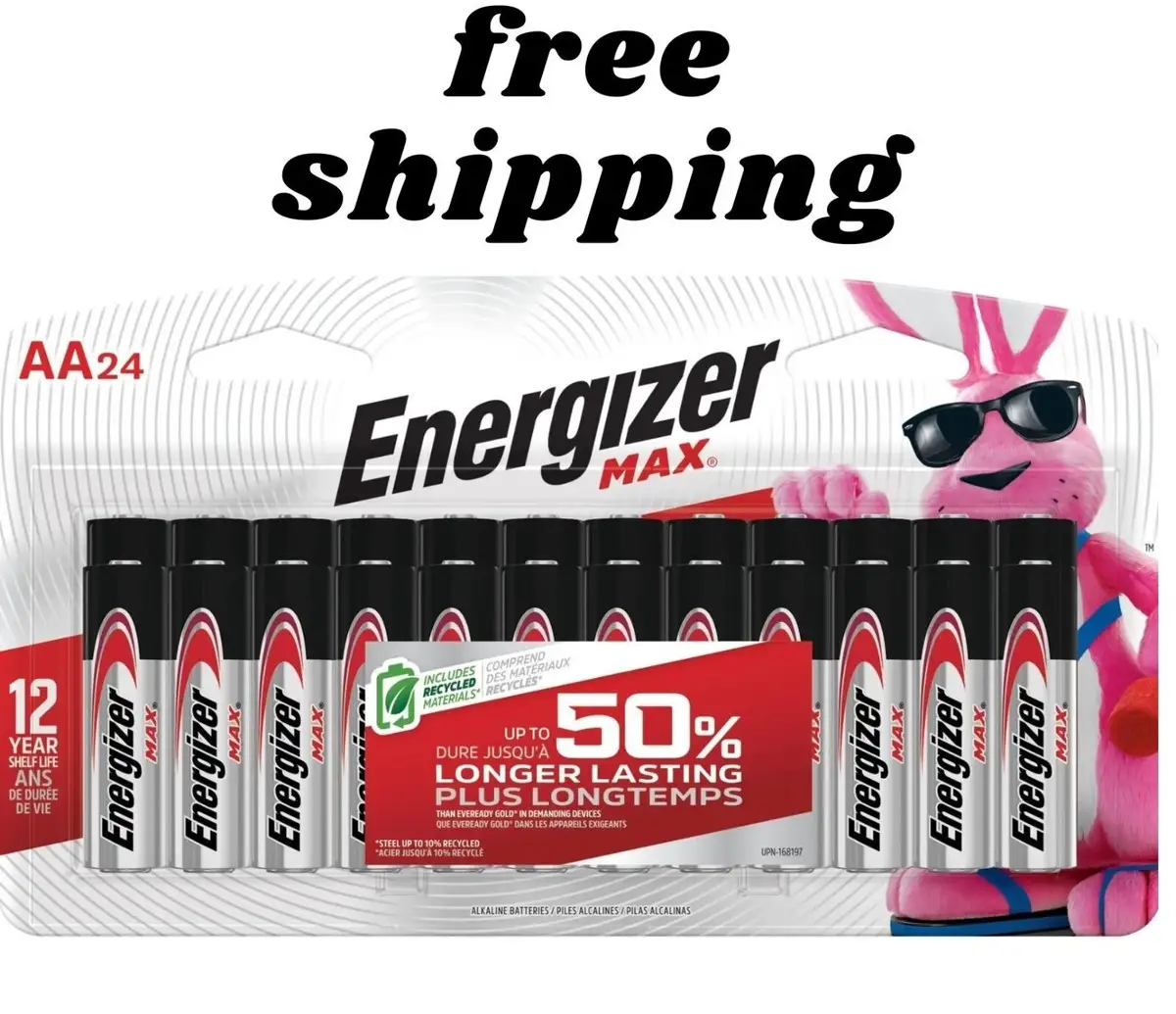
Energizer MAX AA Batteries Review: Strong Everyday Pick (8.3/10)
“Each battery lasts 2 weeks!” That single line captures the central tension around Energizer MAX AA Batteries: for some people, they “keep going and going,” and for others—especially in certain medical devices—they fall short. Verdict: strong everyday alkaline with notable leak/packaging caveats — 8.3/10.
Quick Verdict
Yes — with conditions. For remotes, toys, flashlights, controllers, and general household use, buyers repeatedly call them dependable and long-lasting. If you need month-plus runtime in high-stakes medical devices (like insulin pumps), multiple reports suggest stepping up to lithium instead.
| What stands out | What it means | Evidence (source) |
|---|---|---|
| Long-lasting in everyday devices | Fewer swaps for toys/remotes/controllers | Best Buy: “they last a long time… kids oculus controllers and the xbox controllers” |
| Leak protection praised (mostly) | More confidence leaving batteries installed | Sharvibe: “These haven't leaked at all… garage flashlights” |
| Value improves in bulk | Better per-battery economics | Amazon: 48-pack listed at ~$0.52/count |
| Packaging/shipping issues | Risk of missing/damaged items online | Trustpilot/Revain: “received only 19 instead of 20 in a broken box” |
| High-drain performance isn’t top-tier | Some devices may drain faster than expected | CHOICE lab score: high-drain performance 52%, endurance 58% |
Claims vs Reality
One of the loudest promises around Energizer MAX AA Batteries is longevity—Amazon describes them as Energizer’s “#1 longest-lasting MAX AA batteries” and claims “dependable power” plus “holds power for up to 10 years in storage.” Digging deeper into user reports, that broad claim mostly holds in household contexts where batteries are swapped often and used in low-to-mid drain electronics.
On Best Buy, a recurring pattern emerged: people buying for typical devices consistently describe staying power. Reddit isn’t actually present in the provided data, but Best Buy reviewers repeatedly frame the experience as set-and-forget. One Best Buy reviewer (Cap Tin Turbo) wrote: “what can you say, these batteries will keep going and going and going.” Another Best Buy reviewer (Khush Boos) described toy use: “my son use toys almost everyday and still the battery is going good. i must say long lasting batteries.”
Leak protection is the other headline claim: Amazon says the batteries are “designed to protect your devices against damaging leaks for up to two years after fully used,” and the Energizer product pages repeat “no-leak guarantee” language. In real-world anecdotes, several users echo that sense of relief—especially people burned by corrosion in the past. A Sharvibe reviewer (Ronald Martin) said: “the leak-resistant thing is huge for me… These haven't leaked at all, even in our garage flashlights that sit unused for months.”
But the data also shows a gap between marketing confidence and edge-case reality, especially around inventory freshness and seller handling. On Trustpilot/Revain, a buyer (Dnasty J.) warned: “The expiration date on the box was almost the same as the date of purchase… two of them exploded in my expensive flashlight and corroded it beyond repair.” While that complaint centers on expiry and storage/stock quality, it directly clashes with the device-protection narrative users expect from the brand.
Cross-Platform Consensus
Universally Praised
A recurring pattern emerged across Best Buy and other user-feedback aggregators: people frame Energizer MAX AA Batteries as the “default” battery for the house—especially where convenience matters more than chasing the absolute top performance in extreme drain. For parents, that translates to fewer interruptions. Sharvibe’s Ronald Martin painted a familiar scene: “my kid’s toys kept dying mid-playtime,” then after switching: “my daughter's screaming unicorn has been running non-stop for weeks now.”
For gamers and households loaded with controllers, the benefit isn’t just runtime—it’s consistency. A Best Buy reviewer said: “never have had an issue with performance and they last a long time in the kids oculus controllers and the xbox controllers.” Another leaned on brand expectation: “i mean it’s energizer batteries the name speaks for itself.” The story being told isn’t laboratory precision; it’s that these batteries reduce the annoying churn of swapping AAs mid-use.
Low-drain device performance is also supported by independent lab-style scoring in the provided data. CHOICE, which tests batteries under different loads, scored the low-drain side substantially higher than high-drain: “performance (low drain) 83%” and “endurance (low drain) 91%.” That aligns with the most common user scenarios—remotes, clocks, thermometers, mice—where steady, predictable output matters. On Best Buy, one reviewer summarized that everyday expectation simply: “nice battery’s long lasting still have it in my remote.”
Value gets praised most when people buy larger packs. Amazon’s listing highlights a 48-count pack around $24.98 (about $0.52/count), and users often compare that favorably to store pricing. Ronald Martin on Sharvibe put it bluntly: “the amazon price is insane compared to stores. i saved like $5 getting them here.” Even when reviews are short, they often orbit the same equation: dependable power + reasonable per-battery cost.
After those narratives, the praise tends to crystallize into a few repeated themes:
- Long-lasting in toys/remotes/controllers (Best Buy, Sharvibe)
- Confidence leaving batteries installed due to leak-resistance claims (Sharvibe)
- Better value in multi-packs vs local retail (Amazon pricing, Sharvibe)
Common Complaints
Digging deeper into negative feedback, the most alarming complaints aren’t about normal drain—they’re about shipping/packaging condition, missing batteries, and stock freshness. Those issues don’t attack the chemistry as much as the buying experience (and the risk that mishandling or old inventory undermines expected performance).
On Trustpilot/Revain, Tiffany V. reported: “the pack was completely torn… the batteries were sticking out… only 19 instead of 20.” For buyers stocking up specifically to avoid last-minute battery runs, receiving an incomplete or suspiciously resealed pack is more than an annoyance—it undermines trust. The same platform includes Dnasty J.’s warning about near-expiry stock and failure in a flashlight: “two of them exploded… and corroded it beyond repair.” That kind of incident hits hardest for people who keep batteries in emergency gear (flashlights, smoke alarms) and expect them to sit safely for long periods.
Another complaint thread is about “MAX” expectations in high-stakes devices. Jill S. on Trustpilot/Revain wrote: “These batteries are definitely not ‘max’ batteries! i use them for my insulin pump and each battery lasts 2 weeks!” She contrasted that with lithium: “energizer ultimate lithium… last a month or more in my pump.” For medical-device users, the implication is clear: alkaline MAX may be acceptable, but it may not deliver the maintenance interval they’re hoping for.
Even when complaints are mild, they point to the same vulnerability: what arrives at your door matters. One Best Buy page summary acknowledges “minor packaging concerns,” even amid overwhelmingly positive ratings. In practical terms, the downside isn’t usually “bad batteries”—it’s the risk of damaged packaging, questionable seller practices, or old inventory.
Common complaint themes, grounded in these stories:
- Damaged or resealed packaging and missing units (Trustpilot/Revain)
- Old/near-expiry stock linked to failures (Trustpilot/Revain)
- Not ideal for insulin pumps vs lithium alternatives (Trustpilot/Revain)
Divisive Features
The most divisive point is performance in demanding, high-drain use. Marketing often implies “powerhouse” performance across everything, but the data suggests a more nuanced reality. CHOICE lab results show weaker high-drain outcomes: “performance (high drain) 52%” and “endurance (high drain) 58%.” That doesn’t mean they’re unusable in high-drain devices, but it does explain why some users might feel underwhelmed compared to premium chemistries.
At the same time, many everyday buyers still describe them as strong even in devices like controllers. Ronald Martin on Sharvibe mentioned “xbox controllers (teenage boy approved)” and smoke alarms: “no annoying midnight beeps yet.” The divide appears to be less about whether they work, and more about expectations: if someone wants lithium-like longevity in critical or high-drain scenarios, alkaline MAX can disappoint; for typical household drain patterns, they’re often more than sufficient.
Trust & Reliability
A sharper trust issue emerges when you compare broad retail sentiment to the scam/fulfillment-style complaints found on Trustpilot/Revain. Those reviews cluster around packaging integrity (“sealed with tape,” “pack was completely torn”) and inventory age (“expiration date… almost the same as the date of purchase”). The pattern suggests that for some buyers, the risk isn’t Energizer’s design intent—it’s whether the supply chain delivers fresh, untampered stock.
Long-term reliability stories do exist, mainly through Best Buy-style retail reviews where people emphasize stable performance over time. One Best Buy reviewer (Cap Tin Turbo) wrote they owned the batteries for “10 months” and still framed the experience as: “these batteries will keep going and going and going.” Another (Xavi) described long-term use: “energizer are good quality, long lasting and reliable… convenient.” Those stories support the idea that when purchased from a trusted channel and delivered in good condition, the typical experience is consistent.
Alternatives
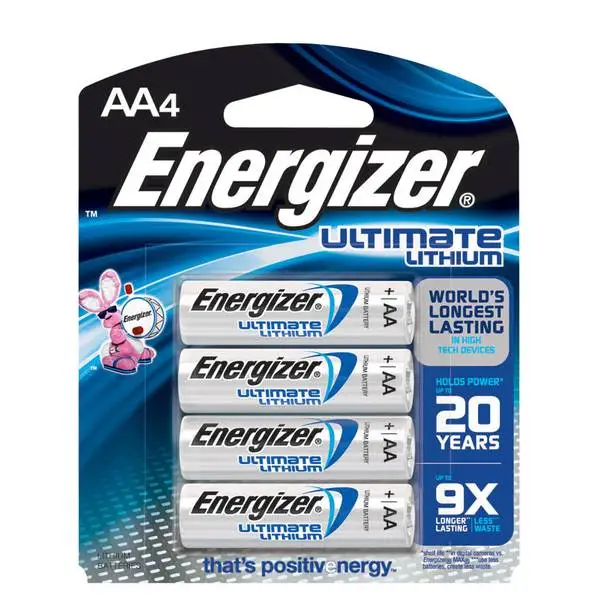
Only a few competitors/alternatives are explicitly mentioned in the provided data, and the biggest one is Energizer Ultimate Lithium. For medical-device users and anyone prioritizing maximum runtime between swaps, that upgrade shows up as a practical solution rather than a luxury. Jill S. on Trustpilot/Revain made that contrast plain: MAX in an insulin pump lasted “2 weeks,” while “energizer ultimate lithium… last a month or more.”
CHOICE’s testing commentary also frames lithium as a performance leader but sometimes a weaker value proposition: “lithium batteries may give you better performance overall, [but] the cost per battery makes them a poor value proposition…” That creates a clear fork: lithium for demanding/high-stakes scenarios; MAX alkaline for everyday devices where cost-per-use matters.
Price & Value
On Amazon, Energizer MAX AA Batteries are positioned as a bulk-value staple: a 48-count pack listed around $24.98 (roughly $0.52 per battery). That matters for households and small businesses that chew through AAs across remotes, toys, flashlights, and accessories. Best Buy reviews repeatedly tie satisfaction to “great price” and “good value,” and one reviewer explicitly framed it for business use: “needed them for my business. all good and will buy them again.”
Resale/market price snapshots on eBay suggest the product is widely available across pack sizes, with listings emphasizing expiration dates (e.g., “exp 2035”), signaling that “freshness” is part of perceived value in secondary markets. Meanwhile, community-style advice from Sharvibe boils down to a simple buying tip: “check the date” sentiment also appears in the negative Trustpilot/Revain feedback where near-expiry stock triggered a warning to return it if unreasonable.
Practical buying takeaways based on user stories and listings:
- Prefer reputable retailers/sellers to reduce packaging and freshness risks.
- Check expiration dates on arrival, especially for emergency-use stock.
- Consider lithium (Ultimate Lithium) if your device needs longer swap intervals.
FAQ
Q: Do Energizer MAX AA batteries actually last a long time in real life?
A: For common household devices, many buyers say yes. A Best Buy reviewer wrote they “last a long time” in “kids oculus controllers and the xbox controllers,” and another said they “keep going and going and going.” Lab data also shows strong low-drain endurance (CHOICE: 91%).
Q: Are they truly leak-resistant?
A: Many users praise the lack of leaks, especially in seldom-used devices. Sharvibe’s Ronald Martin said: “These haven't leaked at all… garage flashlights that sit unused for months.” However, at least one Trustpilot/Revain report described severe failure with corrosion after near-expiry purchase, suggesting seller stock quality matters.
Q: Are they good for high-drain devices like cameras or powerful toys?
A: Results are mixed. CHOICE lab tests show weaker high-drain performance (52%) and endurance (58%) than low-drain scores. Some users still call them “powerhouse” for controllers and toys, but if you need peak high-drain performance, users and test data imply expectations should be tempered.
Q: Should I use them in an insulin pump or other medical devices?
A: Some users advise against relying on MAX alkalines for long intervals. On Trustpilot/Revain, Jill S. wrote: “i use them for my insulin pump and each battery lasts 2 weeks!” She said “energizer ultimate lithium… last a month or more,” suggesting lithium may be the better fit for that use case.
Q: Is buying in bulk online worth it?
A: Often, yes—if the seller is reliable. Amazon’s 48-count listing works out to about $0.52 per battery, and a Sharvibe reviewer said: “the amazon price is insane compared to stores.” But Trustpilot/Revain complaints about torn packs and missing batteries show why checking packaging and expiration dates on arrival is key.
Final Verdict
Buy Energizer MAX AA Batteries if you’re stocking up for household staples—remotes, toys, flashlights, thermometers, and game controllers—where multiple buyers describe them as “dependable” and long-lasting, and lab-style data supports strong low-drain endurance.
Avoid them if your priority is month-plus runtime in critical devices like insulin pumps; Trustpilot/Revain user Jill S. said MAX lasted “2 weeks” and preferred “energizer ultimate lithium” for “a month or more.”
Pro tip from the community: Dnasty J. advised to “check the date and return it if that is not reasonable,” especially when buying large packs online.