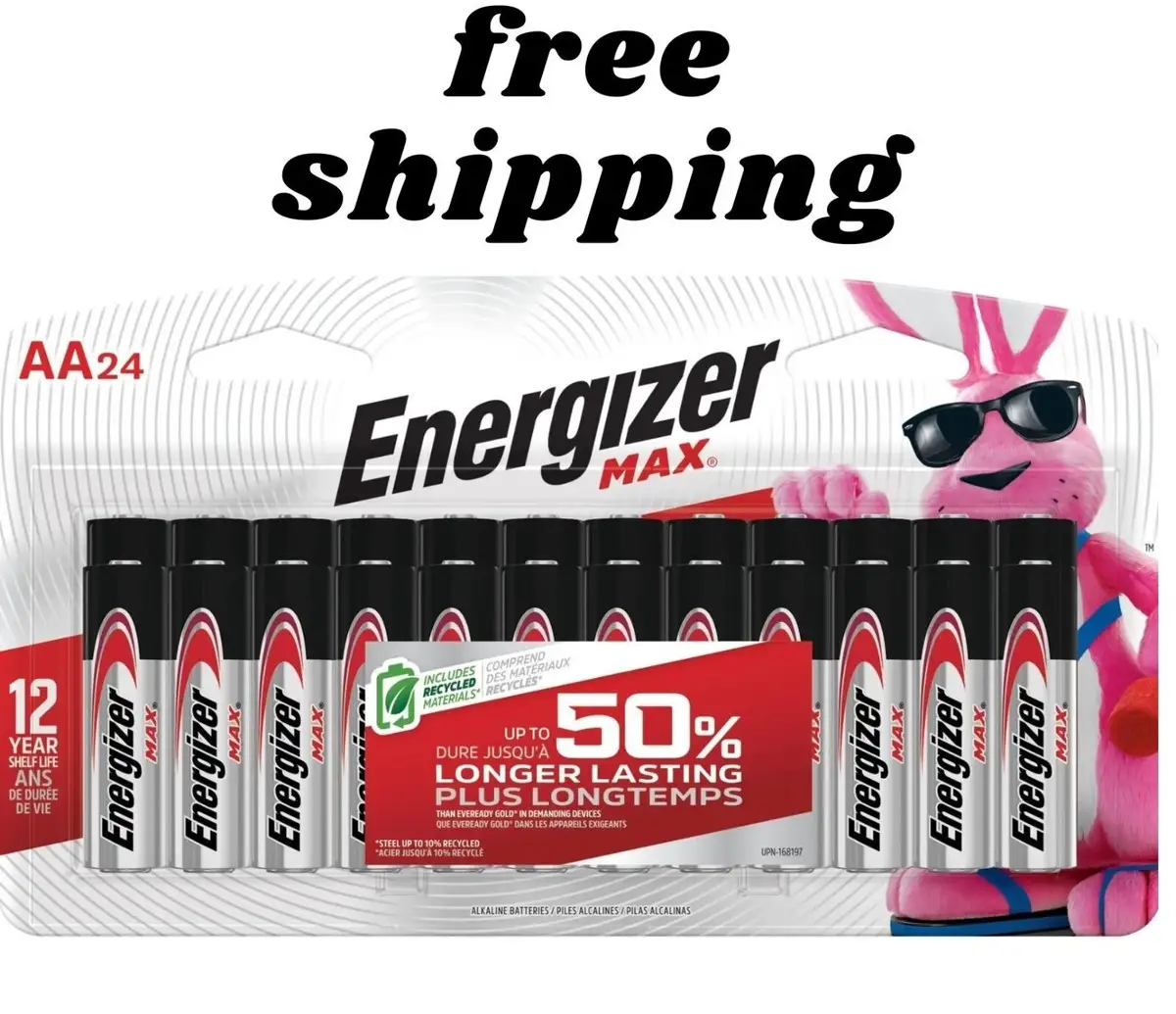
Energizer MAX AA Batteries (16 Pack) Review: Yes, 8.6/10
A single Best Buy reviewer summed up the prevailing mood in five words: “they keep going and going.” Energizer MAX AA Batteries (16 Pack) earns a clear, mainstream-friendly verdict for everyday devices—backed by thousands of customer reviews across retailers. Score: 8.6/10.
Quick Verdict
For anyone stocking up for remotes, toys, controllers, and flashlights, Energizer MAX AA Batteries (16 Pack) is a Yes—especially when on sale. Digging deeper into user feedback, the story is consistent: people buy these because they don’t want surprises. The batteries are repeatedly described as dependable, long-lasting, and worth paying a bit more for versus generic options.
That said, the value math changes if you burn through AAs in high-drain devices or if you’re price-sensitive. A recurring pattern emerged in complaints: cost and occasional packaging/shipping frustration. One Best Buy customer (Superk 734) didn’t criticize performance, but the buying experience: “priced too high… on the rack the price said one thing and when i got to register it was more… i wouldn’t buy again.”
| Verdict | Evidence from users | Who it’s best for | Who should skip |
|---|---|---|---|
| Buy (Yes) | Best Buy rating 4.8/5 with 12,000+ reviews | Households with many devices | People who only buy cheapest AAs |
| Long-lasting | Best Buy user Cap tin turbo: “keep going and going and going” | Remotes, flashlights, toys | Heavy high-drain use where lithium may win |
| Reliable performance | Best Buy user Huey: “consistent quality and great shelf life” | Backup drawers, emergency kits | People expecting rechargeability |
| Leak confidence (reported) | Best Buy: “i like… that they don't leak” | Protecting devices | Anyone who distrusts alkalines in storage |
| Price-sensitive caveat | Best Buy user Superk 734: “priced too high” | Sale shoppers | Full-price buyers on tight budgets |
Claims vs Reality
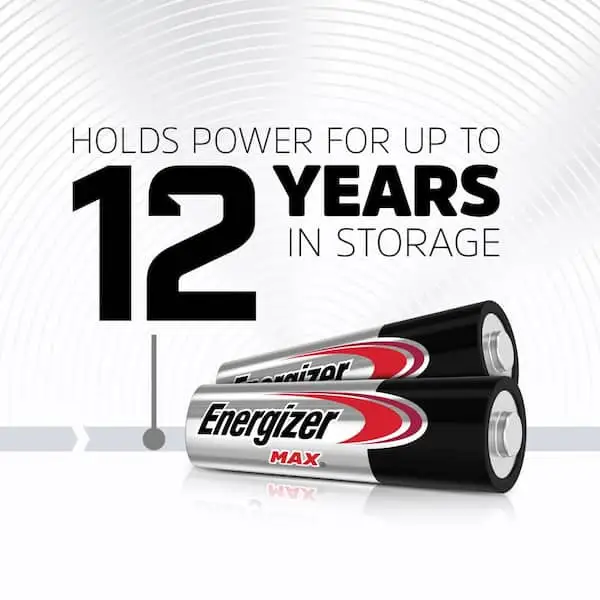
Marketing claim #1: Long storage life (often “up to 10 years” on Amazon listings)
A recurring pattern in user feedback supports the idea of strong shelf readiness, even when reviewers don’t measure years directly. Best Buy user Huey framed it as long-term confidence: “we can always count on energizer batteries for consistent quality and great shelf life.” For preparedness-minded buyers—those who keep spares for storms, travel, or a drawer of “just in case”—that perception matters as much as the spec itself.
But the real-world translation is more practical than scientific: people talk about not having to rebuy often. Best Buy user Audi forme wrote: “i don’t have to buy these very often. seem to last longer than other brands.” That’s less about a calendar claim and more about reduced hassle for everyday households.
Marketing claim #2: Leak protection / “no leaks” positioning
While official product text leans hard on leak protection (Amazon listings cite device protection from leaks and “no leaks guarantee”), many buyers echo that peace-of-mind in plain language. A Best Buy reviewer said: “these batteries are built to last a long time... i like that fact that they don't leak. highly recommend 10/10!!” For parents cycling batteries through toys and for people using devices they don’t want ruined (controllers, remotes, flashlights), “doesn’t leak” becomes a trust signal.
Still, user feedback here is largely absence-of-problem rather than documented proof. TheGunZone’s longform review leans into that vibe: “i’ve never experienced any leaking or corrosion issues with these batteries.” That’s reassuring, but it’s a personal account—useful as a story, not a lab result.
Marketing claim #3: Strong performance across devices (including more demanding use)
Official copy highlights wide compatibility and even calls out improved life in digital cameras on Amazon listings (“up to 30% longer…”). In user stories, the strongest support shows up in “regular life” devices: toys, flashlights, controllers, remotes. Best Buy user Lally put it in a brand-to-brand frame: “i would recommend energizer just as good as dure cell.” Meanwhile, an Amazon reviewer described a camera-specific win: “good batteries and they worked well in my digital camera… these did last a lot longer than the other ones i have tried.”
Yet independent testing doesn’t paint these as untouchable in high-drain scenarios. CHOICE’s lab-based scores show a stronger low-drain result than high-drain performance (low-drain endurance scored higher than high-drain performance). While not “user feedback,” it creates a useful reality check: for remote controls and clocks, expectations align; for constant high-drain loads, the story can get more nuanced.
Cross-Platform Consensus
Universally Praised
“Dependable” shows up so often it becomes the product’s identity. Best Buy user Humber Tom called them a “dependable and long-lasting power solution,” praising “consistent and dependable power output.” That kind of feedback tends to come from people who just want batteries to disappear into the background—no fiddling, no mid-week failures, no weird device behavior.
For families, the most vivid stories are about kid-powered consumption. Best Buy user Moab 461 described battery-hungry chaos: “i have two kids under 10 that blow through batteries. these hold up to their demand. energizer all the way.” Another Best Buy reviewer (Khush boos) framed it as everyday toy endurance: “my son use toys almost everyday and still the battery is going good.” The implication is simple: if you’re constantly swapping AAs in toys, a longer-lasting set reduces interruptions—and reduces the number of frantic “we’re out of batteries” moments.
Gamers and gadget users also repeatedly cite controller performance. Best Buy user shared: “they last a long time in the kids oculus controllers and the xbox controllers.” That’s the kind of use case where “works fine” isn’t enough; people notice when a controller starts fading early. The praise here isn’t about peak power—it’s about steady, expected runtime.
After these narratives, the praise clusters into a few consistent themes:
- Long-lasting in daily devices (toys, remotes, flashlights, controllers)
- Trust in the Energizer MAX brand (“go-to choice”)
- Perceived leak resistance / fewer device worries
Common Complaints
Price is the clearest friction point, and it’s not always about the battery itself—it’s about paying premium rates in the moment. Best Buy user Superk 734 captured the frustration of a mismatch between shelf label and checkout: “priced too high… when i got to register it was more… i wouldn’t buy again.” For budget-focused shoppers, the performance may be fine, but the purchase can feel like a reluctant transaction.
Packaging and shipping irritation pops up in scattered but specific comments. An Amazon reviewer (3-star) said: “my attitude was tainted by the way the aaa batteries were handled… in the same box without any packing.” Another Amazon reviewer liked the compact pack but criticized the shipping box: “nice compact package (inside a way too large cardboard box).” These aren’t performance complaints; they’re experience complaints—annoying for gift buyers, bulk purchasers, or anyone tired of wasteful packaging.
There’s also a quiet category of “they’re just batteries” indifference. Best Buy user Burrito wrote: “just batteries… i trust they will last a reasonable amount of time.” That’s not negative, but it underscores the reality: for many buyers, the product’s ceiling is “meets expectations,” not excitement.
After the narratives, the complaints consolidate into:
- Full-price sticker shock
- Shipping/packaging dissatisfaction (too large boxes, loose packs)
- Environmental concern implied by “single-use” framing in longform reviews
Divisive Features
Value is where opinions split—not because people disagree about performance, but because they weigh cost differently. One Best Buy reviewer framed it as worth paying extra: “better to pay a tiny bit more for more battery life.” Another user praised deals and timing: “energizer batteries are the best, better when on sale.” The battery becomes “best value” only under certain pricing conditions.
Rechargeability is another dividing line in the broader discussion around alkalines. TheGunZone review explicitly flags the downside: “these batteries are not rechargeable… can be wasteful for frequent users.” For high-usage households or businesses, that’s not a minor detail—it’s a different purchasing philosophy. People who prefer rechargeables may see even excellent alkalines as a temporary fix, not a system.
Trust & Reliability
Across large retail review sets, the trust narrative is built on repeat purchasing and long-term familiarity. TheGunZone reviewer positioned it bluntly: “over the years, i have repeatedly purchased these… and my experience… has been generally very positive.” Best Buy user Huey similarly tied trust to predictability: “consistent quality and great shelf life.” For emergency preparedness, that consistency matters—people want the flashlight to work during a power outage, not just on day one.
On scam concerns specifically, the provided sources don’t include a distinct Trustpilot dataset of verified Energizer storefront complaints; the “Trustpilot” entry repeats a blog-style review rather than reporting fraud patterns. So the reliability story here comes primarily from retailer volume and repeat-buyer tone, not from a dedicated anti-scam thread.
Alternatives
Only competitors explicitly mentioned in the data are fair game, and they show up mostly as comparison points rather than full reviews. Duracell is the most common named rival, used as a benchmark. Best Buy user Lally offered a parity take: “i would recommend energizer just as good as dure cell.” Another Best Buy reviewer went further, claiming relative advantage: “last longer than store brand, duracell and amazon batteries.” Those statements suggest many shoppers buy Energizer MAX as their “name brand” choice when they want to avoid generics.
Lithium comes up in CHOICE’s framing as a category that can outperform alkalines in some high-drain situations, though the cost may change the value proposition. If your main use is high-tech, high-drain gear, the alternative discussion hints that you may be comparing chemistry types, not just brands.
Price & Value
Current pricing varies sharply by retailer and timing. Amazon lists a 16-count AA pack at $13.85 in one listing, while Best Buy shows higher sticker prices in some contexts (often around $19.99 for certain packs), and Walgreens lists a 16-pack at a sale price of $17.99 (from $22.99). The user feedback mirrors this volatility: people like the batteries, but they’re happiest when they feel they got a deal.
Resale/market pricing on eBay suggests steady demand and frequent “new” listings, with multiple price points and “verified purchase” reviews. One eBay verified buyer (dee pizza guys) said: “energizer max aa is a very good battery… best… to use on my video game remotes since it lasts a long time like two to three weeks.” Another eBay reviewer (centek) emphasized leak anxiety versus competitors: “reliable batteries that don't leak over time like competitor brand!” That “secondary market” chatter often reflects bulk buyers and deal hunters trying to beat retail pricing.
Buying tips embedded in community tone are simple:
- Watch for sales (“better when on sale”)
- Buy larger packs if you cycle through toys/controllers
- If you’re price-sensitive, compare per-cell cost and checkout pricing
FAQ
Q: Do Energizer MAX AA batteries actually last a long time in real devices?
A: Yes—many buyers describe strong longevity in everyday electronics. A Best Buy reviewer said: “they keep going and going and going,” and another noted they “seem to last longer than other brands.” People most often cite toys, remotes, and controllers as where the runtime feels noticeably better.
Q: Are they good for high-drain devices like cameras or gaming controllers?
A: Generally yes, but expectations vary. An Amazon reviewer said they “worked well” in a digital camera and “did last a lot longer” than others they tried, while many Best Buy reviewers praise controller use. Independent lab scoring (CHOICE) suggests performance is stronger in low-drain than high-drain scenarios.
Q: Do users complain about leaking?
A: Leak worries show up more as praise than complaints. One Best Buy reviewer liked that “they don't leak,” and a longform reviewer said they’d “never experienced any leaking or corrosion issues.” That said, most feedback is anecdotal rather than detailed failure reporting.
Q: Is the 16-pack a good value?
A: Conditional. Many people call them a “great deal” and say it’s worth paying “a tiny bit more for more battery life,” but price complaints appear when the pack feels expensive or pricing changes at checkout. Sales and bulk buying tend to be the sweet spot for value-focused shoppers.
Final Verdict
Buy if you’re stocking Energizer MAX AA Batteries (16 Pack) for remotes, toys, flashlights, and controllers—and you want a familiar “just works” battery. Avoid if you’re extremely price-sensitive at full retail or if you strongly prefer rechargeables for frequent, heavy use. Pro tip from the community: “energizer batteries are the best, better when on sale.”