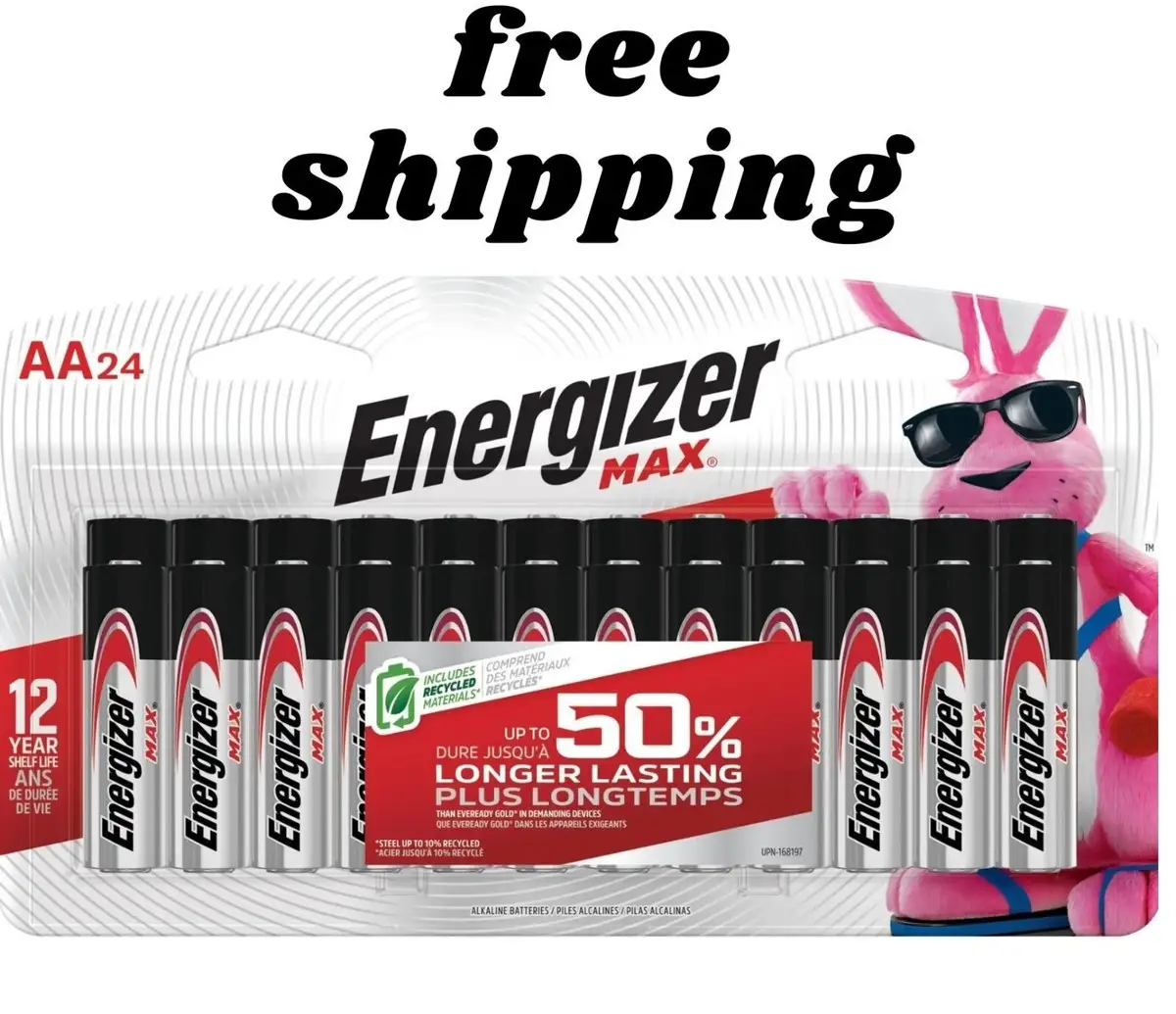
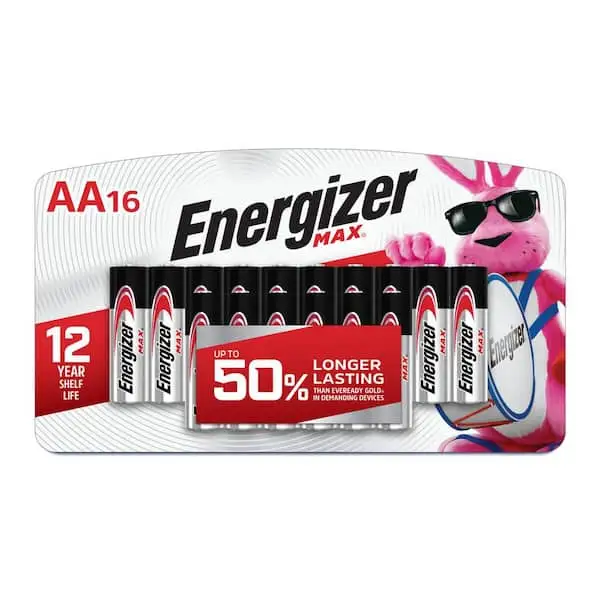
Energizer MAX AA Batteries (16 Pack) Review: Worth It?
“Better than store brand, Duracell and Amazon batteries,” one Best Buy reviewer declared, and that blunt comparison sums up the dominant mood around Energizer MAX AA Batteries (16 Pack). Across retail and community sources, people repeatedly frame these as a dependable default for household electronics, with only a few consistent gripes pulling the score down. Verdict: a strongly favored everyday alkaline with some value and packaging caveats. Score: 8.6/10.
Quick Verdict
Yes, if you want long‑lasting AA alkalines for low‑to‑medium drain devices and don’t mind paying a bit more than generics.
| Pros (from users) | Cons (from users) |
|---|---|
| Long battery life in common devices | Price feels high to some buyers |
| Reliable, consistent performance | Occasional packaging/tampering issues in shipping |
| Good shelf life for spares | Non‑rechargeable waste concerns |
| Outperforms many store brands | Rare reports of loose/unsealed packs |
| Trusted name for “important” devices | Slightly behind top rivals in some high‑drain tests |
Claims vs Reality
Marketing claim 1: “Up to 10 years in storage” / long shelf life. Amazon specs emphasize that these “hold power for up to 10 years in storage,” and Energizer’s own page mentions 10–12 years. User feedback largely aligns. Best Buy reviewer Huey said: “we can always count on energizer batteries for consistent quality and great shelf life.” Another Best Buy customer echoed the same practical takeaway, noting the long‑term dependability: “purchased these batteries for my flash lights… long lasting.”
Digging deeper into user reports, the shelf‑life claim shows up less as a measured number and more as a trust habit: people buy big packs and keep them without worry. A Best Buy buyer Karenk framed it as routine preparedness: “glad to find a large pack… you are always in need of batteries for electronics.” No strong counter‑reports claim premature expiration in storage, so the marketing line appears to match user reality.
Marketing claim 2: “Leak resistant / no leaks guarantee for up to 2 years after use.” Amazon highlights leak resistance, and Energizer advertises a “no‑leak guarantee.” In community talk, this becomes a quiet confidence rather than a headline. TheGunZone reviewer wrote: “I’ve never experienced any leaking or corrosion issues with these batteries.” That absence matters for users putting AAs into pricey gear or kid toys that sit idle.
Still, the data doesn’t show many dramatic leak horror stories or confirmations, so the claim remains more “uncontested” than “proven” by users here. The notable “reality gap” isn’t leakage but shipping integrity: Amazon reviewers complained about unsealed deliveries, which is separate from leak resistance but affects trust in the product arriving new.
Marketing claim 3: “Up to 30–50% longer lasting than basic alkaline in demanding devices.” Amazon specs state “up to 50% longer lasting power vs basic alkaline AA batteries in demanding devices,” and “up to 30% longer‑lasting… in digital cameras.” Users frequently back the broader point, even if not the exact percentage. Best Buy reviewer Moab 461 said: “these hold up to their demand. energizer all the way,” describing kid toys as a battery stress test. Big Snoop was more comparative: “last longer than store brand, duracell and amazon batteries.”
While marketing positions them as strong in high‑drain situations, TrustedReviews’ bench testing complicates the story. That reviewer found “superb performance… particularly well suited for high‑drain loads,” but also noted “overall capacity… a little lower than the leading batteries.” So while officially framed as top‑tier longevity, some testing suggests they are near‑top, not always best‑in‑class. Users generally feel the longevity advantage, but the “longest lasting” superlative is not universally absolute.
Cross-Platform Consensus
Universally Praised
A recurring pattern emerged around simple longevity in everyday gear. Parents and households with lots of small electronics see the biggest benefit. Best Buy’s Moab 461 described two kids “under 10 that blow through batteries,” saying these “hold up to their demand.” For families, that means fewer emergency store runs and fewer mid‑playtime battery swaps. Another Best Buy reviewer, Audi Forme, liked the same outcome in calmer devices: “I don’t have to buy these very often. seem to last longer than other brands.”
Reliability across a mix of devices is the second theme. TheGunZone community review listed remotes, wireless mice, toys, flashlights, clocks, gaming controllers, and scales, concluding the batteries “delivered reliable, consistent power across all these applications.” That kind of breadth matters for users who want one AA type that “just works” everywhere. Best Buy’s Stingray reduced it to a short endorsement: “they are of good quality and last longer than generic brands.”
Users also praise the brand trust angle, especially for safety‑critical or “important” electronics. An Amazon buyer said Nest smoke detectors pushed them to Energizer, then confirmed: “they do last a long time and provide power as advertised… worth it… for important IoT.” That story highlights a specific persona: homeowners who don’t want alarms chirping at 2 a.m. For them, the premium buys peace of mind.
Finally, many see the 16‑pack size as practical value. Best Buy reviewer One Duck Toe joked about “going all out and got the 16 pack… have enough for the flashlights and the remote.” The implied benefit is convenience for users who like to stock spares. Even when buyers call them “just batteries,” like Burrito did, the expectation is that Energizer will meet the baseline without surprises.
Common Complaints
Price is the clearest, most repeated complaint. Amazon’s five‑star smoke‑detector buyer still called them “very expensive,” though “worth it.” Best Buy user Superk 734 was harsher: “priced too high… I wouldn’t buy again.” This affects bargain shoppers and anyone burning through AAs in bulk—like parents or office users—who feel the cost accumulating over time.
Packaging and fulfillment issues pop up across Amazon reviews, not about battery function but how they arrive. One Amazon reviewer rated 4 stars because “the package looked like it had been tampered with.” Another gave 3 stars: “batteries arrived loose not in package. unsure if product has been used.” A separate buyer said the “package was broken and the batteries were strewn all over the box.” For users buying online, especially gifting or stocking up, these reports raise a trust red flag even when the cells perform fine.
Some users also flag the environmental downside of single‑use alkalines. TheGunZone reviewer listed “non‑rechargeable… wasteful for frequent users” and “environmental impact” as cons. This complaint mainly matters to eco‑conscious households or high‑usage users who might prefer rechargeables long‑term.
There are smaller grumbles about being merely “regular ole batteries,” as Ty Breezy put it. That’s less dissatisfaction and more a reminder that this is a utilitarian product: for some, they don’t feel special enough to justify the price premium.
Divisive Features
Value perception splits users. Many feel the longevity offsets the cost. Best Buy’s Green Girl said: “energizers always last and are cost efficient over time.” The Amazon smoke‑detector buyer agreed: pricey, but “worth it… you will not regret it.” These users treat cost as a long‑run equation.
On the other side, some see price as the main story. Superk 734’s frustration was triggered by a price mismatch at checkout, ending with “I wouldn’t buy again.” TrustedReviews similarly implies a subtle value tension: excellent high‑drain performance but “slightly behind… rivals” and “a little more expensive.” So the division isn’t about whether they work—it’s about whether the extra dollars feel justified versus store brands or other premium AAs.
Trust & Reliability
Trust concerns in the data revolve less around counterfeit fears and more around fulfillment quality. Multiple Amazon buyers reported packaging that looked opened or arrived loose, which can make people question whether they received new stock. “Package looked like it had been tampered with,” one Amazon reviewer warned, and another said the “batteries arrived loose not in package.” Those patterns suggest the anxiety is about shipping or third‑party handling rather than the Energizer product itself.
Long‑term reliability stories are more reassuring. TheGunZone reviewer emphasized repeat purchasing “over the years” with “generally very positive” results, highlighting no sudden failures or leaks in storage. Best Buy’s Big Snoop, who owned them “for more than 2 years,” still said they “last longer than store brand.” These longer‑horizon comments reinforce the idea that durability is a key reason users stick with MAX.
Alternatives
Only a few competitors appear in user comparisons. Duracell comes up frequently as the nearest rival. Best Buy reviewer Lally said Energizer is “just as good as dure cell,” while Big Snoop went further: “last longer than… duracell.” For shoppers choosing between the two mainstream brands, user sentiment slightly tilts toward Energizer MAX for longevity, though not unanimously.
Store brands and generic alkalines are the other contrast point. Users repeatedly say MAX beats them in runtime. Stingray called Energizer “good quality and last longer than generic brands,” and Moab 461’s kid‑toy stress test reinforces the same conclusion. TrustedReviews adds a more clinical angle, suggesting that GP Ultra (mentioned in that review) can be cheaper for general use, while Energizer MAX makes more sense for high‑drain needs.
Price & Value
Current retail pricing in the data sits around $13–$14 for a 16‑pack on Amazon and Best Buy, with eBay listings ranging roughly $12 to $13.20. That puts per‑cell cost close to $0.80–$0.90 depending on the seller. Users interpret this differently depending on usage rate.
For low‑drain households—remotes, clocks, smoke detectors—people often call it worth it because replacements are infrequent. Amazon’s Nest smoke‑detector buyer paid the premium for reliability and said they “recommend these for important IoT.” Best Buy’s Audi Forme similarly valued buying less often: “seem to last longer.” For them, value equals reduced hassle.
High‑consumption users feel the pinch more. Superk 734’s “priced too high” complaint fits parents, workplaces, or hobbyists going through piles of AAs. TheGunZone reviewer also warned that cost “can become costly in the long run if you use a lot of them.” Community buying tips are implicit: stock up during sales, or reserve MAX for devices where longevity matters most.
FAQ
Q: Do Energizer MAX AA batteries really last longer than store brands?
A: Many users say yes. Best Buy reviewer Big Snoop wrote they “last longer than store brand,” and Stingray said they outlast “generic brands.” The longevity edge is most noticeable in toys, remotes, and flashlights, though exact percentages aren’t measured by buyers.
Q: Are they good for high‑drain devices like flashlights or cameras?
A: Feedback supports strong performance in demanding gear. TheGunZone reviewer found them reliable in flashlights and gaming controllers, and TrustedReviews’ testing called results “superb” for high‑drain loads. Still, that same test noted top rivals can be slightly higher capacity.
Q: Do these batteries leak?
A: Users rarely report leaking. TheGunZone reviewer said they’d “never experienced any leaking or corrosion issues.” Marketing promises leak resistance for up to two years after full use, and the user data here doesn’t contradict that, though there aren’t many leak‑specific stories.
Q: What’s the main downside buyers mention?
A: Price and packaging. Amazon and Best Buy reviewers often call them expensive, and several Amazon buyers complained about packs arriving “tampered with” or “loose,” which affects trust in online orders even when battery performance is solid.
Q: Should I buy the 16‑pack?
A: If you like keeping spares and use AAs regularly, users find the size convenient. Best Buy reviewer One Duck Toe liked having “enough for the flashlights and the remote.” Heavy users may still wait for sales to make the per‑battery cost feel reasonable.
Final Verdict
Buy if you’re a household user who wants dependable, long‑lasting AAs for remotes, toys, smoke detectors, or flashlights and values fewer replacements. Avoid if you burn through batteries fast and prioritize lowest cost, or if you prefer rechargeables for environmental reasons. Pro tip from the community: use Energizer MAX AA Batteries (16 Pack) for “important” devices, and grab multipacks when prices dip.