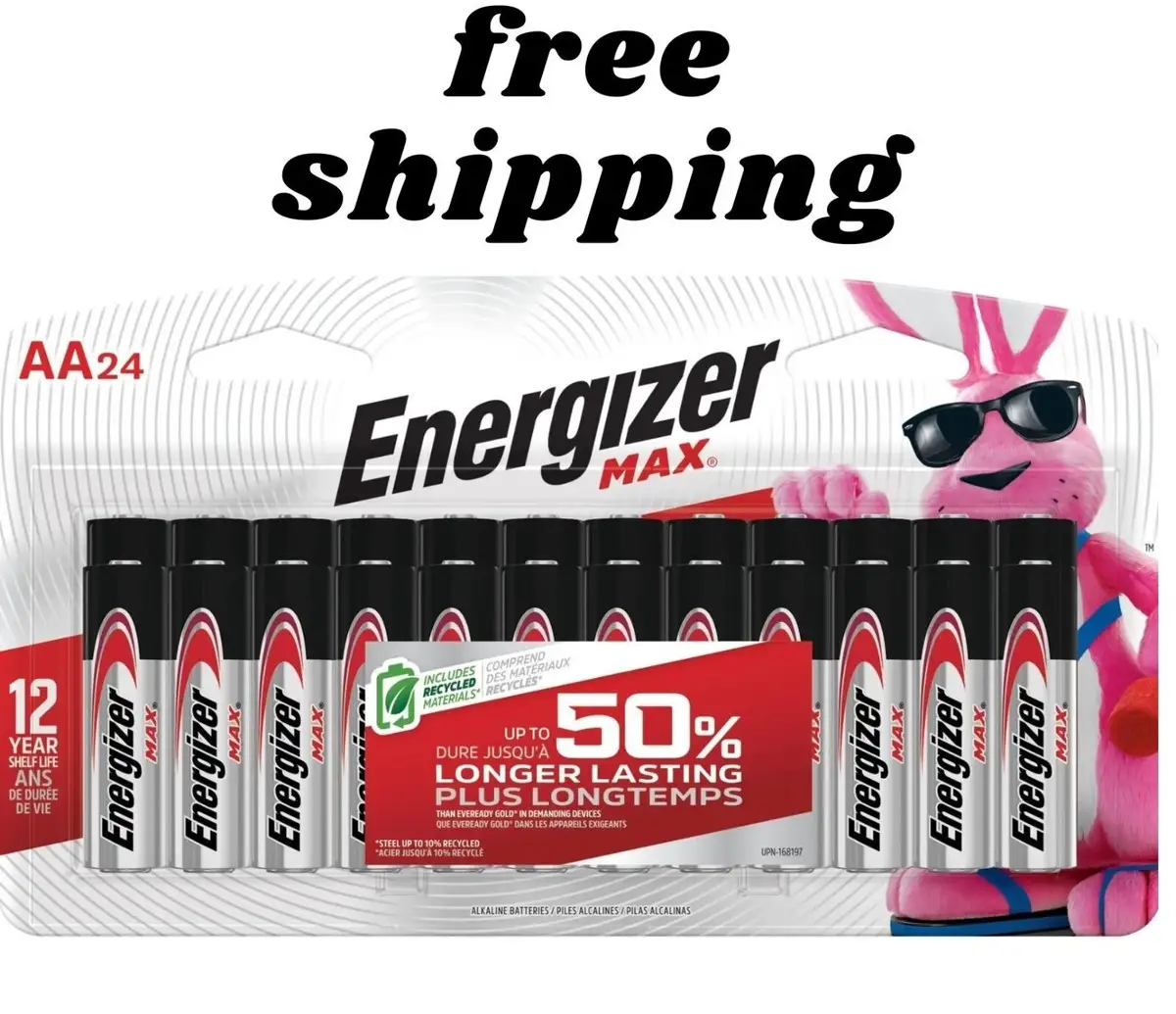
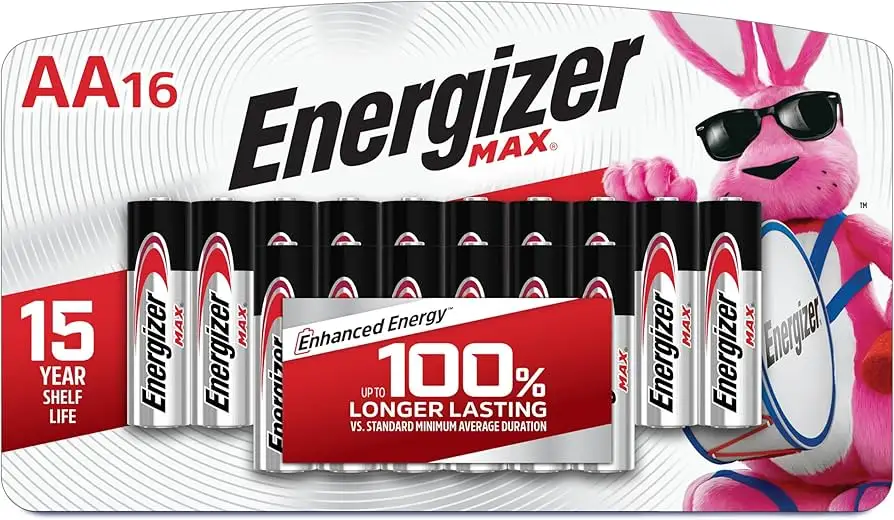
Energizer MAX AA Batteries (16 Pack) Review: Reliable, With Caveats
“Superb quality!! these batteries are built to last a long time ... i like that fact that they don't leak.” That kind of confidence shows up everywhere you look—paired with one nagging reality check from lab-style testing: CHOICE scored Energizer Max at 68% overall and marked it “recommended: no,” despite strong low-drain results.
Energizer MAX AA Batteries (16 Pack) lands a clear “reliable household staple” verdict, with a few caveats around price and high-drain expectations. Score: 8.3/10
Quick Verdict
Yes (Conditional) — A dependable pick for remotes, clocks, toys, and flashlights, especially if you care about leak protection and shelf life. The “conditional” part is price sensitivity and whether your use is high-drain (controllers, camera flashes), where lab results look less flattering than many shopper comments.
| What users liked / disliked | Evidence (source) | Who it affects most |
|---|---|---|
| Long-lasting in everyday devices | “last a long time in the kids oculus controllers and the xbox controllers.” (Best Buy) | Families, gamers, frequent controller users |
| Strong “no leak” confidence | “i like that fact that they don't leak.” (Best Buy) | Anyone protecting pricey electronics |
| Consistent “works as expected” reliability | “product as expected . work as it should” (Amazon customer reviews) | People restocking household basics |
| Good for low-drain devices | “last several months” in remotes/clocks (TheGunZone) and high low-drain scores (CHOICE) | Remote controls, clocks, thermometers |
| Price frustration (occasional) | “priced too high… i wouldn’t buy again” (Best Buy) | Budget buyers, bulk shoppers |
| High-drain performance not top-tier in tests | CHOICE “performance (high drain) 52%” and “endurance (high drain) 58%” | Camera flashes, high-drain toys |
Claims vs Reality
Energizer’s product positioning leans on three promises: leak protection, long storage life, and dependable power across devices. Digging deeper into user reports across retailers, those themes generally hold—but they don’t land equally for every device type.
One marketing line repeated across listings is protection against leaks for up to two years after fully used. In day-to-day feedback, shoppers often translate that into peace of mind rather than measured proof. A Best Buy reviewer wrote, “these batteries are built to last a long time ... i like that fact that they don't leak.” (Best Buy). TheGunZone’s long-form user narrative echoes that sentiment in practical terms: “i’ve never experienced any leaking or corrosion issues with these batteries” (TheGunZone). While this doesn’t quantify the two-year claim, it shows why leak resistance is a key buying driver for people with lots of electronics.
The storage-life claim is another big one: Amazon Germany cites “up to 10 years” in storage, while Walgreens states “up to 12 years in storage.” That difference matters because shoppers may assume a single universal number. In user-facing comments, the concept of long shelf life shows up as trust and repeat purchasing rather than calendar math. A Best Buy reviewer emphasized predictability: “we can always count on energizer batteries for consistent quality and great shelf life.” (Best Buy, model E91TP-16 page). This is one of those areas where official claims vary by retailer copy, but the core user takeaway stays the same: people like stocking them and forgetting about them.
The broad “dependable power” message is mostly validated in casual household use—but looks more complicated under testing. CHOICE reports a strong low-drain picture (“performance (low drain) 83%” and “endurance (low drain) 91%”) but weaker high-drain outcomes (“performance (high drain) 52%”). That creates a gap worth calling out: while many shoppers say these “last longer than other brands,” lab scoring suggests the biggest strength is low-drain scenarios. In practice, that means the person buying AA batteries for a TV remote may be thrilled, while someone powering a high-drain camera flash might not see the same advantage.
Cross-Platform Consensus
Universally Praised
A recurring pattern emerged: people don’t describe Energizer MAX AAs as exciting—they describe them as dependable, the kind of batteries you buy when you’re tired of surprises. On Amazon’s customer-review page for the 16-pack, one reviewer stripped it down to basics: “they are aa batteries . they work well , and they seem to be well - made.” (Amazon). That “well-made” theme shows up repeatedly in retail reviews where users are stocking remotes, radios, and household devices.
For families and heavy day-to-day use, longevity is the headline. A Best Buy reviewer said, “energizer batteries are my preferred batteries to use . never have had an issue with performance and they last a long time in the kids oculus controllers and the xbox controllers.” (Best Buy). On the Best Buy E91TP-16 page, “moab 461” framed it as survival gear for parent life: “i have two kids under 10 that blow through batteries . these hold up to their demand . energizer all the way” (Best Buy). The same “outlasts other brands” vibe appears again and again: “seem to last longer than other brands.” (Best Buy, “audi forme”).
Low-drain “set it and forget it” use cases are where the stories get especially consistent. TheGunZone reviewer described months of runtime in exactly the devices CHOICE’s low-drain testing resembles: “in remote controls and clocks, i’ve found them to last several months.” (TheGunZone). Another Best Buy review zoomed in on that everyday reality: “i always use energizer batteries in my remotes , clocks , and thermometers.” (Best Buy). For someone outfitting a house—thermometers, wall clocks, TV remotes—that’s the core promise: fewer battery swaps.
Leak anxiety is also a quietly powerful reason people stick with the brand. One Best Buy customer wrote, “i like that fact that they don't leak . highly recommend 10/10.” (Best Buy). In the longer narrative review, TheGunZone reinforced the same point with a device-protection mindset: “i’ve never experienced any leaking or corrosion issues… very important… avoiding damage to the powered device.” (TheGunZone). For users with pricey controllers or electronics, “no leak” isn’t just a feature; it’s insurance.
After these narratives, the praise clusters into a few repeated themes:
- Reliable household performance (“worked perfectly.” (Best Buy, “knuch”))
- Long-lasting compared with generic/store brands (“last longer than generic brands” (Best Buy))
- Confidence stocking up (“buy more for less” (Amazon))
Common Complaints
The biggest negative thread isn’t catastrophic failure—it’s cost and buying friction. A Best Buy reviewer “superk 734” gave a blunt account of sticker shock: “priced too high… on the rack the price said one thing and when i got to register it was more… i wouldn’t buy again.” (Best Buy). That’s less about battery chemistry and more about retail experience, but it still affects perceived value, especially for shoppers who buy batteries only when something dies and they’re in a hurry.
Packaging and shipping is another frustration point, especially in marketplace deliveries. An Amazon reviewer noted a mismatch between compact packaging and an oversized shipping box: “nice compact package ( inside a way too large cardboard box )” (Amazon). Another Amazon comment complained about how items were handled together: “my attitude was tainted by the way the aaa batteries were handled… in the same box without any packing.” (Amazon). These aren’t complaints about the cells themselves, but they do impact buyer satisfaction—particularly for people ordering multi-packs or bundles.
High-drain expectations are where the “complaint” can be more subtle: people may not complain directly, but lab-style data suggests limits. CHOICE’s scoring shows significantly weaker performance under high drain than low drain (CHOICE). While many retailer reviews praise runtime, the testing implies that if your main use is demanding devices, you may not get the same standout advantage as you do in remotes and clocks. In other words: the product is widely liked, but the “best in every scenario” interpretation doesn’t fully match test results.
After the narratives, the complaints boil down to:
- Price sensitivity (“priced too high… wouldn’t buy again.” (Best Buy))
- Packaging/shipping annoyance (Amazon)
- High-drain edge not clearly supported by lab scoring (CHOICE)
Divisive Features
Price and value perception is the most divisive dimension. Some users frame Energizer MAX as worth paying for. A Best Buy reviewer argued, “better to pay a tiny bit more for more battery life” (Best Buy). Another said they’re “cost efficient over time” (Best Buy, E91TP-16 page). But others see the same aisle tag and feel the opposite, like “superk 734,” who described being surprised at checkout and refusing a repeat purchase (Best Buy).
Brand comparisons also split opinion, mostly in casual “this vs that” language. One Best Buy E91TP-16 reviewer “lally” wrote, “i would recommend energizer just as good as dure cell” (Best Buy). Meanwhile, another claimed superiority: “last longer than store brand , duracell and amazon batteries.” (Best Buy, “big snoop”). These statements don’t resolve which is objectively best, but they show how much the decision is influenced by personal reference points and what people have tried before.
Trust & Reliability
A trust signal that repeats across platforms is long-term repeat purchasing. TheGunZone narrative explicitly frames it as a habit: “over the years, i have repeatedly purchased these energizer aa max batteries… dependable” (TheGunZone). On Best Buy’s E91TP-16 page, “huey” echoed “consistent quality and great shelf life” (Best Buy). This is the kind of feedback that matters to households and small businesses: they aren’t celebrating a feature; they’re describing a supply staple.
On the scam-concern front, the closest trust-adjacent issues in the provided data are about fulfillment and pricing surprises rather than counterfeit accusations. Amazon reviews complained about shipping choices (“way too large cardboard box”) and how items were packed together (Amazon). Best Buy had a pricing mismatch story at the register (Best Buy). None of these directly allege scams, but they do show where trust can erode: unexpected handling and unexpected price.
Longer-term durability stories also show up indirectly through device categories that punish weak batteries: controllers, flashlights, and cameras. A Best Buy reviewer reported strong performance in “oculus controllers and the xbox controllers” (Best Buy), and an Amazon reviewer emphasized heavy-drain camera use: “good batteries and they worked well in my digital camera which uses up batteries like mad . these did last a lot longer than the other ones i have tried” (Amazon). Those are credibility-building anecdotes because they come from users who feel they “burn through” batteries.
Alternatives
Only a few competitors are explicitly mentioned in the data, and they’re mostly framed as comparison points rather than direct recommendations. Walgreens’ product copy claims “up to 50% longer lasting than Eveready Gold in demanding devices” (Walgreens). Users also compare against “store brand,” “generic brands,” “Duracell,” and “amazon batteries.” (Best Buy E91TP-16 page).
Digging into user language, the alternative many people are actually choosing against is the cheapest option. “stingray” said, “they are of good quality and last longer than generic brands” (Best Buy E91TP-16 page). “big snoop” went further: “last longer than store brand , duracell and amazon batteries.” (Best Buy). But not everyone frames it as a clear win—“lally” positioned it as parity: “just as good as dure cell” (Best Buy). The takeaway is less “one brand destroys the other” and more: people buying Energizer MAX often do so to avoid the disappointment they associate with generics.
Price & Value
Price perception swings with where and when people buy. Best Buy lists the 16-pack product page at $19.49 in the provided snapshot (Best Buy), while another Best Buy listing for E91TP-16 shows $13.99 (Best Buy, model E91TP-16). Walgreens shows a sale price of $17.99 from $22.99 (Walgreens). That spread helps explain why value debates are so heated: the “same batteries” can feel like a bargain one week and a rip-off the next.
On resale and market pricing signals, eBay listings show the 16-pack around $13.20 from one seller with high feedback and significant volume sold (“1934 sold”) (eBay item 115426846916). Other eBay search results show multiple price points and lots, including individual 16-packs around the low-to-mid teens (eBay market pages). That suggests the “market clearing” price can be notably below some brick-and-mortar sticker prices, especially if you’re comfortable ordering online.
Community buying behavior also hints at a strategy: buy in bulk to reduce pain. An Amazon reviewer wrote, “buy more for less” (Amazon), and a Best Buy reviewer praised deals: “the price at best buy is great” (Best Buy). On the flip side, the clearest caution is the register surprise story: “on the rack the price said one thing and when i got to register it was more” (Best Buy). For value-focused shoppers, verifying the price before checkout (or buying when on promotion) is part of the real-world experience.
FAQ
Q: Do Energizer MAX AA batteries actually last a long time in real devices?
A: Yes—especially in everyday devices. A Best Buy reviewer said they “last a long time in the kids oculus controllers and the xbox controllers” (Best Buy), and TheGunZone reported they “last several months” in “remote controls and clocks” (TheGunZone).
Q: Do they leak and damage devices?
A: Most user feedback emphasizes confidence around leakage. One Best Buy reviewer wrote, “i like that fact that they don't leak” (Best Buy), and TheGunZone noted, “i’ve never experienced any leaking or corrosion issues” (TheGunZone). This aligns with marketing leak-protection claims, though users cite experience, not timed tests.
Q: Are these good for high-drain devices like camera flashes or demanding toys?
A: It depends. An Amazon reviewer said they worked well in a “digital camera which uses up batteries like mad” and “did last a lot longer than the other ones” (Amazon). But CHOICE testing shows weaker “performance (high drain) 52%” (CHOICE), suggesting results vary.
Q: Are they worth the price?
A: Value depends heavily on the deal. Some buyers say it’s “better to pay a tiny bit more for more battery life” (Best Buy), while another called them “priced too high… i wouldn’t buy again” after a register surprise (Best Buy). Comparing retailer promos or eBay pricing helps.
Q: What devices do people actually use these in?
A: Common use cases are remotes, flashlights, toys, clocks, and controllers. TheGunZone lists “remote controls,” “wireless computer mouse,” “toys,” “flashlights,” and “portable gaming controllers” (TheGunZone). Best Buy reviewers also mention “blood pressure checker” and “tv remote control” (Best Buy).
Final Verdict
Buy if you’re the kind of household that’s constantly feeding remotes, clocks, flashlights, and kids’ toys—and you want the comfort of comments like “always reliable and long lasting” (Best Buy) and “consistent quality and great shelf life” (Best Buy, E91TP-16 page).
Avoid if your main goal is maximum high-drain test performance per dollar; CHOICE’s high-drain scoring is notably lower than its low-drain results (CHOICE), and price complaints like “priced too high… i wouldn’t buy again” (Best Buy) show how quickly value can flip.
Pro tip from the community: stock up when you find a deal—one Amazon reviewer summed the mindset up simply: “buy more for less” (Amazon).