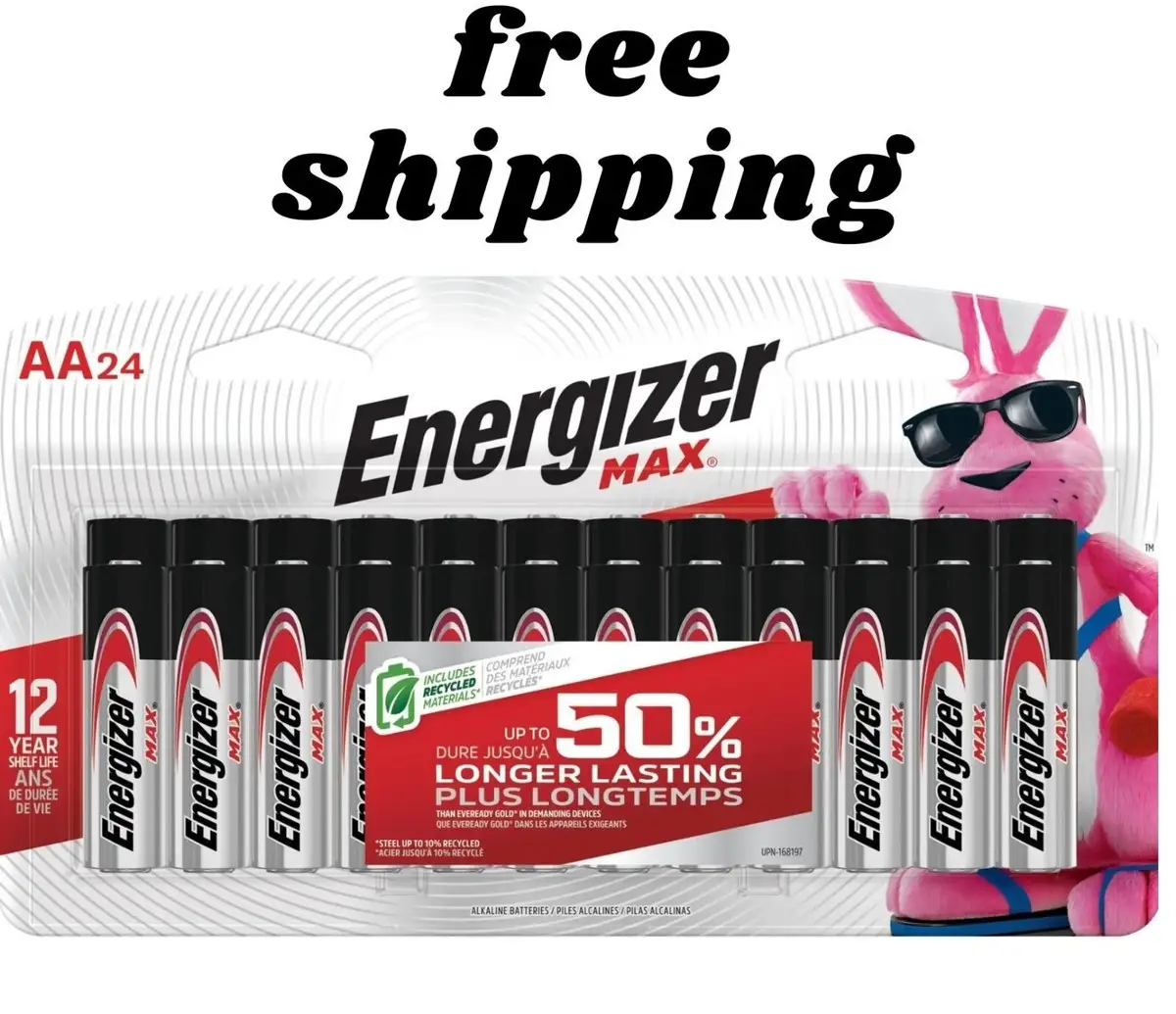
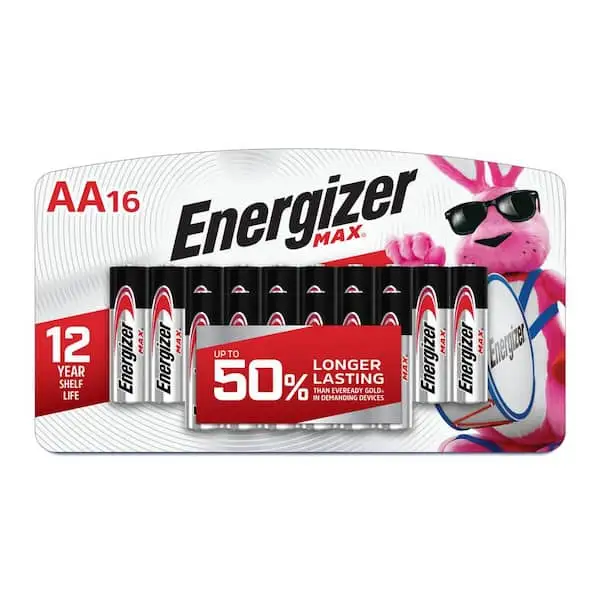
Energizer MAX AA Batteries 16 Pack Review: Reliable Buy?
“These batteries are built to last a long time... i like that fact that they don't leak. highly recommend 10/10!!” — that single Best Buy line captures the dominant theme across platforms for Energizer MAX AA Batteries (16 Pack): dependable power, with lingering anxiety about price and packaging. Verdict: Yes (with caveats) — 8.6/10.
Quick Verdict
For everyday households and work kits, Energizer MAX AA Batteries (16 Pack) are repeatedly described as a safe, reliable default—especially for remotes, flashlights, controllers, and medical devices. The loudest negatives aren’t about performance; they’re about value and fulfillment issues (tampered/unsealed packaging).
| Call | Evidence from users |
|---|---|
| Buy for reliability | Best Buy reviewer said: “energizer are the go to batteries. always reliable and long lasting.” |
| Strong in common household devices | Best Buy reviewer said: “good batteries for use in toys and flashlights. best value.” |
| Stands out in controllers | Best Buy reviewer said: “they last a long time in the kids oculus controllers and the xbox controllers.” |
| Packaging can be a problem | A verified buyer on Amazon noted: “package looked like it had been tampered with.” |
| Some deliveries arrived unsealed/loose | A verified buyer on Amazon noted: “batteries arrived loose not in package. unsure if product has been used.” |
| Price complaints exist | Best Buy user superk 734 said: “priced too high… i wouldn’t buy again.” |
Claims vs Reality
Claim 1: “Locks in power for up to 10 years in storage.”
Digging deeper into user reports, “shelf life” shows up as a real-world reason people stick with the brand—especially buyers stocking for unpredictable needs. Best Buy user huey framed it as routine dependability: “we can always count on energizer batteries for consistent quality and great shelf life,” suggesting this isn’t just a marketing line but part of the product’s reputation.
At the same time, user feedback in this dataset doesn’t include long time-stamped “10 years later” confirmations; it’s more about confidence and repeat purchasing. TheGunZone review also emphasizes storage-readiness as household peace of mind, describing “the peace of mind that comes with knowing your devices will work when you need them,” particularly for outages and flashlights.
Claim 2: “Designed to prevent damaging leaks / No leaks guarantee.”
Leak resistance is one of the most repeated “why I buy these” points. A Best Buy reviewer wrote: “i like that fact that they don't leak,” pairing it directly with longevity. TheGunZone review doubles down on this as lived experience: “i’ve never experienced any leaking or corrosion issues with these batteries,” and frames it as protection against device damage.
Still, the loudest “risk signal” in the data isn’t leaks—it’s fulfillment integrity. Several Amazon reviews focus on packaging condition rather than chemistry: “package looked like it had been tampered with” and “batteries arrived loose not in package.” That creates a different kind of trust gap: not “do these leak?” but “did I receive a clean, untampered product?”
Claim 3: “Up to 30% longer-lasting than previous Energizer Max AA in digital cameras.”
Camera use does appear, and it’s framed in demanding terms. A verified buyer on Amazon said: “good batteries and they worked well in my digital camera which uses up batteries like mad. these did last a lot longer than the other ones i have tried.” That’s a direct performance comparison in a high-drain-ish scenario (a camera “uses up batteries like mad”), aligning with the brand’s “longer-lasting” pitch.
But external test-style scoring complicates the story. CHOICE’s lab-style results show stronger low-drain endurance than high-drain performance (e.g., low-drain endurance 91% vs high-drain endurance 58%). While that’s not a user quote, it does set expectations: these may shine most in remotes/clocks and routine household draw rather than being the absolute best value under high-drain conditions.
Cross-Platform Consensus
Universally Praised
A recurring pattern emerged: people don’t romanticize these batteries—they treat them like infrastructure. When buyers are happy, it’s because the batteries disappear into the background and devices simply keep working. Best Buy user usafrdoc summarized that utilitarian satisfaction: “they well and do exactly what it's supposed to do. no issues.” For busy households, that “no issues” sentiment is the product.
For families burning through AAs in toys and controllers, the benefit is fewer interruptions and fewer emergency runs to the store. Best Buy user moab 461 tied it directly to kid-heavy usage: “i have two kids under 10 that blow through batteries. these hold up to their demand.” TheGunZone review echoes this “wide array of everyday devices” usage, listing everything from “remote controls” and “wireless computer mouse” to “portable gaming controllers,” and saying the batteries delivered “reliable, consistent power across all these applications.”
Medical and “important device” use also shows up, which raises the stakes beyond convenience. One Best Buy reviewer said: “it is very good for my electro blood pressure checker.” On Amazon, a buyer described being nudged by a smart-home alert into choosing this exact type: “my… nest smoke detector began chirping… they recommended to replace with these types of batteries… they do last a long time and provide power as advertised.” For people maintaining smoke detectors, blood pressure monitors, or other must-work electronics, the story isn’t about maximum capacity—it’s about reliability and reduced anxiety.
After those narratives, the praise clusters into a few repeated themes:
- “Long lasting” in everyday devices (remotes, clocks, controllers)
- Dependability as a default brand choice
- Leak resistance as peace of mind
- Works across many device types without fuss
Common Complaints
The most consistent frustration isn’t that the batteries fail—it’s that the buying experience sometimes does. Multiple Amazon reviews focus on packaging condition, which matters because batteries are often purchased for safety-critical or gift scenarios. A verified buyer on Amazon said: “the package looked like it had been tampered with.” Another reported: “batteries arrived loose not in package. unsure if product has been used.” Even when the product “works,” that kind of delivery experience injects doubt.
There’s also a separate packaging complaint about transit handling. A verified buyer on Amazon noted: “package was broken and the batteries were strewn all over the box, mixed with my other items.” And another Amazon reviewer complained about how multiple packs were shipped: “my attitude was tainted by the way the aaa batteries were handled… in the same box without any packing.” While that line mentions AAA, it appears in the broader Amazon battery review dataset and reinforces the same theme: careless fulfillment can sour perceptions even if the cells themselves are fine.
Price is the second major complaint, and it tends to come from people buying out of urgency. Best Buy user superk 734 wrote: “priced too high… on the rack the price said one thing and when i got to register it was more… i wouldn’t buy again.” On Amazon, a buyer who liked performance still called out cost: “the only downside is that these are very expensive, but worth it.” That’s not a performance critique—it’s a value negotiation.
Common complaint themes, in plain terms:
- Suspicion from “tampered” or “unsealed” packaging on arrival
- Shipping/boxing that leaves batteries loose or scattered
- Price sensitivity, especially during urgent purchases
Divisive Features
Brand trust itself is oddly polarizing. Some buyers treat “Energizer” as the entire argument. A Best Buy reviewer said: “i mean it’s energizer batteries the name speaks for itself.” That kind of statement signals that reputation reduces decision fatigue—especially for households managing many devices.
Others push back indirectly by focusing on price and treating them as interchangeable. Best Buy user burrito wrote: “just batteries… i trust they will last a reasonable amount of time,” which is lukewarm and assumes adequacy rather than excellence. Meanwhile, CHOICE’s test-style scoring suggests that performance depends heavily on drain conditions, reinforcing why some people feel “these are the best,” while others feel “they’re fine, but not special for the money.”
Trust & Reliability
Digging deeper into trust signals, the dataset’s most “scam-like” anxiety is not counterfeit claims, but the sense of compromised fulfillment: “tampered” packaging, “unsealed product,” and batteries arriving “loose.” That matters because buyers often pick Energizer MAX specifically for devices they can’t afford to fail—smoke detectors, flashlights for outages, or medical monitors. When the box looks wrong, it undermines the whole “peace of mind” purchase logic.
On longer-term reliability stories, the clearest pattern is repeat buying over years and confidence across devices rather than explicit “six months later” timestamps. TheGunZone review frames it as a multi-year relationship: “over the years, i have repeatedly purchased these… i never had to worry about them suddenly giving up on me.” Best Buy user audi forme echoed the same idea in fewer words: “i don’t have to buy these very often. seem to last longer than other brands.”
Alternatives
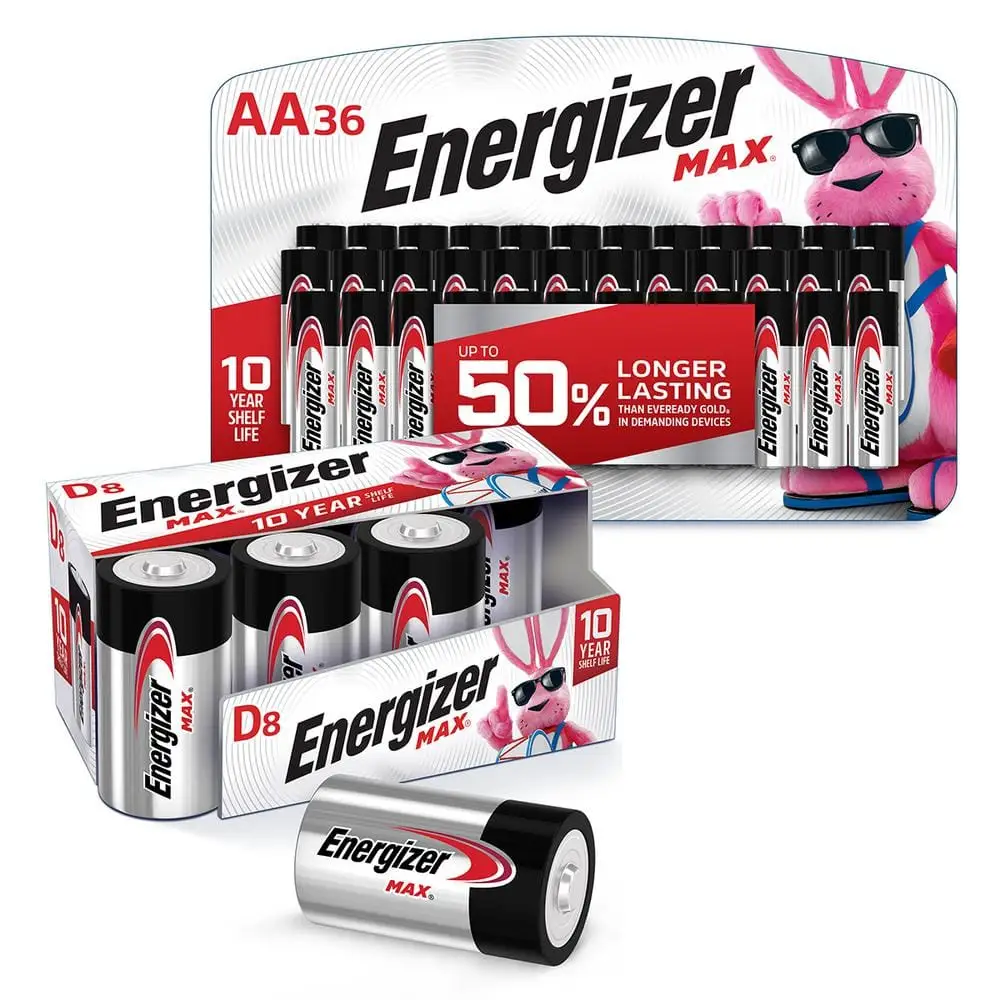
Only competitors mentioned in the provided data are fair game, and users do compare them—sometimes bluntly. Best Buy user lally said: “i would recommend energizer just as good as dure cell,” treating Duracell as the obvious peer. Another Best Buy reviewer (big snoop) went further, claiming a clear win: “last longer than store brand, duracell and amazon batteries.” For shoppers deciding between major brands, these comments frame Energizer MAX as a “longer than others” pick—at least for that user’s device mix.
On the budget side, Eveready appears in the Amazon specs dataset as a point of comparison in marketing language (e.g., claims about lasting longer than Eveready Gold in demanding devices). In the user feedback itself, the most consistent “alternative” is the generic “store brand.” Best Buy user stingray said: “they are of good quality and last longer than generic brands,” positioning Energizer MAX as a step-up choice when cheap batteries become annoying to replace.
For buyers considering rechargeables, the GunZone review explicitly flags the tradeoff: “while these batteries are not rechargeable…” and frames waste/cost as the downside. The dataset doesn’t provide strong user testimonials for Energizer rechargeables here, so the alternative discussion remains mostly alkaline-to-alkaline.
Price & Value
At current retail snapshots in the data, the 16-pack price varies by platform and listing context. Amazon’s specs page shows $13.85 for a 16 count (about $0.87 per count), while Best Buy lists $13.99 for a 16-pack on one product page and $19.49 on another listing context. That spread matches how users talk about value: sometimes “great deal,” sometimes “priced too high.”
User value judgments hinge on how many batteries they burn and how painful failure is. For heavy-use households, moab 461’s “two kids under 10” story implies value through fewer replacements. For device-critical use, the Amazon smoke detector buyer accepted the premium: “very expensive, but worth it.” But for price-sensitive shoppers caught by surprise at checkout, superk 734’s response is the opposite: “i wouldn’t buy again.”
Resale and market pricing signals from eBay suggest new packs often land around the low teens; one listing shows $11.99 shipped for a 16-pack, and another shows $13.20. That supports a practical buying tip implied by the data: shopping around can matter, because platform pricing swings widely even for the same “16 pack” idea.
Community-flavored buying tips reflected in user comments:
- If you’re stocking remotes, clocks, and flashlights, prioritize “shelf life” and buy larger packs when the per-cell price drops.
- If packaging looks unsealed or tampered, multiple Amazon reviewers suggest that’s a real risk signal worth acting on.
- If you need batteries for controllers/toys, users repeatedly justify the premium by replacement frequency.
FAQ
Q: Do these actually last longer in real devices like controllers and smoke detectors?
A: Yes, many buyers say they do. Best Buy reviewers mention long runtime in “oculus controllers and the xbox controllers,” and an Amazon buyer replacing a Nest smoke detector battery said they “do last a long time and provide power as advertised.” Experiences vary by device drain.
Q: Are leak issues common with Energizer MAX AA (16 pack)?
A: Leak complaints aren’t prominent in this dataset; leak resistance is often praised. A Best Buy reviewer said: “i like that fact that they don't leak,” and TheGunZone review reported: “i’ve never experienced any leaking or corrosion issues.” The bigger concern reported is packaging condition on delivery.
Q: What’s the biggest problem people run into when buying these online?
A: Packaging integrity. Multiple Amazon reviewers described suspicious or messy fulfillment, including “package looked like it had been tampered with” and “batteries arrived loose not in package.” Even when batteries work, that experience creates doubt—especially for safety-critical devices.
Q: Are they worth the price compared to Duracell or store brands?
A: Conditional. Some Best Buy users claim they “last longer than generic brands,” and one said they last longer than “store brand, duracell and amazon batteries.” But others complain “priced too high,” so value depends on sales, how fast you burn batteries, and how much reliability matters.
Final Verdict
Buy if you’re the kind of household that wants a dependable AA stash for remotes, flashlights, kids’ toys, controllers, and occasional medical devices—because the dominant feedback is “always reliable and long lasting” and “no issues.” Avoid if you’re highly price-sensitive or if you can’t tolerate fulfillment uncertainty, since Amazon buyers reported “tampered” and “unsealed” packaging.
Pro tip from the community: treat these as “infrastructure” batteries—Best Buy user huey’s logic is essentially set-and-forget: “consistent quality and great shelf life.”