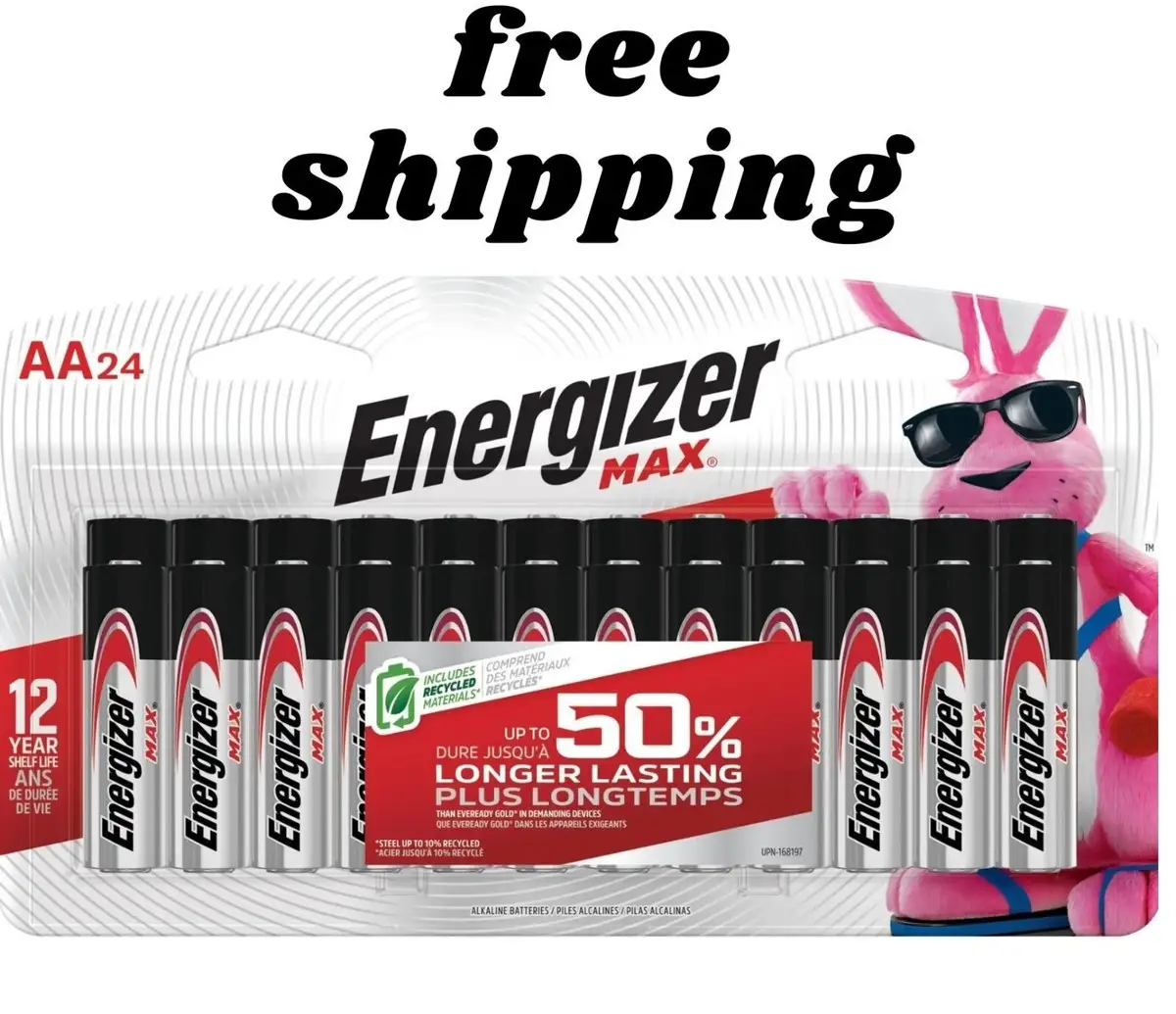
Energizer MAX AA Batteries (16 Pack) Review: Dependable
A lab score of 68% sits awkwardly next to tens of thousands of glowing retail ratings—and that tension defines the story of Energizer MAX AA Batteries (16 Pack). Verdict: a dependable pick for everyday electronics, with recurring gripes around price and occasional packaging issues. Score: 8.6/10.
Quick Verdict
Conditional — Yes for remotes, clocks, toys, and general household use; conditional for high-drain gear if you’re chasing best value.
| What users agree on | Evidence from user feedback | Who it matters to |
|---|---|---|
| Long-lasting in everyday devices | Best Buy highlights “battery life”; reviewers say “they last a long time” | Families, office setups, emergency kits |
| Reliable brand performance | “always reliable and long lasting” (Best Buy) | Anyone who just needs batteries to work |
| Leak confidence is a theme | “i like that fact that they don't leak” (Best Buy) | People powering expensive devices |
| Price can sting | Amazon: “very expensive”; Best Buy: “priced too high” | Heavy battery users, parents |
| Packaging can be messy | Amazon: “package looked like it had been tampered with”; “arrived loose” | Online buyers, gift buyers |
Claims vs Reality
Energizer’s messaging leans heavily on predictable pillars: long storage life, dependable performance, and leak protection. Digging deeper into user reports, most buyers echo the “reliable power” idea—especially in low- to medium-drain household electronics—while a smaller but consistent subset points to problems that aren’t about chemistry at all: shipping, packaging, and price.
One friction point is that broad marketing promises don’t always map cleanly to how people actually judge batteries. Many reviewers don’t measure runtime; they measure whether devices stop nagging them, whether controllers keep working for weeks, and whether batteries arrive sealed. On Amazon, one verified reviewer framed the purchase around smart-home reliability: “A verified buyer on Amazon noted: ‘they do last a long time and provide power as advertised. the only downside is that these are very expensive’” (Amazon customer reviews).
A second tension shows up when you put expert testing beside consumer sentiment. CHOICE’s lab testing gives Energizer Max an overall 68% and marks it not recommended (CHOICE), even while retail platforms show very high star averages. That doesn’t mean buyers are “wrong”—it suggests most shoppers are using these in low-drain contexts where they feel strong, while lab scoring weighs high-drain performance and value differently.
Claim 1: “Long-lasting power”
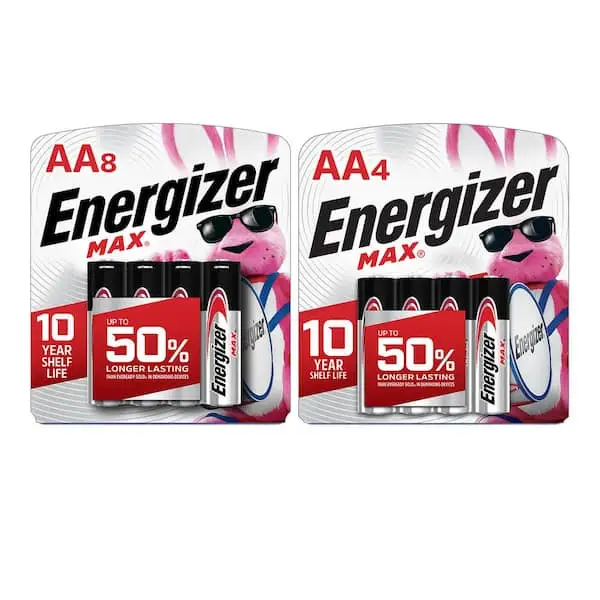
Marketing emphasizes longevity, and user narratives back it up most strongly for low-drain devices. A recurring pattern emerged: people praise “months” of normal use rather than precise hours. A reviewer on Best Buy wrote: “Energizer are the go to batteries. always reliable and long lasting” (Best Buy). Another leaned into the familiar slogan-style experience: “cap tin turbo… ‘these batteries will keep going and going and going’” (Best Buy).
Where reality gets more nuanced is in high-drain or performance-scored contexts. CHOICE splits results by drain and shows stronger low-drain numbers than high-drain performance (CHOICE). While everyday users rarely complain about runtime, the lab perspective suggests the “long-lasting” story is most bulletproof in remotes/clocks and less decisive in demanding devices.
Claim 2: “Leak protection / device safety”
Leak anxiety is real because battery damage is expensive and annoying. Energizer’s leak-prevention framing matches what many buyers celebrate, even if they’re describing it informally. A Best Buy reviewer said: “these batteries are built to last a long time ... i like that fact that they don't leak” (Best Buy). In longer-form community-style writing, TheGunZone’s review claims: “i’ve never experienced any leaking or corrosion issues with these batteries” (TheGunZone).
But the user feedback also suggests a different kind of “safety” concern: packaging integrity. On Amazon, complaints aren’t about leakage in devices—they’re about how batteries arrived. “A verified buyer on Amazon noted: ‘unsealed product… batteries arrived loose not in package. unsure if product has been used’” (Amazon customer reviews). That’s not a chemistry failure, but it does undermine trust for online orders.
Claim 3: “Good value”
Value is where sentiment splits most clearly. Many shoppers feel the higher price is justified by fewer swaps and fewer emergencies. One Amazon reviewer called them “very expensive, but worth it” for “important iot” devices (Amazon customer reviews). Best Buy’s aggregate language also emphasizes “great price” and “good value” alongside battery life (Best Buy).
Still, price sensitivity shows up sharply when someone believes the checkout price didn’t match expectations. A Best Buy reviewer complained: “priced too high… on the rack the price said one thing and when i got to register it was more… i wouldn’t buy again” (Best Buy). Digging deeper into user reports, the “value” claim holds best when buyers catch sales or buy multipacks; it breaks down when purchased urgently at a premium.
Cross-Platform Consensus
Universally Praised
The loudest chorus, across Amazon, Best Buy, Influenster, and retailer summaries, is simple: these are “go-to” alkaline AAs that feel dependable. For parents cycling through toys and handhelds, that dependability matters more than squeezing out the last theoretical milliamp-hour. On Best Buy, one reviewer tied longevity directly to family devices: “they last a long time in the kids oculus controllers and the xbox controllers” (Best Buy). Another framed it as constant household demand: “glad to find a large pack of batteries… you are always in need of batteries for electronics” (Best Buy).
A second universally praised theme is broad compatibility—buyers plug them into whatever is around the house and move on. TheGunZone’s long-form review lists real-world use cases like “remote controls,” “wireless computer mouse,” “toys,” “flashlights,” and “clocks,” concluding: “delivered reliable, consistent power across all these applications” (TheGunZone). That maps closely to what Best Buy reviewers describe in shorter bursts, like “good batteries for use in toys and flashlights” (Best Buy).
Finally, shelf-life and readiness show up as a quiet but meaningful benefit. People stocking for emergencies or just trying to avoid frequent store runs treat “ready when you need them” as the point. Best Buy reviewer huey wrote: “we can always count on energizer batteries for consistent quality and great shelf life” (Best Buy). For anyone building a hurricane kit or keeping backups for smoke detectors, those lines read like reassurance rather than marketing copy.
- Most-praised use cases: remotes, clocks, toys, flashlights, controllers (Best Buy; TheGunZone)
- Most-praised attributes: “long lasting,” “reliable,” “consistent quality,” “great shelf life” (Best Buy)
- Typical buyer language: “go to batteries,” “name speaks for itself” (Best Buy; Influenster)
Common Complaints
The most common negative feedback isn’t “these died fast”—it’s “these cost more than I expected” and “the packaging was weird.” That distinction matters: the product experience often stays positive, while the purchase experience can sour quickly. On Amazon, one reviewer praised performance but flagged fulfillment: “A verified buyer on Amazon noted: ‘the batteries themselves were great, but the package looked like it had been tampered with’” (Amazon customer reviews). Another was more direct: “A verified buyer on Amazon noted: ‘unsealed product… batteries arrived loose not in package’” (Amazon customer reviews).
Price complaints tend to come from shoppers buying under time pressure. A Best Buy reviewer described feeling trapped by urgency: “priced too high… i started to put them back but didn’t have time… my tv remote control was low” (Best Buy). For heavy-use households—kids, game controllers, lots of battery-powered toys—the cost theme also appears in more general terms. TheGunZone review lists “cost” as a con: “can become costly in the long run if you use a lot of them” (TheGunZone).
Digging deeper into user reports, there’s also a small amount of noise—reviews that don’t fit batteries at all. One Best Buy review text veers into an unrelated TV story (Best Buy), suggesting some platform-level review clutter rather than a product flaw. Still, the recurring complaints that do align across sources are price sensitivity and packaging integrity.
- Most repeated negatives: “very expensive,” “priced too high,” “tampered with,” “arrived loose” (Amazon; Best Buy)
- Who feels it most: urgent buyers, bulk users, online-order customers (Amazon; Best Buy)
Divisive Features
Value is the dividing line. Some buyers insist paying more is rational because replacements are less frequent. An Amazon reviewer justified it for critical devices: “A verified buyer on Amazon noted: ‘worth it… i recommend these for important iot’” (Amazon customer reviews). On the other side, a Best Buy buyer basically said the opposite: “i wouldn’t buy again” after a pricing mismatch experience (Best Buy).
Another split is environmental and rechargeability expectations. TheGunZone review calls out the “non-rechargeable” nature as a drawback—“single-use design can be wasteful”—even while recommending them for convenience (TheGunZone). For eco-minded shoppers, that’s a real tradeoff; for everyone else, it’s just the standard alkaline reality.
Trust & Reliability
Trust issues in this dataset show up less as “counterfeit batteries” accusations and more as concerns about packaging and whether the product was previously opened. The Amazon reviews contain the clearest skepticism: “package looked like it had been tampered with” and “arrived loose not in package” (Amazon customer reviews). Those stories can make buyers question chain-of-custody even when the batteries themselves work.
For longer-term reliability stories, Best Buy’s high review volume includes repeated “go-to” language and “no issues” phrasing over time. One reviewer wrote: “we can always count on energizer batteries for consistent quality and great shelf life” (Best Buy). TheGunZone’s narrative also emphasizes durability and a lack of leakage over repeated purchases: “over the years, i have repeatedly purchased… generally very positive” (TheGunZone).
Alternatives
Only a few competitors are explicitly mentioned in the provided data, but the comparisons are telling because they’re framed in everyday language, not lab metrics. On Best Buy, one reviewer said: “i would recommend energizer just as good as dure cell” (Best Buy). Another went further: “last longer than store brand, duracell and amazon batteries” (Best Buy). These aren’t controlled tests, but they show why many shoppers default to Energizer Max when they’ve been disappointed by generics.
CHOICE’s lab framing adds another “alternative” angle: it suggests performance/value tradeoffs vary by drain type (CHOICE). That implies bargain alkalines might feel fine in remotes, while more demanding devices can punish cheaper cells. In the user stories here, Energizer Max’s practical edge is consistency—people trust it across toys, flashlights, and controllers without thinking too hard.
Price & Value
Current pricing signals vary by platform in the dataset, and buyers respond strongly to timing and format. Best Buy lists the 16-pack around the high teens to ~$19.99 in one listing context (Best Buy), while eBay listings show around $11.99–$13.20 for similar 16-count packs depending on seller (eBay). That gap helps explain why “sale” and “deal” language pops up in user praise: the value story changes fast with the receipt.
On Amazon, value often reads like reluctant acceptance: “A verified buyer on Amazon noted: ‘very expensive, but worth it’” (Amazon customer reviews). On Best Buy, value is praised when the price feels fair—“great price,” “great deal”—and rejected when it doesn’t—“priced too high” (Best Buy). For bargain hunters, eBay listings also mention expiration years like “2032” (eBay), which matters to people stocking up.
- Buying tips implied by reviews: buy multipacks, watch for sales, avoid last-minute purchases at premium pricing (Best Buy; Amazon)
- Resale/market trend signal: consistent multi-seller availability around $12–$13 on eBay for 16-packs (eBay)
FAQ
Q: Do Energizer MAX AA batteries actually last a long time in real devices?
A: Yes in typical low- to medium-drain use. Best Buy reviewers describe “long lasting” performance in “remotes, clocks,” and even “xbox controllers” (Best Buy). CHOICE lab testing shows stronger low-drain results than high-drain performance, which matches why remotes and clocks get the happiest feedback (CHOICE).
Q: Are there leak problems reported with Energizer MAX?
A: Leak complaints aren’t prominent in the provided user reviews; several explicitly praise no-leak experiences. A Best Buy reviewer said: “i like that fact that they don't leak” (Best Buy), and TheGunZone review claims no leakage or corrosion in their use (TheGunZone). Packaging integrity is a bigger trust issue than leaks.
Q: Why do some buyers complain about “unsealed” or “tampered” packaging?
A: Some Amazon reviewers report receiving batteries “loose not in package” or packaging that “looked like it had been tampered with” (Amazon customer reviews). That complaint targets fulfillment/condition on arrival, not performance once installed, but it can affect confidence for gifts or critical devices.
Q: Are these worth the money compared with Duracell or store brands?
A: Many think so, but it depends on price and urgency. One Best Buy reviewer said Energizer is “just as good as dure cell” (Best Buy), while another claimed they last “longer than store brand, duracell and amazon batteries” (Best Buy). Others call them “very expensive” or “priced too high” (Amazon; Best Buy).
Q: Are Energizer MAX AA batteries good for high-drain devices?
A: They’re used for flashlights and controllers in user reports, but lab scoring suggests high-drain performance/value is less dominant than low-drain. CHOICE reports lower “performance (high drain)” than “performance (low drain)” (CHOICE). TheGunZone notes lifespan is shorter in demanding devices but still “satisfactory” (TheGunZone).
Final Verdict
Buy if you’re a household power-user who wants dependable AAs for remotes, clocks, toys, flashlights, and controllers—and you’d rather swap batteries less often. Avoid if your main goal is the cheapest possible cost-per-hour, or if you’re highly sensitive to online packaging condition.
Pro tip from the community: wait for deals and buy larger packs—Best Buy reviewers repeatedly mention stocking up when “on sale” (Best Buy), and eBay listings suggest lower market pricing for 16-packs compared with some retail listings (eBay).