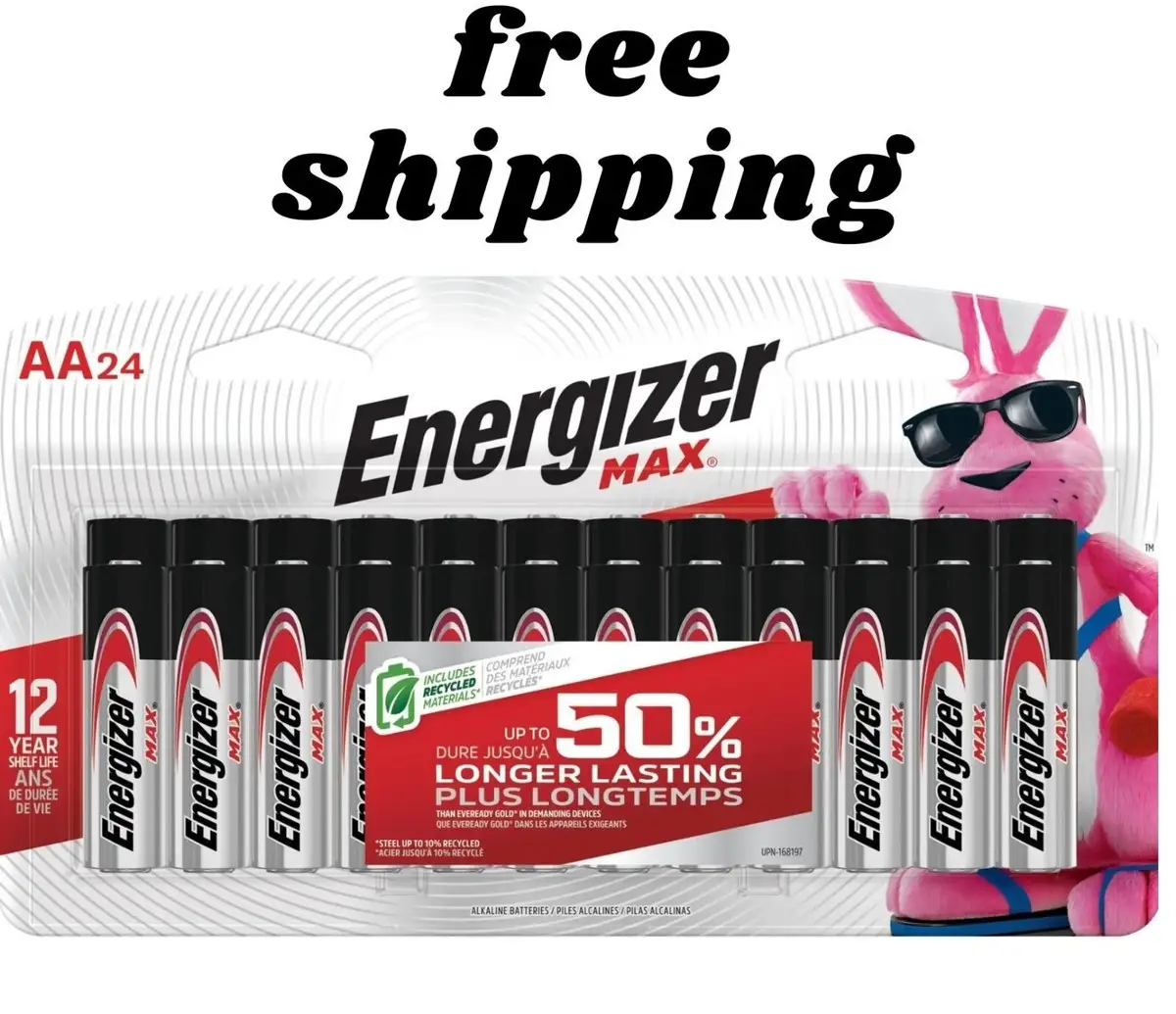
Energizer AA Max Batteries Review: Reliable Stock-Up Pick
The loudest signal in the data isn’t about voltage or branding—it’s sheer volume of approval: Amazon lists Energizer AA Max Alkaline Batteries at “4.8 out of 5 stars” across “44,150 reviews,” while Best Buy shows a “4.8” rating with “11,401 reviews.” That kind of cross-platform scale usually exposes weak products fast. Here, the feedback largely points the other way.
Energizer AA Max Alkaline Batteries verdict: a dependable “stock-up” AA for everyday devices, with recurring praise for longevity and leak resistance—but a smaller set of reports flagging old stock and messy or missing-pack packaging. Score: 9/10
Quick Verdict
Yes (Conditional). Yes if you’re powering remotes, toys, flashlights, clocks, and controllers and want a widely trusted alkaline. Conditional if you’re buying bulk from third-party marketplace listings where packaging/age complaints appear.
| What matters | What people liked | What people disliked | Sources |
|---|---|---|---|
| Battery life in everyday devices | “last for quite some time,” “still going strong five months later” | “lasted one day” (old stock complaint) | Reddit analysis (TheReviewIndex), Fakespot |
| Leak resistance | “never experienced any leaking,” “don’t leak” | Some users buy specifically due to past leaks with other brands | TheGunZone, Best Buy |
| Price vs stores | “cheaper than Walmart,” “saved like $5” | Can feel costly long-term for heavy users | TheReviewIndex, Sharvibe, TheGunZone |
| Packaging & delivery | “arrived quickly,” “as described” | “40 loose batteries just scattered around,” missing packs | TheReviewIndex, Fakespot |
| Use across devices | Remotes, toys, controllers, flashlights, medical devices | Not rechargeable (waste concern) | Best Buy, TheGunZone |
Claims vs Reality
Energizer’s marketing centers on long storage life and leak protection, and the user narratives often echo those claims—though not perfectly.
Claim 1: “Holds power up to 10 years in storage.” Amazon’s listing emphasizes storage readiness: “holds their power for up to 10 years while in storage.” On the product-site copy captured under Twitter/X data, the claim expands into “12-year shelf life” language in places. Users don’t typically “verify” shelf-life claims directly, but the storyline shows up as people buying these to keep spares around for the inevitable remote or flashlight failure.
Digging deeper into consumer language, “having spare batteries on hand” appears in the Reddit-style review snippets, with one reviewer framing the household reality: “with more and more remote controls... it’s imperative to have spare batteries on hand.” The evidence is indirect—convenience and readiness—rather than controlled testing. Still, the buying motivation aligns with the storage-life pitch.
Claim 2: “Leak resistant… up to 2 years after fully used.” Both Amazon specs and Energizer’s professional site copy stress leak protection: “designed to protect devices from leakage… up to 2 years.” Across platforms, that promise lands strongly with shoppers who have had devices ruined before. A Best Buy reviewer put it plainly: “i like that fact that they don't leak.” A longer-form reviewer on TheGunZone also asserts: “I’ve never experienced any leaking or corrosion issues with these batteries.”
However, the story isn’t purely about chemistry—it’s also about handling and sourcing. In the Fakespot data tied to an “80 count” listing, complaints focus on “old” batteries and repackaging (“cheap white box”), which suggests that when buyers run into problems, they often attribute it to stock age or how the batteries were sold, not the brand’s mainstream retail packs.
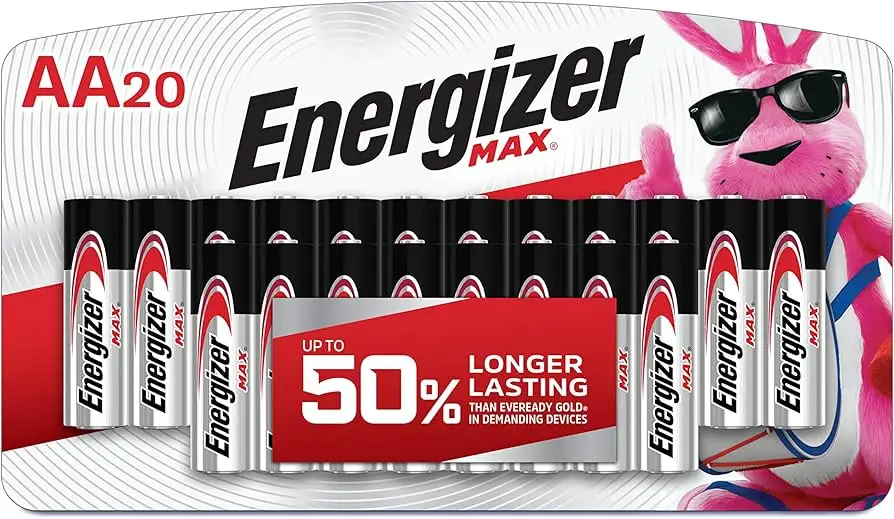
Claim 3: “Up to 50% longer lasting.” Energizer claims “up to 50% longer lasting” (vs basic alkaline/other baselines depending on the page). User feedback frequently describes relative performance rather than precise measurement. One reviewer in the Reddit analysis says: “they seem to last longer then other brands,” and another adds: “they work longer than the amazon brand ones i previously purchased.” That’s consistent with the claim’s spirit, but it’s not a lab-grade confirmation—just repeated comparative experiences in household devices.
Cross-Platform Consensus
Universally Praised
The most consistent praise across Amazon listings, Reddit-style review excerpts, Best Buy, and long-form writeups is simple: these AAs feel reliable in the devices people actually use every day. That matters most to families and anyone managing lots of small electronics—remote controls, toys, flashlights, and controllers—where frequent swaps become a constant annoyance.
On Sharvibe, Ronald Martin describes the “kid’s toys kept dying mid-playtime” problem and claims the fix was immediate: “they last forever… running non-stop for weeks.” That same “toy durability” theme reappears in Best Buy feedback, where one reviewer ties performance to gaming peripherals: “they last a long time in the kids oculus controllers and the xbox controllers.” For parents and gamers, the implication is fewer interruptions and fewer emergency store runs.
A recurring pattern also emerges around value—specifically, buying online instead of in-store. In the Reddit analysis quotes, users call it “best deal around” and even “cheaper than walmart.” Sharvibe’s review adds a concrete personal savings angle: “i saved like $5 getting them here.” For high-consumption households (holiday toys, multiple controllers, frequent flashlight use), the savings story becomes part of the product’s appeal, not just a side note.
Leak resistance is another widely praised theme, and the emotional core here is device protection. Ronald Martin frames it through prior damage: “i’ve had so many devices ruined by battery acid… these haven't leaked at all.” TheGunZone reviewer similarly emphasizes confidence in build: “robust… well-sealed,” and “never experienced any leaking or corrosion.” For people using AAs in flashlights stored for months or in “valuable devices” (as Amazon’s copy describes), this is less about performance and more about risk reduction.
After the narrative, the common “wins” look like this:
- Long-lasting power in low-to-medium drain devices (remotes, clocks, toys, controllers)
- Strong perceived value when bought in multipacks online
- Reassurance around leak resistance and device safety
Common Complaints
The most serious negative reports in the provided data aren’t about the batteries “being weak” in general—they’re about getting questionable stock or questionable packaging. That distinction matters because it shifts the risk from chemistry to supply chain and listing quality, especially in bulk purchases.
On the Fakespot entry, one complaint is blunt: “batteries are old… lasted one day.” Another set of “helpful insights” describes chaotic presentation: “40 loose batteries just scattered around,” plus “flimsy box was flattened in shipment.” There are also missing-item allegations: “there was supposed to be 48 aa batteries but box had been opened and 2 packs of 4 were gone.” For buyers who rely on bulk orders—business users, security-camera owners, or anyone stocking emergency kits—this kind of fulfillment noise is the main practical threat: you can’t benefit from “10 years in storage” if what arrives looks tampered with or incomplete.
There’s also a more fundamental complaint that isn’t about defects: these are single-use alkaline batteries. TheGunZone’s review calls out the tradeoff: “non-rechargeable… can be wasteful,” and mentions “environmental impact.” For frequent users (game-cam operators, heavy controller use, or professional deployments), that critique isn’t about performance—it’s about long-run cost and waste, even when the batteries work as expected.
After the narrative, the recurring complaints cluster into:
- Bulk listing packaging issues (loose batteries, flattened boxes, opened boxes)
- Suspected old stock leading to short runtime in at least one account
- Non-rechargeable design causing cost/waste concerns for heavy users
Divisive Features
The biggest “split” isn’t a technical feature—it’s purchase channel. In typical retail experiences (Amazon’s mainstream listing and Best Buy), the tone is overwhelmingly positive: “awesome batteries at great price,” “always reliable and long lasting,” and “great deal… work well in all my devices.” But in the Fakespot-tracked bulk listing, the conversation turns to presentation and legitimacy signals, like batteries labeled “not for retail trade.”
That creates a practical divide: for shoppers buying standard consumer packs, the narrative is consistency and confidence. For shoppers chasing extreme bulk deals or repackaged lots, the narrative can shift to uncertainty about handling, completeness, and freshness—issues that feel like “battery problems” even when they may be supply-chain problems.
Trust & Reliability
Digging deeper into trust signals, the Fakespot page explicitly frames concerns around repackaging and altered reviews: it says the engine “has detected that amazon has altered, modified or removed reviews from this listing” and “approximate total reviews altered up to 52.” Even if the battery brand remains the same, that kind of marketplace turbulence becomes part of the buyer’s risk calculus—especially when the “helpful insights” mention opened boxes and missing packs.
At the same time, longer-term reliability stories appear in the broader review pool. TheReviewIndex excerpt includes a durability-style anecdote: “these batteries are still going strong five months later.” TheGunZone review, written as repeated household use over time, claims “over the years, i have repeatedly purchased” and describes performance as “dependable.” For buyers prioritizing predictable outcomes—medical devices, security systems, emergency flashlights—those “months later” and “over the years” narratives are the strongest trust anchors in the data provided.
Alternatives
Only a few competitors are explicitly named in the provided data, and they mostly appear as comparison points rather than full alternatives. TheReviewIndex snippets mention “duracell” and compare to “amazon brand ones,” while one quote references “copper top ones” (a Duracell association in everyday speech, though the quote itself doesn’t formally name the brand). The overall theme: some users perceive Energizer AA Max Alkaline Batteries as lasting longer than generic/store brands, and at least comparable or better than other major brands depending on device and price.
A shopper looking for the lowest price might be tempted by “amazon brand ones,” but one user explicitly reports: “they work longer than the amazon brand ones i previously purchased.” Meanwhile, those already committed to big-name alkalines often frame Energizer as the safe bet: “energizer batteries are my preferred batteries to use… never have had an issue with performance.” The tradeoff is that major-brand reliability can cost more unless you catch sales or multipack discounts.
Price & Value
The price story is heavily platform-dependent, and the data shows multiple price anchors. Amazon’s 24-count listing shows “$18.16” (about “$0.76 / count”). Best Buy’s listings vary by pack size and promotion, including a “20 pack” shown at “$5.99” on clearance (though also marked “sold out”), and another listing at “$19.49.”
On the resale side, eBay shows a “16 pack” for “$13.20/ea” from a seller with “99.4% positive feedback,” and broader marketplace listings include multi-pack options and stated “manufacturer warranty 10 years” on one entry. The value implication: for bargain hunters and bulk buyers, deals exist—but the packaging/handling complaints in other sources suggest that chasing the lowest per-cell price can carry non-trivial risk depending on the seller and packaging format.
Community buying advice trends toward “stock up” when pricing is right. Sharvibe’s Ronald Martin says: “the amazon price is insane compared to stores,” and goes as far as “honestly might buy another pack just to stock up.” TheReviewIndex price snippets reinforce that sentiment with lines like “can’t beat the price” and “best deal around.” For households with lots of devices, the consistent advice is to buy multipacks from reputable listings and treat batteries like a pantry staple.
FAQ
Q: Do Energizer Max AA batteries actually last a long time in real devices?
A: Yes—many buyers describe strong longevity in everyday electronics. TheReviewIndex quote says they “last for quite some time,” and another notes they’re “still going strong five months later.” Best Buy reviewers also describe long life in toys and controllers, suggesting consistent performance in low-to-medium drain use.
Q: Are they really leak-resistant, or is that just marketing?
A: Many users echo the leak-resistance claim in their own words. A Best Buy reviewer wrote: “i like that fact that they don't leak,” and TheGunZone review says they “never experienced any leaking or corrosion.” Still, bulk/third-party listings show packaging complaints, which can muddy trust even if the cells are fine.
Q: What devices are people using these batteries in most often?
A: The feedback repeatedly mentions remotes, clocks, toys, flashlights, and game controllers. TheGunZone lists “remote controls,” “wireless computer mouse,” “toys,” “flashlights,” “clocks,” and “portable gaming controllers.” Best Buy reviews also call out Oculus and Xbox controllers, and household remotes.
Q: What’s the biggest risk when buying in bulk?
A: The main risk in the provided data is packaging and freshness concerns from certain listings. Fakespot’s insights include: “40 loose batteries just scattered around,” and another complaint alleges missing packs from an opened box. One reviewer also claims “batteries are old… lasted one day,” pointing to stock age as a potential issue.
Q: Are these a good value compared to other brands?
A: Often yes, especially when discounted online. TheReviewIndex quotes include “cheaper than walmart” and “can’t beat the price,” and Sharvibe claims “i saved like $5” versus stores. Some users also say they last longer than “amazon brand ones,” which can tilt the value equation even if the upfront price is higher.
Final Verdict
Buy Energizer AA Max Alkaline Batteries if you’re a parent juggling toy batteries, a gamer swapping controller cells, or a household that wants dependable remotes/flashlights without constant replacements—because the dominant storyline is “reliable,” “long lasting,” and “don’t leak.”
Avoid (or at least be picky about the listing) if you’re purchasing extreme bulk from third-party marketplace packs where packaging looks repackaged or incomplete; the Fakespot data includes warnings like “40 loose batteries just scattered around” and claims of missing packs.
Pro tip from the community: treat good pricing as a stock-up moment—Sharvibe’s Ronald Martin said the “amazon price is insane compared to stores” and even considered buying extra “just to stock up at this price.”