Energizer 395/399 Batteries Review: Worth It? 8.6/10
“Second battery in the pack was dead.” That one-line frustration sits right next to thousands of glowing ratings—and it captures the reality of Energizer 395/399 Silver Oxide Batteries better than any spec sheet: strong everyday performance, with occasional quality-control hiccups. Verdict: 8.6/10.
Quick Verdict
For most watch owners: Yes. For mission-critical devices where a single dud is unacceptable: Conditional (buy from reputable sellers, test on arrival).
| What buyers cared about | What feedback suggests | Evidence (platform) |
|---|---|---|
| Long-lasting power | Consistently praised | “they consistently provide long-lasting power” (Amazon customer review) |
| Reliability / no duds | Mostly positive, but not perfect | “never a dud!” vs “second battery… was dead” (Amazon customer reviews) |
| Leak resistance | Strong positive theme | “never had an energizer leak” (Amazon customer review) |
| Ease of install | Frequently mentioned | “easy to install” (Amazon customer review) |
| Fit for specific watches | Often a “perfect fit” | “needed these for my Bulova… Perfect fit” (Amazon customer review) |
| Value vs jeweler fees | Big perceived savings | “jeweler… charge you $20+… do it yourself” (Amazon customer review) |
Claims vs Reality
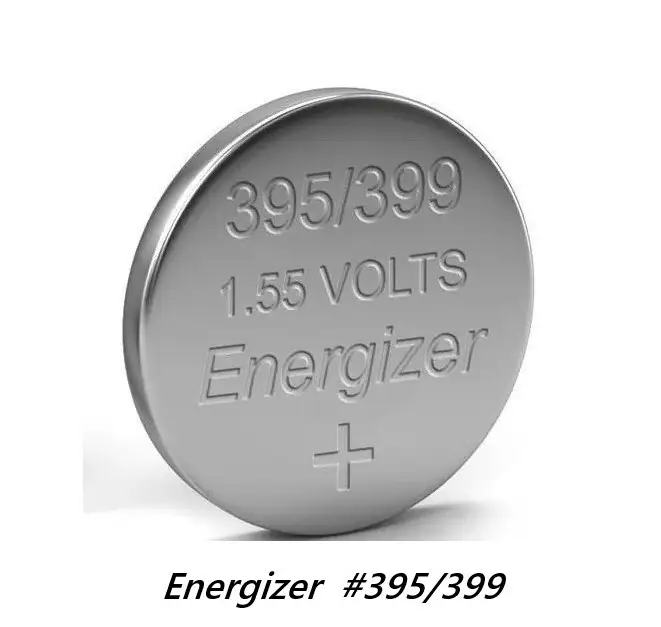
Energizer’s Amazon product copy leans hard on consistency—highlighting “excellent stable discharge characteristics,” “excellent leakage resistance,” and even a “reported failure rate… far less than 1/1000 of 1%.” Digging deeper into user reports, the broad theme supports the promise of steady performance: one Amazon reviewer wrote the batteries “maintain steady performance for a long time,” and another described them as “reliable… and maintain steady performance.”
But the same review set also shows why buyers still hedge their bets when they open the package. A recurring pattern emerged in the form of rare “dead on arrival” complaints. One Amazon customer flatly reported: “Second battery in the pack was dead. Third, good to go.” While that’s not a flood of failures, it’s a meaningful contradiction to the near-zero-failure marketing language: while officially positioned as exceptionally low-failure, at least some buyers are encountering a dud in a multi-pack.
Leak resistance is another place where the marketing claims and lived experience align more cleanly. Energizer highlights sealing structure and “excellent leakage resistance,” and a buyer echoed that confidence in plain language: “never had an energizer leak ! ! ! ! !” In the same breath, that user contrasted it with competitors: “better than dura leaks,” suggesting at least some shoppers are choosing these specifically to avoid the mess—and the device damage—associated with leaking button cells.
Cross-Platform Consensus
Universally Praised
“Never a dud!” is the kind of claim that only shows up when a product becomes routine—something people reorder without thinking. On Amazon, one reviewer explained they keep “a stock of button cells” because they own multiple watches, and concluded: “I’ve had excellent luck with this brand… and I’ve never had any of these cells arrive dead or bad.” For collectors and multi-watch households, that consistency matters less as a headline feature and more as a relief: you can refresh a drawer full of timepieces without the nagging suspicion that half the pack will disappoint.
Long-lasting power also shows up less as lab numbers and more as day-to-day calm. An Amazon reviewer described the batteries as “fantastic” and said they “consistently provide long-lasting power.” Another reinforced the same lived experience in brief, utilitarian terms: “works well . . last long.” For watch wearers, that translates into fewer battery swaps, fewer back-cover removals, and less risk of scratching a case or pinching a gasket during repeated DIY installs.
Ease and fit are repeatedly framed as “no drama” replacements. One Amazon buyer tied it directly to a known watch model: “needed these for my Bulova Marine Star watch… Perfect fit.” Another called the batteries “reliable, easy to install,” and appreciated having spares. For anyone maintaining multiple watches—or swapping a battery before travel—those remarks suggest the 395/399 form factor lands where it should, without the trial-and-error that sometimes comes with cross-referenced button cells.
A final, very practical theme is cost avoidance. One Amazon reviewer put it bluntly: “if you go to jeweler they charge you $20+ to put in batteries per watch… buy a watch kit and do it yourself.” That story isn’t about the battery chemistry; it’s about the ecosystem. For budget-conscious owners of “not… cheap watches,” the value proposition is that a small blister pack can prevent repeated service fees.
Summary of repeated praise (after the stories):
- Long-lasting, steady output for watches and small devices (Amazon reviews)
- Low-leak reputation in real-world use (Amazon reviews)
- Reliable fit and straightforward installation for common watch models (Amazon reviews)
Common Complaints
The clearest complaint is also the simplest: occasional dead cells in a multi-pack. One Amazon customer described a specific sequence: “Second battery in the pack was dead. Third, good to go… Tested the remainder; battery 4 and 5 were good to go.” The frustration here isn’t catastrophic—especially because the pack still mostly worked—but it’s exactly the kind of nuisance that hurts when you’re mid-replacement, tools out, case back open.
That matters most for buyers who want a single battery to revive a watch immediately, not a pack for long-term stocking. If someone orders these to fix a stopped watch before an event, even a one-in-five dud (in one person’s pack) can feel like a betrayal of the product’s reputation. The user’s own summary—“luck of the draw I guess”—reads like resignation more than anger, but it still flags inconsistency.
Another quieter complaint theme is less about the battery itself and more about the buying experience: people are shifting from specialty sellers to online ordering for convenience. One reviewer said: “i used to always have to go to a battery seller… but now… more convenient to order from Amazon.” Convenience is praise, but it also hints at the risk: online fulfillment can be great, yet it’s where buyers become more sensitive to freshness, storage conditions, and the possibility of receiving older stock.
Summary of repeated complaints (after the stories):
- Rare DOA batteries in multipacks (Amazon reviews)
- Higher sensitivity to seller quality and stock freshness when buying online (implied by buying patterns on Amazon/eBay listings)
Divisive Features
The product naming and cross-compatibility language can be confusing, even when the battery works perfectly. Across listings, it’s referred to as 395/399, SR927SW, SR927W, and more. For experienced watch owners, that’s normal; for a first-time DIY replacer, it can create hesitation: am I buying the right one?
At the same time, people who know their exact model number seem delighted by the specificity. The Bulova owner who called it a “Perfect fit” is the flip side of the confusion: once you’ve confirmed compatibility, the swap becomes routine and satisfying.
Trust & Reliability
On Amazon’s large review set for the Energizer 395/399 multi-pack, the tone is strongly trust-forward: one reviewer said they “keep [their] eye on performance” and concluded they’ve had “excellent luck with this brand.” Another declared the batteries “high-quality, dependable,” framing trust as repeatable, boring reliability—exactly what a watch battery should be.
But the same corpus also contains the kind of warning that makes cautious buyers test every cell upon arrival. The “DOA” report—“second battery in the pack was dead”—doesn’t suggest counterfeiting on its own, yet it does reinforce a pragmatic community habit: buy from reputable listings, and verify before relying on one battery for a critical moment.
Alternatives
Only one direct competitor appears in the provided user-discussion data: Duracell 395/399. In the Reddit/community-style quotes included, “sarah” described Duracell as crucial for professional use: “as a busy medical professional, having reliable batteries for my equipment is crucial and these definitely fit the bill.” Another quoted user celebrated Duracell’s versatility “from powering my son’s favorite toy train to keeping my fancy watch ticking away.”
Meanwhile, Energizer’s advantage in the Amazon review snippets tilts toward leak confidence and routine watch use. An Amazon reviewer emphasized: “never had an energizer leak,” and another talked about keeping a stock for multiple watches with “never… arrive dead or bad.” Put simply: Duracell appears in the data as a reliability/versatility pick in personal stories, while Energizer appears as the “I buy these all the time for watches” choice—plus a leak-resistance reputation that some buyers explicitly prize.
Price & Value
At the time of the provided listings, single-cell pricing varies widely by seller and pack format. Amazon’s single “Energizer 395/399 Silver Oxide SR927SW 1pc” is shown at $2.35, while another Amazon listing shows $1.96 for a related 395-399TS item. On eBay, single units appear around $4.28 shipped, reflecting marketplace pricing and shipping overhead rather than raw battery cost.
Value, however, is most vividly expressed through avoided service fees. One Amazon reviewer contrasted the cost of DIY batteries with professional installation: “jeweler… charge you $20+… buy a watch kit and do it yourself.” For owners with multiple watches, the math compounds quickly: even if a pack includes an occasional dud, the savings can remain substantial compared with repeated jeweler visits.
Community buying tips embedded in reviews skew practical: keep spares, order for convenience, and choose pack sizes that match how often you replace cells. Another Amazon reviewer’s habit—“I keep a stock of button cells”—suggests that for frequent users, the best “deal” is the one that keeps you from running out when a watch dies unexpectedly.
FAQ
Q: Are Energizer 395/399 batteries actually long-lasting in watches?
A: Yes, most feedback describes strong longevity and steady performance. An Amazon reviewer wrote the batteries “consistently provide long-lasting power” and “maintain steady performance for a long time,” while another summarized more simply: “works well . . last long.” Real-world stories focus on fewer replacements in watches.
Q: Do people receive dead-on-arrival batteries?
A: Occasionally, yes. One Amazon customer reported: “Second battery in the pack was dead. Third, good to go.” That suggests most cells worked, but not all. If you’re depending on a same-day replacement, buyers’ experiences imply it’s smart to test a cell before closing up a watch.
Q: Do these batteries leak?
A: Reports in the provided data lean strongly toward “no.” One Amazon reviewer said: “never had an energizer leak ! ! ! ! !” This matches Energizer’s marketing emphasis on leakage resistance. Leak anxiety appears to be one reason some shoppers prefer Energizer over other brands mentioned in passing.
Q: Are these a good fit for Bulova watches?
A: Some buyers say yes, for specific models. One Amazon reviewer wrote: “needed these for my Bulova Marine Star watch… Perfect fit.” Since compatibility can vary by exact movement, the safest approach is to match the battery code listed in your watch/manual to 395/399 (SR927 variants).
Q: Is it worth buying these instead of paying a jeweler?
A: For many watch owners, yes. One Amazon reviewer noted jewelers can “charge you $20+” per watch and recommended DIY with a kit. If you own multiple watches, the savings can add up quickly—especially when users report easy installation and reliable performance.
Final Verdict
Buy if you’re a watch owner who wants a dependable, commonly used SR927-size replacement and appreciates the “stock up and forget it” convenience—especially if you’re trying to avoid repeated jeweler fees. Avoid if you need absolute certainty that every cell in a multi-pack will be perfect, because at least one buyer reported a “dead” battery in the pack. Pro tip from the community: “buy a watch kit and do it yourself” to sidestep the “$20+” per-watch service charge (Amazon customer review).