Duracell Coppertop 9V 6-Pack Review: Reliable (8.8/10)
“‘No annoying low-battery chirps at 3 am — bless.’” That single line captures why Duracell Coppertop 9V Battery, 6 Count keeps getting treated like the “set-it-and-forget-it” pick for smoke detectors and other mission-critical devices. Verdict: strong reliability reputation with a packaging asterisk — 8.8/10.
Quick Verdict
Yes (Conditional): Buy if you prioritize dependable 9V power for household safety devices and don’t mind paying a bit more; be aware that shipping/packaging problems show up in user stories.
| What buyers focus on | Evidence from user feedback | What it means for you |
|---|---|---|
| Reliability in smoke detectors | Trustpilot user Ronald Carroll said: “i popped one into my smoke detector… it’s been going strong for months.” | Good fit for low-drain, always-on devices. |
| Long shelf/storage confidence | Tom’s Tek Stop noted: “they hold their charge on the shelf for years.” | Useful for emergency kits and backup drawers. |
| Low leakage anxiety (not zero) | Tom’s Tek Stop wrote: “rarely have they leaked,” but also: “they can still leak.” | Safer to leave installed longer, but not risk-free. |
| Price vs local retail | Trustpilot user Ronald Carroll said: “way cheaper than grabbing them at walmart.” | Value depends heavily on where you buy. |
| Packaging/shipping risk | Trustpilot user Ronald Carroll reported: “package arrived ripped open with missing batteries.” | Consider checking seals/contents immediately on arrival. |
Claims vs Reality
Amazon’s listing leans hard on broad dependability: “long-lasting,” “reliable power,” and “guaranteed for 5 years in storage.” Digging deeper into user narratives, the “reliable power” claim is the most consistently echoed—especially by people using 9V batteries in smoke detectors and similar devices where failure is obvious and annoying.
A verified reviewer-style post on Sharvibe (Trustpilot section) reinforces the everyday reality of that claim. Trustpilot user Ronald Carroll said: “no annoying low-battery chirps at 3 am — bless,” framing longevity less as a lab spec and more as uninterrupted sleep. That same post adds a quick “fresh outta the package” check: “i tested these with my drone battery checker… no duds here,” which aligns with the expectation of consistent out-of-box voltage.
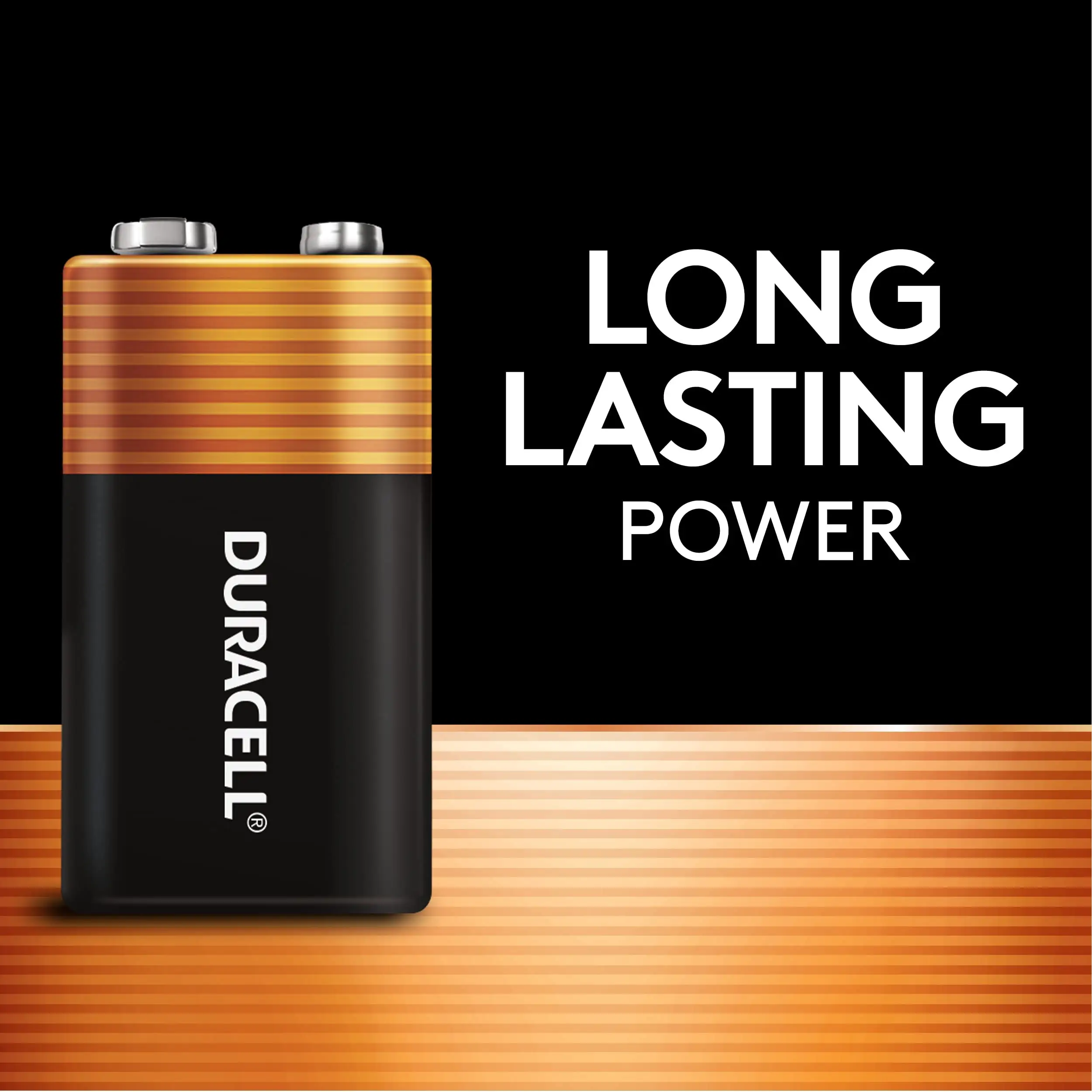
The storage-life claim gets more complicated when you widen the lens. Amazon states these are “guaranteed for 5 years in storage,” yet Tom’s Tek Stop describes a longer horizon in general Duracell Coppertop terms: “retain nearly a full charge for up to ten years on the shelf” and “they have a ten years in storage guarantee to boot.” While that may reflect a broader Coppertop line or older packaging, it creates a perception gap: officially presented as 5 years on Amazon, while at least one reviewer source talks in “up to ten years” language.
Finally, the “quality assurance” vibe runs into a very specific real-world failure mode: shipping integrity. The same Trustpilot entry that praises performance also flags a fulfillment concern: “package arrived ripped open with missing batteries.” That’s not the battery failing in-device—it’s the buying experience undermining trust before the first install.
Cross-Platform Consensus
Universally Praised
A recurring pattern emerged around “mission-critical calm,” especially for smoke detectors. People don’t celebrate a 9V battery for being exciting; they celebrate it for being invisible. Trustpilot user Ronald Carroll tied it directly to smoke detector peace: “it’s been going strong for months.” In that story, longevity isn’t abstract—it’s measured by the absence of chirps, the absence of surprise maintenance, and the feeling that the device is quietly doing its job.
Another repeated praise theme is shelf confidence—having batteries on hand that still feel “ready” later. Tom’s Tek Stop described that long-term trust in simple terms: “they hold their charge on the shelf for years.” For preparedness-focused households, that translates to buying a multi-pack like a 6-count and not worrying that the last battery in the pack will be weak when needed.
Leakage risk—usually the unspoken fear with alkalines—gets framed as “low, but not impossible.” Tom’s Tek Stop said: “rarely have they leaked,” and also explained the practical outcome: “we do not worry with leaving them in appliances for months (or years at times).” For users who keep 9Vs in detectors, testers, or seldom-opened devices, that perception reduces the constant urge to proactively swap batteries out of fear of corrosion.
After these narratives, the praise tends to cluster into a few repeatable takeaways:
- Dependable performance in smoke detectors and other low-drain devices (Trustpilot; Tom’s Tek Stop)
- “Ready when needed” storage behavior for backups (Tom’s Tek Stop)
- Lower leakage anxiety compared with some alternatives, while still acknowledging the possibility (Tom’s Tek Stop)
Common Complaints
The most concrete negative thread in the provided data isn’t about the battery dying early—it’s about packaging and fulfillment problems. Trustpilot user Ronald Carroll relayed secondhand frustration: “one reviewer mentioned their package arrived ripped open with missing batteries.” Even though he added “mine was fine,” the existence of that report matters most for buyers ordering multi-packs, where missing cells can quietly erase the value proposition.
Price is the other recurring tension: buyers like the performance, but some see the brand premium as a tax. Tom’s Tek Stop summarized it bluntly: “expensive,” pointing out that prices “have gone higher over time.” For budget-focused shoppers or high-consumption households, that complaint isn’t theoretical—battery spending becomes “as common as the electricity bill,” in their words.
Leakage also shows up on the complaint side, not as a frequent event but as an unsolved risk that still nags at cautious owners. Tom’s Tek Stop wrote: “they can still leak,” and emphasized you “still must worry that a battery will leak eventually.” For users placing 9Vs into devices where corrosion would be costly (test equipment, audio gear, or anything hard to replace), that lingering possibility can be enough to drive more frequent swaps.
Common complaint themes, as told through user stories:
- Shipping/packaging integrity can fail, leading to missing batteries (Trustpilot)
- Brand pricing feels high even when performance is respected (Tom’s Tek Stop)
- Leakage is “least of any” they tested, but still possible (Tom’s Tek Stop)
Divisive Features
Where opinions split most is value: some narratives frame Duracell as cheaper than local retail, while others frame it as expensive over time. Trustpilot user Ronald Carroll said: “way cheaper than grabbing them at walmart,” implying online purchase can flip the premium into savings. Meanwhile, Tom’s Tek Stop argues the broader trend: “prices have gone higher over time,” encouraging deal-hunting at discount stores.
Another divisive point is the “how long is long” expectation. The Amazon listing emphasizes a “5 years in storage” guarantee, while Tom’s Tek Stop references “up to ten years on the shelf” language. The practical effect is that some buyers may expect near-decade readiness, while the official Amazon framing signals a shorter, clearer promise.
Trust & Reliability
“Missing batteries” is the kind of claim that triggers scam-adjacent anxiety even when the product itself is legitimate. Digging deeper into the Trustpilot-style narrative, the concern is not counterfeit performance but package integrity: Trustpilot user Ronald Carroll said: “package arrived ripped open with missing batteries.” That kind of report tends to make buyers scrutinize seals, count contents immediately, and question the chain of custody.
On long-term durability, the most sustained reliability stories come from reviewer-style sources rather than a true Reddit thread dataset here. Tom’s Tek Stop presents a long-horizon perspective: “over the past couple decades… rarely have they leaked,” plus “they hold their charge on the shelf for years.” That’s not a “6 months later” post in the forum sense, but it’s still a durability narrative rooted in extended ownership and repeated purchases.
Alternatives
Only a few competitors are explicitly named in the provided sources, and the most direct comparison is Energizer. Tom’s Tek Stop said: “duracell batteries appear almost like energizer alkaline batteries… their power lasts just as long,” adding that “neither battery appears to leak any more than the other.” For shoppers who treat 9V alkalines as a commodity, that story suggests you may be paying for brand familiarity and availability rather than a dramatic performance gap.
The same source also frames the competitive landscape as tight: Duracell and Energizer are “in such tight competition for market share.” If your use case is everyday household devices and you’re choosing purely on runtime, that reviewer’s experience implies either brand can satisfy—so discounts and freshness dates might matter more than the logo.
Price & Value
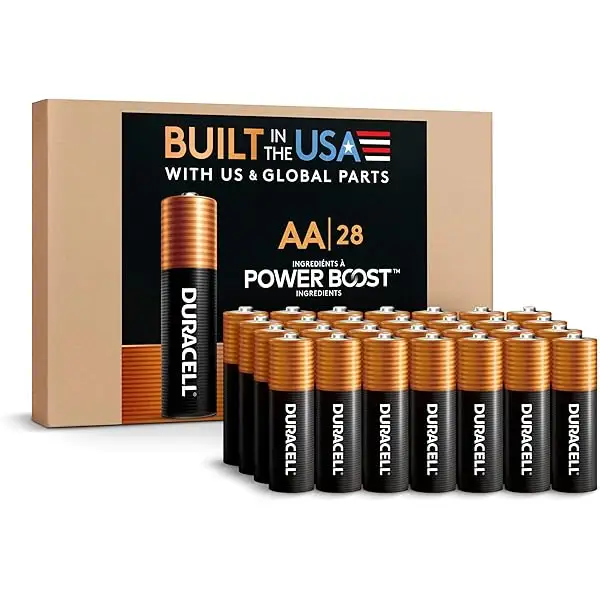
Current Amazon pricing in the provided listing for the 6-count pack appears around the mid-$20s (shown as $25.25 in one scrape, and $22.46 in another listing excerpt). That spread alone hints at what many buyers already do in practice: treat these like a commodity where timing and seller matter.
Value narratives split along “online vs local.” Trustpilot user Ronald Carroll framed the online buy as a win: “way cheaper than grabbing them at walmart.” But Tom’s Tek Stop repeatedly returns to the idea that Coppertops are “expensive” and recommends hunting: “we often see them in discount stores at much lower prices… check out those great deal places first.”
Resale/market pricing adds another lens: eBay listings show lots of Duracell 9V packs and bulk quantities with visible expiration dates (e.g., “exp march 2026,” “exp 2027+”). That pattern suggests buyers care about dated freshness and are willing to trade in bulk. The eBay data isn’t “performance feedback,” but it does show how much expiration dating becomes part of perceived value.
Practical buying tips implied by the community stories:
- Check packaging condition and count batteries immediately (Trustpilot)
- Look for deals; pricing varies widely by channel (Amazon listing; Tom’s Tek Stop; Trustpilot)
- Watch for freshness/“best-by” dates to avoid older stock (Tom’s Tek Stop; eBay listings)
FAQ
Q: What devices do people actually use Duracell Coppertop 9V batteries in?
A: Smoke detectors come up repeatedly. Trustpilot user Ronald Carroll said: “i popped one into my smoke detector… it’s been going strong for months.” Tom’s Tek Stop also lists smoke detectors, remotes, thermostats, testers, clocks, and flashlights as common uses.
Q: Do these really prevent the dreaded middle-of-the-night smoke alarm chirp?
A: Many stories frame longevity as “no chirps.” Trustpilot user Ronald Carroll said: “no annoying low-battery chirps at 3 am — bless.” It’s still device- and usage-dependent, but the strongest praise centers on steady performance in smoke detectors.
Q: Are they safe to store long-term for emergencies?
A: Storage confidence is a recurring theme. Amazon claims “guaranteed for 5 years in storage,” while Tom’s Tek Stop says they “hold their charge on the shelf for years” and even references “up to ten years” language. Practically, users treat them as emergency-drawer friendly.
Q: Do Duracell Coppertop 9V batteries leak?
A: Reports describe leakage as uncommon but possible. Tom’s Tek Stop said: “rarely have they leaked,” yet also cautioned: “they can still leak.” For expensive devices, some buyers may still prefer periodic replacement rather than leaving them installed indefinitely.
Q: Any common shipping or packaging issues when ordering online?
A: Yes—at least one Trustpilot narrative flags it. Trustpilot user Ronald Carroll reported: “package arrived ripped open with missing batteries,” though he added his own order was fine. The recurring advice is to inspect packaging and contents right away.
Final Verdict
Buy if you’re the kind of household that treats a 9V battery as safety infrastructure—smoke detectors, emergency radios, and anything you don’t want failing quietly. Trustpilot user Ronald Carroll summed up the lived benefit as: “no annoying low-battery chirps at 3 am — bless.”
Avoid if your top priority is the lowest possible cost per battery and you’re comfortable switching brands based on weekly deals; even a friendly reviewer source calls Coppertops “expensive” (Tom’s Tek Stop).
Pro tip from the community: Deal-hunt and verify freshness—Tom’s Tek Stop warns that “stores and online vendors sometimes do not remove expired batteries from the shelves,” and the eBay market’s obsession with expiration dates shows many buyers treat that as part of the value equation.