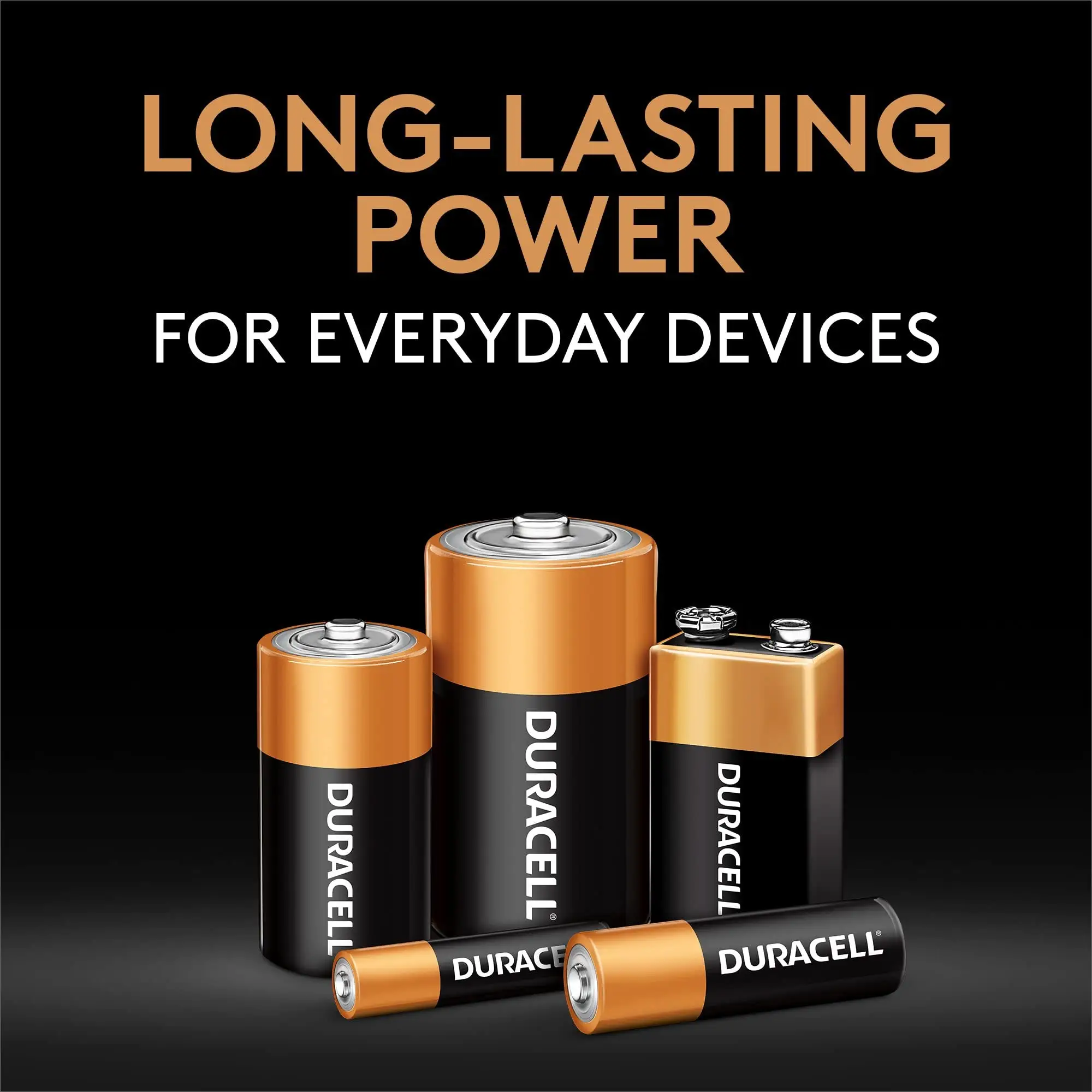
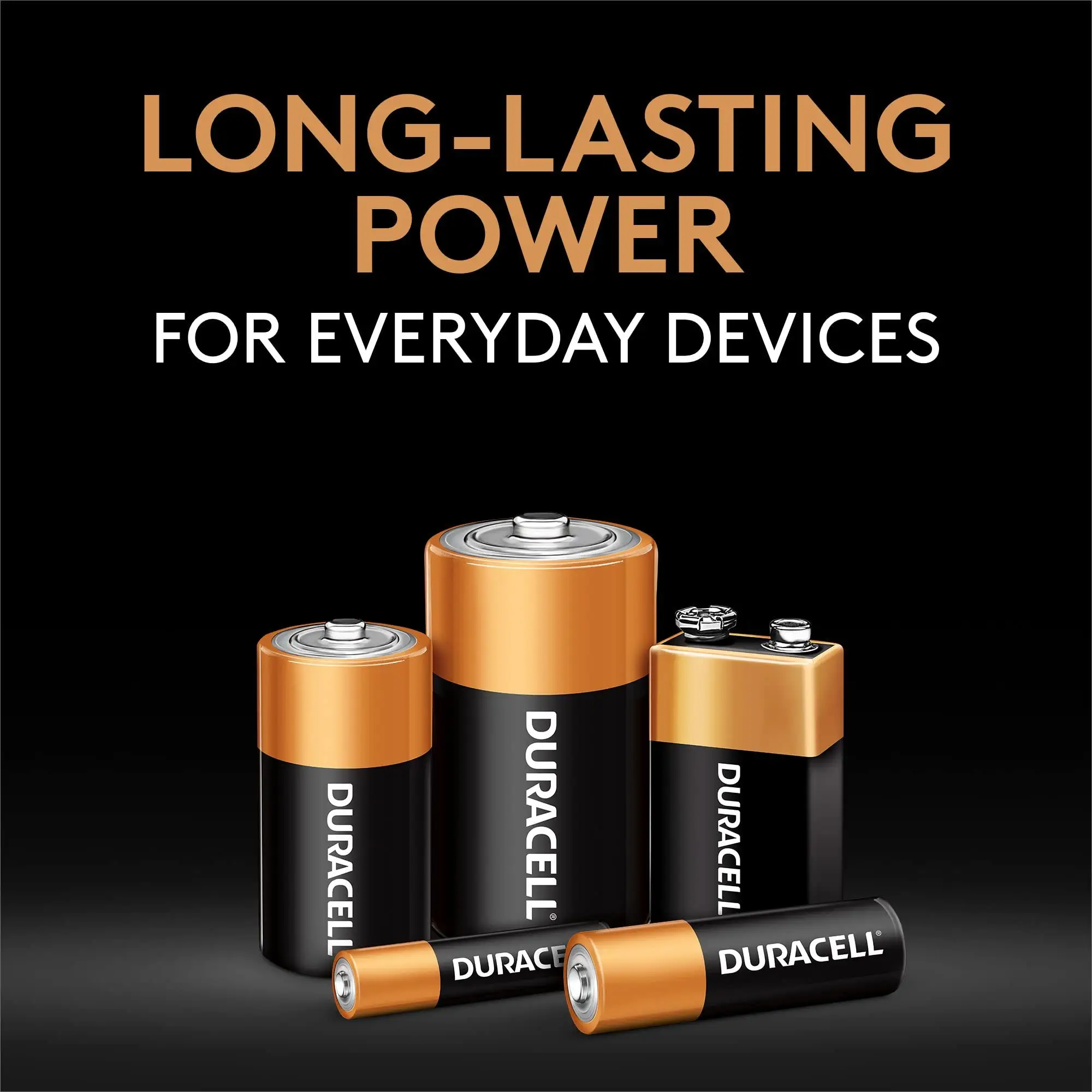
Duracell Coppertop 9V 6-Pack Review: Conditional 8.2/10
A 4.8-star listing on Amazon sits next to a 3.2-star listing for what looks like the same Duracell Coppertop 9V Battery, 6 Count—and that split sets the tone for the real story: the batteries themselves get praised, but the buying experience can swing the outcome. Verdict: Conditional buy — 8.2/10
Quick Verdict: Conditional
Digging through the available feedback, the strongest theme is reliability in “set it and forget it” devices like smoke detectors, plus confidence that the batteries arrive “fresh.” The pushback isn’t really about power output; it’s about packaging, fulfillment, and occasional concerns about what arrives at the door.
A Trustpilot-style reviewer framed it plainly: “no annoying low-battery chirps at 3 am,” while still warning that “one reviewer mentioned their package arrived ripped open with missing batteries.” That combination—strong in-device performance, inconsistent packaging outcomes—explains why some shoppers rave and others rate the experience much lower.
| Call | Evidence from user feedback | Who it’s best for |
|---|---|---|
| Buy? | Conditional | Shoppers who can check packaging on arrival |
| Reliability | “been going strong for months” (Trustpilot post) | Smoke detector and alarm users |
| Freshness out of box | “they were fresh outta the package. no duds” (Trustpilot post) | Anyone avoiding dead-on-arrival batteries |
| Packaging risk | “package arrived ripped open with missing batteries” (Trustpilot post) | Online buyers; gift / bulk buyers |
| Shelf-life expectation | 5-year storage guarantee (Amazon specs) | Emergency kits, storm-season stocking |
| Value angle | “way cheaper than grabbing them at walmart” (Trustpilot post) | Price-sensitive shoppers comparing retail |
Claims vs Reality
Claim 1: “Long-lasting power” for household devices (Amazon specs).
While marketing leans hard on “long-lasting,” the most concrete real-world stories in the provided data come from smoke detectors. A reviewer on a Trustpilot-style post described installing one in a smoke detector and said it’s “been going strong for months,” emphasizing the everyday impact: “No annoying low-battery chirps at 3 am.”
That kind of feedback matters most for homeowners and renters who choose 9V batteries specifically for alarms and carbon-monoxide detectors. It’s not a lab metric, but it’s a lived metric: fewer disruptive chirps and fewer replacements.
Claim 2: “Guaranteed for 5 years in storage” (Amazon specs).
The official guarantee is clear: “duracell guarantees each coppertop 9-volt alkaline battery to last 5 years in storage.” A musician blogger echoed the practical version of that promise, writing: “i’ve had some sit in storage for months and still perform like new when needed.” For emergency preparedness buyers, that story aligns neatly with the storage claim—at least over “months,” not years.
Still, the data doesn’t include true multi-year follow-ups. So while the marketing says “5 years,” the user-supplied narratives here mainly validate shorter-term storage success rather than full shelf-life endurance.
Claim 3: “Quality assurance” and dependable delivery (Amazon specs) vs. shipment reality.
Duracell’s spec language emphasizes defect coverage and dependability, but one of the sharper warnings in the provided feedback isn’t about a defective cell—it’s about fulfillment. A Trustpilot-style reviewer reported: “onereviewermentionedtheirpackagearrivedrippedopenwithmissingbatteries. yikes.” That gap is important: even if the product is dependable, the experience can fail before you ever install one.
A recurring pattern emerged: complaints (when they appear) skew toward packaging integrity and what arrives, not how the battery performs once installed.
Cross-Platform Consensus
Universally Praised
The loudest consistent praise is basic—but valuable: these batteries feel dependable in “mission-critical” devices. A Trustpilot-style reviewer talked about installing a battery in a smoke detector and said it’s “been going strong for months,” highlighting the everyday relief of “No annoying low-battery chirps at 3 am.” For homeowners, that’s not a small perk; it’s the difference between a device you trust and a device that nags.
Another recurring theme is confidence in freshness. The same reviewer described checking the batteries immediately: “i tested these with my drone battery checker… and they were fresh outta the package. no duds here.” That’s especially relevant for buyers who’ve been burned by dead-on-arrival 9V batteries—whether for alarms, testing equipment, or a drawer-stocked emergency kit.
Then there’s the use-case breadth. A musician blogger framed the batteries as a dual-purpose staple for stage gear and home safety: “rock-solid in our smoke detectors (no annoying midnight chirps!) and garage door openers.” For performers, that means fewer failures in effects pedals and tuners; for families, it means fewer interruptions from home devices that should just work.
Even in promotional-style community text, the language mirrors the same sentiment: the product is praised for “reliability and performance” and “long-lasting power,” and it claims the design helps with “reducing the risk of corrosion or damage.” While that source reads more like an ad recap than raw forum posts, it still reflects what the shared narratives focus on: reliability, not novelty.
After those stories, the praise can be summarized plainly:
- Long-lasting performance in smoke detectors and household devices (Trustpilot-style post; musician blog)
- “Fresh outta the package” confidence (Trustpilot-style post)
- Works for both household and hobby/pro use like pedals and tuners (musician blog)
Common Complaints
The most specific negative feedback in the dataset centers on packaging and shipment integrity rather than battery chemistry or device compatibility. The Trustpilot-style reviewer relayed a warning: “one reviewer mentioned their package arrived ripped open with missing batteries.” For bulk buyers, that’s the nightmare scenario—your “6 count” isn’t really six, and the problem isn’t obvious until you need one.
That kind of complaint hits two groups hardest. First: anyone buying ahead for storm season or emergency preparedness, where the whole point is knowing your spares are complete and ready. Second: users replacing multiple alarms at once—if you’re short a battery, you’re forced into a last-minute store run.
There are also hints of more general, low-frequency issues like “packaging issues or the batteries not lasting as long as expected in certain cases,” including “outdated packaging” or “shorter life spans in specific uses.” But those comments come from an “answers” style page summarizing “research,” not direct verbatim consumer quotes, so they function more like an aggregation claim than firsthand testimony.
What’s striking is what’s missing: there aren’t detailed stories here of leakage, device damage, or widespread early failure. The “common complaint” bucket is more about the buying pipeline than the product’s behavior after installation.
After those reports, the complaints can be summarized as:
- Occasional shipment/packaging integrity problems, including missing batteries (Trustpilot-style post)
- Occasional mentions (secondhand) of shorter-than-expected life or outdated packaging (ShopSavvy-style page)
Divisive Features
The most divisive “feature” isn’t a feature at all: the product’s Amazon presence appears split. One Amazon listing shows 4.8 out of 5 stars (261 reviews) for a 6-count pack, while another 6-count Coppertop 9V listing shows 3.2 out of 5 stars (58 reviews) and “currently unavailable.” That divergence suggests buyers may be mixing experiences across listings—possibly due to seller/channel differences or packaging variations.
Price/value is also framed differently depending on context. A Trustpilot-style reviewer called it “way cheaper than grabbing them at walmart,” while the same reviewer still hinted at risk: “cross your fingers for intact shipping.” In other words, online deals can look great, but some buyers may trade retail certainty for shipping variability.
Trust & Reliability
One trust signal in the dataset is how often “no chirps” and “months” come up in smoke-detector use—an application where people quickly lose patience for anything unreliable. The Trustpilot-style reviewer’s framing was blunt and practical: “been going strong for months” and “No annoying low-battery chirps at 3 am.”
At the same time, scam concerns here show up less as “counterfeit battery” claims and more as “did the package arrive intact?” The sharpest distrust moment is the missing-items story: “package arrived ripped open with missing batteries.” That’s the kind of experience that makes buyers question the whole supply chain, even when the cells themselves perform fine.
The provided “Reddit (Community)” content doesn’t include actual Reddit usernames or direct “6 months later” forum-style check-ins; it reads like a deal-and-insights post that paraphrases general sentiment. So the longer-term durability evidence in this dataset is driven mainly by the Trustpilot-style “months” smoke detector report and the musician blog’s repeated-pack confidence: “after years of use across dozens of packs.”
Alternatives
Competitors are mentioned indirectly rather than by specific brand names. A musician blogger said Duracell “consistently outlast the competition,” but didn’t name which batteries lost. That makes it impossible to do a brand-versus-brand breakdown from the provided data.
There is, however, an internal alternative implied: Duracell’s own range and related lines. The Amazon search snippet includes “Procell” 9V options, and other Duracell pack sizes (2-count, 4-count, 8-count, 12-pack) appear. For buyers who want to reduce per-battery cost, the musician blogger recommended pack sizing as a strategy: “the 12-pack is perfect… pro tip: buy two boxes so you’ve always got a fresh stash.” That’s less about switching brands and more about buying format.
From the available feedback, the realistic “alternatives” are:
- Different pack sizes of Duracell Coppertop 9V (Amazon marketplace listings)
- Duracell “Procell” 9V listings shown in marketplace/search results (Amazon snippet; eBay listings)
Price & Value
The pricing picture in the data varies by listing and channel. Amazon specs show a 6-count pack around $25.25 (roughly $4.21/count) on one page, while another “Top Products” scrape shows $22.46 for the same 6-count framing. A deal-style community post referenced a time deal at $15.41 for six, down from $20.29, positioning it as a budget-friendly stock-up moment.
From a buyer’s perspective, value isn’t only per-battery cost; it’s also how often you have to replace them. The musician blogger argued the higher upfront cost pays back: “while not the cheapest option, the extended lifespan makes them more economical in the long run.” And the Trustpilot-style reviewer compared it directly to local retail: “way cheaper than grabbing them at walmart.”
Resale/secondary-market pricing reinforces that 9V Duracell inventory moves in bulk, with many listings emphasizing expiration years (“exp 2027,” “exp march 2029”) on eBay. That signals what bargain hunters already know: when you buy batteries online or secondhand, date codes/expiration windows are part of the value calculation.
Community-style buying tips embedded in the data are straightforward:
- Check freshness/expiration dates when they arrive (ShopSavvy-style page suggests “check expiration dates”; eBay listings highlight exp years)
- Consider larger pack sizes if you burn through 9Vs regularly (musician blog’s “12-pack” and “buy two boxes” advice)
- Inspect packaging on delivery to avoid missing-items surprises (Trustpilot-style warning)
FAQ
Q: What devices can Duracell Coppertop 9V batteries be used in?
A: They’re commonly used in smoke detectors and other household devices. A Trustpilot-style reviewer said they put one in a smoke detector and it’s “been going strong for months,” and a musician blogger also cited “smoke detectors” and “garage door openers” as reliable use cases.
Q: Are these actually long-lasting in smoke detectors?
A: Real-world feedback supports that use. A Trustpilot-style reviewer reported their smoke detector battery has been “going strong for months” with “No annoying low-battery chirps at 3 am.” The dataset doesn’t include multi-year follow-ups, but the short-to-mid term story is positive.
Q: Do the batteries arrive fresh, or are there duds?
A: One reviewer specifically checked. A Trustpilot-style buyer said, “i tested these with my drone battery checker… fresh outta the package. no duds here.” That’s a single anecdote, but it directly addresses the common worry about dead-on-arrival batteries.
Q: What’s the biggest risk when buying online?
A: Packaging and completeness. A Trustpilot-style reviewer warned that “one reviewer mentioned their package arrived ripped open with missing batteries.” Even when performance is praised, that kind of shipping issue can erase the value if you’re counting on a full 6-pack.
Q: Is the 6-count pack worth it compared with buying locally?
A: Some buyers think so. A Trustpilot-style reviewer said it was “way cheaper than grabbing them at walmart,” and a deal-style post highlighted a time price drop to $15.41 for six. The tradeoff mentioned in feedback is making sure shipping arrives intact.
Final Verdict
Buy if you’re powering smoke detectors, alarm systems, or household devices where “no chirps at 3 am” matters, and you like stocking a drawer with a 6-pack backed by a 5-year storage guarantee on paper. Avoid if you can’t risk a shipment arriving damaged or incomplete—especially if you’re replacing multiple detectors at once.
Pro tip from the community: a musician blogger’s playbook is simple—“buy two boxes so you’ve always got a fresh stash”—but pair that with the Trustpilot-style caution and inspect the package immediately for missing batteries.