Corsair HS55 Wireless Review: Budget Dual-Connect Verdict
Few wireless headsets boast dual connectivity at under $100, yet the CORSAIR HS55 WIRELESS Gaming Headset manages it — though not without trade-offs. Across hundreds of reviews, it scores a solid 7.8/10: praised for comfort, versatile connections, and battery life, but hampered by average audio tuning and occasional mic frustrations.
Quick Verdict: Conditional buy — great for multi-platform convenience seekers, less ideal for audiophiles or those needing flawless mic performance.
| Pros | Cons |
|---|---|
| Dual 2.4 GHz dongle and Bluetooth connectivity | Bass can be boomy and muddled |
| Comfortable with memory foam & light weight | Mic quality inconsistent; sidetone too quiet |
| Decent battery life with fast charge | No wired audio option |
| Strong wireless USB range | Occasional connection dropouts via dongle |
| Easy EQ switching on-device | Limited iCUE software features |
Claims vs Reality
Corsair markets the HS55 as delivering “never miss a beat” low‑latency wireless connectivity with up to a 50 ft range. While some verified buyers echoed this — “I can hear perfectly from a couple rooms away with no detectable latency” — Reddit listings show a spec discrepancy: certain batches list wireless range as only 30 ft. Tom’s Hardware measured about 15 m usable range before walls caused breakup.
A second bold claim is “immersive audio” via custom‑tuned 50 mm drivers. Marketing suggests battlefield‑ready detail and clarity. Multiple Best Buy reviewers disagreed, with one noting: “It didn’t really deliver on that hope… lacks in the bass department”, while Tom’s Guide observed thin lows without software EQ. Conversely, some users praised FPS competition mode for making footsteps easy to track.
Finally, Corsair trumpets “crystal‑clear communication” via a Discord‑certified mic. Reality is mixed: a verified buyer reported “mic randomly causes static… common issue”, and Corsair’s community forum highlighted a sidetone so quiet “I literally have to shove the mic into my mouth to hear myself.” Yet others, after configuration, found voice capture “basically flawless.”
Cross-Platform Consensus
Universally Praised
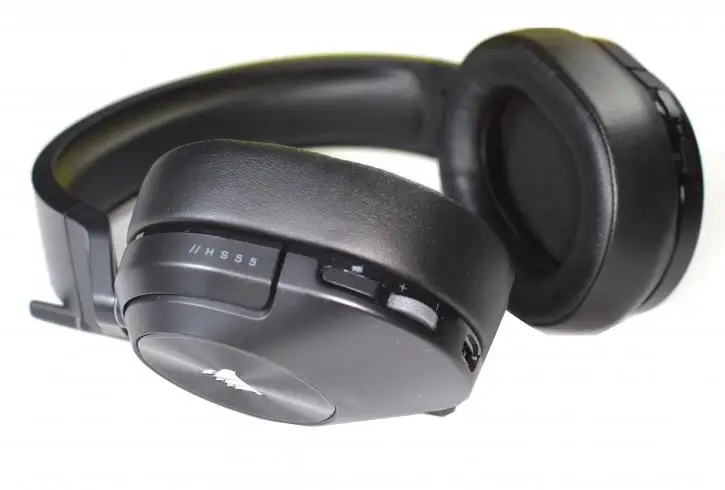
Comfort is the headset’s most consistent win. The 266 g weight and plush ear cushions suit long sessions. A verified Best Buy customer wrote: “Super comfortable even when wearing for long periods”. For glasses wearers, Tom’s Hardware confirmed it fits snugly without pressing frames. Students and remote workers value its versatility — one reviewer uses it on “laptop, PS5, and weekly work meetings” — underscoring seamless switching between Bluetooth and dongle.
Battery performance earns plaudits when expectations meet reality. Though Corsair claims 24 hours, realistic use often yields 16–20. Fast charging is a highlight; “15 minutes of charging provides up to six hours” became a lifesaver for competitive gamers mid‑tournament.
The dual connectivity feature makes it a platform‑agnostic choice. A Best Buy buyer enthused: “Swaps flawlessly between them… very good battery life”, while Trustpilot summaries note reliable wireless USB range even several rooms away.
Common Complaints
Audio tuning divides opinion. A recurring phrase from Tom’s Hardware: “booming, bloated bass” with treble roll‑off. This limits clarity in music and richer game soundscapes. Cinematic players — especially those streaming films — lamented “surround sound… didn’t really deliver… lacks in the bass department”.
Mic performance frustrates some. Sidetone monitoring is ineffective for those who rely on hearing themselves live, especially streamers. Dongle connection dropouts occurred in multiple Best Buy reports: “Cuts in and out regardless of settings… Bluetooth mode more stable but still annoying.” Without a wired fallback, these moments become deal‑breakers.
Another sticking point is the absence of wired audio. Tom’s Guide points out: “Corsair didn’t just remove the fixed audio cable; they didn’t leave a 3.5 mm jack in its place.” This limits use cases for travelers or competitive gamers preferring latency‑free tethered setups.
Divisive Features
Dolby Audio 7.1 availability — via iCUE on PC/Mac — splits PC enthusiasts from console purists. For desktop users, this unlocks richer soundstage; console players get stereo only. Some buyers lauded “surround effect impressive” while others felt it added little over default stereo.
EQ presets are similarly polarizing: quick cycling via the volume wheel pleases casual users but annoys those who accidentally switch modes while adjusting volume mid‑game.
Trust & Reliability
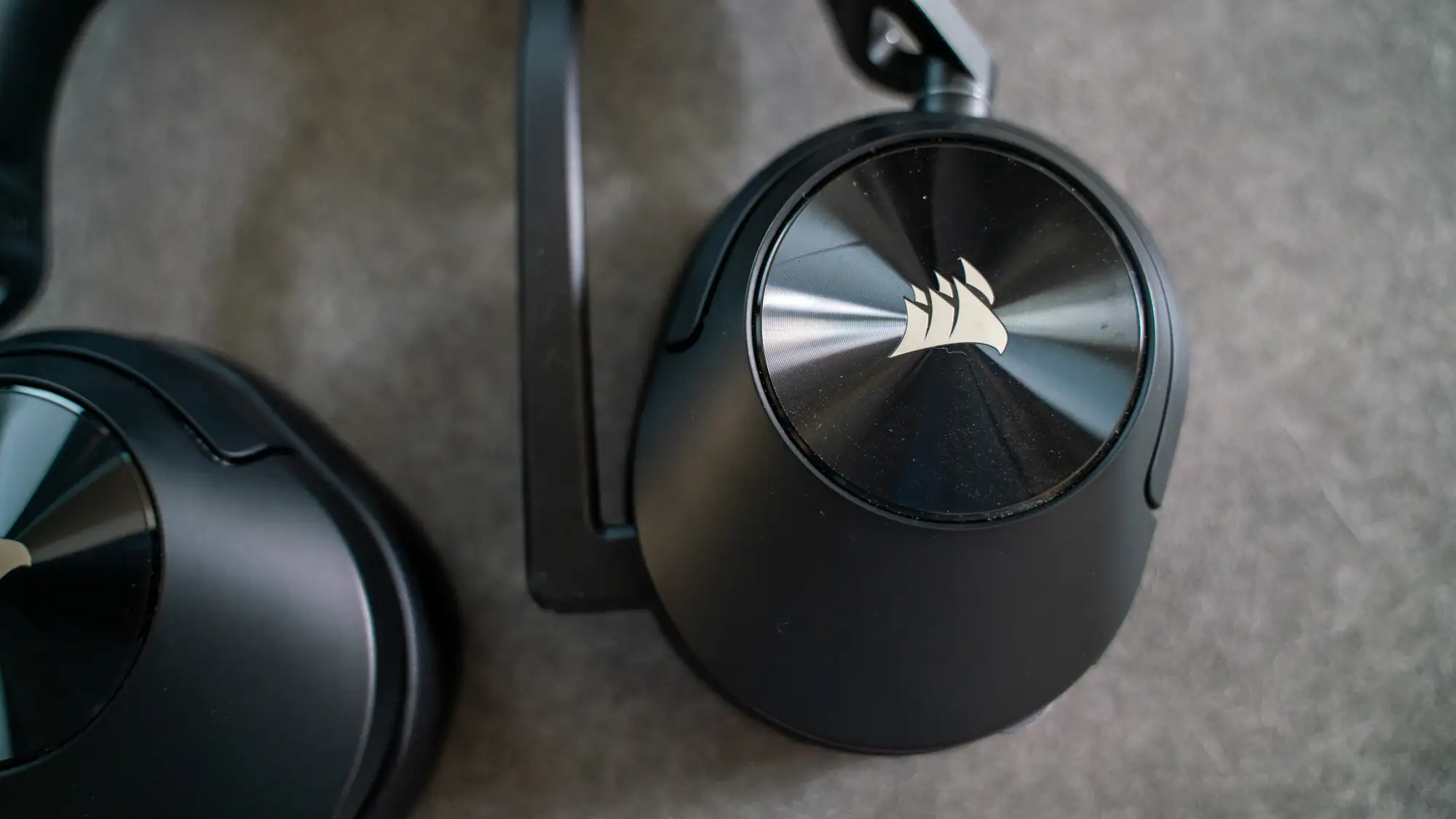
A few Reddit threads and Best Buy critiques identify firmware update woes with the dongle; one user had to return the headset after “fighting with iCUE for a few days.” While most buyers report solid build — steel strap inside headband adds durability — material choices are mainly plastic, making long‑term crack resistance a watchpoint. That said, Tom’s Hardware stressed “no worrying creaks” and solid hinge action after repeated stress tests.
On Corsair’s community forum, prolonged sidetone issues persisted for over a year with “no resolution or feedback,” prompting one buyer to switch brands. This hints at customer service response lag, relevant for support‑heavy users.
Alternatives
Two competitors surfaced often in comparisons:
- Corsair HS70 Bluetooth — retains wired aux cable and dual connection to phone and game device simultaneously; noted for better overall sound quality at the same price.
- SteelSeries Arctis Nova Pro Wireless — premium simultaneous listening from both sources, absent on the HS55. Costs significantly more but solves HS55’s one‑source limitation.
Tom’s Hardware also flagged Creative SXFI Air as an option for spatial audio via USB, matching HS55’s $100 tag but broadening feature set.
Price & Value
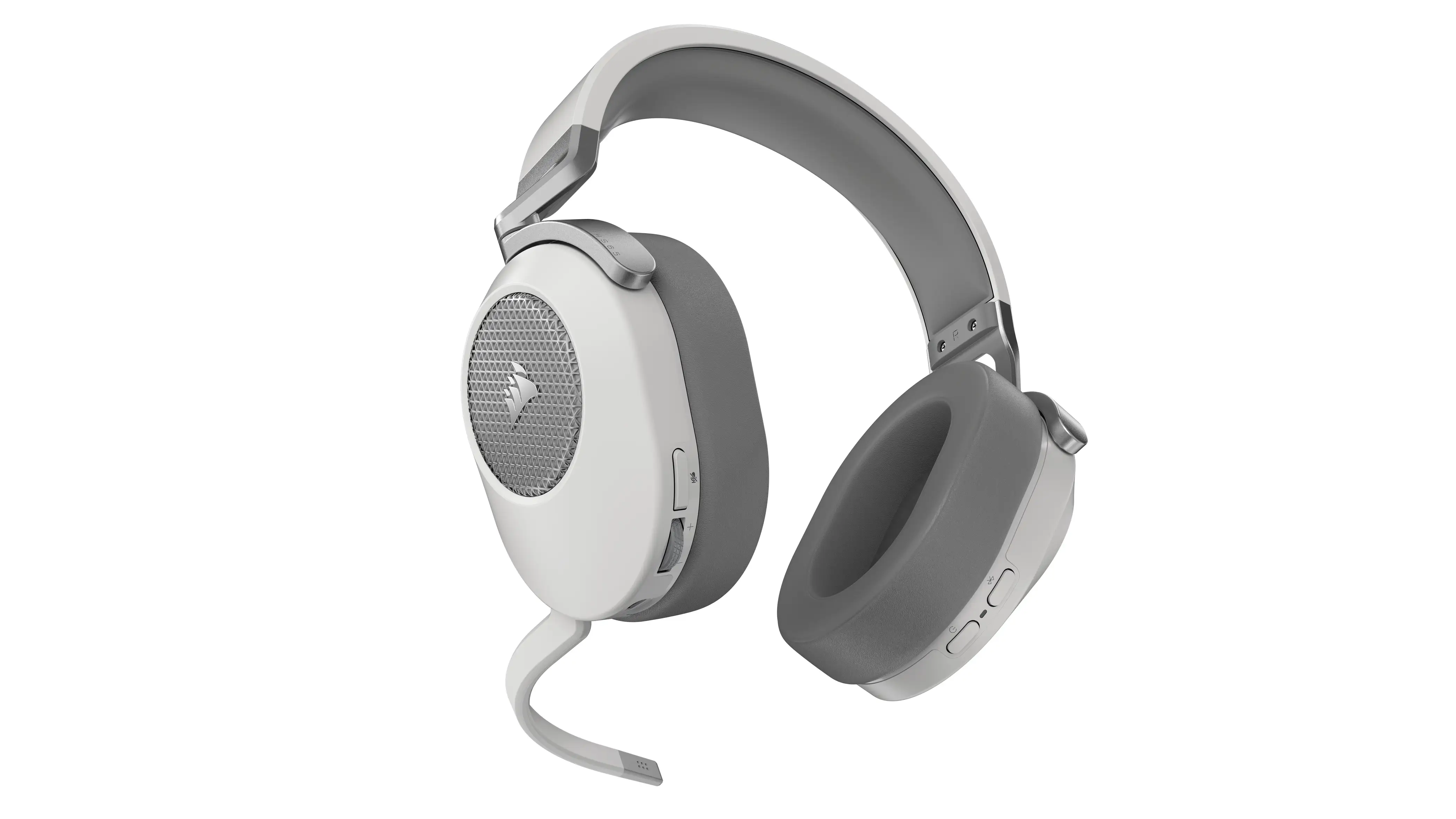
Retail pricing hovers at $99.99, though eBay listings show open‑box units between $42–$45. Discounts into the $50–$79 range at Best Buy drew delighted buyers: “Great buy for $50… nice long battery life.” Resale value remains modest — likely due to lack of wired flexibility and mid‑tier sound tuning — making it attractive as a budget purchase rather than an investment.
For buyers willing to tweak EQ in iCUE and prioritize multi-platform use without needing high‑fidelity audio, this headset punches above its discounted price.
FAQ
Q: Does the HS55 Wireless support simultaneous game and music playback?
A: No. Users can pair 2.4 GHz USB and Bluetooth at once, but Bluetooth is limited to phone calls when USB wireless is active.
Q: How accurate is the 24‑hour battery life claim?
A: Typical usage lands between 16–20 hours. Louder volumes shorten life; fast charging offsets this with six hours from a 15‑minute top‑up.
Q: Will the mic work well for streaming?
A: It’s fine for Discord and casual chat but often compresses voices; sidetone monitoring is weak, making it less ideal for professional streaming.
Q: Is there any wired fallback?
A: No. The USB‑C port charges only; no 3.5 mm or wired USB audio mode exists.
Q: How is comfort for glasses wearers?
A: Well‑reviewed by multiple sources; pads fit snugly without pressing frames, though heat build‑up can occur in warm environments.
Final Verdict: Buy if you want a lightweight, multi‑platform wireless headset for under $100 and can live with average mic performance and bass‑heavy tuning. Avoid if you need wired audio, high‑fidelity sound, or flawless sidetone.
Pro tip from community: Install Corsair iCUE early, update firmware, and set your own EQ — FPS mode often yields the best clarity for competitive play.





