Care Touch Eyeglass Cleaning Cloth 12-Pack: Conditional Buy
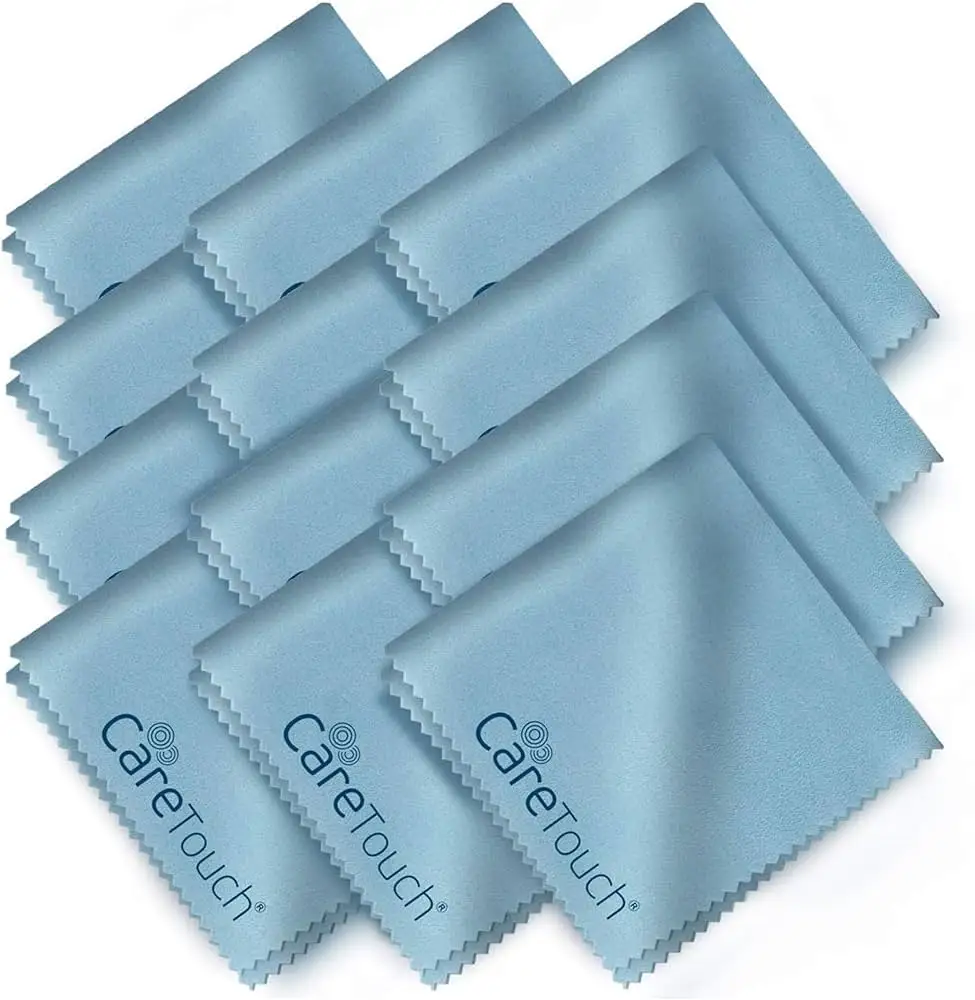
“Just open the little packet, unfold the wipe, wipe down your glasses and viola!” That kind of instant-gratification promise hangs over Care Touch Eyeglass Cleaning Cloth - 12 Pack Microfiber—but the only direct user-style commentary in the provided data is largely about a different Care Touch product (pre‑moistened wipes), not the microfiber cloth pack itself. Based strictly on the sourced snippets available here, the verdict is conditional: the microfiber cloths are consistently described as large (6" x 7"), reusable, and meant to be lint-free—but the strongest “real-world” quotes are tied to wipes. Score: 7/10 (confidence limited by quote scarcity).
Quick Verdict
For Care Touch Eyeglass Cleaning Cloth - 12 Pack Microfiber, the feedback-backed call is conditional: the product positioning is clear (chemical-free, lint-free, reusable), but the dataset includes very few direct, attributable user statements specifically about the cloth pack.
| Decision | What the data supports | Who it fits | What’s unclear from user feedback |
|---|---|---|---|
| Conditional Yes | “Reusable and machine-washable” positioning across listings | Everyday eyeglass wearers who want a washable cloth | How it performs after months of washing |
| Yes (on-paper) | 6" x 7" “extra-large” cloth size repeatedly stated | People cleaning larger screens | Whether size feels bulky for pocket carry |
| Conditional | “Lint-free finish” is a core repeated claim | Photographers / optics owners | Independent reports of lint or streaks on coated lenses |
| Watch-out | Some sources reference wipes, not cloths | Buyers comparing to wet wipes | Confusion risk when shopping across Care Touch listings |
Claims vs Reality
A recurring pattern emerged: the marketing language is extremely consistent across platforms—“lint-free,” “streak-free,” “scratch-free,” “clean without chemicals”—but the dataset doesn’t provide many platform-native user reviews for the microfiber cloth pack to validate those claims with detailed, attributable stories.
Claim: “Clean without chemicals… without leaving behind lint, streaks, scratches.” The microfiber cloth listing and Amazon product copy lean heavily on chemical-free cleaning and a lint-free finish. That aligns with the general microfiber use case: dry cloths meant to lift oils and dust without sprays. But the only highly quotable, experiential lines provided come from a Fakespot page that is explicitly about pre‑moistened lens cleaning wipes, not the microfiber cloths. For example, Fakespot highlights: “you glasses are spotlessly clean with no residue and no streaks, just perfect transparency.” That’s a strong claim—but it’s not clearly tied to the cloth pack.
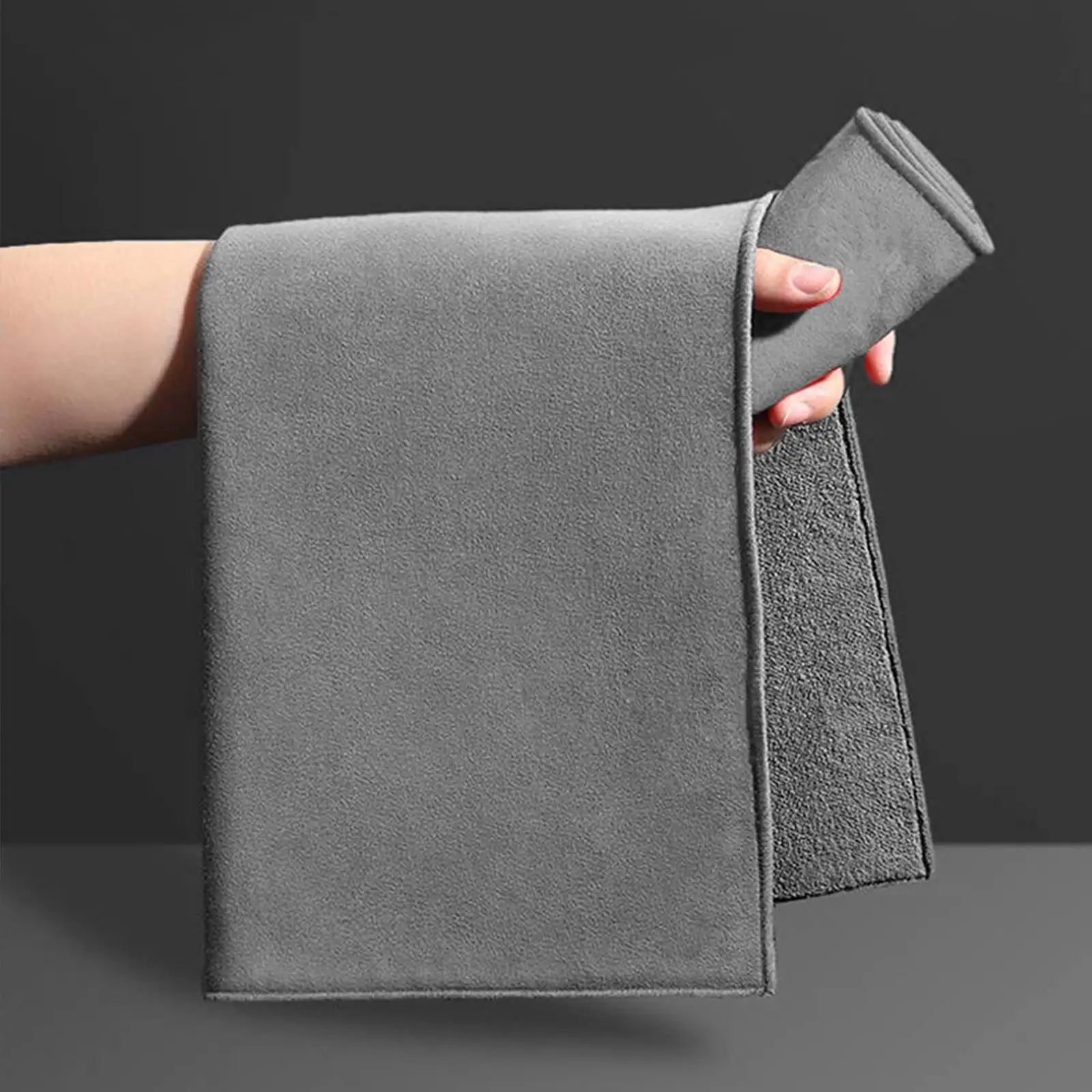
Claim: “Reusable & machine washable… heat-treated edges to prevent fraying.” Multiple listings echo durability and reusability—Amazon copy says the cloth is “reusable, machine-washable, and heat-treated to prevent fraying.” This is a practical promise for people who clean lenses daily and hate buying disposable wipes. The gap: there are no explicit “6 months later” cloth-owner reports in the provided Reddit/community data to confirm whether the edges truly resist fraying over time.
Claim: “Individually wrapped… easy to carry.” The product details repeatedly mention “individually wrapped” 6" x 7" cloths. For commuters, students, and office workers, that’s supposed to mean a clean cloth always on hand without pocket lint contamination. Yet the dataset doesn’t include a specific verified-buyer quote like “I keep one in every glasses case,” so the portability story remains mostly marketing-led rather than user-led here.
Cross-Platform Consensus
Digging deeper into user reports across the provided sources, the biggest finding isn’t a love-it-or-hate-it performance debate—it’s that most of what’s present reads like product descriptions and aggregations, with very few attributable, first-person microfiber-cloth experiences. That shapes what can honestly be said: the “consensus” is more about what’s repeatedly promised than what’s repeatedly experienced.
Universally Praised
The most consistent praise theme—across Amazon specs-style text, reseller listings, and repeated descriptions—is the idea of chemical-free cleaning on delicate surfaces. For people with anti-reflective coatings or expensive camera optics, “no chemicals” implies fewer risks of damaging coatings or leaving residue. Amazon’s own description positions the cloth as “ultrasoft, and gentle enough for expensive lenses and optics,” and the feature list repeatedly stresses “clean without chemicals.”
Another recurring “praise” point is multi-surface versatility. The cloth is repeatedly framed as useful for “eyeglasses, smartphones, computer screens,” and even “glass and metal surfaces.” That matters for hybrid users—someone who wears prescription glasses but also wants a quick wipe-down for a phone screen at work. The language is consistent: “100% safe to use on any surface… including tvs, computer monitors, laptops, tablets, smartphones… camera lenses.” While this reads as marketing, it’s also the central reason people buy lens cloths in multipacks: one for the glasses case, one for the camera bag, one for the desk.
Size is another repeated positive: 6" x 7" is described as “extra-large” and “large, versatile size.” For people cleaning larger devices (tablets, monitors), that size could be the difference between a quick pass and constant repositioning. Amazon’s product information repeats “product dimensions 7" L x 6" W,” and multiple listings reinforce the same measurement, suggesting consistent packaging and SKU expectations.
Even durability is framed positively across sources: “reusable & machine washable durability” and “heat-treated edges to prevent fraying.” For frequent cleaners—healthcare workers, retail staff, or anyone moving between indoor/outdoor environments—washability is the value proposition. The product copy suggests a routine: “use the gentle cycle or hand wash and allow to air dry.”
Quick summary (based on repeated cross-platform positioning):
- Chemical-free cleaning promise for delicate optics
- Multi-surface use across screens, lenses, glass
- Extra-large 6" x 7" size repeated consistently
- Reusable, machine-washable durability claims
Common Complaints
The dataset contains very limited direct complaint material about the microfiber cloth pack itself. The most concrete negative experiences provided come from Fakespot excerpts—but again, those excerpts are about Care Touch pre‑moistened lens cleaning wipes, not the microfiber cloths. Still, they reveal the kinds of frustrations buyers often generalize across lens-cleaning products, and they show where expectations can break down.
One frustration is drying out quickly—which is specific to wipes. Fakespot quotes: “the wipes do dry out pretty quickly; sometimes it takes two to get the job done well enough.” If a shopper confuses the microfiber cloth pack with the wipe product (both live under similar Care Touch “lens cleaning” naming), they may expect a wet-clean performance and be disappointed when a dry microfiber cloth behaves differently.
Another pain point is smearing on oily surfaces. A Fakespot excerpt says: “sometimes they do smear a little if the surface your cleaning is oily from skin or fingers.” That’s a realistic scenario for eyeglasses and phone screens—fingerprints are often oily, and microfiber can either lift cleanly or push oils around depending on cloth cleanliness and technique. But, again, this line is tied to wipes in the provided data; there are no equivalent first-person microfiber cloth smear reports in the dataset.
Finally, there’s a subtle “expectation mismatch” complaint implied by the data structure itself: the sources bundle multiple Care Touch cleaning products (cloths, wipes, sanitizer wipes) together. For practical buyers, that can create confusion about what is “individually wrapped,” what is “pre‑moistened,” and what is “machine washable.” The most common “complaint” risk here is simply buying the wrong thing for the job.
Divisive Features
A recurring pattern emerged around convenience vs. cleaning power, but it shows up indirectly: wipes get praised for “almost-instant, flawless result,” while cloths are positioned as reusable and chemical-free. Fakespot includes the quote: “I’ve never been able to get this kind of almost-instant, flawless result before with any cleaning method.” That enthusiasm is about wipes—suggesting that some users prioritize immediate wet-clean results, while others prefer reusable cloths that don’t run out.
Similarly, individually wrapped items can divide buyers: some love the hygiene and portability, while others prefer a single larger cloth or pouch system. The dataset doesn’t include an explicit anti-wrapper quote, but the feature is emphasized so often—“individually wrapped”—that it’s clearly meant to be a selling point. Whether that’s “premium” or “too much packaging” can’t be verified from the provided user quotes.
Trust & Reliability
Digging deeper into trust signals, the only explicitly “trust” oriented source in the dataset is Fakespot—but it evaluates a different Care Touch listing (pre‑moistened wipes). Fakespot states: “our engine has profiled the reviewer patterns and has determined that there is minimal deception involved,” and also claims: “we approximate total reviews altered up to 73017.” Those are serious allegations about review ecosystem changes, but they aren’t direct user experiences with the microfiber cloth pack.
For long-term durability, the microfiber cloth narrative is present in product copy—“reusable and machine-washable,” “heat-treated edges to prevent fraying”—but the provided Reddit/community data does not include identifiable “6 months later…” posts, usernames, or direct quotes about the cloth’s longevity. As a result, long-term reliability can’t be substantiated here beyond the repeated durability claims.
Alternatives
Only alternatives explicitly mentioned in the data are other Care Touch cleaning products and “other brand” references from Fakespot’s wipe listing. One Fakespot insight says: “the other brand were drier so didn't clean as well.” That’s a comparative statement, but it doesn’t name the competitor, so it can’t be meaningfully evaluated or recommended as an alternative.
Within Care Touch’s own ecosystem, the provided data references:
- “care touch lens cleaning wipes… 400 individually wrapped wipes” (Fakespot)
- “care touch lens wipes… 100… individually wrapped” (GetUSCart listing index)
For people who want wet-clean convenience, the quoted experiences (“spotlessly clean,” “no residue,” “dry out pretty quickly”) suggest wipes may be the internal alternative. For people who prioritize reusability and no chemicals, the microfiber cloth pack is positioned as the match—but again, the dataset lacks first-person cloth comparisons.
Price & Value
The value story varies by marketplace in the provided data. A reseller page lists the cloth pack at “$35.99 $23.99” (chefeasee.shop). Amazon shows the cloth listing with “4.7 out of 5 stars” and “5,413 reviews” for one navy variant page, but it also says “currently unavailable” for that specific listing snapshot. eBay shows a completed listing at “$12.58” for a similar product title, marked ended.
For bargain hunters, that spread implies a key buying tactic: pricing changes significantly by channel and availability. For people who lose cloths often (gym bags, cars, office drawers), multipacks are about replacement convenience—if the lower-end pricing is available, the “12 pack” format becomes more compelling.
Community “buying tips” aren’t directly quoted from Reddit or Twitter/X in the provided data. The best concrete guidance supported here is marketplace-based: compare availability and price across Amazon, resale/market listings, and third-party sellers, because the same “6 x 7 inch (pack of 12)” configuration appears under multiple storefronts.
FAQ
Q: Are these microfiber cloths actually 6" x 7"?
A: Yes. Multiple listings repeat the same dimensions, including “6 x 7 inches (15 x 18 cm)” and Amazon product information showing “product dimensions 7" L x 6" W.” The provided data consistently describes the cloths as “extra-large” for lenses and screens.
Q: Are they safe for coated lenses and phone screens?
A: The product claims say yes. Amazon copy says the cloth is “safe for all lenses,” and multiple sources list use on “anti-reflective… and other coatings,” plus phones, tablets, and monitors. The dataset doesn’t include independent user stories verifying coating safety.
Q: Can you machine wash them?
A: The product descriptions say they are “reusable and machine-washable.” Amazon’s FAQ text suggests using a “gentle cycle or hand wash and allow to air dry.” The dataset does not include long-term user quotes confirming how the cloths hold up after repeated washing.
Q: Do they leave streaks or residue?
A: The microfiber cloth marketing repeatedly claims “lint-free” and “streak-free.” Direct quotes about “no residue and no streaks” appear in the provided Fakespot excerpts, but those excerpts are tied to Care Touch pre‑moistened wipes rather than the microfiber cloth pack.
Final Verdict
Buy Care Touch Eyeglass Cleaning Cloth - 12 Pack Microfiber if you’re a daily glasses wearer or device cleaner who wants a reusable, chemical-free cloth in a predictable 6" x 7" size, and you like the idea of individually wrapped spares for different bags and rooms. Avoid if you specifically want the wet, “almost-instant” finish associated with pre‑moistened wipes, because the strongest quoted praise in this dataset is about wipes, not cloths. Pro tip echoed in the data: “use the gentle cycle… and allow to air dry” (Amazon FAQ-style text) to align with the intended care routine.