Canon EF-S 10-18mm Lens Review: Affordable Ultra-Wide Win
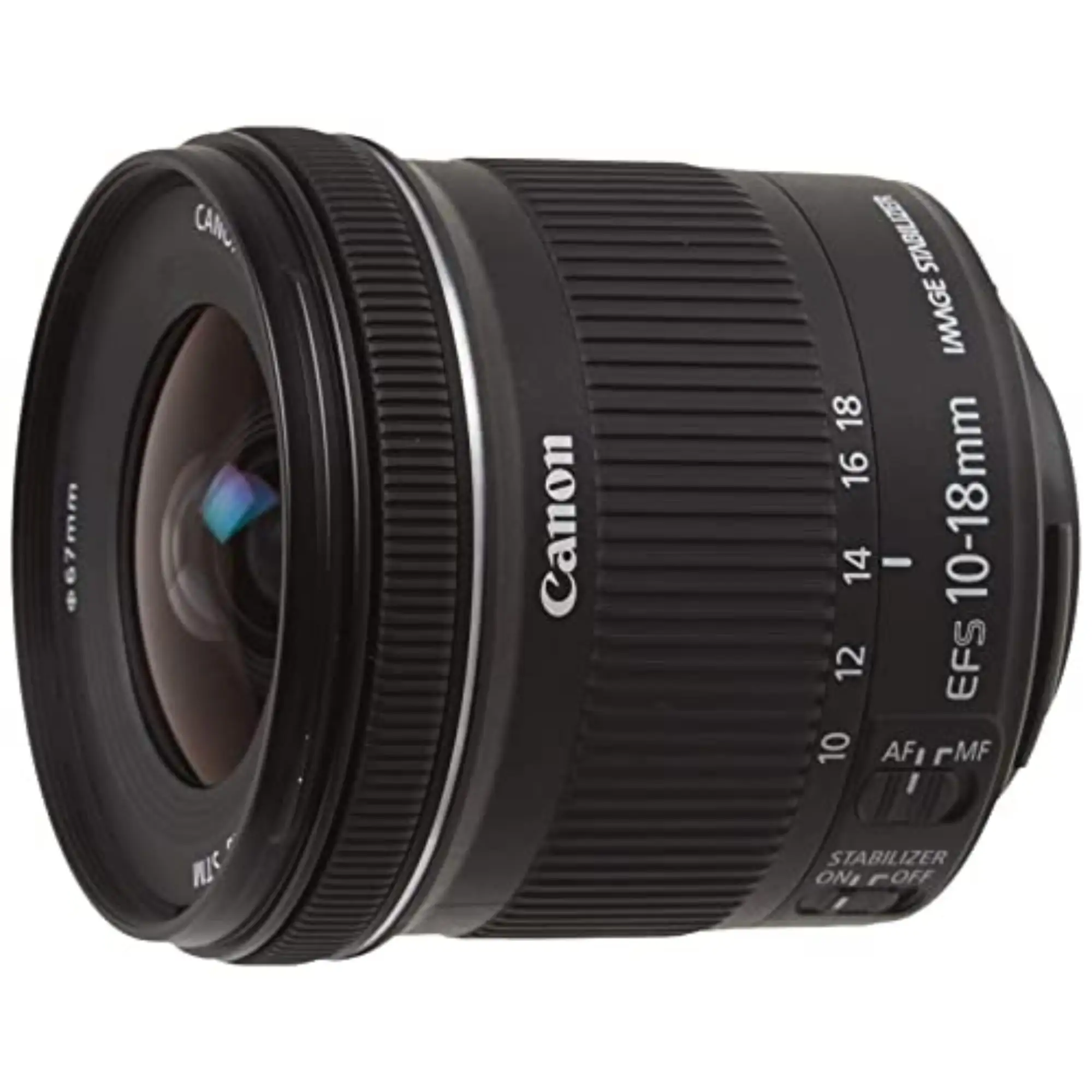
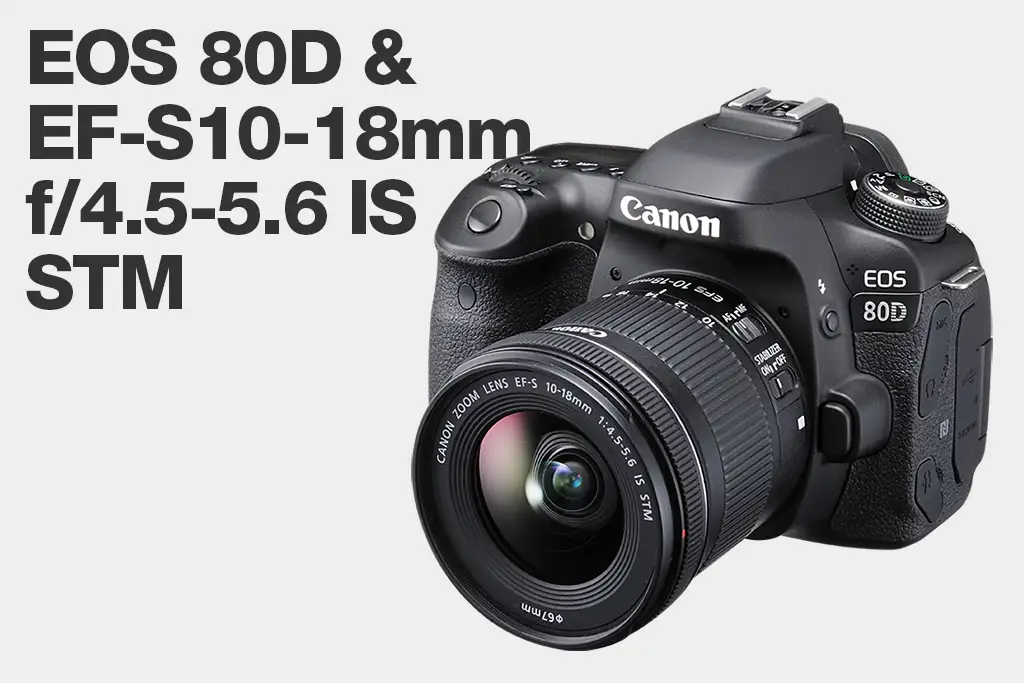
Starting at under $200 on the resale market, the Canon EF-S 10-18mm f/4.5-5.6 IS STM Lens challenges the notion that ultra-wide photography requires ultra-high budgets. With ratings climbing as high as 4.9/5 on Amazon and 4.7/5 from 943 Best Buy reviewers, its reputation among landscape, real estate, and travel shooters is clear: this is an affordable workhorse. The verdict from aggregated feedback: 8.8/10.
Quick Verdict: Conditional buy – excellent for daylight landscapes, interiors, and travel; less ideal for low-light or pro-grade durability.
| Pros | Cons |
|---|---|
| Very wide 10mm field of view without fisheye distortion | Narrow maximum aperture limits low-light performance |
| Affordable new and used pricing | Plastic build lacks weather sealing |
| Smooth and silent STM autofocus for video | Corner softness at widest focal lengths |
| Optical Image Stabilization up to 4 stops | Visible distortion at extreme wide angles |
| Lightweight and travel-friendly | Chromatic aberration in high-contrast scenes |
| Sharpness improves at mid zoom range | Not compatible with full-frame cameras |
Claims vs Reality
Canon’s marketing positions the EF-S 10-18mm STM as a compact, ultra-wide lens with “optical excellence” and smooth STM focusing ideal for travel and interiors. The company touts “high-contrast, high-resolution images with minimal glare and aberration,” alongside Image Stabilization that delivers up to four stops of shake reduction.
Digging into user reality, one Reddit post mirrors the manufacturer’s praise, calling it “a must-have lens for entry-level users” and highlighting its “exaggerated perspective” for dramatic compositions. Best Buy customer nc tritech described it as “the best value in wide angle lenses, bar none,” adding that it “swallows everything you see in your natural field of view.”
Yet limitations emerge in low-light scenarios. Lisa online admitted, “The lens doesn’t work well in low light conditions… I had to Photoshop to brighten up.” This points to the real effect of the f/4.5–5.6 aperture – it’s fine outdoors or in well-lit interiors, but struggles without supplemental lighting or slower shutter speeds.
Cross-Platform Consensus
Universally Praised
A recurring highlight is how this lens empowers real estate and interior photographers. Best Buy reviewer evas photos noted, “It makes a smaller kitchen appear larger… capture the entire room because of the wide angle.” Landscape enthusiasts like osmana 67 called it “a whole different experience” for nature shots, praising sharp waterfall images. Travel photographers love its portability – a Reddit contributor emphasized it’s “20 percent smaller and 38 percent lighter” than the similar EF‑S 10‑22mm, making it easier for casual shooters to carry all day.
Video creators also benefit from STM’s silent autofocus. Reno pointed out, “The auto focus is just dead silent… built with video in mind.” Paired with stabilization, it remains usable handheld, even for panning shots.
Common Complaints
The most consistent gripe concerns low-light performance. Multiple Best Buy reviewers reported difficulty shooting indoors without bright lighting, unless deploying tripods or post-processing adjustments. Lisa online and ispete both referenced weakness at night or in dim rooms. While Canon promises “capture the moment… even in low light,” the gap becomes evident: the stabilization helps with blur, but doesn’t compensate for insufficient light gathering.
Distortion at the extremes also affects certain use cases. While manageable in landscapes, architectural photographers sometimes see bowed lines when shooting at 10mm without correction. Trustpilot-style summaries and forum threads mention chromatic aberration appearing in high-contrast edges, especially in corner regions.
Divisive Features
Build quality splits opinion. Reno described it as “cost cutting high quality plastic” – lightweight yet not premium-feel. Some appreciate the portability advantage, others feel uneasy about durability, especially without weather sealing. Corner softness is another point of divergence: photographers focusing center-frame find it negligible, but pixel-peepers notice it at widest settings.
Trust & Reliability
Longer-term accounts suggest stable performance for casual and semi-pro users. Xd jj, using it for over a year, confirmed “gets everything… truly recommend it.” Drum kit player 1 found it reliable for group shots in tight rooms. However, no feedback indicates extensive harsh-weather use – unsurprising for a non-sealed lens. There are no signs of widespread mechanical failure; STM focus continues to earn praise years after purchase.
Scam concerns don’t appear significant in official or reseller channels, but buying via eBay shows wide variance in condition and price, with “C grade” listings under $100. Several bundles include cheap accessories, with experienced forum users warning to check authenticity when prices drop unusually low.
Alternatives
The most direct comparison in user narratives is the Canon EF-S 10-22mm f/3.5-4.5 USM. Jimin monterey contrasted them, noting the 10-18mm costs “almost half” and “not disappointed” in performance despite the smaller aperture. For shooters needing more light, upgrading to faster primes or the 10-22mm makes sense but at double the budget. Others mention generic brands, but Stan insisted this lens delivers “best quality… even cheaper than other generic brands.”
Price & Value
On eBay, pre-owned EF-S 10-18mm lenses range $99–$175 depending on condition, while new listings hover around $194–$230. Amazon’s renewed units rate 4.9/5 stars. This leads to strong value retention compared to other kit lenses. Best Buy shopper Computer geek 10101010101 captured the sentiment: “A lot of lens for what you pay for.” Lower resale prices make it an accessible entry point into ultra-wide shooting without risking heavy loss if resold.
FAQ
Q: Is the Canon EF-S 10-18mm compatible with full-frame cameras?
A: No, it’s designed for Canon APS-C cameras. Multiple users caution that it won’t mount or cover full-frame sensors without cropping.
Q: How does it perform for video recording?
A: Smoothly – the STM motor delivers quiet, continuous autofocus. Reno described it as “dead silent,” ideal for travel vlogging or real estate walkthroughs.
Q: Can I shoot in low light without a tripod?
A: Only in well-lit environments. With f/4.5–5.6 aperture, handheld low-light shooting is challenging, though Image Stabilization reduces blur if shutter speeds drop moderately.
Q: What filter size does it use?
A: 67mm, making it easy to find affordable UV or ND options; many resale units include filters as part of bundles.
Q: How sharp is it across the frame?
A: Center sharpness is high, especially at f/8–f/13. Corner softness appears at 10mm, noted by architecture photographers; stopping down helps.
Final Verdict: Buy if you’re a landscape, travel, or real estate photographer seeking an affordable, lightweight ultra-wide option for APS-C. Avoid if your primary work is low-light interiors or requires weather-sealed durability. Pro tip from community: aim for the 12–14mm range for optimal sharpness, and carry a tripod if you frequently work indoors.