Texas Instruments BAII Plus Review: Strong CFA Pick
The Texas Instruments BAII Plus Financial Calculator has built a cult following among finance students and professionals, scoring a strong 8.6/10 across platforms. It's widely recommended for CFA candidates and accounting majors, praised for its intuitive layout and exam approval, but with a recurring critique about button feel and battery replacement difficulties.
Quick Verdict: Conditional Recommendation
| Pros | Cons |
|---|---|
| Approved for CFA and other finance exams | Button feedback feels “sticky” to many users |
| Easy to learn for beginners | Battery replacement process is cumbersome |
| Excellent core financial functions (TVM, NPV, IRR) | Slightly flimsy build—no rubber feet |
| Affordable compared to competitors | Response speed sometimes “a little slow” |
| Compact, portable, and durable protective cover | Requires extra keystrokes vs HP models |
| Clear display with labeled variables | No contrast adjustment |
| Long-term reliability reported by professionals | Fringe features not compelling for some |
Claims vs Reality
Marketing emphasizes advanced financial calculations like time value of money, amortization schedules, and cash-flow analysis up to 24 uneven cash flows. While these features largely deliver, some users find the actual workflow less streamlined than advertised. A verified Best Buy buyer noted: “It works perfectly… gets the job done,” yet others say simple functions require “unbelievable” keystrokes compared to HP models.
Another claim is ergonomic usability through color-coded keys and prompted displays. Reddit user feedback showed mixed experiences: one CFA candidate said, “The buttons are much stickier and I could never get used to it. Switched to the BAII Plus and it’s a big improvement”, suggesting that ergonomics depend on personal button press styles.
Lastly, TI markets durability and portability with a protective cover. While many like the compact size (“Can fit in your pocket… very easy to operate,” per a Best Buy review), others argued the slip case “doesn’t fit securely” and the lack of rubber feet means you must use two hands to keep it from sliding.
Cross-Platform Consensus
Universally Praised
For finance students, especially those taking CFA exams, this calculator is described as a non-negotiable. Staples customer Jahn L. bought it “just what he needed for business classes” and several Best Buy reviewers mention cutting homework time “in half” thanks to quick TVM and NPV calculations. The clear display with variable labels helps beginners confirm figures before finalizing.
Portability earns near-universal approval. A Best Buy buyer loved that it “can fit in your pocket” while being “very easy to operate” for quick math—benefiting MBA students moving between classes. For professionals, the low cost compared to competitors like the HP 12c is a highlight, with The Humble Broker noting it provides “the most bang for your buck” without skimping on functions.
Long-term reliability is a recurring theme. One finance pro in The Humble Broker piece has used their BAII Plus for 15 years, carrying it “to the car dealership to figure out implied interest rate on a loan,” showing durability beyond academic use.
Common Complaints
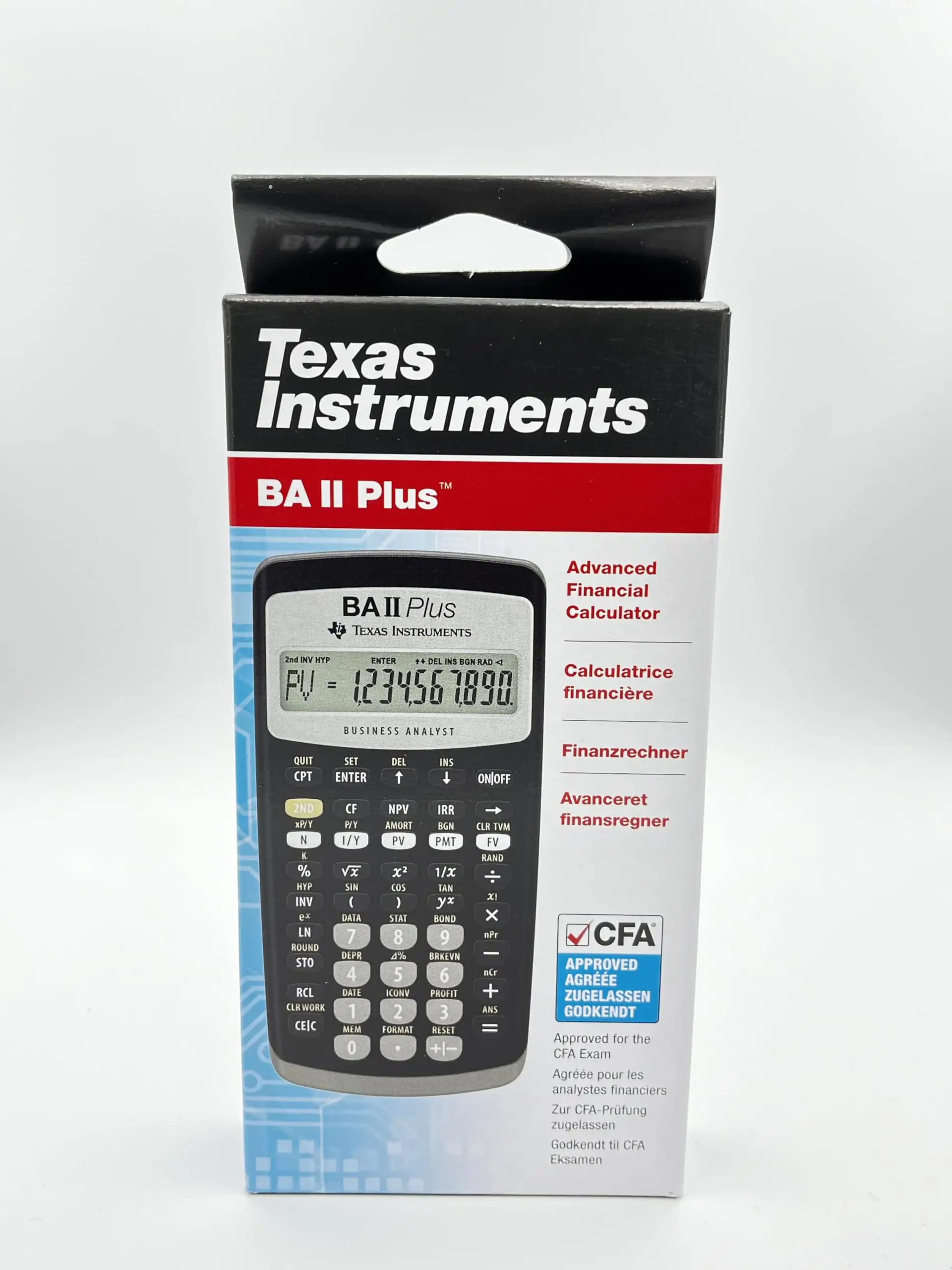
Button feel is the loudest critique. Reddit user feedback shows repeated frustration: “The pro consistently eats inputs… the non-pro has buttons more reliable when going fast.” Best Buy reviews praise responsiveness for the basic BAII Plus, but BAII Plus Professional users often disliked the tactile resistance.
Battery replacement is another sore spot. One reviewer explained, “User not only needs to unscrew the back, but needs to tear the back cover apart as well… I’m afraid I might break it.” This can be inconvenient for exam-takers, where downtime is costly.
The physical build—described by an Amazon reviewer as “flimsy… no rubber feet”—can be a dealbreaker for those working on slick desks. Professionals comparing to the HP 12c often find TI’s casing less solid, although lighter weight sometimes suits travel.
Divisive Features
Extra calculation modes (like duration and MIRR) split opinions. Some professionals find them useful for bond analysis and payback periods; others, like a Reddit CFA user, note these are “incredibly easy anyways” and add little value for the price difference.
Design aesthetics are divisive—some love the “up-to-date” look compared to the HP 12c, while others call the interface “pretty old” and the logic of operation “dull.”
Trust & Reliability
No scam concerns surfaced—purchases from Best Buy, Staples, and Amazon delivered authentic products with protective cases and manuals. On long-term performance, multiple users attest to years of flawless function: “Fifty years of TI calculators,” wrote a Staples buyer, while others mention passing calculators down to children for college use.
Durability beyond aesthetics appears sound; despite complaints about flimsy feel, real-world user reports don’t indicate hardware failure, only ergonomic and build perception issues. Reddit user owning “two pros” still says, “If I lost my BAII Plus Pro, I’d certainly buy it again.”
Alternatives
The HP 12c surfaces often as the main competitor. The HP wins on tactile feel and fewer keystrokes for tasks (“six steps on TI vs two on HP”), along with display persistence after power-off. However, HP uses reverse Polish notation, off-putting for beginners comfortable with algebraic entry.
HP 17BII gets mention for its comprehensive, practitioner-level functions and a menu-driven interface, but it’s not CFA exam approved—limiting use for credential-bound students. For most examinees, the BAII Plus remains the pragmatic choice.
Price & Value
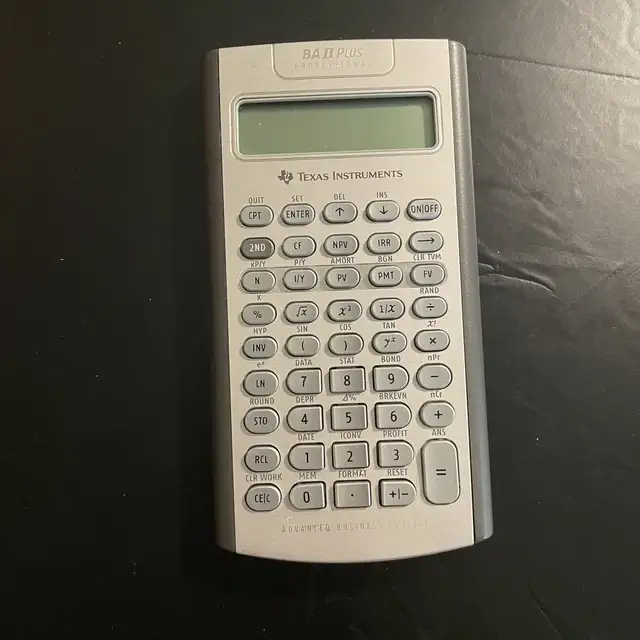
Current retail pricing centers around $43–45 new, as seen on Best Buy and eBay listings. Used units in good condition fetch $22–25, signaling strong resale for a specialty tool. The community often frames it as an “affordable and durable” pick, especially for students needing CFA-approved devices.
Buying tips from Reddit and Best Buy reviewers recommend standard BAII Plus over Professional unless specific advanced functions (like duration) are necessary. For resale or long-term ownership, protective case quality and battery replacement ease should be factored.
FAQ
Q: Is the BAII Plus allowed on finance exams?
A: Yes, it’s approved by the CFA Institute, GARP FRM, and other professional certifications, making it a staple for exam takers needing advanced financial functions in a portable format.
Q: How hard is it to learn?
A: Beginners often find it easy thanks to color-coded keys and prompted display guidance. A Best Buy reviewer said they “found the functions easy to understand” as a first-time financial calculator user.
Q: Does the Professional version offer major advantages?
A: Only marginally—added features like duration are helpful for specialized cases, but Reddit feedback suggests most students won’t use them often. Button feel can be worse for fast input.
Q: How is battery life and replacement?
A: Battery life is solid thanks to automatic power-down, but replacement is cumbersome. Multiple users warn the process involves unscrewing and prying the cover, risking damage.
Q: Will it last beyond college?
A: Yes—finance professionals report using the same calculator for over a decade without failures, indicating robust internal build despite light external casing.
Final Verdict: Buy if you’re a finance student, CFA candidate, or professional wanting an affordable, exam-approved calculator with clear guided entry. Avoid if you prioritize premium button feel or need ultra-fast keystroke workflows—HP models offer a tactile upgrade. Community pro tip: stick to the standard BAII Plus unless you have a specific need for the Professional’s extra functions.