AT&T Pro Wireless Charging Pad Review: 6.6/10
“However, it gets quite hot for a wireless charger” is the line that keeps showing up once you get past the marketing. AT&T Professional Series Wireless Charging Pad lands as a conditional buy: it can be genuinely convenient and case-tolerant for some setups, but heat, older connectors on certain versions, and occasional “doesn’t charge fully” reports keep it from feeling universally safe. Verdict: 6.6/10.
Quick Verdict
For the AT&T Professional Series Wireless Charging Pad, the answer is Conditional: worth it on a good sale (or if you already have the right power brick/cable), but watch for heat and model/version differences.
| What the data points to | Pros (with source) | Cons (with source) |
|---|---|---|
| Charging performance | “charges fast, compact, its a winner!” (Amazon reviews) | “doesn't charge fully” (Amazon reviews) |
| Case compatibility | “charges through a fairly thick case” (Amazon reviews) | Needs positioning “at a certain angle” with OtterBox Defender (Slickdeals) |
| Convenience factor | “makes charging my iphone very easy” (Amazon reviews) | “not the best value… uses micro-usb… outdated” (Amazon reviews) |
| Heat management | — | “it gets quite hot… my phone gets very warm” (Slickdeals) |
| Price/value | $10 sale called out as “67% savings” (Slickdeals) | Higher pricing elsewhere ($19.99–$25 on eBay listings) |
Claims vs Reality
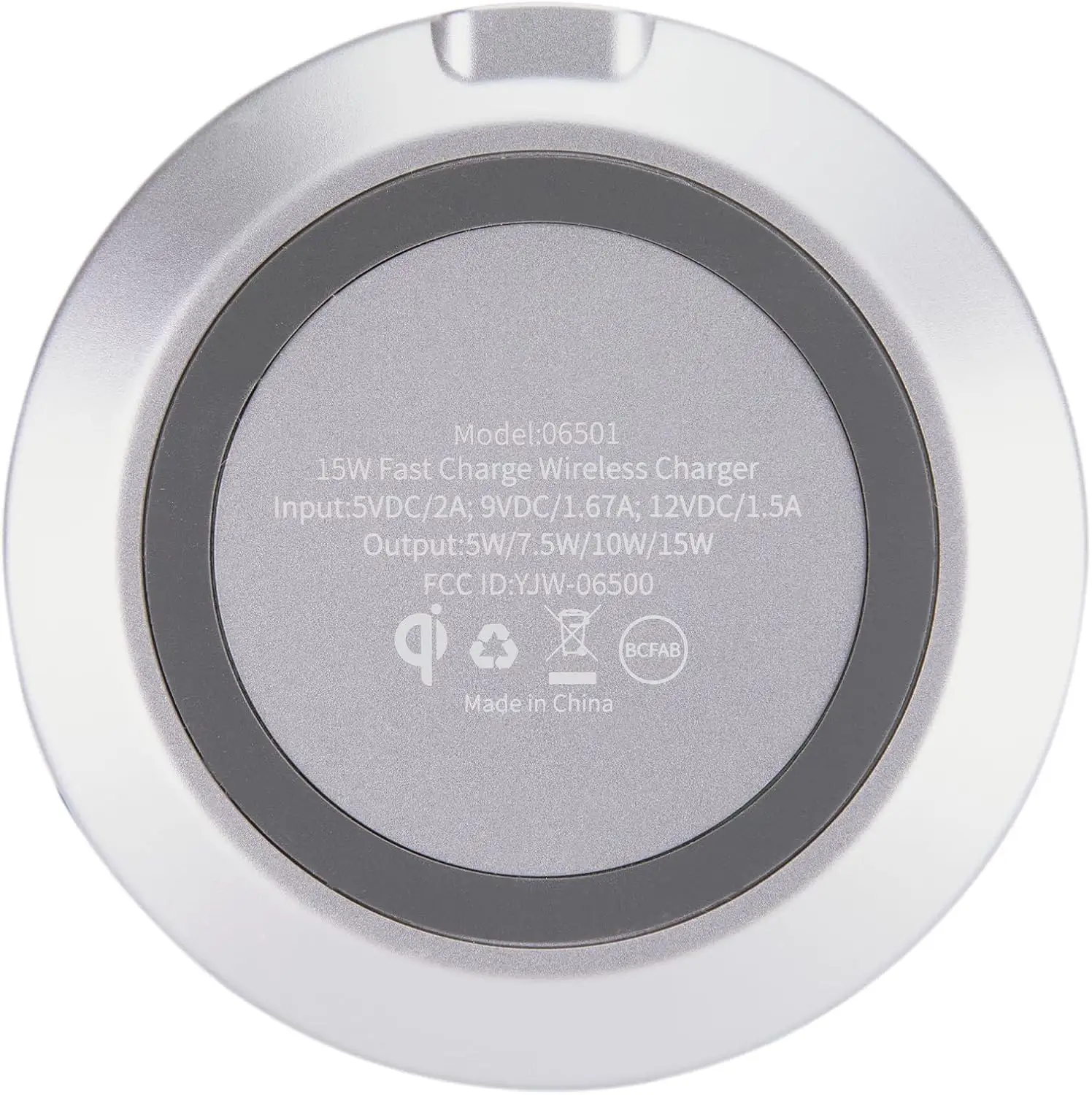
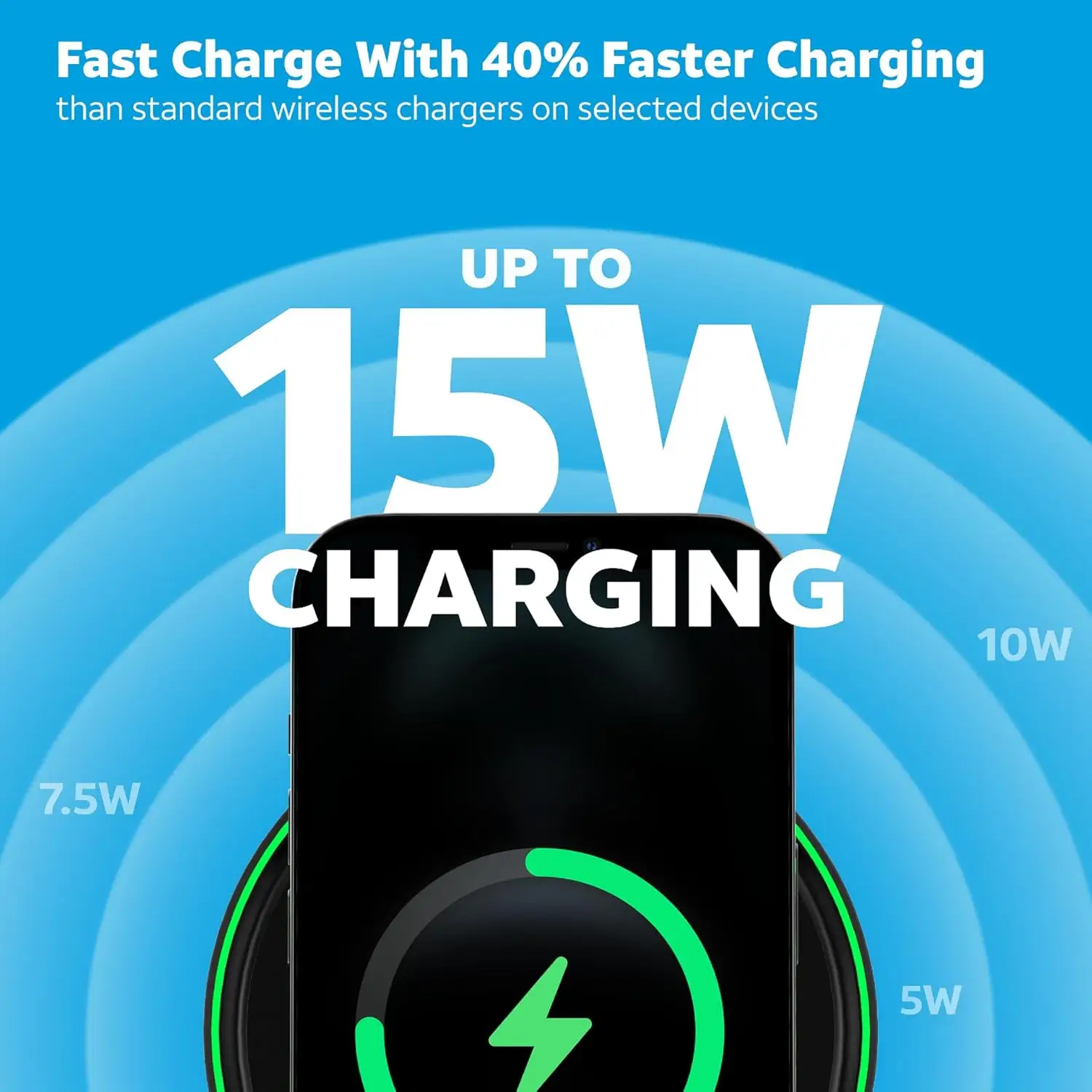
AT&T marketing language leans on speed and ease: the premium pad promises it “charges… up to 40% faster than other standard wireless chargers” (AT&T product page), and the older fast-charge pad claims “charges up to 20% faster on select devices” plus “output up to 10w on select devices” (AT&T product page). Digging deeper into user reports, the real story is less about raw wattage and more about whether a specific phone-and-case combo stays aligned and stays cool.
A recurring pattern emerged across Amazon and community deal discussions: when it works, people describe it as noticeably better than cheap pads, especially through cases. A verified buyer on Amazon wrote: “works great for iphone xr in a leather case. others did not work nearly as well.” Another Amazon reviewer framed it more broadly: “this charger is the best i've found for wireless charging… the charge is fast.” That aligns with AT&T’s “case friendly” positioning—but the community also repeatedly hints that placement and case thickness can still be the deciding factor.
The biggest gap between claims and reality shows up around “set it and forget it” stability versus heat. Slickdeals’ editor notes (community-sourced) are blunt: “it gets quite hot for a wireless charger and my phone gets very warm after charging sessions— not great for battery health and longevity.” That’s not a minor nit for cautious users who care about long-term battery degradation; it turns the experience into something you monitor rather than forget.
Cross-Platform Consensus
Universally Praised
“Bedside charger” is where this product’s supporters keep steering the conversation. A verified buyer on Amazon summarized their use case cleanly: “great bedside charger.” For people who want a no-fuss nightstand setup—drop the phone, stop fiddling with cables—the appeal is mostly about habit formation. Another Amazon reviewer called it “cool charge” and said it “makes charging my iphone very easy,” reinforcing that the main win is reducing friction.
Case tolerance is another bright spot, particularly for users who refuse to go caseless. The Amazon feedback includes: “it charges through a fairly thick case and the charge is fast.” On the community side, Slickdeals user reports extend that to heavy-duty protection: “it charges my s9 through a thick otterbox defender case without any problems.” For commuters, parents, and anyone with a drop-prone lifestyle, that’s the difference between a charger you can actually live with and one that becomes a daily annoyance.
Value also spikes sharply when the pad is heavily discounted. Slickdeals framed a $10 offer as “67% savings,” and the tone shifts from cautious to enthusiastic when the price is low enough. That same thread includes: “i bought a bunch of these when they were on sale for $5. they work well,” suggesting that at promo pricing, users treat it as a multi-room convenience accessory—office, bedroom, kitchen—rather than a premium, must-be-perfect device.
After those positives, the through-line is practical: when the pad matches your phone and your case, users describe it as fast-enough, easy, and more reliable than bargain chargers they tried before. As one Amazon reviewer put it: “works great - better than others.”
What praise clusters around
- Convenience for nightstands: “great bedside charger” (Amazon reviews)
- Case-friendly charging: “charges through a fairly thick case” (Amazon reviews); “through a thick otterbox defender case” (Slickdeals)
- Deal-driven value: “on sale for $10… 67% savings” and “on sale for $5… they work well” (Slickdeals)
Common Complaints
Heat is the clearest recurring concern once you move from short impressions to “would I keep using this?” worries. Slickdeals’ editor note doesn’t mince words: “it gets quite hot… my phone gets very warm.” That’s not just discomfort; that user explicitly ties it to battery health: “not great for battery health and longevity.” For heavy daily chargers—people who top up throughout the day, or leave it charging for long sessions—warmth becomes a risk signal rather than a tolerable quirk.
Another theme is model/version mismatch and “outdated” hardware expectations. One Amazon reviewer compared their pad to a newer AT&T model they already own and called out differences: “overall it is not the best value for the money as it uses micro-usb and is a bit outdated and it shows.” That matters because the AT&T product pages and listings in the dataset describe multiple pads (5W, 10W, 15W; some bundled with USB-C wall charger; some using micro-USB). Users aren’t always shopping for a “wireless charger” in the abstract—they’re shopping for a connector ecosystem that matches their cables and chargers.
Then there’s the blunt, confidence-killing failure mode: incomplete charging. A verified buyer on Amazon posted: “doesn't charge fully.” Another buyer’s verdict is similarly direct: “not a good buy.” For travelers, shift workers, and anyone relying on overnight charging, this kind of report hits harder than “it’s a little slow,” because it suggests waking up to a low battery.
Even when charging works, some users describe alignment sensitivity with thick cases. A Slickdeals user wrote: “works with slim cases too. even with my otterbox defender, when positioned at a certain angle.” That’s still praise—but it quietly contradicts the “secure, reliable charge every time” language on the AT&T page, because “a certain angle” implies a finicky sweet spot.
What complaints cluster around
- Heat and phone warming: “gets quite hot… phone gets very warm” (Slickdeals)
- Outdated connector expectations: “uses micro-usb… outdated” (Amazon reviews)
- Incomplete charging: “doesn't charge fully” (Amazon reviews)
- Positioning sensitivity: “positioned at a certain angle” (Slickdeals)
Divisive Features
The “case friendly” promise is a point of agreement and disagreement at the same time. Some people report near-effortless case charging—“charges through a fairly thick case” (Amazon reviews)—while others imply a more delicate alignment game with tougher protection: “when positioned at a certain angle” (Slickdeals). For users with OtterBox-style cases, that split is crucial: the pad can either feel like magic or feel like a nightly ritual of nudging the phone.
Value is similarly polarized because pricing varies wildly by where and when you buy. In deal contexts, the pad looks like a steal: “on sale for $10” (Slickdeals). On resale markets, eBay shows listings around $19.99–$25 for “brand new” units (eBay). Meanwhile, one Amazon reviewer calls it “not the best value” because of micro-USB and perceived age. The same hardware can read as “great deal” or “overpriced and outdated,” depending on the model and the checkout total.
Trust & Reliability
Concerns about fulfillment and ordering reliability appear more in community chatter than in star ratings. On Slickdeals, one commenter grumbled: “oh great , another chance for att to cancel my order after a month.” That’s not a claim about the charger’s electronics—but it does show anxiety around actually receiving the product when promotions are involved, especially for deal hunters.
On durability, the dataset doesn’t include classic “six months later” teardown-style updates, but it does include signs that people buy multiples and keep them in rotation. Slickdeals users wrote: “i bought a couple of these the last time they were on sale,” and another said they’d “buy another one to leave it at work.” That pattern suggests some confidence in day-to-day usefulness, even as heat and model age remain worries. There’s also a maker-ish angle: “i take the guts out and fit them into a 3d printed holder,” implying the internals are serviceable enough for DIY repurposing.
Alternatives
The only direct competitor brands mentioned in user discussion are Monoprice and Anker, both referenced specifically in the context of heat. In a comparison that reads like a warning label, Slickdeals’ editor note says: “i have other wireless chargers that are the stand type from monoprice and anker that charge well without the phone getting warm.” For users whose top priority is minimizing device warmth—battery health hawks, people charging during work calls, or anyone in hot climates—that single line is a compelling reason to consider a stand-style alternative from those brands instead.
On the other hand, the AT&T pad has a niche appeal for people who want case tolerance at a bargain price, particularly when a promo drops the cost into impulse-buy territory. The same community thread that mentions Monoprice and Anker also contains strong “works well” reports with thick cases, which can be harder to guarantee with random low-cost pads.
Price & Value
Pricing swings are dramatic across the sources. Amazon shows an AT&T 5W pad listed at $20.81 with a 4.1/5 rating from 18 reviews (Amazon specs listing). Separately, Amazon review pages for an AT&T 15W pad show 4.2/5 across 27 ratings (Amazon reviews). Meanwhile, Slickdeals documents promotional pricing as low as $10—and even “$5” in past deals—framed as a strong bargain for a Qi-certified charger.
Resale listings on eBay cluster around $19.99–$25 for “new” units (eBay). That suggests the product retains enough perceived value to move on secondary markets, but it also means you may not be saving much versus some retail pricing—especially if you end up with an older micro-USB version that a verified Amazon reviewer described as “outdated.”
Community buying tips are practical and occasionally skeptical. In the Slickdeals thread, users ask basics like “cable included?” and “is this usb-c or micro usb?”—a reminder that “AT&T wireless charging pad” is not one single consistent bundle. One commenter answered confidently: “came with usb a to usb c cable,” but another Amazon reviewer warned their unit “uses micro-usb.” The safest value play, based on these reports, is treating the exact port/cable bundle as a must-verify detail before buying.
Value takeaways from real buyers
- Promo pricing changes the whole equation: “on sale for $10” and “on sale for $5… they work well” (Slickdeals)
- Version-check is essential: “uses micro-usb… outdated” (Amazon reviews) vs “should include usb a to usb c cable… came with usb a to usb c cable” (Slickdeals)
- Secondary market pricing sits near $19.99–$25 new (eBay)
FAQ
Q: Does it charge through a thick case like an OtterBox Defender?
A: Sometimes, yes. One Slickdeals commenter said it “charges my s9 through a thick otterbox defender case without any problems,” but another noted it worked with an OtterBox Defender only “when positioned at a certain angle.” Expect case thickness and alignment to matter.
Q: Does it get hot while charging?
A: Multiple community reports say yes. Slickdeals’ editor note warns it “gets quite hot” and that the “phone gets very warm after charging sessions,” raising concerns about “battery health and longevity.” Other users still say it “works well,” so heat tolerance varies by setup.
Q: Is it USB-C or micro-USB?
A: It depends on the specific model/version. A verified Amazon reviewer complained theirs “uses micro-usb,” while a Slickdeals thread about the 15W pad includes users saying it “came with usb a to usb c cable.” Verify the exact SKU/bundle before buying.
Q: Does it reliably charge to 100% overnight?
A: Not always, according to some buyers. A verified Amazon reviewer said it “doesn't charge fully,” while others call it a “great bedside charger” and say it “charges fast.” If you need guaranteed full charge, placement and device compatibility seem critical.
Final Verdict
Buy the AT&T Professional Series Wireless Charging Pad if you’re a case-on user who wants a simple “drop-and-charge” nightstand setup and you can grab it at deal pricing; Amazon and Slickdeals feedback includes “charges fast” and even thick-case success like “through a thick otterbox defender case.”
Avoid it if heat is a dealbreaker or you’re worried about battery warmth over long sessions; one community report says it “gets quite hot” and the phone “gets very warm,” and there are also “doesn't charge fully” complaints.
Pro tip from the community: treat the connector/bundle as non-negotiable—people are still asking “usb-c or micro usb?” and one user summed up the risk of getting the wrong generation as “outdated and it shows.”