AKG K371 Review: Near-Neutral Sound with Caveats
Few closed-back studio headphones under $200 have sparked as much grassroots enthusiasm as the AKG K371, with some Redditors even calling them “the best closed back under $500.” Across dozens of candid user reports, a portrait emerges of a headphone that nails tonal balance and comfort—while tripping over some durability quirks. From home studios to office desks, the K371 has become a go‑to for listeners who want something closer to a neutral reference curve without spending flagship money.
Quick Verdict: Conditional Buy
| Pros | Cons |
|---|---|
| Smooth, near-Harman tuning with deep sub-bass extension | Some report fragile build elements (headband, faux leather peel) |
| Very comfortable for long sessions; lightweight design | Stock cables kink easily and proprietary connector frustrates |
| Excellent clarity across mids and highs without harshness | Ears may touch driver due to thin stock pads |
| Foldable, portable, and easy to drive from phones or interfaces | Isolation not strong enough for loud-stage or drum tracking |
| Comes with 3 detachable cables and carrying pouch | Comfort can suffer for glasses wearers or with certain head shapes |
| Solid value compared to rivals like ATH-M50x or DT 770 Pro | Mini-XLR connector can protrude uncomfortably |
Claims vs Reality
AKG’s marketing leans heavily on the “accurate, neutral sound” line, touting their reference response tuning and a 5 Hz–40 kHz frequency response. In practice, many find the tonal balance impressively close to that ideal. A Reddit user wrote: “A smooth Harman sound signature… very little chance of listening fatigue in my opinion.” Others flagged that the tuning isn’t ruler-flat, with a slight midrange peak and a sub-bass emphasis that casual listeners enjoy but mixers may need to tame via EQ.
The brand also promises “unmatched long-wearing comfort”. Here, most agree the 255 g weight and plush pads make these wearable for hours—Sweetwater buyers reported using them “12–14 hours a day while I stream”. Yet comfort depends on anatomy: multiple owners noted thin pads causing ear contact with the drivers, leading to discomfort over multi-hour sessions, unless upgraded to thicker aftermarket pads.
Isolation claims sparked more divergence. AKG positions them for “superior isolation” in noisy environments. While office and home users find them fine for blocking chatter, engineers tracking drums or loud vocals warned of click bleed. One Sweetwater review summed it bluntly: “These don’t have the best isolation… I would not recommend these for tracking drums.”
Cross-Platform Consensus
Universally Praised
What pulls such a broad range of users toward the K371 is its tonal character. Musicians and audiophiles alike celebrate the tuning’s neutrality with a touch of warmth. A verified buyer on Amazon noted: “Full, rich, warm, accurate, but still have enough detail and bass response for any kind of music.” For bass enthusiasts, the sub-bass performance is a highlight—Reddit comparisons to rival models consistently give the K371 the edge in extension and control.
Comfort wins frequent praise from long-session users—streamers, video editors, and mixing engineers. The lightweight, foldable chassis and swiveling earcups accommodate single-ear monitoring for DJs and producers. One Sweetwater reviewer said they could “wear them for 4 hours without taking them off”, while another tracking musician forgot they had them on after two hours.
Portability also comes up as a strength: foldable hinges, a soft pouch, and easy drivability from laptops, smartphones, or portable recorders make them viable outside the studio. For podcasters and content creators, that translates into fewer compromises between travel and mix accuracy.
Common Complaints
Build quality concerns have shadowed the model since early production runs. Reports of headbands snapping (sometimes within months) and faux leather peeling from the pads emerged on Sweetwater and Reddit. One frustrated user noted: “One day I was taking them off my head… the headband just snapped.” While some believe AKG improved hinges in later batches, caution remains in community advice.
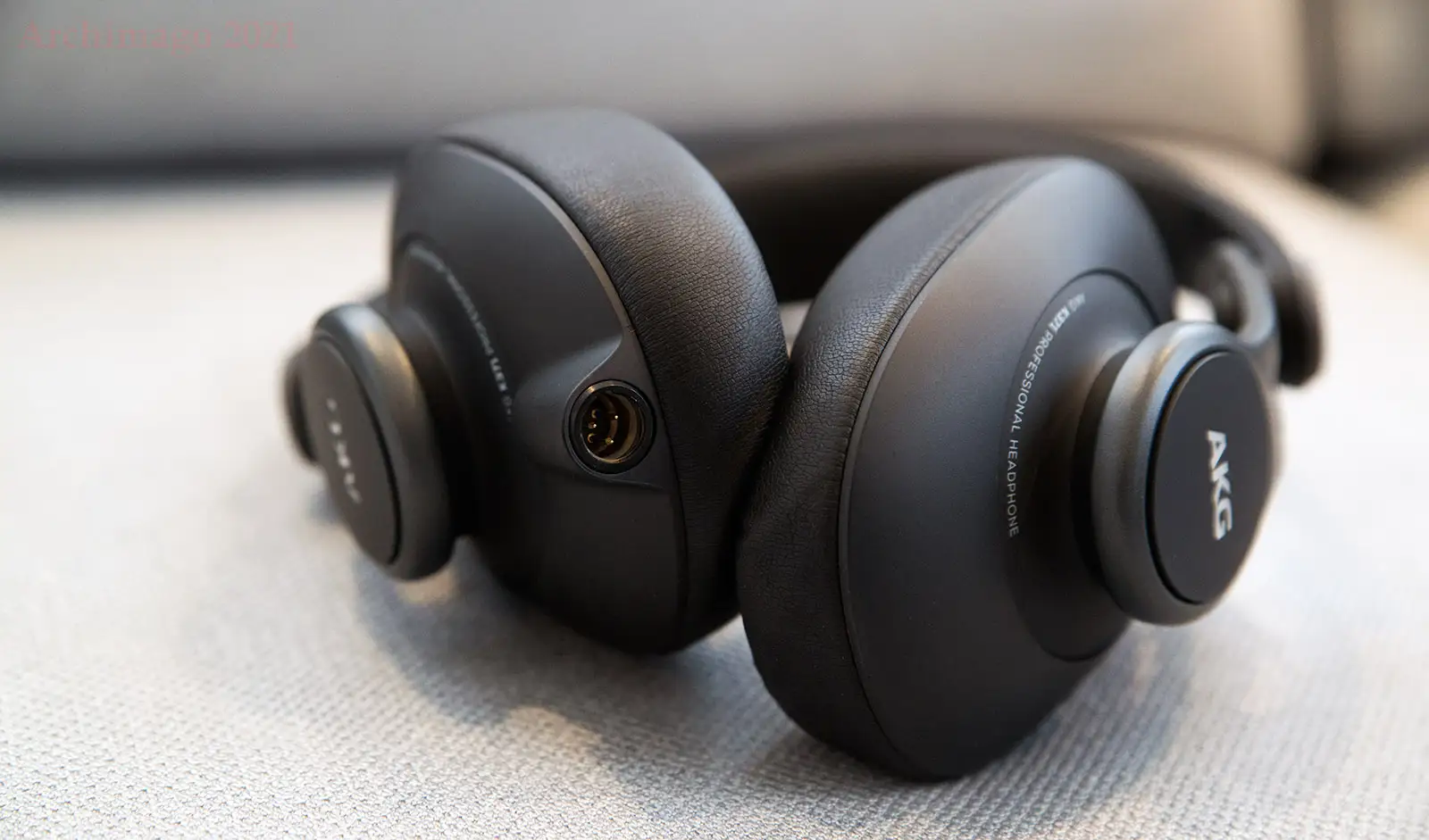
The proprietary mini-XLR cable connector draws repeated ire. Not only do the included cables develop kinks and coil memory, but the connection itself can seize or protrude uncomfortably, especially for users with shorter necks. As one Redditor lamented, “Every time I turn my head to the left it hits my shoulder in a very annoying way.”
Comfort, while generally praised, falters for certain head shapes or those wearing glasses. The thin stock pads can press ears against the driver, causing some to invest in thicker Brainwavz or Dekoni replacements. This swap also alters soundstage and treble, which some value, others don’t.
Isolation lands in the “good, not great” tier. Those in moderately noisy offices are satisfied; others tracking loud instruments warn it’s insufficient without high playback volumes, which can risk headphone bleed.
Divisive Features
The K371’s bass presence divides opinion. Enthusiasts of clinical reference sound sometimes see the low-end bump as coloration. One Sweetwater buyer stated: “Sound quality is great but doesn’t feel neutral… too colored.” On the opposite side, casual listeners, hip-hop fans, and gamers relish the extra weight in the bottom octave.
Similarly, its technical resolving power—detail retrieval, imaging—draws mixed assessments. For casual music enjoyment, many find it “just right”; for those mixing highly detailed acoustic content, some feel it lags behind older AKG models like the K550 in separation and stereo width.
Trust & Reliability
Fakespot’s analysis suggests around 74% of Amazon reviews for the K371 are reliable, with potential removal of older reviews. That’s not exceptionally high, but far from untrustworthy territory. There’s no dominant narrative of counterfeit units, but buyers on forums do advise purchasing from reputable dealers due to batch variability.
Long-term durability stories reveal a split: some have used the headphones daily for years with no functional issues, others ran into structural failures within months. Factors like careful handling and pad replacement seem to extend lifespan. One Reddit veteran noted AKG had “fixed those [folding hinge] problems” by later production, though the headband and pad material remain points of wear.
Alternatives
Alternatives most often compared include the Audio-Technica ATH-M50x, Beyerdynamic DT 770 Pro, and even Sennheiser open-backs like the HD 600 for those who can use non-isolating gear. The ATH-M50x offers a more V-shaped, “fun” signature but introduces treble harshness some flee to the K371 to avoid. The DT 770 Pro delivers tighter isolation and treble sparkle but veers further from neutrality. For mixers wanting ultimate accuracy in a closed model, community voices sometimes push toward the AKG K553 MkII instead.
Price & Value
Pricing fluctuates widely: eBay offers open-box units around $120 plus shipping; new retail hits $149–$199, with occasional dips. At ~$150, many see it as unmatched for sub-$500 closed-backs. Several Sweetwater buyers said they’d expected to spend more, and the bundled cables/pouch add tangible convenience. Resale value holds decently if the pads are in good shape—replacement parts are inexpensive, but the proprietary cable system can limit accessory compatibility.
FAQ
Q: Do the K371 need an amplifier?
A: No. With 32 Ω impedance and 114 dB sensitivity, they’re easy to drive from laptops, phones, and portable recorders, though a clean source can maximize clarity.
Q: How is isolation compared to other closed-backs?
A: Adequate for office or home studio use, but less effective for very loud environments like live drum tracking. Users report mild click bleed with vocalists.
Q: Can you replace the pads?
A: Yes. Many swap to Brainwavz or Dekoni oval pads for added comfort and to avoid ears touching the drivers. This can subtly change the tuning.
Q: Is the bass accurate?
A: Bass extends very deep with emphasis in the sub-bass. Mixers seeking a strictly flat bass region may want EQ; many casual listeners enjoy the extra heft.
Q: Are there known build issues?
A: Some users experience headband snaps or peeling faux leather over time. Proactive care and gentle handling reduce the likelihood.
Final Verdict: Buy if you’re a podcaster, content creator, or musician wanting a portable, comfortable, near-neutral closed-back at a mid-range price. Avoid if maximum isolation or tank-like build is essential. Pro tip from the community: consider budgeting for aftermarket pads early—they can transform both comfort and perceived soundstage without altering the K371’s core strengths.





