VTech CD1113 Corded Phone Review: Conditional Buy (7/10)
“Huge disappointment, barely usable” is the kind of line that shows up even on a phone with thousands of mostly positive ratings—and it frames the VTech CD1113 Corded Phone as a product that can either be a cheap lifesaver or a daily annoyance depending on how (and where) you use it. Verdict: Conditional buy — 7/10.
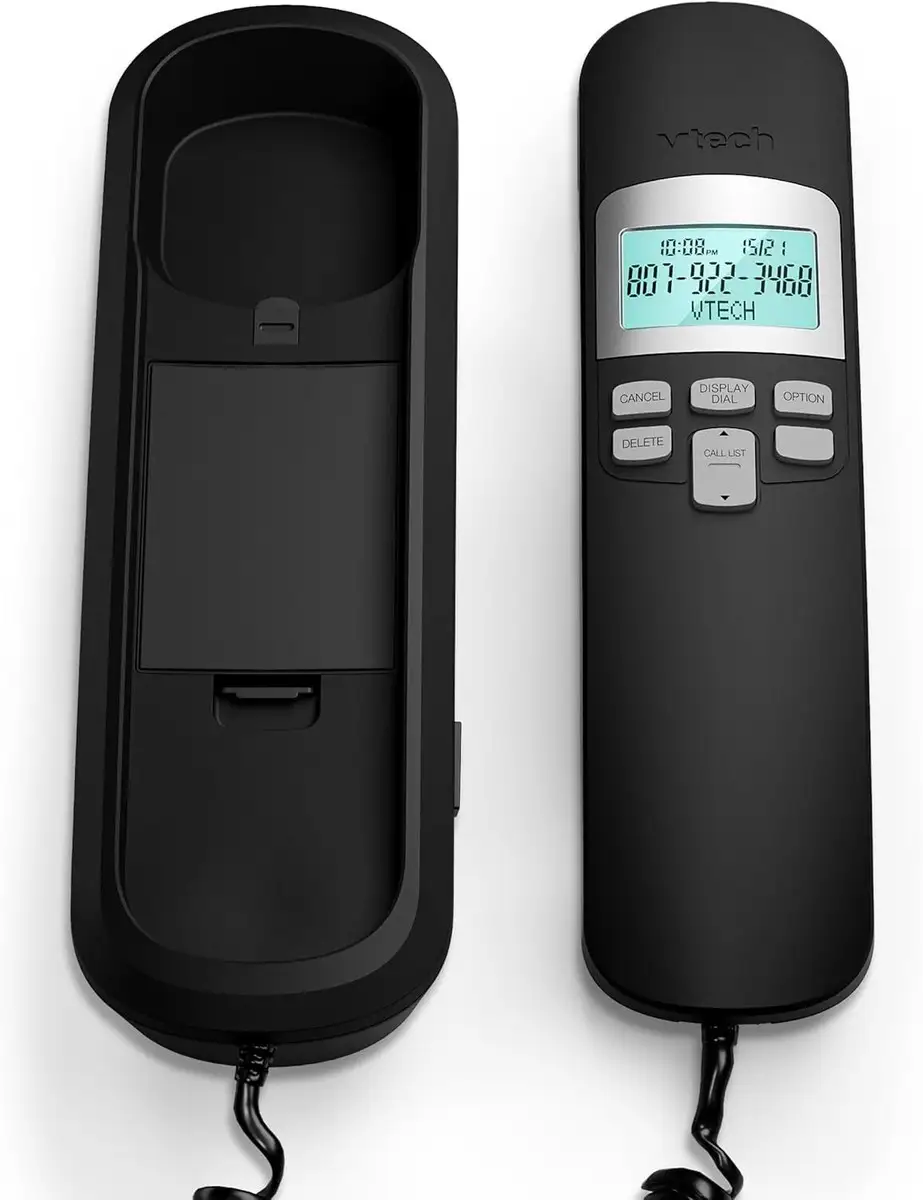
The official positioning is clear: a compact trimstyle corded phone with caller ID/call waiting, “no AC power needed,” and “works in a power outage.” On Amazon, the black CD1113BK listing shows 4.1/5 from 1,528 reviews, while a separate Amazon listing for the black trimstyle caller-ID version shows 3.9/5 from 200 global ratings—numbers that hint at broad satisfaction, but not without sharp pockets of frustration.
Digging deeper into the text reviews, a recurring pattern emerged: people who want a basic, inexpensive landline—especially as a backup—often feel it “does what it should do.” But users who rely on wall mounting, need better visibility, or expect modern ergonomics describe real deal-breakers like weak illumination, short hardwired cords, and wall-hanging stability.
Quick Verdict
For shoppers who need a simple corded phone (often as a backup or for older relatives), VTech CD1113 Corded Phone is a Conditional Yes—as long as you’re okay with small buttons, a hard-to-read display in low light, and cord limitations.
| Decision | Evidence from user feedback |
|---|---|
| Buy if | You want a cheap, basic landline: A verified buyer on Amazon noted: “for such a low price, I have no complaints about its functionality — it does what it should do.” |
| Avoid if | You need wall-mount security: A verified buyer on Amazon wrote: “if you hang this phone on the wall, it will fall off the hook frequently because the catch is too shallow.” |
| Best for | Backup during outages: A verified buyer on Amazon said it’s “a backup phone in case of power outages.” |
| Main downside | Visibility/lighting: A verified buyer on Amazon noted: “there is no light though so hard to read if your in the dark.” |
| Ergonomics risk | Small, tight keypad: A verified buyer on Amazon complained: “The buttons are tiny and close together.” |
| Setup pain point | Poor/unclear instructions: A verified buyer on Amazon wrote: “no instruction whatsoever,” while another said: “the instructions left a lot to be desired.” |
Claims vs Reality
The marketing story centers on convenience: caller ID, no AC power, and outage resilience. But user feedback complicates each claim with practical “gotchas” that show up once the phone is mounted, used in dim rooms, or expected to behave like older, heavier trimline designs.
Claim: “No AC power needed / works in a power outage.”
On paper, this is the CD1113’s core advantage for anyone who wants a wall phone without running a power cord. One Amazon reviewer echoed that use case directly, calling out the benefit of not needing an outlet: A verified buyer on Amazon said the battery-lit handset means “there is no need to extend a power chord to the nearest outlet… a real plus if this is being used as a wall phone.”
But the same feedback thread highlights the hidden dependency: visibility and caller ID features may still push you into batteries. A verified buyer on Amazon warned: “the caller id only works with batteries,” and the display experience itself can be underwhelming even with batteries installed—something that affects anyone counting on this phone during outages when lighting may already be limited.
Claim: Caller ID usability.
Caller ID is a key reason people buy a trimstyle phone in 2025—especially if they got rid of cable TV overlays. One user framed that exact scenario: A verified buyer on Amazon wrote: “i recently got rid of cable… it’s exactly what i need to make it easy to see who’s calling.”
Yet multiple reviews push back on readability. A verified buyer on Amazon noted: “the phone number displayed is so small, making it almost unreadable,” and another summarized it bluntly: “display window is too small.” The gap is clearest for older users or anyone with impaired vision: A verified buyer on Amazon wrote the screen “need light to see display… not adequate for vision impaired.”
Claim: Wall-mount friendly trimstyle design.
The product is marketed as table/wall mountable, and some buyers are genuinely satisfied with mounting. A verified buyer on Amazon said: “good little phone ... no problem mounting it to the wall.” Another short review also affirmed it “hangs on the wall.”
But the harshest criticism is specifically about wall use. A verified buyer on Amazon said: “it will fall off the hook frequently because the catch is too shallow.” For households mounting a phone in a kitchen, hallway, or garage—where bumps are common—this isn’t a minor quibble; it’s the difference between “set and forget” and constant re-hanging.
Cross-Platform Consensus
Universally Praised
The most consistent praise is about price-driven practicality. People buying this phone often aren’t seeking premium design—they’re trying to solve a specific problem fast: a working landline, a backup for outages, or a replacement for an old trimline that finally died. That context matters because satisfaction is tightly linked to expectations. One Amazon reviewer described returning to landlines after a decade and said: “for such a low price, I have no complaints about its functionality — it does what it should do.” For budget-focused buyers, that’s the main “win.”
Another recurring positive is simplicity. For users who want minimal setup and a straightforward call experience, the tone is almost relieved that a basic phone still exists. A verified buyer on Amazon described it as “simplistic and minimalist and works great,” adding: “i would highly recommend this product.” That kind of praise tends to come from people who just want dial tone reliability without apps, charging docks, or complicated bases.
There’s also a thread of appreciation for keeping a corded phone as insurance. Several comments frame the CD1113 as a secondary phone, not the household centerpiece. A verified buyer on Amazon wrote: “works as a secondary ph if power goes out,” while another, weighing tradeoffs, concluded: “if $20 is all you really want to spend for a backup phone in case of power outages, this one will suffice.” The beneficiary here is anyone building redundancy—parents’ homes, a spare line for a home office, or an emergency phone in a basement.
- Most praised themes (Amazon reviews): low price usefulness, simple/basic calling, backup/outage role.
Common Complaints
The loudest and most repeated complaint is visibility and lighting—and it’s not just one person nitpicking. Buyers repeatedly say the display is hard to read unless the room is bright. A verified buyer on Amazon wrote: “there is no light though so hard to read if your in the dark.” Another buyer described installing batteries and still finding it lacking: “it doesn't really light up at all… even when batteries are installed it's still very weak.” For older adults, nightstand placement, or dim hallways, this becomes a daily friction point.
Closely tied to visibility is small, cramped controls. People expecting larger classic wall-phone buttons find the CD1113’s keypad and feedback lacking. A verified buyer on Amazon complained: “The buttons are tiny and close together,” and added a usability issue that hits anyone dialing without looking: “you cannot hear the beeps while pressing the buttons.” That’s a real accessibility and confidence problem—especially for seniors, or for anyone who wants a quick, reliable dial without second-guessing.
Then there’s cord and build practicality, especially because some cords appear hardwired. Buyers repeatedly mention short or non-replaceable cords limiting placement. A verified buyer on Amazon said: “the phone cord is hard-wired into the phone and relatively short,” and another called out durability implications: “the cord that plugs into the wall is attached to the phone… if it ever breaks it can’t be repaired.” For users who need distance from the wall jack, this shifts cost from “cheap phone” to “cheap phone plus couplers plus workarounds.”
- Most common complaints (Amazon reviews): dim/small display, tiny buttons, short hardwired cords, shaky wall-hang security.
Divisive Features
Wall mounting is the most polarizing element. Some buyers report it works fine and even buy multiples: A verified buyer on Amazon said: “no problem mounting it to the wall ... actually ordered another for my desk.” But the opposing camp describes repeated failure: “it will fall off the hook frequently,” specifically blaming the shallow catch. That’s a contradiction that likely comes down to installation environment, wall plate style, and how often the phone is bumped.
Lightweight design also splits opinion. For some, it’s a space-saving perk—“compact” and easy to place. For others, low weight creates stability problems on a table. A verified buyer on Amazon described a chain reaction: “the cord gets super-tangled easily… [and] the base… is very light in weight [and] fly off the table.” That complaint matters for desk users who pick up the handset frequently and don’t want to tape down cords.
Trust & Reliability
On reliability, the data shows both long-running loyalty and outright failures. Some buyers describe years of use and repurchasing the same model: A verified buyer on Amazon said: “i have used this v-tech phone for years and recently purchased two more.” Another echoed longevity indirectly: “bought it to replace one just like it that had lasted many years.” These comments suggest that for some households, the CD1113 is a repeatable, predictable choice.
But there are also hard-stop defect experiences. One Amazon review describes a unit that rings yet fails during conversation: A verified buyer on Amazon wrote: “it does ring …but, you can’t hear the person… once you answer… the call display doesn’t work either.” Another frustration shows up around returns and cross-border shipping: A verified buyer on Amazon complained: “tried to return would cost me over 21$ to send back to canada.” That’s less about product quality and more about purchase-risk, but it affects trust in the overall buying experience.
Alternatives
Competitor comparisons are thin in the provided data, but one listing description explicitly mentions compatibility with “AT&T trimline” models, positioning the CD1113 within the broader trimline-style corded phone category. That implies the real “alternative” is not a specific named product in reviews, but the general class of trimline phones—often older models with larger buttons or sturdier wall catches.
What the feedback suggests is this: if you prioritize readability and ergonomic dialing, buyers who find the CD1113’s “tiny” buttons and dim display frustrating may be happier with a different trimline phone design (especially one with a better backlight and replaceable cords). If you prioritize cheap backup functionality, the CD1113 is frequently described as “sufficient.”
Price & Value
The product’s value story is dominated by its low new price and the idea of it being “good enough” for a niche need. Amazon lists the CD1113BK around $18.14, while the VTech official store shows $16.95. That range reinforces why many reviewers tolerate compromises: at this price, expectations shift from premium comfort to basic dial tone.
Resale listings on eBay show a spread—from roughly $12.95 + shipping up to around $19.99 (plus shipping) depending on condition (“new open box” vs. “new”). The takeaway is that the phone doesn’t seem to hold a high premium secondhand; instead, it trades like a commodity item—useful if you find a clean open-box deal, less compelling if shipping inflates total cost.
Community buying “tips” embedded in reviews lean toward realistic use: buy it as a backup, keep expectations modest, and plan for batteries if you care about caller ID visibility. As one Amazon reviewer put it, it’s a “low priced phone” that “solves my problem”—but also “requires three aa batteries,” which they found “a bit inconvenient.”
FAQ
Q: Does the VTech CD1113 work during a power outage?
A: Yes—users commonly buy it as a backup phone. A verified buyer on Amazon described it as “a backup phone in case of power outages.” However, several reviewers note caller ID and visibility may rely on batteries, so outage functionality can depend on what features you need.
Q: Is the caller ID display easy to read?
A: Not for everyone. Multiple Amazon reviewers describe the screen as small or hard to read, especially in low light. One noted the “phone number displayed is so small,” and another said the display is “not adequate for vision impaired,” suggesting it may frustrate seniors or low-vision users.
Q: Can you wall-mount it reliably?
A: It depends. Some buyers report “no problem mounting it to the wall,” but others warn it “will fall off the hook frequently because the catch is too shallow.” If wall mounting is critical, user feedback suggests this is the riskiest part of the design.
Q: Are the cords replaceable or long enough?
A: Several reviewers complain the cords are short and appear hardwired. One Amazon reviewer said the phone cord is “hard-wired… and relatively short,” and another noted the wall cord is attached, meaning if it fails “it can’t be repaired” without replacing the phone.
Q: Is it a good phone for older parents?
A: Only if they’re comfortable with small buttons and a dim or small caller ID screen. One review mentioned buying it for parents but criticized “no instruction whatsoever” and a “very loud ringer,” while others flagged tiny keypad spacing and readability issues that can be challenging for seniors.
Final Verdict
Buy VTech CD1113 Corded Phone if you’re the kind of buyer who needs an inexpensive landline that “does what it should do,” especially as a backup for power outages or an extra-room phone. Avoid it if wall-mount security, large readable caller ID, or senior-friendly dialing is non-negotiable—because multiple reviewers describe a “too shallow” wall catch, “tiny” buttons, and a display that’s hard to read without good light.
Pro tip from the community: treat it like a budget backup phone, not a premium everyday handset—one Amazon reviewer’s framing captures the consensus best: “if $20 is all you really want to spend… this one will suffice.”