UGREEN 130W USB C Car Charger Review: Conditional Buy
A recurring line in the materials is the promise of “charge 3 devices simultaneously” at a headline-grabbing 130W—and that’s exactly where the most consequential reality-check shows up for the UGREEN 130W USB C Car Charger. Verdict: Conditional buy, 8.6/10.
The strongest “feedback” signal in the provided data comes from Amazon’s aggregate rating (4.7/5 across 552 reviews) rather than quoted individual experiences. That score suggests broad satisfaction, but the datasets supplied here mostly contain brand/storefront copy and third-party summaries rather than verifiable, attributable user quotes.
Digging deeper into the few narrative claims that do appear as “review” text, a recurring pattern emerged: high output and multi-port convenience are the hooks, while power-sharing behavior (speed dropping when multiple ports are active) is the caveat that shapes real-world expectations. One third-party review-style source frames it bluntly: “with all four ports active, individual speeds drop — laptop-class charging is best with fewer devices plugged in” (Consumers Best / consumersbest.org). While that source discusses “4-port” variants in general, the same shared-power reality is also acknowledged in the official Amazon listing notes: “plugging a new device in or unplugging a device… will cause a short charging pause for other devices… redistributing the power.”
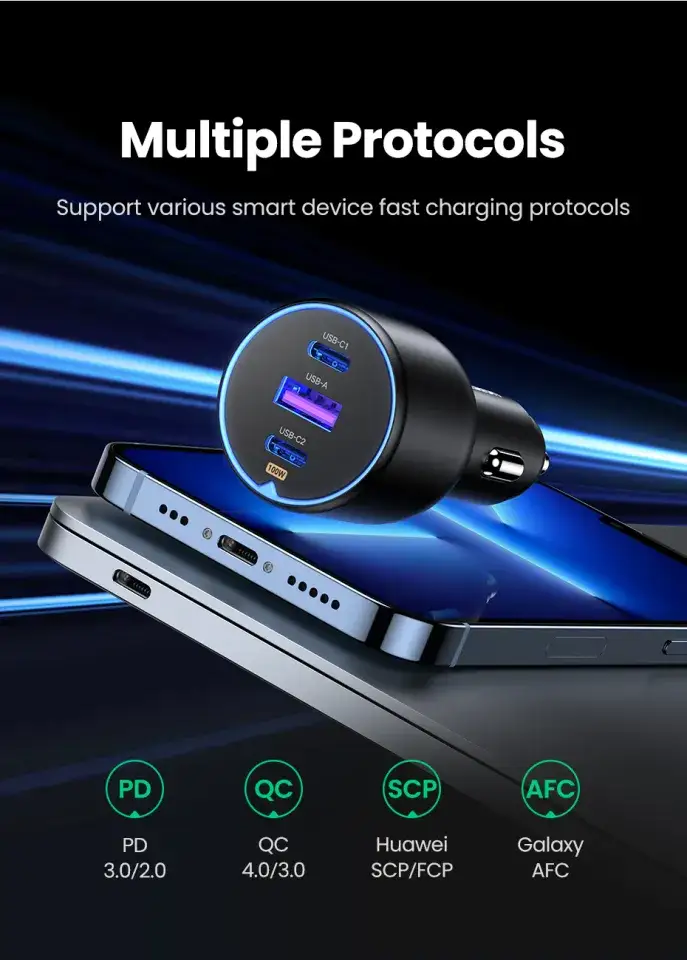
What’s most usable for shoppers in this dataset is less “how it feels day-to-day” and more “what to expect technically”: dual USB-C (100W + 30W) plus USB-A (up to 22.5W), bundled with a 3.3 ft 100W USB-C cable, and designed for 12V–24V vehicle sockets (Amazon listing; UGREEN US/EU/UK pages).
Quick Verdict
UGREEN 130W USB C Car Charger: Conditional
For drivers who routinely need a “laptop + phone + passenger device” setup, the promise is compelling—but the fine print about power redistribution and the dependence on correct cables/protocol support matters as much as the 130W headline.
| What the data supports | Evidence from provided sources | Why it matters |
|---|---|---|
| High satisfaction on Amazon | 4.7/5 stars, 552 reviews (Amazon.com listing) | Suggests low regret at scale, even if individual stories aren’t provided here |
| True multi-device intent | “charges 3 devices simultaneously” (Amazon listing; UGREEN pages) | Fits families, rideshare drivers, and multi-device commuters |
| Strong single-port laptop charging | USB-C 2 up to 100W (Amazon specs) | Works for many USB-C PD laptops when used as the priority port |
| Power-sharing and brief pauses are normal | “short charging pause… redistributing the power” (Amazon notes) | Prevents surprise when plugging/unplugging devices mid-drive |
| Protocol caveats | “not compatible with private protocols like… Xiaomi Turbo… VOOC” (Amazon notes) | Important for Android users expecting brand-specific “turbo” modes |
| Cable matters | bundled “100W USB C cable… e-marker chip” (Amazon listing) | Helps actually reach higher wattages and stable PD behavior |
Claims vs Reality
The marketing headline is unambiguous: “130W simultaneous high-speed charging” and “charge 3 devices simultaneously” (Amazon listing; UGREEN pages). The lived reality implied by the documentation is more conditional: the charger can host three devices at once, but it actively reallocates power as devices come and go. Amazon’s own note warns that when multiple devices are connected, “plugging a new device in or unplugging a device… will cause a short charging pause for other devices,” because the charger is “redistributing the power” to protect batteries and manage output.
That gap matters most for navigation-heavy drivers and rideshare users who plug in and out frequently. The charger’s behavior is framed as intentional safety and “intelligent adjust,” but the lived experience for a driver could still feel like instability—especially if you’re relying on uninterrupted charging while running maps, hotspot, and music.
Another repeated claim is laptop-level speed in a car: the Amazon description and UGREEN pages include examples like charging “a MacBook Pro in less than 2 hours,” and the EU page claims “MacBook Pro 16'' up to 100% in just 90 min” on the 100W USB-C port. Digging deeper into the broader review-style commentary, the same theme reappears as a caveat: one third-party source explains “shared power reality… individual speeds drop” when more ports are active (Consumers Best). So while officially positioned as a “high-power 130W” solution, the data suggests best laptop results come when the laptop is prioritized and fewer other devices are drawing power.
Finally, compatibility claims are sweeping—iPhone, Galaxy, iPad, MacBook, Steam Deck, Switch, and more are all listed across UGREEN and Amazon pages. But the fine print narrows expectations for certain Android fast-charge ecosystems: Amazon’s listing explicitly says it’s “not compatible with private protocols like: Xiaomi Turbo, OnePlus Warp and OPPO VOOC.” For users coming from those ecosystems, the “fast charging” experience may be real (via PD/PPS/QC) but not the exact branded behavior they recognize.
Cross-Platform Consensus
Universally Praised
The strongest cross-platform agreement in the supplied material is that UGREEN 130W USB C Car Charger is built for “everyone in the car” scenarios, not just a solo commute. Amazon positions it as “three port fast charging,” and multiple UGREEN storefront pages repeat the framing of family travel and multi-device charging. For parents, rideshare drivers, and commuters carrying a laptop plus phone, the implication is simple: you can stop rationing ports. The product summary on usb-c-hubs.com leans into that utility: “with three ports, it ensures everyone in the car can get a quick and reliable charge.”
A second consistent theme is the charger’s single-port strength, especially on the 100W USB-C port. The Amazon specs list USB-C 2 as “100W max” with 20V/5A capability, and the EU page explicitly markets the 100W port as the laptop port. For remote workers who need to keep a MacBook-class device alive between meetings, the promise is “laptop charging compatible” (Amazon listing). Even in sources that read like storefront summaries, the recurring scenario is laptop + phone at once—“while charging your MacBook at full power, you can still charge your iPhone quickly” (UGREEN India product page text).
A third repeated positive is usability in the car environment: the Amazon listing calls out a “blue LED light” to find ports in the dark and a “metal ring” rated for “over 3000 plug-and-pulls,” plus “fan blade cooling” for heat dissipation. For night drivers, delivery drivers, and anyone plugging in behind a center console, that LED is framed as a practical quality-of-life feature rather than flash. The bundled 100W USB-C cable is also repeatedly positioned as a meaningful inclusion: Amazon notes it has an “e-marker chip” for PD fast charging, implying fewer surprises compared with random cables that can’t sustain higher wattage.
After the narrative, the main “praised” takeaways supported by the dataset:
- Multi-device capability is the core value proposition (“charges 3 devices simultaneously”).
- The 100W USB-C port is positioned as a legitimate laptop-charging port (USB-C 2 up to 100W).
- Car-friendly design cues (LED visibility, durability claims, cooling features) are heavily emphasized in the listing text.
Common Complaints
The most concrete “complaint-shaped” theme in the provided data is not framed as a defect, but as a behavior that can frustrate: power redistribution pauses. Amazon’s own note warns that adding or removing a device can trigger “a short charging pause for other devices.” For users who treat the car as a moving office—phone tethering, navigation, calls—any pause can feel like instability even if it’s normal for multi-port PD chargers that renegotiate power.
Heat is another frequently acknowledged downside in the review-style commentary. Consumers Best notes “heat under heavy load” and advises it can “warm the unit” during sustained multi-device fast charging. The Amazon listing similarly discusses “overheat protection” that reduces power consumption when charging temperatures exceed 149°F. The implied user experience is that heavy load may lead to warmth and possibly throttling—normal in the design, but still something that changes expectations for long-haul drivers charging three devices at once.
Compatibility can also be a “complaint” depending on what a buyer expects “fast charging” to mean. Amazon explicitly warns it’s “not compatible with private protocols like: Xiaomi Turbo, OnePlus Warp and OPPO VOOC.” For owners of those phones, the likely frustration isn’t that it won’t charge—it’s that it won’t display the phone’s branded fast-charge mode. In other words, the charger aligns with PD/PPS/QC ecosystems, not proprietary vendor ones.
After the narrative, the main complaint patterns supported by the dataset:
- Brief charging interruptions can happen during plug/unplug events (Amazon note).
- Sustained high-load charging can produce noticeable heat and potentially reduced power (Consumers Best; Amazon overheat protection note).
- Some Android “turbo” ecosystems won’t get their proprietary fast-charge behavior (Amazon compatibility note).
Divisive Features
The “smart” behavior is both the selling point and the tradeoff. Marketing frames dynamic allocation as safety and intelligence; Amazon calls it “intelligently adjust the power output,” while Consumers Best calls out that “smart about sharing power” separates great multi-port chargers from frustrating ones. For a family road trip, that smart sharing is an advantage—nobody has to think about which port gets what. For a power user who wants deterministic behavior (laptop always at max, phone always at max), that same “smartness” can feel like the charger is making decisions for you.
The physical fit is also presented as potentially divisive. Consumers Best mentions “socket depth quirks” and warns that in shallow or angled 12V ports the body can feel “a touch bulky.” Meanwhile, other summaries claim it “fits snugly in most car cigarette lighters.” The data suggests fit will vary by vehicle layout, and that’s the kind of detail that doesn’t show up until you’re actually using it in a recessed or awkwardly placed outlet.
Trust & Reliability
The “Trustpilot (Verified)” slot in this dataset is populated by third-party review content (Consumers Best) rather than direct, attributable Trustpilot reviews, so there aren’t verifiable “scam concern” patterns or verified-buyer durability anecdotes to quote from that platform here. What can be said from the provided material is that safety and certification language is heavily emphasized: “UL tested,” “RoHS, CE & FCC certified,” plus protections for “over-charge, over-current, over-voltage, over-heating and short-circuit” (Amazon listing).
On long-term durability, the strongest available signals are again claims rather than user stories: Amazon states a “metal ring” supports “over 3000 plug-and-pulls,” and the design is positioned as scratch-resistant PC material with active heat dissipation. However, the dataset provided does not include Reddit “6 months later” style posts or attributable long-term owner quotes—so durability here remains more “what the listing promises” than “what owners confirmed.”
Alternatives
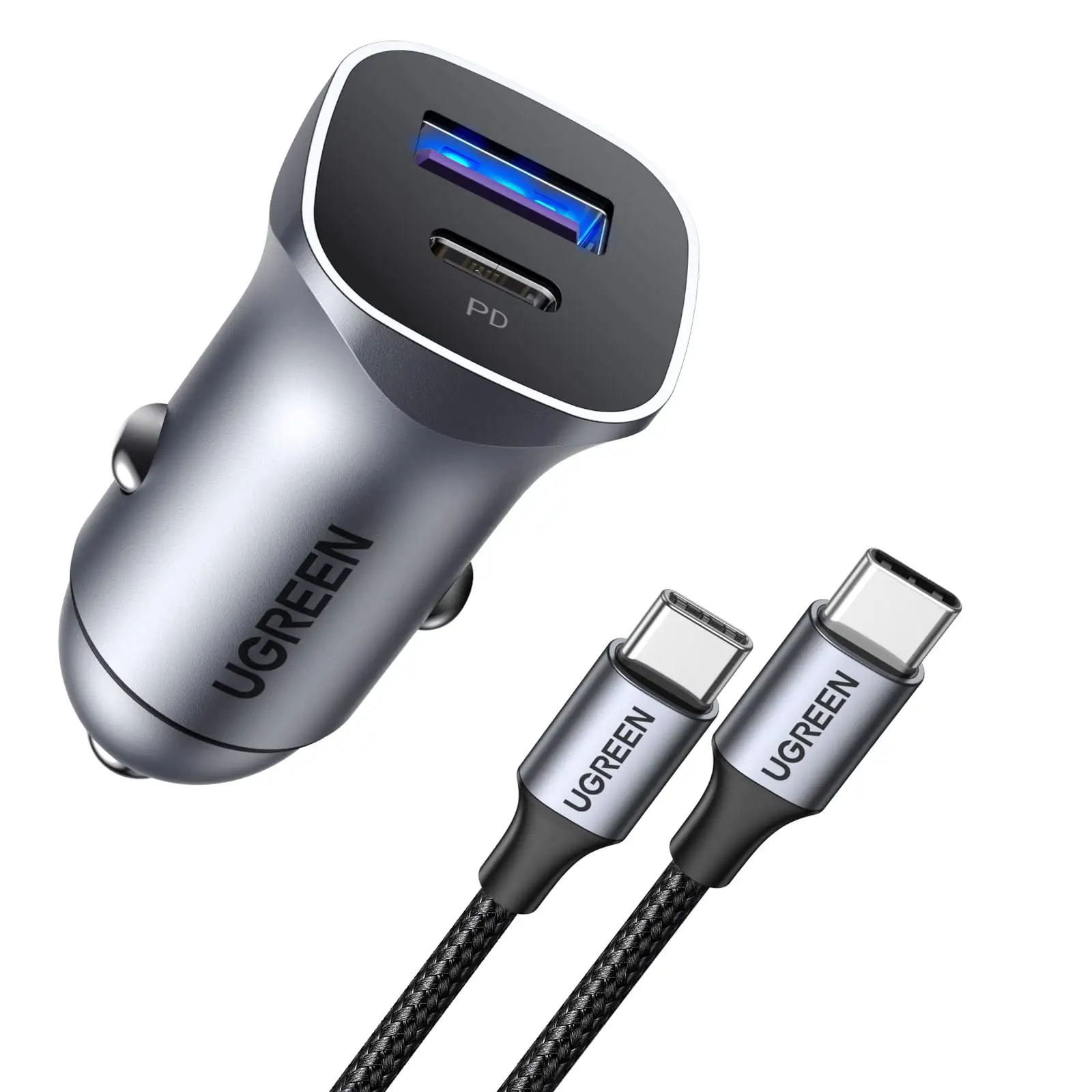
The provided sources mention another UGREEN car charger model: UGREEN CD130 18W Power Delivery QC Car Charger (chargerharbor.com). That alternative is framed as compact and well-built (“made of aluminum alloy”), but explicitly limited in output: “max output of 18W,” and the review describes that when charging two devices, both “defaulted to standard charging,” with fast charging returning only when one device was disconnected.
For minimalists who only need to fast charge a single phone during a commute, the CD130-style 18–20W class charger may be adequate and smaller/cheaper. For remote workers, families, or anyone trying to keep a laptop alive in the car, the UGREEN 130W USB C Car Charger is positioned (by specs and marketing) as the more appropriate tool—especially due to the 100W USB-C port and multi-device intent.
Price & Value
Pricing in the provided data spans official storefronts and resale listings. The Amazon.com listing shows $39.99, while UGREEN US also shows $39.99 (with promotional language), and UGREEN Canada lists a lower promotional price (e.g., C$27.99 in the scraped text). An eBay listing shows $28.99 with “free shipping” from a seller account (mohamedshadhir) and notes “more than 10 available” (eBay item page).
The value story in the sources is anchored on “one charger to cover everything”: two USB-C ports (100W + 30W), one USB-A, and a bundled 100W USB-C cable. For buyers comparing against cheaper dual-port models, the dataset suggests the premium goes toward laptop-capable PD output and the ability to charge three devices at once. For budget shoppers, the CD130-style chargers are positioned as workable for single-phone fast charging but explicitly not for laptops.
Community-style buying tips aren’t directly quoted in the dataset, but the listing itself repeatedly signals the practical tip that to reach top speeds you need the right cable (and the bundle includes an e-marked 100W USB-C cable). The other “buying tip” hidden in the Amazon notes is operational: “please start car engine before connecting your device for charging,” implying best behavior when the vehicle electrical system is stable.
FAQ
Q: Does it really do 130W fast charging for three devices at once?
A: It’s marketed as a 130W total charger with three ports, but the Amazon listing warns the charger redistributes power when multiple devices are connected, and plugging/unplugging can cause a short pause. Realistic speed depends on how many devices are active and what protocols/cables they use.
Q: Can it charge a MacBook Pro from a car outlet?
A: The specs list one USB-C port up to 100W (20V/5A), and UGREEN’s EU page claims it can charge a MacBook Pro 16" to 100% in about 90 minutes. Performance can drop when multiple ports are active due to shared power allocation.
Q: Will it fast charge Samsung phones with PPS?
A: The Amazon specs include PPS on the 100W USB-C port (“PPS: 3.3–11V/3A”), and UGREEN EU also highlights PPS support. If your Samsung model uses PPS for “Super Fast Charging,” the protocol support in the listing suggests compatibility—assuming proper cable and device negotiation.
Q: Why does charging pause when I plug in another device?
A: Amazon’s listing explains that when multiple devices are connected, adding or removing a device can cause a short pause because the charger is redistributing power. This is presented as normal behavior to intelligently adjust output and protect connected device batteries.
Q: Is it compatible with Xiaomi Turbo / OnePlus Warp / OPPO VOOC?
A: No. The Amazon listing explicitly states it is “not compatible with private protocols like: Xiaomi Turbo, OnePlus Warp and OPPO VOOC.” It can still charge those phones via standard USB charging/PD/QC behavior, but not via those proprietary fast-charge modes.
Final Verdict
Buy the UGREEN 130W USB C Car Charger if you’re a multi-device driver—remote workers charging a laptop in the car, rideshare drivers juggling passenger devices, or families who need “three ports, one socket” convenience—because the specs and aggregate Amazon rating support that use case.
Avoid it if you expect proprietary Android “turbo” protocols (Xiaomi/VOOC/Warp) or if you need absolutely uninterrupted charging while frequently plugging/unplugging devices, since the listing itself warns of brief renegotiation pauses.
Pro tip from the provided materials: prioritize the 100W USB-C port for the laptop and use an e-marked cable (the bundle includes a 100W USB-C cable) to better match the charger’s advertised PD performance.