Ubiquiti Flex 2.5G PoE Review: Compact Power, Mixed Limits
Out of all the recent additions to Ubiquiti’s lineup, the Ubiquiti Networks Flex 2.5G PoE has generated a striking amount of praise for blending compact design with multi‑gigabit capability and flexible power options — but only if you understand its quirks. Across multiple platforms, the consensus lands around 8.5/10, with exceptional performance for the size, tempered by a few operational caveats.
Quick Verdict: Conditional buy — best suited for users already in, or planning to adopt, the UniFi ecosystem, multi‑gig home networks, or small business setups with modest PoE demands.
| Pros | Cons |
|---|---|
| Eight 2.5GbE PoE++ ports with 10GbE RJ45/SFP+ uplink | No power supply included |
| Reliable, near‑theoretical throughput | Limited total PoE budget without AC adapter |
| Compact, fanless, silent operation | Only one 10GbE uplink port |
| PoE power forwarding for daisy chaining | No standalone web UI; UniFi required for full features |
| Flexible mounting options | AC adapter is bulky and costly |
Claims vs Reality
Ubiquiti markets the Flex 2.5G PoE as a “compact, multi‑gig PoE++ switch with 10GbE uplink” capable of delivering up to 196W with an optional adapter. On paper, that sounds like a powerhouse. But Reddit and HardwareZone reports make clear: without the AC power brick, actual PoE delivery can drop sharply. HardwareZone’s tester found that “with a PoE+++ uplink I had 76W available after the switch powered itself,” while “PoE++ only gave 37W,” enough for just a couple of APs.
Another claim — plug‑and‑play operation with advanced UniFi control — holds up well in basic use. Trustpilot’s review from Dong Ngo confirms “connect its uplink port… and it’ll work like any unmanaged switch,” but those wanting VLANs, link aggregation, or traffic prioritization must adopt it into a UniFi setup. The limitation that "there's no built‑in local web interface" was cited repeatedly across Reddit and review sites as a pain point for mixed‑vendor networks.
Performance claims of full 2.5Gbps per port were tested rigorously. HardwareZone measured 2,219 Mbps down and 2,086 Mbps up on a desktop PC, matching real‑world expectations. Oddly, a Snapdragon X Elite laptop yielded much lower download speeds — suggesting edge‑case driver or adapter quirks rather than a switch fault.
Cross‑Platform Consensus
Universally Praised
Compactness came up again and again. Lon Seidman wrote that it “fills a long‑standing gap… solid power support, 2.5 gig speeds, tight integration with UniFi ecosystem” in a footprint that fits a shelf in a distribution board. The fanless design means silent operation even under extended load, welcomed by home offices.
Throughput excellence is another near‑universal win. Dong Ngo described “sustained rate as fast as a 2.5Gbps connection could be,” while HardwareZone’s multi‑device setup ran smooth for weeks. The 10GbE RJ45/SFP+ combo uplink, though single‑port, was appreciated for backbone connectivity — a boon for NAS deployments or high‑demand AP arrays.
PoE power forwarding (being both PD and PSE) earned high marks from users chaining devices in tight installs. Reddit’s networking enthusiasts liked the “flex notion” — powering APs downstream without extra injectors, if budgets are balanced.
Common Complaints
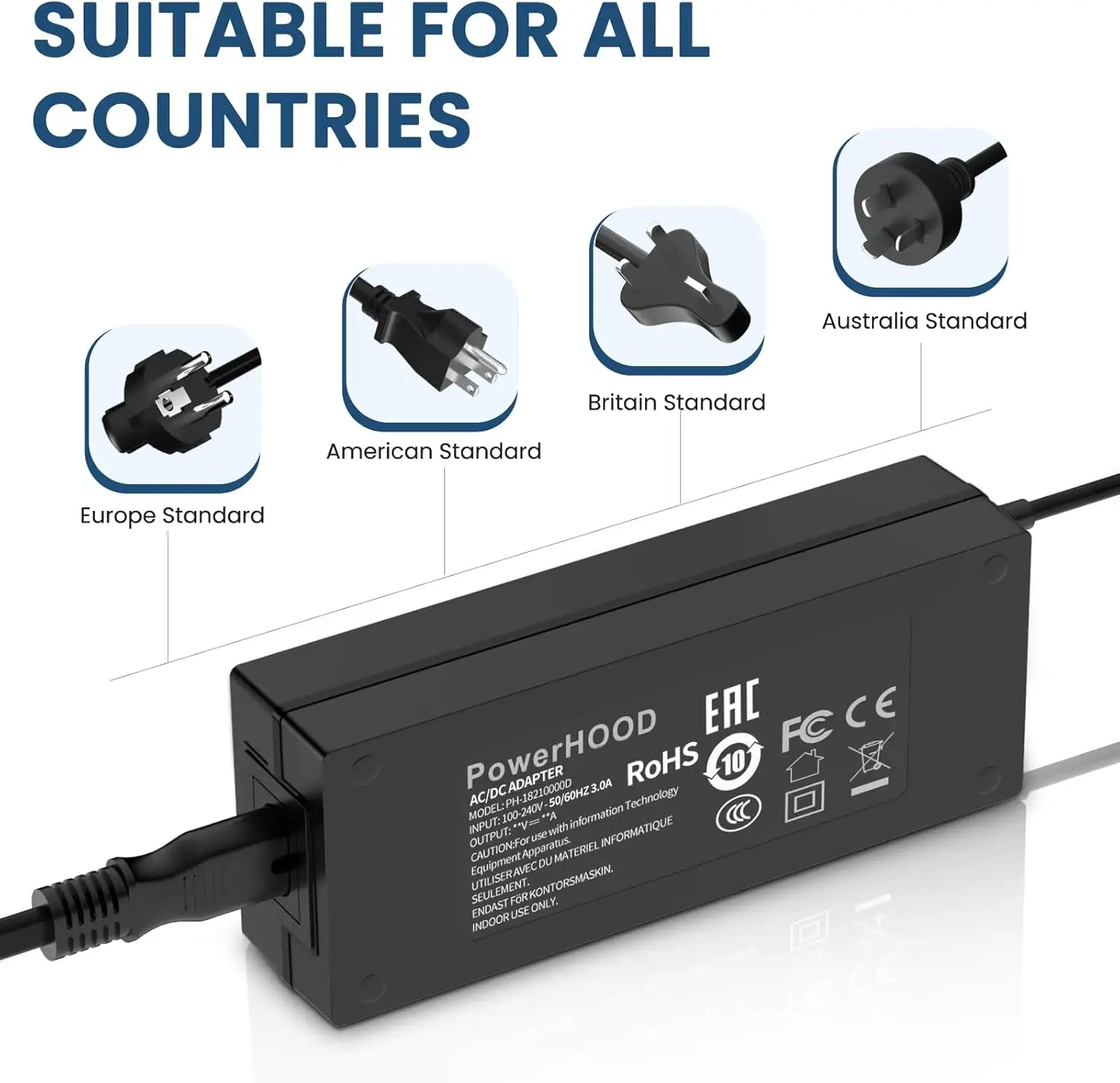
The missing power adapter was the most consistent frustration. Seidman admitted he “didn’t read the fine print” and had to spend $80 more; HardwareZone called the adapter “large and bulky” — a necessary expense only for those needing the full 196W budget. Without it, maximum per‑port PoE output can’t be achieved across all eight ports.
Limited PoE budget with PoE‑in was a technical gotcha many ran into. Dong Ngo warned “don’t use more than one PoE++ device with it” unless you have substantial input power. For prosumers with several high‑draw cameras or APs, miscalculation leads to devices dropping power.
Management constraints were another recurring topic. Without UniFi, it’s plug‑and‑play only. Seidman and HardwareZone both highlight no standalone web GUI — mixed‑vendor networks lose access to key controls like VLANs or bandwidth throttling.
Divisive Features
The choice of a single 10GbE uplink — RJ45/SFP+ combo — split opinions. Home users found one uplink sufficient, while small office setups wished for dual uplinks or more 10GbE ports for redundancy. Seidman noted, “I would have liked at least one more 10 gig port onboard.”
PoE forwarding, while clever, sees uneven use. HardwareZone called it “likely to remain unused” for most casual buyers, yet for security installers it’s the main selling point. The trade‑off is careful wattage planning, which not all buyers want to manage.
Trust & Reliability
No scam concerns surfaced — resale units on eBay matched expected specs, with market pricing stable. Reddit’s speed complaints (halved download rates) were resolved via enabling flow control, a fix shared peer‑to‑peer.
Durability sentiment is positive. Dong Ngo noted that “it remained relatively cool even during heavy operation,” unlike hotter Enterprise 8 PoE models. HardwareZone tested enclosure heat build‑up in a cabinet and found it “warm to the touch but never uncomfortable,” with polycarbonate casing showing no flex.
Alternatives
Within Ubiquiti’s stable, the Enterprise 8 PoE offers dual SFP+ uplinks and higher raw specs (80Gbps switching), but doubles the price at ~$479. The Pro 8 PoE adds Layer 3 functions with mixed PoE outputs for $349 — still short of the Flex’s compact chassis.
Outside Ubiquiti, Amazon lists cheaper multi‑gig PoE switches, but as HardwareZone cautioned, “none with a feature set that’s quite as compelling” for UniFi environments. For mixed‑brand networks without UniFi, alternatives with built‑in web GUIs may prove simpler.
Price & Value
eBay UK pricing hovers around £209.99 (~$265), a moderate premium over the US $199 MSRP. HardwareZone’s Singapore purchase at S$350 underscores geographic price bumps. Resale value is strong; listings of Flex models retain most of their retail price months after launch.
Community buying tip: factor the adapter cost upfront if your PoE load demands exceed 46W — the “cheap” $199 buy can quickly hit $279+, but that ensures full per‑port power.
FAQ
Q: Does the Flex 2.5G PoE require a power adapter?
A: Not if powered via PoE++ or PoE+++, but this limits total output. For the full 196W budget to all ports, an optional AC adapter is essential.
Q: Can I manage it without other UniFi gear?
A: Only in basic unmanaged mode. Advanced features — VLANs, link aggregation, per‑port PoE control — need a UniFi controller or console.
Q: How hot does it run?
A: Users report it gets warm but remains safe to touch, even with multiple PoE devices active. The fanless design is quiet and reliable.
Q: Is PoE power forwarding useful for me?
A: If chaining switches or APs, yes — it can pass power downstream. For standalone use, it’s less critical.
Q: Will it work with non‑Ubiquiti devices?
A: Yes, at the Ethernet level. However, management and compatibility with certain SFP modules may vary.
Final Verdict
Buy if you’re a UniFi user expanding into multi‑gig with modest PoE needs or a home/small‑business owner wanting silent, compact, high‑throughput switching. Avoid if you require web‑based management in a mixed‑vendor environment or full PoE++ output to many devices without spending on the adapter.
Community pro tip: As Reddit users found, enable flow control if you see uneven speeds — it can turn “half” performance into “full” overnight.