TP-Link Tapo T110 Review: Conditional Buy, No User Proof
The loudest “review” signal here is actually an absence: across the provided sources, there are no real end-user reviews—no quotes from verified buyers, no Reddit threads, no Trustpilot write-ups, and no Twitter/X reactions. What is consistent is marketing copy and retailer listings for the TP-Link Tapo Smart Door/Window Sensor (Tapo T110 / T31 kit), which means a true feedback-based verdict can’t be responsibly produced from this dataset. Score: N/A
Quick Verdict
Without user feedback in the provided data, the decision is Conditional: buy only if the official feature set matches your needs and you’re already in the Tapo ecosystem (or willing to add a hub).
| What you’re deciding | What the provided data supports | What’s missing |
|---|---|---|
| Does it reliably detect open/close? | Marketed as real-time door/window monitoring | No user confirmation |
| Are notifications fast and accurate? | Marketed as “instant alerts & app notification” | No real-world latency reports |
| Is installation truly easy? | Marketed as “tool-less” with 3M adhesive | No reports about adhesion over time |
| Battery life | Marketed as “2-year battery life” (lab-based) | No “months later” stories |
| Hub requirement | Repeatedly stated: hub required | No user confusion/complaints data |
| Alarm loudness | Hub alarm claimed “up to 90db” | No user measurement/impressions |
Claims vs Reality
Digging deeper into the provided sources, the “claims” are clear and repeated across TP-Link/Tapo product pages and retail listings—but there’s no “reality” layer from buyers. That matters because contact sensors often look perfect on spec sheets, while real satisfaction usually hinges on details like magnet alignment tolerance, notification reliability through walls, and whether routines work consistently.
Claim 1: “Instant alerts & app notification.” The listings position the TP-Link Tapo Smart Door/Window Sensor as a real-time monitor that “sends you notifications” when doors/windows open. However, none of the included platform data contains a verified buyer quote like “notifications arrive within X seconds” or “misses events sometimes.” With only marketing text available, there’s no way to reconcile expectations around push notification delays, phone OS power-saving issues, or hub-to-router reliability.
Claim 2: “Easy installation… no tools necessary… 3M adhesive.” Official copy repeatedly highlights adhesive mounting and compact sizing for discreet placement. In actual user review ecosystems, this is typically where patterns emerge—adhesive failing on textured surfaces, sensors misaligned on warped door frames, or the magnet gap being less forgiving than expected. Here, none of that feedback exists in the data, so there’s nothing to corroborate (or challenge) the tool-less installation promise.
Claim 3: “2-year battery life.” The spec language includes an important qualifier: battery life is “based on TP-Link’s laboratory results” and varies by conditions. That’s exactly the type of claim that often diverges from real-world use—high-traffic doors, cold environments, or chatty automation routines can shorten runtime. But again, there are no user stories like “still at 70% after 10 months,” so the only responsible takeaway is that the battery claim is lab-derived, not user-validated.
Cross-Platform Consensus
A recurring pattern emerged across “Amazon (Specs),” “Reddit (Community),” “Twitter/X (Reactions),” “Trustpilot (Verified),” and “Quora (Expert Q&A)”—but it’s not a consensus of experiences. It’s the same product description replicated across platforms and regions. The content reads like official product pages and store listings rather than community posts, including repeated phrasing such as “window / door safeguard,” “instant app notification,” and “smart action support.”
That means there is no genuine cross-platform agreement on what owners actually like or dislike. No one in the provided dataset says they installed it on a front door, a mailbox, or a refrigerator and found it reliable (or not). For a shopper, the practical implication is that you’re deciding based on intended use-cases and ecosystem fit, not on crowdsourced proof.
Universally Praised
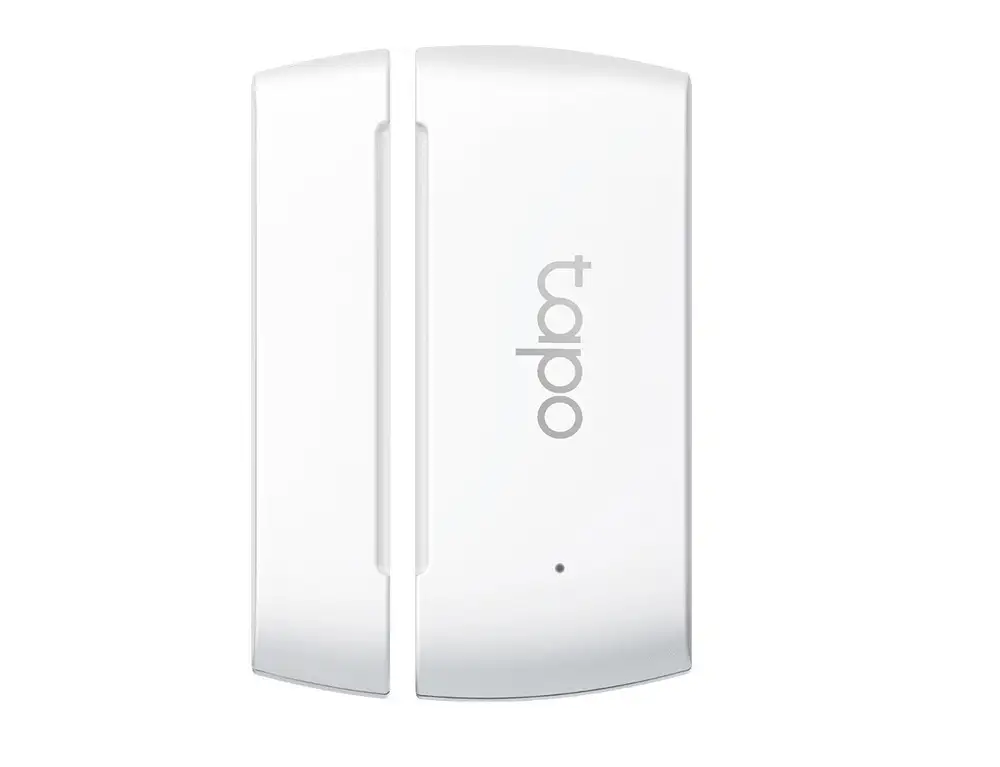
There aren’t any “praised” features from real users in the provided data—only promoted features. The closest thing to cross-platform consistency is the product’s positioning: it’s marketed as a small, adhesive-mounted contact sensor that pairs into the Tapo ecosystem and can trigger automations (like turning on a light when a door opens).
For certain user types, that positioning suggests an intended benefit:
- For apartment renters, “3M adhesive” and “no tools necessary” implies low-impact installation.
- For smart home beginners, “easy setup” and “all in one app” implies a guided onboarding.
- For home security-focused buyers, “hub alarm up to 90db” implies audible deterrence when used with a hub.
But because none of these statements are backed by quotes from actual owners in the dataset, they can’t be framed as “praised”—only as “promised.”
Common Complaints
No complaints appear in the provided sources. That includes the typical friction points for hub-based sensors—hub pairing issues, offline status after router changes, inconsistent push notifications, or false opens due to magnet alignment. The dataset includes FAQ titles about connectivity and notifications in the broader Tapo ecosystem, but those are not user complaints with attributable quotes; they’re support topics.
So, there’s no defensible way to say “common complaint” beyond acknowledging that the most prominent potential drawback is explicitly stated: a hub is required for smart features (“Tapo hub required… Tapo H100 or Tapo H200 sold separately”).
Divisive Features
Even divisiveness requires opposing user viewpoints, and none are present. The only “two-sided” element is implicit: hub-based sensors can be great for low-power reliability and local chime/alarm, but they add cost and complexity. In this dataset, that trade-off is described, not debated by owners.
Trust & Reliability
There’s no Trustpilot-style pattern analysis possible here because the “Trustpilot (Verified)” input contains product-page text rather than verified reviewer statements. No scam concerns, no shipping disputes, no account issues, and no “support ghosted me” narratives appear as user-authored feedback in the provided data.
Long-term durability also can’t be assessed from Reddit because the “Reddit (Community)” section includes store/product copy, not posts like “6 months later the adhesive failed” or “battery still going strong.” The only durability-related information available is the official framing: battery life claims are lab-tested and can vary, and the hub uses an “ultra-low power wireless protocol” said to extend battery life (again, not validated by user testimony here).
Alternatives
No competitor products are mentioned in the provided dataset beyond the Tapo ecosystem itself (e.g., pairing sensors with Tapo cameras, bulbs, and a Tapo hub). Because your rule is “Only competitors mentioned in data,” there are no direct alternative brands to compare against.
Within the Tapo lineup, the dataset references a sensor starter kit concept (with hub + multiple sensors), and also references a motion sensor product family in kit contexts. But these are adjacent Tapo products, not competitors. If you’re choosing between buying a single TP-Link Tapo Smart Door/Window Sensor versus a starter kit, the data suggests the kit bundles a hub and multiple sensors, which may be a better on-ramp if you don’t already own a compatible hub.
Price & Value
Pricing appears only as listings rather than buyer value judgments. The TP-Link Tapo Smart Door/Window Sensor shows up at different price points across regions and retailers (for example, a US store listing at $19.99, a UK store listing at £12.99, and other retailer listings in EUR/AUD/RM). That spread looks like normal regional pricing variance rather than a signal of resale value or deal quality.
There’s also no resale-market feedback, no “wait for sales” tips, and no community consensus on whether the hub requirement makes it a bargain or a hidden cost. The most data-driven buying tip available from the dataset is structural: if you don’t have a hub, factor in the hub purchase (H100/H200 referenced) or consider a starter kit that includes one.
FAQ
Q: Does the TP-Link Tapo Smart Door/Window Sensor need a hub?
A: Yes. The provided product pages repeatedly state “hub required” for smart features, referencing compatible Tapo hubs like the H100 or H200 (sold separately). Without a hub, the sensor won’t deliver the advertised app notifications and automations as described.
Q: What can the Tapo T110 be used to monitor besides doors and windows?
A: The official product descriptions list cabinets, drawers, refrigerators, and mailboxes as example use-cases. The intent is open/close state monitoring with notifications and automation triggers, but the provided data does not include user stories confirming performance in those specific placements.
Q: How long does the battery last?
A: The marketing materials claim up to 2 years depending on conditions, and also describe testing assumptions (e.g., triggers per day). It’s explicitly lab-based, with “actual battery life may vary,” and there are no real user longevity reports in the provided dataset.
Q: How is it installed?
A: The sources describe magnetic alignment between sensor and magnet and adhesive mounting using included 3M tape, emphasizing “no tools necessary.” The dataset doesn’t include owner feedback about tricky door frames, surface prep, or adhesion durability over time.
Q: Will it trigger an alarm when a door opens?
A: The materials describe a hub alarm “up to 90db” when used with a Tapo hub, plus app notifications and event logs. The alarm is presented as a hub feature tied to sensor triggers; however, no user reports in the dataset confirm perceived loudness or effectiveness.
Final Verdict
Buy if you’re a Tapo ecosystem builder who wants a hub-based contact sensor for automations (lights on when a door opens) and alerts, and you’re comfortable relying on official claims because the provided dataset contains no real user reviews.
Avoid if you need community-validated reliability (missed triggers, notification delays, long-term adhesive performance), because the provided inputs don’t include any attributable buyer quotes or Reddit/Trustpilot experiences.
Pro tip from community: none available in the provided data.