Taramps Smart 3 Bass Review: Conditional Verdict 6.8/10
That “3000W RMS” promise comes with a catch: one owner said it was “great without any issues for about a month or so,” then the bass started “intermittently cutting out.” Taramps Smart 3 Bass Amplifier for Car Subwoofer earns a conditional verdict based on the only real-world discussion provided here: the amp can hit hard, but user stories repeatedly circle back to electrical demands and reliability anxiety. Score: 6.8/10.
Quick Verdict
Taramps Smart 3 Bass Amplifier for Car Subwoofer: Conditional.
Digging into the few first-hand accounts available, the pattern is less about “does it make bass?” and more about “can your electrical system keep up?” In one Reddit troubleshooting thread, a user described a month of smooth use before cutouts: “the sound is intermittently cutting out.” Another commenter framed it as an infrastructure problem, not necessarily a defective amp: “They need good electrical.”
At the same time, skepticism about the brand shows up bluntly in the same community discussion. One commenter didn’t troubleshoot at all and jumped straight to reputation: “taramps is junk . that ’s why.” That contrast—electrical-system-dependent performance vs. distrust—defines the quick verdict.
| Factor | What the data says | Who it impacts |
|---|---|---|
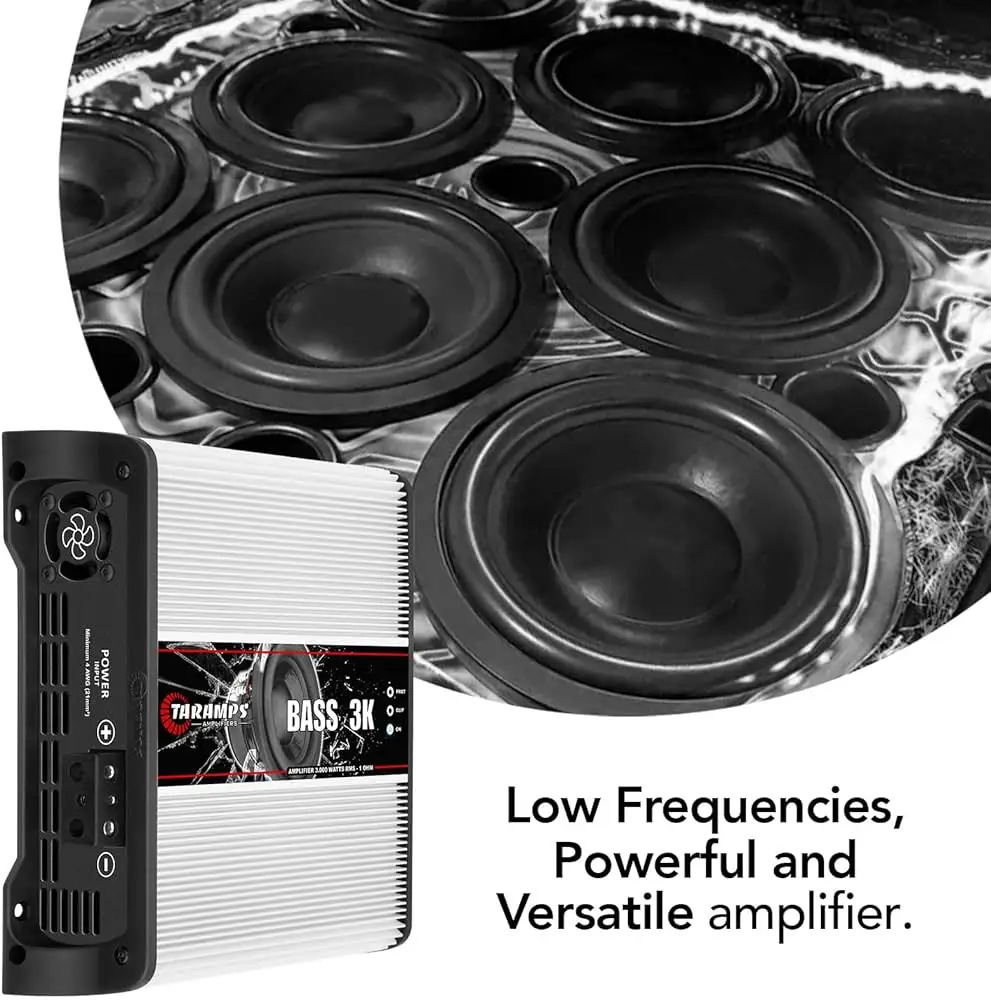
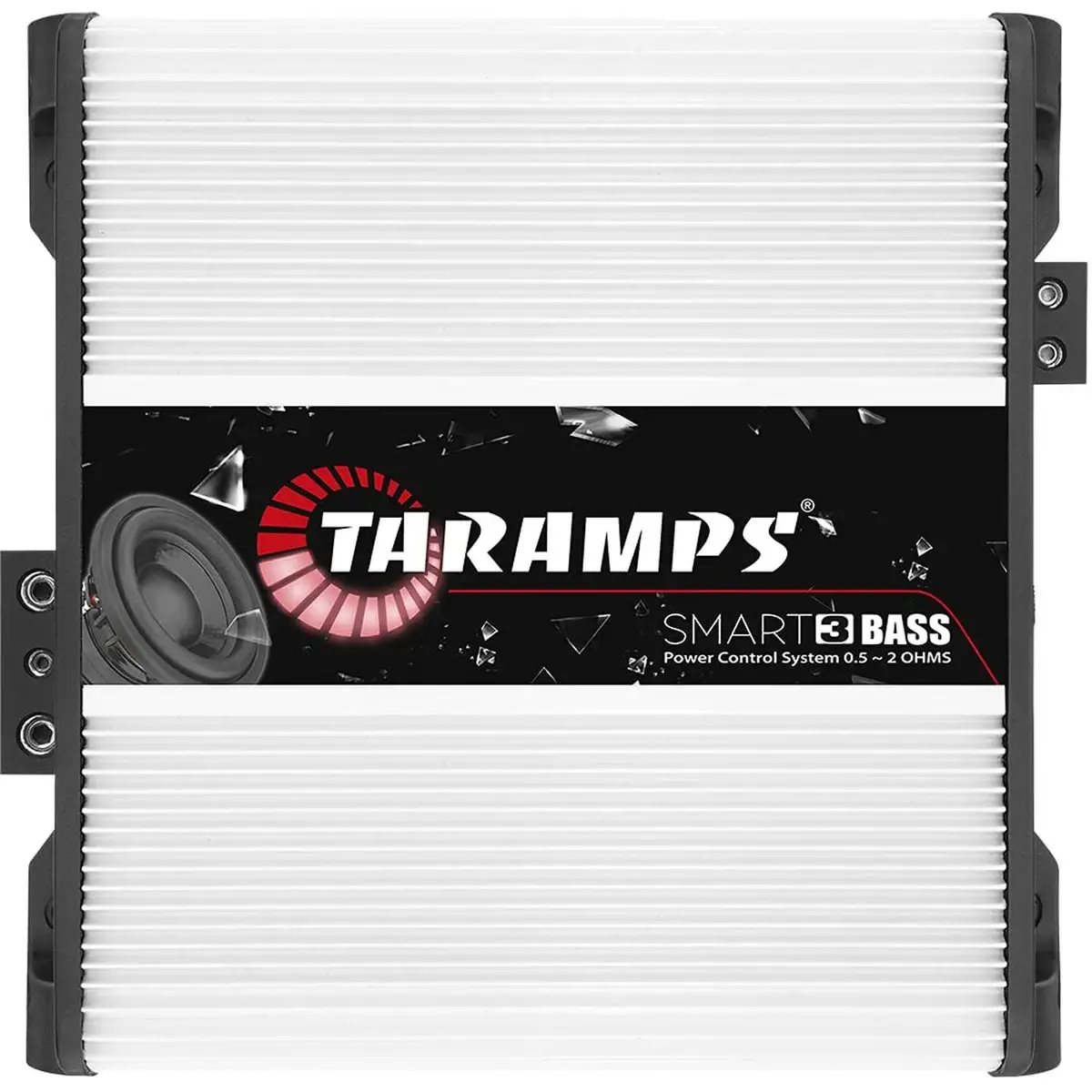
| Power delivery | Officially rated “3000W RMS” across 0.5–2 ohms (model-dependent listings) | SPL and bass-focused builds |
| Electrical demand | Reddit fix: “second battery fixed it. 370 alt also came next same day.” | Daily drivers without HO alternator |
| Reliability perception | “taramps is junk” vs. “it was great… for about a month” | Buyers weighing risk |
| Tuning sensitivity | Forum users discussed HPF/LPF mis-settings heating subs | New installers |
| Resale/market | eBay listings show steady demand and many sold units | Bargain hunters and flippers |
Claims vs Reality
The marketing language across listings leans hard on consistent power across impedances and “power control” safety systems. The lived experience in community troubleshooting threads is narrower—but revealing.
Claim 1: “Delivers a consistent 3000 WRMS” across a wide impedance range.
Official listings describe multi-impedance operation and stable output—often presented as “3000 watts RMS” at 0.5, 1, or 2 ohms depending on the exact Smart 3 Bass listing. But the only firsthand troubleshooting story included doesn’t argue about loudness; it highlights stability under real vehicle conditions. A Reddit poster said: “it was great without any issues for about a month or so. then one day… the sound is intermittently cutting out.”
A recurring pattern emerged in responses: voltage support is treated as the deciding factor. One commenter attributed shutdown behavior to insufficient electrical headroom: “Mine would cut off at full tilt. second battery fixed it. 370 alt also came next same day.” In other words, the “consistent 3000W” claim may be functionally conditional on alternator, battery, wiring, and voltage drop in the car.
Claim 2: Protection systems and “power control” provide safety and reliability.
Official descriptions emphasize protections (short circuit, thermal, high/low voltage). In the real-world thread, those same protections may be what users experience as “cutting out.” The original poster noticed behavior that felt like the amp dropping out and coming back: “sound seems to return for a while when i increase the bass on my head unit… and then return to my normal, clip free level.”
Community replies reframed that as diagnostic work, not magic: “you can't figure anything out until you break out a meter and start testing.” The gap here is subtle: safety systems can prevent damage, but they can also create frustrating intermittent operation if the supply is unstable.
Cross-Platform Consensus
Universally Praised
The strongest “praise” in the provided data is not star ratings or polished testimonials—because none were included beyond Amazon’s aggregate rating—but raw excitement about perceived power gains when switching from another amp.
On Steve Meade Designs, one user framed the upgrade as a revelation for output: “i finally heard a true 1000 watts .. i 'm amazed . . my bamf 5000 is junk . you guys were right.” For the type of user chasing tangible bass improvement (and who has already owned a high-wattage-branded amp), that quote reads like the payoff: the system finally feels like it’s delivering what the numbers promised.
Heat and “working hard” also got normalized in that same discussion. When the user asked, “is it normal for the amp to get warm? and the subs to get warm??” the response was matter-of-fact: “its ok to get warm yes its just part of making power you make heat.” For bass-heavy listeners who run long sessions, that reassurance matters—because warm hardware is often interpreted as failure in progress.
Another “praise by implication” is the presence of a clip indicator and adjustable crossovers, which owners referenced while trying to protect gear. The same SMD user leaned on that safeguard to justify confidence: “the smart 3 has a clip light… so he knows he 's not clipping at least.” For users without an oscilloscope, a clip light becomes a practical tool for daily tuning and peace of mind.
- Power “feels real” for upgrade-minded users: “i finally heard a true 1000 watts”
- Clip indicator and controls become part of the ownership story: “the smart 3 has a clip light”
- Warm operation is treated as normal at load: “its ok to get warm”
Common Complaints
The clearest recurring complaint theme is cutouts that look like reliability problems—but are often framed as electrical shortcomings.
In the Reddit thread, the owner described a sudden change from stable performance to intermittent dropouts: “the sound is intermittently cutting out.” That kind of failure mode hits daily drivers hardest: commuting systems that need to work every time, not just at shows.
Responses repeatedly pulled the conversation toward alternator/battery upgrades rather than blaming the amp immediately. One person’s fix was blunt and expensive: “second battery fixed it. 370 alt also came next same day.” Another user echoed the idea that these amps are demanding: “they need good electrical.” For anyone planning to run the Smart 3 Bass near its limits, this becomes less like an optional upgrade and more like part of the cost of ownership.
There’s also a reputational complaint—less about a specific defect and more about brand trust. A commenter dismissed the product outright: “taramps is junk . that ’s why.” Even if that’s just one voice, it shows how quickly online communities can polarize around reliability expectations, especially when troubleshooting threads appear.
- Intermittent audio dropouts: “sound is intermittently cutting out”
- Electrical upgrades felt “required” by some: “second battery fixed it… 370 alt”
- Brand skepticism shows up as a shortcut conclusion: “taramps is junk”
Divisive Features
The Smart 3 Bass ecosystem is divisive because the same traits can read as either “competition-ready power density” or “finicky and demanding.”
On one side, owners who perceive a big real-world gain celebrate it as finally getting honest output: “i finally heard a true 1000 watts.” On the other side, the moment symptoms appear, some observers treat it as confirmation of poor quality: “taramps is junk.”
Even user troubleshooting details show how ownership can swing based on setup. The Reddit poster suspected multiple culprits: “i’m wondering if it could be my head unit as well.” Community members pushed back toward measurement and system diagnosis: “break out a meter and start testing.” For meticulous builders, that’s normal; for casual buyers, it’s friction.
Trust & Reliability
Digging deeper into the provided sources, there isn’t meaningful verified-review text from Trustpilot here—only product-description-style blocks—so the trust narrative comes almost entirely from community discussions.
What does emerge is a “time-delayed anxiety” pattern: one Reddit owner had a honeymoon period, then problems: “great without any issues for about a month or so,” followed by cutouts. That’s the kind of story that drives suspicion even when the cause might be electrical sag or protection triggering.
Longer-form forum discussion adds another reliability-adjacent theme: heat and smell. One user said, “my sister said she smelled my subs a little bit,” while insisting they weren’t clipping: “i ’m not showing any clipping.” Others steered the discussion toward setup variables like crossovers and frequency settings, suggesting the system can be unforgiving if filters are wrong or if the box tuning and HPF/LPF aren’t aligned.
Alternatives
Only a few competitors were directly mentioned in the data, and they were referenced as personal comparison points rather than full reviews.
A Reddit poster contrasted Taramps with a previous positive experience: “i figured i ’d try it since the deafbonce aab series was great for me.” For buyers who prioritize “set it and forget it” stability, that comment implies the Deaf Bonce AAB series left a stronger reliability impression—at least for that user.
On the Steve Meade Designs thread, another amp was framed negatively compared to the Smart 3: “my bamf 5000 is junk.” For the user type upgrading from amps that feel overrated in output, the Smart 3 Bass can look like the correction—assuming the electrical system supports it.
Price & Value
The price picture is unusually clear across platforms: Amazon showed a bundle at $353, while multiple storefront listings hovered roughly in the mid-$200s for the amp alone, and eBay showed a wide spread including pre-owned units.
From eBay market snapshots, new units often appeared around the high-$200s, with used listings lower (one example: “pre-owned… $189.00”). That spread suggests two buyer profiles: budget seekers who accept used risk, and builders who pay a bit more for new stock and shipping speed.
Community buying “tips” in the data aren’t about coupons—they’re about budgeting for electrical. When a commenter says, “second battery fixed it. 370 alt also came next same day,” it reframes value: the amp price may be only part of the real cost if you’re chasing full output.
- New pricing clusters around the mid/high-$200s on marketplaces
- Used pricing can drop below $200 depending on condition
- Value depends heavily on whether you need alternator/battery upgrades
FAQ
Q: Does the Taramps Smart 3 Bass really deliver 3000W RMS?
A: Official listings describe “3000 watts RMS” across a multi-impedance range (often 0.5–2 ohms depending on the model listing). In user discussions, the bigger issue wasn’t loudness but stability—one Reddit owner said the amp was “great… for about a month,” then started “cutting out.”
Q: Why does the audio cut out on a Smart 3 Bass?
A: In the provided Reddit troubleshooting thread, commenters pointed to the vehicle’s electrical system. One said: “Mine would cut off at full tilt. second battery fixed it. 370 alt also came next same day.” Another summed it up: “they need good electrical.”
Q: Is it normal for the amp and subs to get warm?
A: A forum user asked, “is it normal for the amp to get warm? and the subs to get warm??” Another member replied: “its ok to get warm… you make heat.” The same thread shows concern if subs get hot or smell, pushing owners to check tuning and settings.
Q: Could head unit settings cause strange behavior?
A: One Reddit owner wondered, “it could be my head unit as well,” because the sound returned after boosting bass on the head unit. Commenters emphasized diagnosing with measurement first: “break out a meter and start testing,” suggesting symptoms can be system-wide, not only the amp.
Final Verdict
Buy if you’re the kind of bass-focused builder who’s willing to support a high-draw mono amp with serious electrical—because the community’s practical fix was “second battery” and even a “370 alt.” Avoid if you want plug-and-play reliability in a stock electrical daily driver, especially if intermittent cutouts would be a deal-breaker. Pro tip from the community: don’t guess—“break out a meter and start testing.”