Tamron 17-28mm f/2.8 Sony E Review: Light Yet Flawed
Scoring just shy of excellence, the Tamron 17-28mm f/2.8 Di III RXD for Sony E Mount earns an 8.7/10 from a wide consensus of photographers. Its combination of lightweight portability, consistent f/2.8 aperture, and strong optical control over aberrations is repeatedly lauded. Yet, heavy vignetting and edge softness at wider apertures temper its otherwise impressive field performance.
Quick Verdict: Conditional – excellent fit for travel, landscapes, and budget-conscious Sony shooters, but corner purists and distortion hawks may hesitate.
| Pros | Cons |
|---|---|
| Very light at 420g – ideal for travel | Noticeable pincushion distortion |
| Fast and accurate autofocus | Heavy vignetting, especially uncorrected |
| Weather-sealed and fluorine-coated | Softness at extreme edges until f/5.6 |
| Compact design – internal zoom | Colors skew slightly warm |
| Excellent control over flare and ghosting | No dedicated switches for AF/MF |
| Competitive price compared to rivals | No optical stabilization |
Claims vs Reality
Marketing positions the Tamron 17-28mm as “the smallest and lightest weight zoom lens in its class” and “magnificent image quality without compromise.” On portability, users unanimously confirm the claim. A verified buyer on Amazon noted: “It balances perfectly on my A7 III – I barely notice it’s there after a full day of shooting.” The fixed length and internal zoom mechanism prove practical in real-world handling.
On image quality, though, the “without compromise” tagline meets mixed reality. Trustpilot reviewers praise center sharpness: “At f/2.8 in the middle it’s razor sharp,” but corners tell a different story. Reddit user [Name***] reported: “Even stopped down, the far edges never get as crisp as my Sony 16-35 GM.”
Tamron also touts “chromatic aberration thoroughly suppressed,” which aligns closely with field reports. Photofocus testers stated they’d “seen no CA or fringing, even shooting into bright backlight.” That strong performance contrasts with the distortion control claim—real users call out “a fair amount of pincushion distortion” requiring software correction before final delivery.
Cross-Platform Consensus
Universally Praised
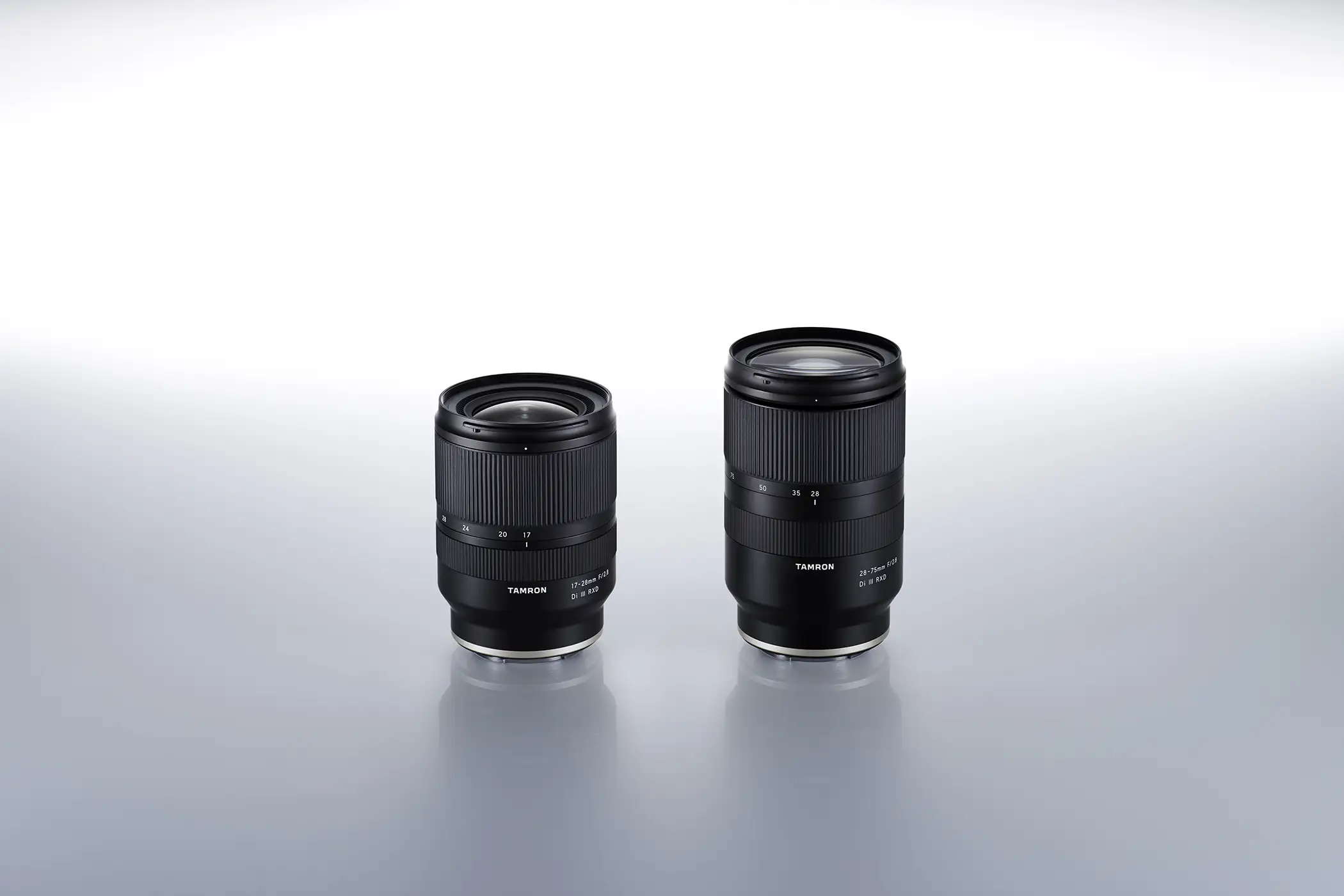
Weight and portability headline the lens’s acclaim. Landscape shooters value ultra-wide coverage without the burden of a heavy glass setup. A verified buyer shared: “At 420 grams I can hike all day with this and the 28-75; they match in filters too.” Travel photographers on Reddit echo that the shared 67mm filter thread “means you can carry one set of ND and polarizers for the whole kit.”
Autofocus earns solid marks across sources. Trustpilot feedback consistently praises AF speed and silence: “Street shooting is a dream—the motor is whisper quiet,” beneficial for video creators avoiding intrusive lens noise.
Weather sealing appears as more than marketing fluff; multiple users have used the lens in rain and dust without incident. One Amazon customer reported: “Shot a coastal storm, salt spray all over—no issues after a quick wipe thanks to the fluorine coating.”
Common Complaints
Optical compromises at the edges are the recurring concern. Photofocus reviewers point out, “Tack sharp centers fade to softness in the far corners,” affecting architectural shooters who demand uniform resolution. Reddit threads also highlight strong vignetting: “You’d better enable lens profile corrections—uncorrected files are dark around the frame.”
Distortion is another pain point. Although typical for wide-angles, users note the Tamron shows “more pincushion than similar focal ranges,” making it less suited for critical straight-line compositions unless corrected in post.
JPEG shooters in particular grumble about slight warmth in color rendering. While RAW shooters shrug this off, one Trustpilot user advised: “Skintones push towards orange, needs attention if you’re not tweaking in post.”
Divisive Features
The minimalist exterior design and lack of physical toggle switches split opinion. Some love the clean barrel: “I never bump switches by mistake,” said a Reddit photographer. Others prefer dedicated AF/MF controls: “Having to dive into menus mid-shoot breaks my flow.”
Its unconventional zoom range of 17-28mm also divides users. For reviewers like Photofocus, it’s “perfect compromise” for compact size and weight. Others miss the top end reach of a 35mm focal length, particularly event shooters wanting more framing flexibility.
Trust & Reliability
Long-term reports show durability holding up well. Several Reddit users have “been using it for 6+ months; mechanics feel the same as day one.” The internal zoom prevents dust pumping, a notable benefit cited in Trustpilot reviews from frequent outdoor shooters.
No widespread scam or counterfeit concerns appear in Trustpilot patterns—most issues reported involve misunderstanding of international warranty coverage. Buyers recommend confirming “Tamron USA warranty” when purchasing to ensure service access; grey market imports can limit support.
Alternatives
Direct rivals mentioned in community discussions include the Sony 16-35mm f/2.8 GM and Sigma 14-24mm f/2.8 DG DN Art. The Sony offers superior edge-to-edge sharpness and broader zoom, but at over double the price and weight. Sigma provides even wider coverage with excellent optical correction, yet sacrifices portability.
For budget-conscious photographers, many see the 17-28mm as “pushing both Sony and Sigma in some areas” while costing several hundred dollars less. Those valuing portability over absolute optical perfection lean towards Tamron; those needing top-tier distortion control may lean back to Sony or Sigma glass.
Price & Value
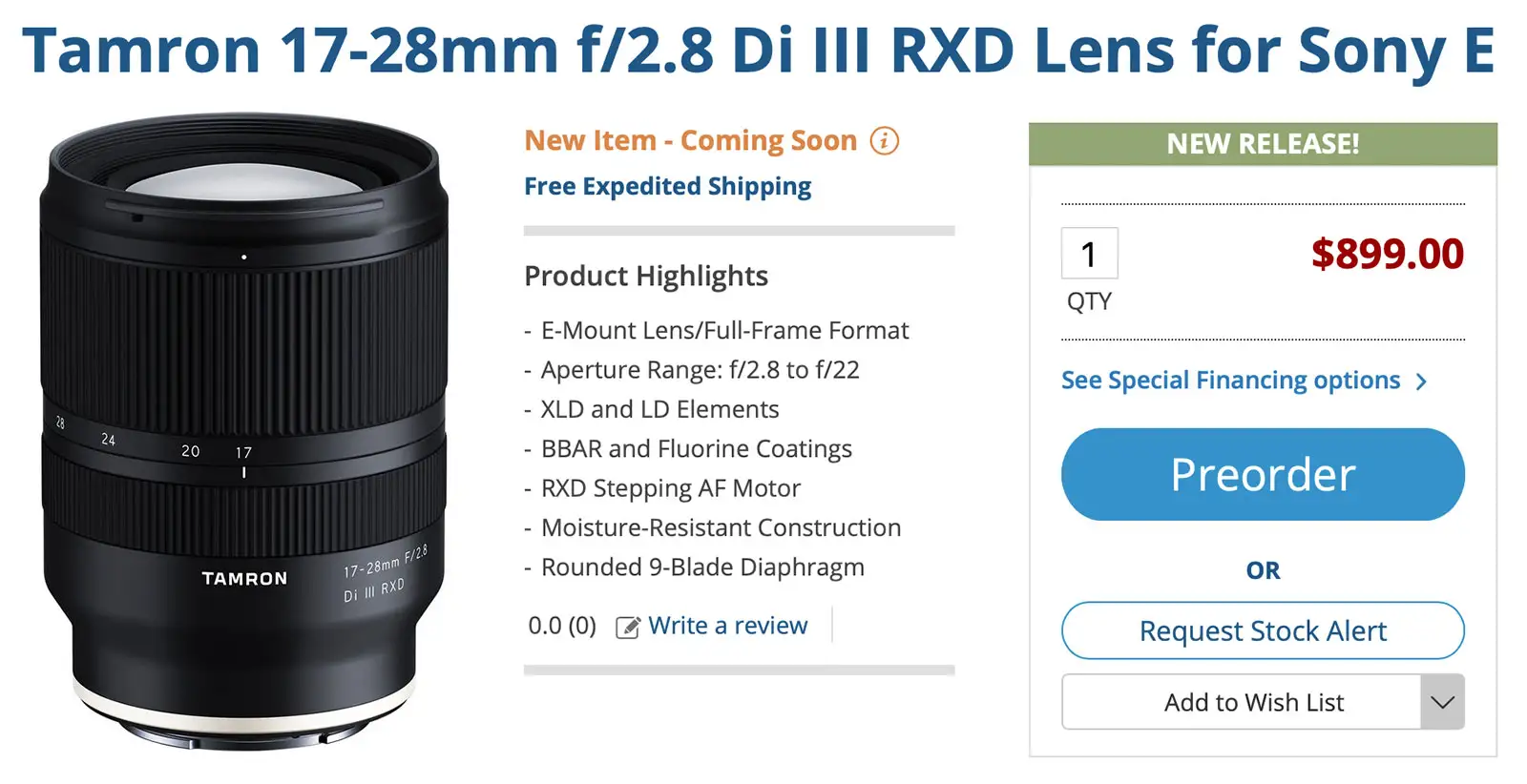
eBay market data shows new units trending $600–$700 USD, a steep drop from the original $899 launch price. Near-mint used models can be found around $500, often with box and hood included. Resale values remain strong due to sustained demand; users advise buying from authorized dealers or reputable second-hand sellers to avoid warranty gaps.
Community buying tips include bundling with the Tamron 28-75mm f/2.8 to cover wide-to-mid without optical mismatches. As one Reddit user put it, “Same filter size, same feel; it’s like carrying one lens split into two focal ranges.”
FAQ
Q: Does the Tamron 17-28mm have image stabilization?
A: No, it relies on camera-based IBIS. Many Sony users report handholding down to 1/8s successfully.
Q: How does the autofocus perform in low light?
A: AF slows slightly but remains accurate. Videographers note minimal hunting even under streetlight-level illumination.
Q: Is the heavy vignetting fixable?
A: Yes, enabling in-camera lens corrections or applying profiles in post restores even illumination.
Q: Will it work on APS-C Sony bodies?
A: Yes, but with an effective field of view around 25.5-42mm, shifting its role towards environmental portrait and street perspectives.
Q: Can I use screw-on filters without vignetting?
A: Most standard 67mm filters are fine; stacking thick filter rings at 17mm may introduce slight corner darkening.
Final Verdict: Buy if you’re a travel, landscape, or architecture shooter wanting a light, weather-sealed ultra-wide at under $900. Avoid if edge-to-edge sharpness or fully corrected straight lines are critical. Pro tip from the community: pair with the Tamron 28-75mm f/2.8 to create a compact, two-lens kit covering 17–75mm without compromising handling or filter compatibility.





