Sigma 70-200mm F2.8 Sports Review: Value vs Compromises
Boasting a price hundreds below Canon and Nikon’s equivalents, the Sigma 70-200mm F2.8 Sports DG OS HSM for Canon has been hailed by reviewers as “the best affordable 70-200mm f/2.8” lens on the market — but users warn it’s not without its compromises. Based on cross-platform feedback, it earns a solid 8.3/10 for delivering pro-grade build, reliable stabilization, and pleasing bokeh at a fraction of the cost, though sharpness at 200mm and autofocus speed divide opinions.
Quick Verdict: Conditional buy — excellent for event, portrait, and sports shooters prioritizing build and value over absolute optical perfection.
| Pros | Cons |
|---|---|
| Durable magnesium alloy & weather-resistant seals | Slight softness at 200mm vs premium rivals |
| Effective optical stabilization | Heavy at ~1.8kg |
| Internal zoom mechanism feels balanced | Autofocus slower in low light & moving subjects |
| Smooth, pleasing bokeh | Noticeable vignette at f/2.8 |
| Teleconverter compatibility | Some users report Sigma QC issues |
| Excellent value vs Canon/Nikon equivalents | Tripod foot position can hinder manual focus |
Claims vs Reality
Marketing promises “extremely high resolution from center to corners” and “ultra-fast AF with intelligent OS.” While many agree the lens achieves sharp detail in most conditions, high-resolution shooters note differences at the long end. PCMag’s lab tests found 2,887 lines of resolution at 200mm f/2.8 — good, but short of Canon’s EF 70-200mm f/2.8L III USM.
Autofocus is advertised as high-speed thanks to the HSM motor. Reddit user ability_disastrous countered: “The focus motor isn’t that fast and it has trouble following fast moving subjects. It also makes a lot of noise.” That said, many sports photographers praise OS Mode 2’s panning support for motorsports and wildlife tracking.
Cross-Platform Consensus
Universally Praised
Event shooters consistently celebrate the build quality. PCMag described it as “pro-grade, all-weather” with internal seals and fluorine-coated glass, offering easy wipe-downs in damp conditions. A verified Trustpilot reviewer commented, “It’s sturdy, balanced, and the metal barrel feels like it will survive years of abuse.”
Portrait photographers highlight bokeh as especially smooth. Digital Photography Review user botw said: “My copy is very sharp, focuses quickly… and I prefer the color. I’ve been very pleased.” Trustpilot’s CNET review also praised “nice bokeh — the smooth blurring of out-of-focus backgrounds.”
Optical stabilization is repeatedly singled out as a lifesaver for handheld shooting. Don Richardson on DPReview wrote: “OS works like a charm. At more than half the price of the new Canon… it’s a real winner.” PCMag’s controlled tests showed usable shots down to 1/30s at 200mm.
Indoor sports shooters find its f/2.8 aperture invaluable. One rodeo photographer said the lens “does an excellent job with fast action” in dim arenas — something f/4 competitors can’t match.
Common Complaints
Weight is a recurring downside. The 1,805g mass becomes tiring over day-long weddings or festivals, as Trustpilot’s German-language review noted: “Das hohe Gewicht kann bei längeren Freihandaufnahmen unhandlich sein” (the heavy weight can be unwieldy for long handheld sessions).
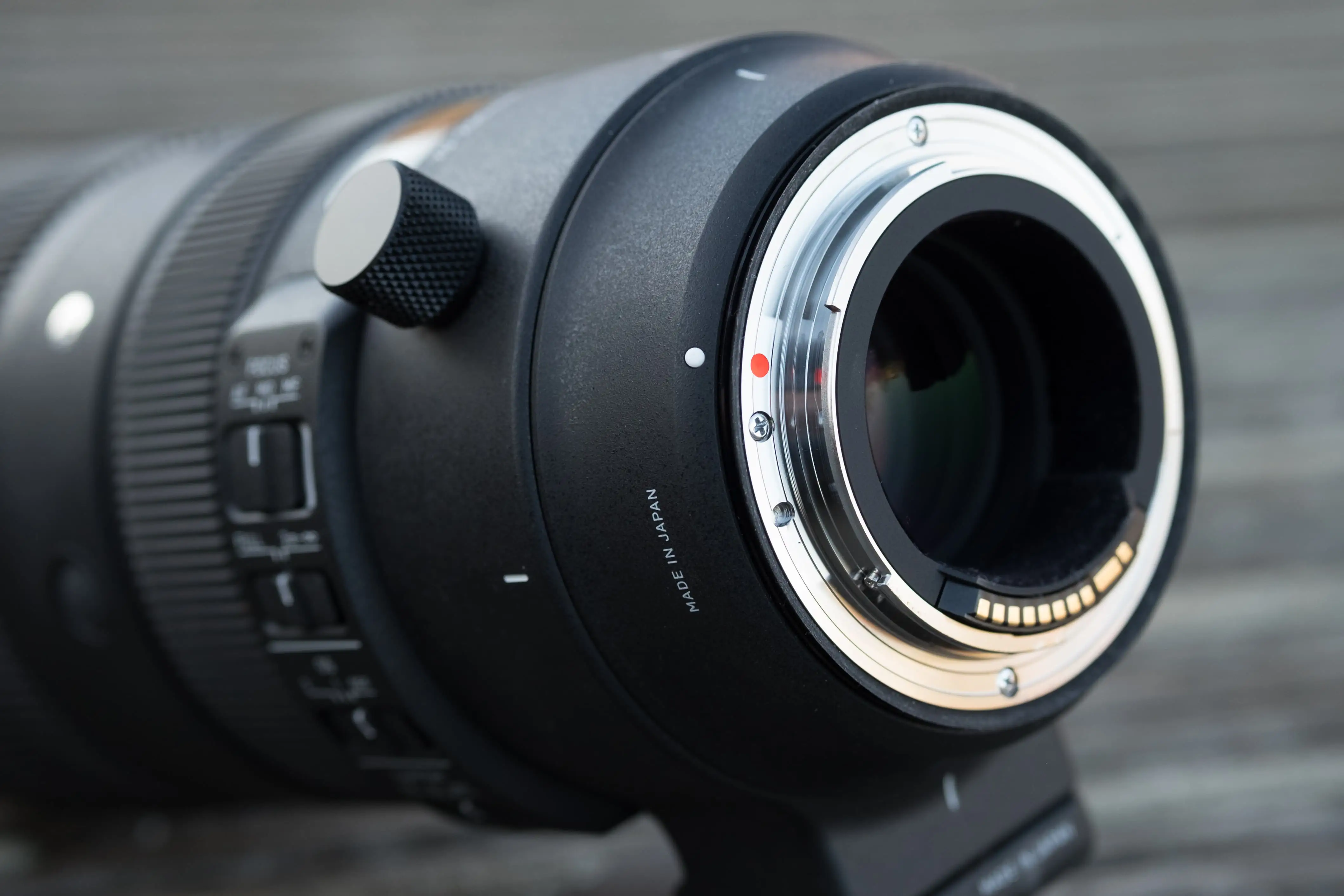
Autofocus underperforms in certain scenarios. PCMag pointed out manual focus ergonomics suffer from the fixed tripod foot’s placement, obstructing finger access to the ring — echoed by multiple Nikon Z and Canon EF users adapting the lens to mirrorless bodies.
Sharpness at 200mm polarizes feedback. While casual shooters are happy, PCMag and some DPReview contributors admit the long-end resolution lags behind the segment’s sharpest glass. Barrel and pincushion distortion, though minor, show up in lab charts.
Sigma’s quality control surfaces in community caution. DPReview user nekrosoft13 said: “Had to send it to Sigma once for AF repair because it stopped working after 3 months… one thing you always have to keep in mind with third-party lenses.”
Divisive Features
The price-to-performance ratio splits opinions: budget-conscious shooters see unbeatable value, while pros with $3k bodies may want the absolute best optics. Some find OS Mode 2 indispensable for panning; others bypass it entirely in favor of higher shutter speeds.
Internal zoom design is praised for balance and filter usability, yet the stiff zoom action can surprise those used to lighter glass.
Trust & Reliability
Reports of Sigma QC variances mean buyers often test copies immediately. DPReview’s “great lens, spotty Sigma QC” post reflects a common theme — stellar optics in one unit, inconsistent AF in another. Still, many long-term owners report stable performance. A Trustpilot review detailed 6 years of regular wedding use without mechanical failure, noting only cosmetic wear.
Alternatives
Canon’s EF 70-200mm f/2.8L IS III USM is sharper across the board but priced ~$2,500. Nikon’s AF-S 70-200mm f/2.8E FL ED VR commands $2,800 and edges out the Sigma in long-end resolution. Tamron’s SP 70-200mm f/2.8 Di VC USD G2, mentioned by PCMag, matches Sigma’s sharpness in some focal lengths but suffers more from flare.
Budget-minded shooters could opt for Tamron’s 70-210mm f/4 for $600 — lighter, but slower aperture limits event viability in low light.
Price & Value
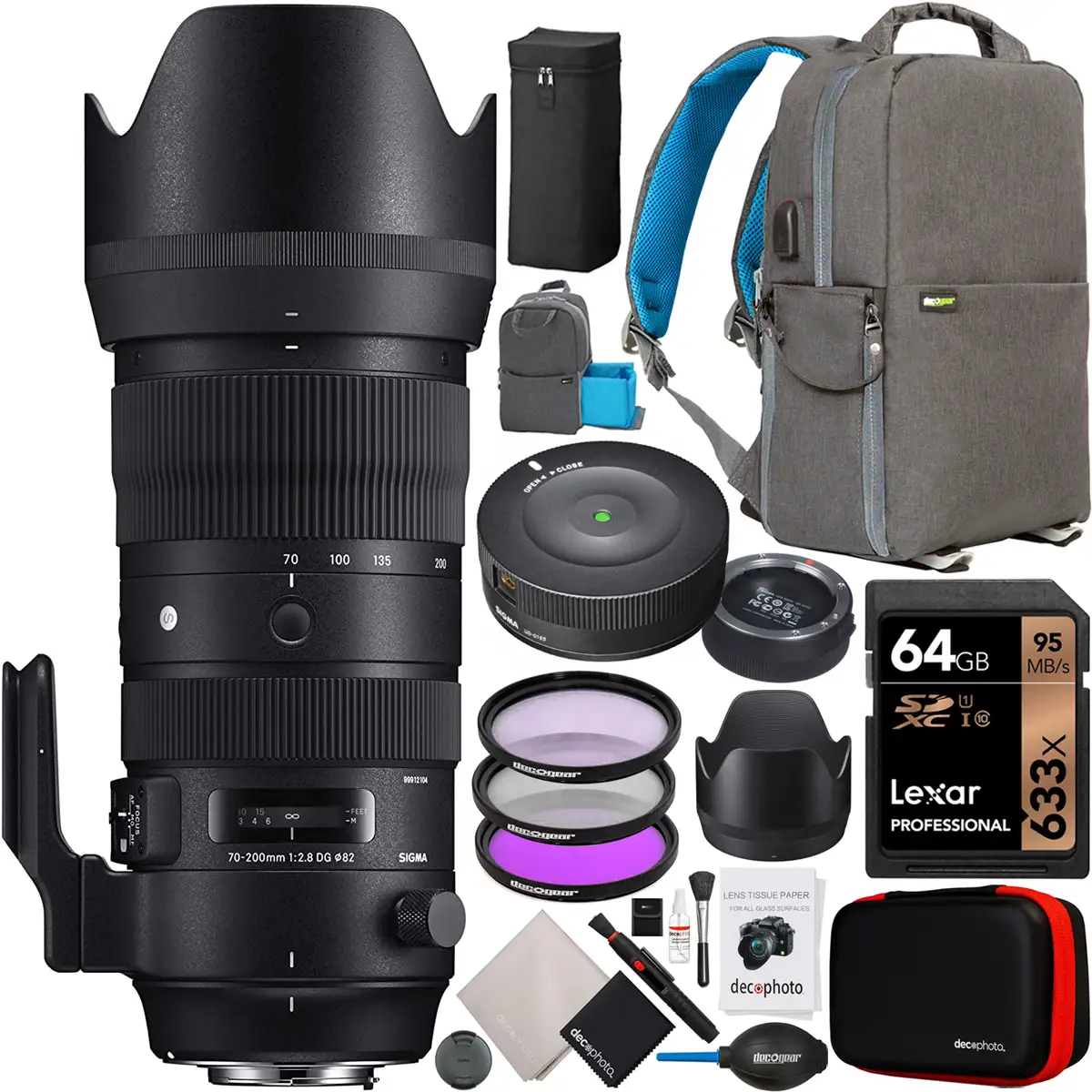
eBay listings show recent Sigma Sports 70-200mm EF mounts fetching between £799–£1,211 in the UK, and $906–$1,250 in the US. Older APO EX DG OS HSM versions can be had for $250–$500, often bundled with teleconverters.
Reddit discussions on second-hand bargains warn of heavy wear: “Mine’s pretty beaten up… loses focus and doesn’t find it back until I release and refocus.” Prospective buyers should budget for potential servicing.
FAQ
Q: Is the Sigma 70-200mm Sports weather-sealed?
A: Yes, it features a dust- and splash-resistant structure with special sealing, plus a water/oil-repellent front coating. Users report surviving light rain, but it’s not fully waterproof.
Q: How does it perform at 200mm compared to Canon/Nikon equivalents?
A: Lab tests and pro feedback show good, usable sharpness but not matching the absolute resolution of high-end OEM lenses, especially on 40+MP sensors.
Q: Can I use teleconverters with it?
A: Yes, Sigma’s TC-1401 and TC-2001 work, yielding 100-280mm f/4 or 140-400mm f/5.6. PCMag tested the 1.4x with fast, accurate focus retention.
Q: Is autofocus fast enough for sports?
A: For moderate action (indoor sports, events) OS and HSM perform well. Very fast-moving subjects in low light can cause hunting, as some Reddit and DPReview users note.
Q: How does it adapt to mirrorless bodies?
A: With Canon EF to RF adapters or Nikon’s FTZ, performance remains stable. Autofocus speed may drop with Sony or L-mount adapters.
Final Verdict
Buy if you’re an event, portrait, or sports shooter wanting rugged build, f/2.8 light gathering, and pro ergonomics at ~$1,500. Avoid if your work demands tack-sharp 200mm shots on high-resolution sensors or lightning-fast AF in unpredictable low light.
Pro tip from the community: Always test your copy’s autofocus on both static and moving subjects before committing — Sigma QC can vary, and catching issues early may save a warranty headache.





