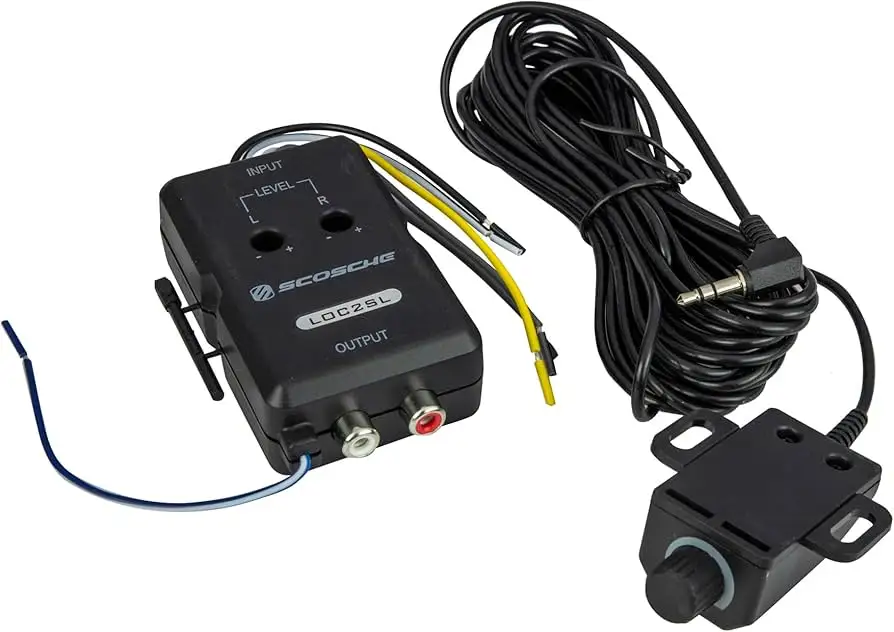
Scosche LOC2SL Review: Reliable Budget LOC, 8.6/10
“Most reliable… I’ve never failed.” That veteran installer sentiment pops up again and again around the Scosche LOC2SL Line Output Converter with Remote Control Knob, and it frames a clear takeaway: this is a budget-friendly way to add an amp or sub to a stock stereo without drama. Verdict: strong value with a couple of caveats. Score: 8.6/10.
Quick Verdict
Conditional yes. For drivers who want to keep a factory head unit and add a sub or amplifier, the LOC2SL is widely seen as dependable and simple. If you expect plug‑and‑play simplicity or premium hardware touches, some users say you’ll notice the tradeoffs.
| What users liked / disliked | Evidence from feedback |
|---|---|
| Reliable performance over time | An Amazon buyer said: “Most reliable… I’ve never failed. I’ve been in the business for 24 years.” |
| Works well with stock stereos | An Amazon reviewer noted: “Perfect for a stock stereo… made it easy to install an aftermarket subwoofer and amp.” |
| Noticeable bass and clarity improvement | A reviewer on VisionHut wrote: “Significantly improved my car’s audio… remarkable clarity… bass-heavy tracks.” |
| Easy installation for many | A VisionHut reviewer said: “One of the easiest to set up… instructions were crystal clear.” |
| Remote turn‑on wire is convenient | An Amazon buyer shared: “The remote wire actually works very well… only turns the amp on when the radio is on.” |
| Some installation splicing required | An Amazon buyer cautioned: “Had to do a lot of splicing and tapping.” |
| Remote bass knob feels cheap to some | A VisionHut reviewer said: “The remote control knob feels slightly flimsy.” |
Claims vs Reality
One major marketing promise is that the Scosche LOC2SL “delivers premium performance without noise, static, or buzzing” and provides clean high‑to‑low level conversion. Digging deeper into user reports, this claim largely holds for typical subwoofer add‑ons. An Amazon reviewer who added subs to a stock head unit said it “sounds great,” and another simply wrote, “clean & clear sound.” A VisionHut reviewer echoed that the converter produced “crystal-clear audio quality with no noticeable distortion,” especially for bass‑heavy music.
That said, the clean‑signal story depends on correct wiring. A recurring pattern emerged in Amazon feedback where initial problems were traced to connections. One Amazon buyer wrote, “Didn’t seem to work at first… but I re-did a few connections and it worked!” Users don’t report inherent noise issues as much as setup sensitivity, meaning beginners may need patience to get the full “no buzzing” experience.
Another advertised highlight is easy installation without removing the stereo. Many users confirm this convenience. An Amazon reviewer who kept a factory Kia Soul stereo said it “made it easy to install an aftermarket subwoofer and amp,” and the VisionHut reviewer described “seamless integration with my factory stereo” and “no complex rewiring.” For DIY installers, that translates to a weekend‑friendly upgrade path.
But there’s a gap for people expecting a fully plug‑and‑play harness. One Amazon buyer summed it up: “Not bad, not great… had to do a lot of splicing and tapping.” The converter avoids head‑unit removal, yet still expects tapping into speaker wires. So while marketing frames it as easy, reality is “easy if you’re comfortable with basic wiring.”
A third claim centers on the included remote bass knob and signal‑sensing remote turn‑on. In practice, both features are praised for daily usability. An Amazon user said, “Love the level control knob,” while another noted the knob’s wide range: “Turning it all the way down will essentially turn your sub off… nice for when you need to go incognito!” The signal‑sensing remote wire also gets love for saving extra wiring runs: “Relieved to not have to route another remote wire… it only turns the amp on when the radio is on.”
Still, users disagree about the hardware feel. The VisionHut reviewer liked the convenience but admitted the knob “feels slightly flimsy compared to the rest of the device.” So function is strong, but perceived build quality of the dial is a mild weak spot.
Cross-Platform Consensus
Universally Praised
“Perfect for a stock stereo” is the most repeated theme. Factory head‑unit keepers—drivers who don’t want to lose steering‑wheel controls or dashboard aesthetics—see the Scosche LOC2SL as a straightforward bridge to aftermarket bass. An Amazon buyer using a 2018 Kia Soul said it “made it easy to install an aftermarket subwoofer and amp,” and another in a 2008 Toyota Avalon wrote that with the stock head unit, “it sounds great!” For these users, the converter’s value isn’t just technical; it’s about preserving the OEM system while upgrading low‑end punch.
Sound gains are also widely celebrated, especially for subwoofer setups. A VisionHut reviewer described a “remarkable clarity in the sound, especially when playing bass-heavy tracks,” calling the output “crisp and clear.” On Amazon, a buyer who installed it for sub amplification explained that it “removes or blocks the higher frequencies before they enter your subwoofer amplifier,” leading to tighter bass and less distortion. For bass‑focused listeners—hip‑hop fans, EDM commuters, motorcycle riders—the LOC2SL is repeatedly credited with making the sub hit harder without muddying the cabin.
Installation ease rounds out the core praise. A VisionHut reviewer said it’s “one of the easiest to set up,” highlighting clear instructions and quick integration. Another Amazon user reinforced the point with minimal words: “Not a single complaint it did the job!” Even in more detailed installs, users emphasize that you can tap rear speaker wires rather than tearing apart the dash, which matters to DIYers nervous about factory electronics.
Finally, reliability and durability show up as long‑term positives. The most striking endorsement comes from an experienced professional: “Most reliable… we use these products in various applications… I’ve never failed.” That kind of comment is a vote of confidence for installers who need predictable results across different vehicles.
Common Complaints
The most common frustration isn’t performance, but wiring work. Several Amazon reviewers point out that this is not a harness‑based solution. One said plainly that for the money “it’s not bad,” but admitted “had to do a lot of splicing and tapping.” For first‑time installers or those working in tight wiring looms, the task can feel more involved than the marketing implies.
Some users also flag small design gaps. The VisionHut reviewer wanted “additional mounting options included,” suggesting that the compact body fits well behind dashboards but doesn’t come with much help for securing it cleanly. That matters more to neat‑freak installers who want everything strapped down and vibration‑proof.
Hardware feel, especially of the remote knob, is another recurring nit. While functionality is praised, that same VisionHut user called the dial “slightly flimsy.” For drivers who adjust bass frequently from the dash, a less‑premium feel could be mildly annoying even if it works.
A final concern is the remote turn‑on circuit’s potential risk. One Amazon buyer wrote that the remote wire “works very well,” but added, “my only fear is if the loc remote wire circuit malfunctions… and causes my amp to kill my battery.” No one in the dataset reports an actual battery‑drain incident, but the worry shows that some users want reassurance about safeguards.
Divisive Features
The remote bass knob is split between convenience lovers and build‑quality skeptics. Many celebrate its range and sensitivity. An Amazon buyer said the knob “works flawlessly” and lets them shut the sub down quickly. Meanwhile, the VisionHut reviewer liked its usability but questioned sturdiness. So for hands‑on bass tuners, it’s a highlight; for those expecting a premium tactile feel, it’s merely “fine.”
Another divisive point is how “easy” installation feels. Experienced DIYers echo VisionHut’s “effortless installation,” but newer users interpret the necessary splicing as a downside. The same hardware ends up “super easy” or “painstaking” depending on comfort with car audio wiring.
Trust & Reliability
Across available feedback, scam or counterfeit fears don’t surface; users focus on function. What stands out instead is confidence in the unit holding up. An Amazon professional reviewer with decades in the field called it “most reliable” and said they’ve “never failed” using these in “various applications.” That kind of testimony suggests the LOC2SL has a reputation for consistent operation rather than being a fragile budget pick.
Longer install stories on Amazon reinforce stability after setup. One Toyota Avalon owner described a “painstaking process” to tap wires, but once complete, the converter ran smoothly, remote turn‑on included. Another buyer noted they had “absolutely no issues after installation complete,” pointing to a pattern where reliability is high once connections are solid.
Alternatives
Only two competitors are explicitly mentioned in the dataset. A VisionHut reviewer compared the Scosche LOC2SL with the PAC SNI‑35, saying the PAC is “a solid choice” but “lacks the remote control knob.” For drivers who want in‑cabin bass adjustment without digging into the trunk amp, that knob is the differentiator.
They also cited the AudioControl LC2i as a higher‑end option “known for its advanced features like AccuBASS.” The same reviewer argued the Scosche “shines in its ease of installation and affordable quality,” even if it “may not have all the bells and whistles.” So the consensus is: LC2i if you want premium processing and are okay paying more; LOC2SL if you want simple, low‑cost signal conversion with a handy dash knob.
Price & Value
Pricing feedback paints the Scosche LOC2SL as a budget win. Amazon listings hover around $19.99, with Walmart close at $19.97. eBay resale and new listings range widely, from about $16 new to $10‑$15 used, with typical new prices clustering in the low‑to‑mid $20s. That spread suggests strong supply and stable value rather than scarcity pricing.
User sentiment aligns with that price stability. A VisionHut reviewer called it “value for money,” saying it “holds its own in terms of performance and durability” versus pricier alternatives. Amazon buyers similarly frame it as a necessary, low‑cost fix for distorted sub setups, emphasizing that “a more expensive device will do the same thing, but only cost more.” For budget‑minded DIYers, that combination of low entry cost and decent resale makes it a low‑risk purchase.
FAQ
Q: Does the Scosche LOC2SL work well with factory stereos?
A: Yes. Multiple Amazon buyers used it specifically to keep stock head units while adding a sub or amp. One said it was “perfect for a stock stereo” in a Kia Soul, and another in a Toyota Avalon reported it “sounds great” with the factory radio.
Q: Is installation truly easy for beginners?
A: It depends on wiring comfort. Some users say setup is “one of the easiest” and instructions are clear, but others note you must tap speaker wires. One Amazon reviewer said it “did the job,” while another warned they “had to do a lot of splicing and tapping.”
Q: How useful is the remote bass control knob?
A: Very useful for many. Users like adjusting bass from the dash, with one Amazon buyer saying it has a “very wide range” and can “essentially turn your sub off.” A VisionHut reviewer liked the feature but felt the knob was “slightly flimsy.”
Q: Does the signal-sensing remote turn-on actually work?
A: Mostly yes. An Amazon reviewer said the remote wire “works very well” and turns the amp on only when the radio is on, saving a separate remote run. Some users express mild concern about long‑term circuit reliability but no failures are reported in this dataset.
Q: Will it improve sound quality or just add a connection?
A: Many users hear a real improvement. VisionHut described “remarkable clarity” and stronger bass. An Amazon buyer argued it helps by filtering unwanted high frequencies before the sub amp, reducing distortion and making the amplifier work more efficiently.
Final Verdict
Buy if you’re a DIY car‑audio upgrader trying to add a subwoofer or 2‑channel amp to a stock stereo, and you want a cheap line output converter with a dash‑mounted bass knob. Avoid if you want a truly plug‑and‑play harness solution or premium‑feeling controls. Pro tip from the community: double‑check taps and grounds—one Amazon user only got full bass after redoing a few connections.