Sanus Era 300 Stand Review: Conditional Buy (8.6/10)
“Not impressed; as they failed to support the weight of the Era 300’s.” That one line sharply clashes with the overwhelmingly positive retail feedback around Sanus Height Adjustable Speaker Stand for Sonos Era 300 - White—and it sets up the real story: most buyers celebrate the look and stability, but at least one community report questions whether the sliding height mechanism reliably holds position over time. Verdict: Conditional buy — 8.6/10.
Quick Verdict
Conditional — a strong fit if you want a tailored, clean-looking, adjustable stand for Era 300, but pay attention to the height-lock mechanism complaints from community discussion.
| What matters | Evidence from user feedback | What it means for you |
|---|---|---|
| Build quality feels premium | A verified Best Buy reviewer “fox is bubba” said: “fit and finish is top notch” | For design-focused rooms, it tends to “blend” rather than stand out |
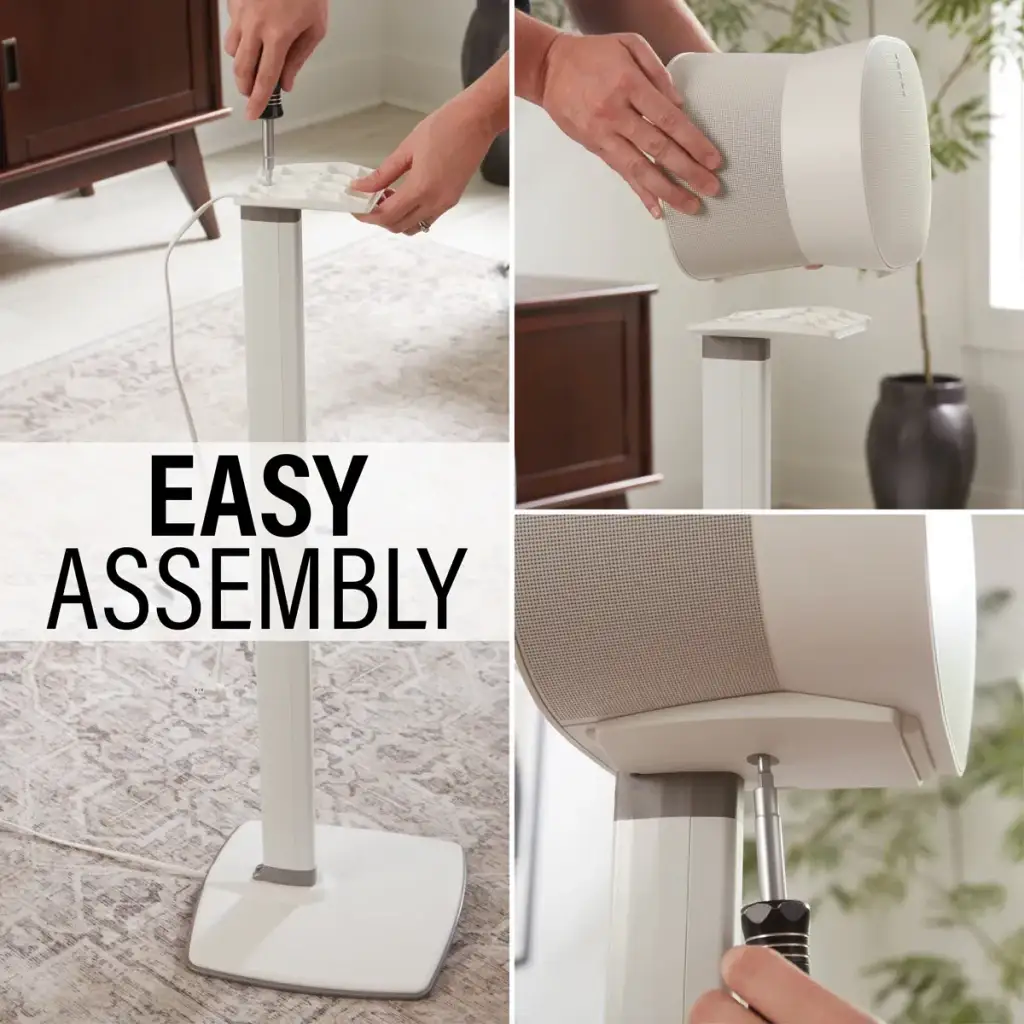
| Easy assembly | A verified Best Buy reviewer “fox is bubba” noted: “easy assembly” | Good for buyers who don’t want a project |
| Stability and sturdiness | Best Buy reviews repeatedly highlight “sturdiness”; “danielr” said: “solid and stable” | Helps in homes with foot traffic/pets (less wobble anxiety) |
| Adjustability is a key draw | A verified Best Buy reviewer “hek 1286” wrote: “adjustable in height” | Useful if you’re dialing in Dolby Atmos surround placement |
| Fixed-height frustration exists (model confusion across listings) | “dona” said: “good stand just not adjustable” | Some listings/reviews reference fixed-height variants; double-check model |
| Mechanism reliability concern (community report) | From Sonos Community thread: “slide mechanism didn’t lock into place firmly… would slip below the adjusted height” | If you frequently change height or need max extension, risk tolerance matters |
Claims vs Reality
Sanus marketing positions this family of stands as quick to assemble, sleek, and built for optimal listening height with cable management. The official spec language emphasizes “17 inches of effortless sliding height adjustment” and a “sturdy, oversized base,” plus “press fit” cable management. Digging deeper into user reports, the headline mostly holds up—especially around assembly, aesthetics, and stability—but the “effortless” part is where a gap appears in at least one community narrative.
Claim 1: “Effortless sliding height adjustment”
For buyers shopping specifically for adjustability, retail feedback often frames adjustability as a benefit, not a burden. A verified Best Buy reviewer “hek 1286” said: “these speaker stands are adjustable in height, allowing you to find the optimal listening position.” For a home theater user trying to align Era 300 surrounds with seated ear height, that kind of feedback implies the adjustment feature does its job and helps fine-tune placement.
But a conflicting report emerges in the Sonos Community discussion comparing Sonos-branded stands versus Sanus stands. One community poster described a failure mode that hits the core promise: “the slide mechanism didn’t lock into place firmly thus the Era 300’s would slip below the adjusted height.” While that’s a single user story in the data provided, it directly contradicts the “effortless” framing and suggests that for some setups (or some units), the locking confidence may not match expectations.
Claim 2: “Optimal listening height” (and the right height for most rooms)
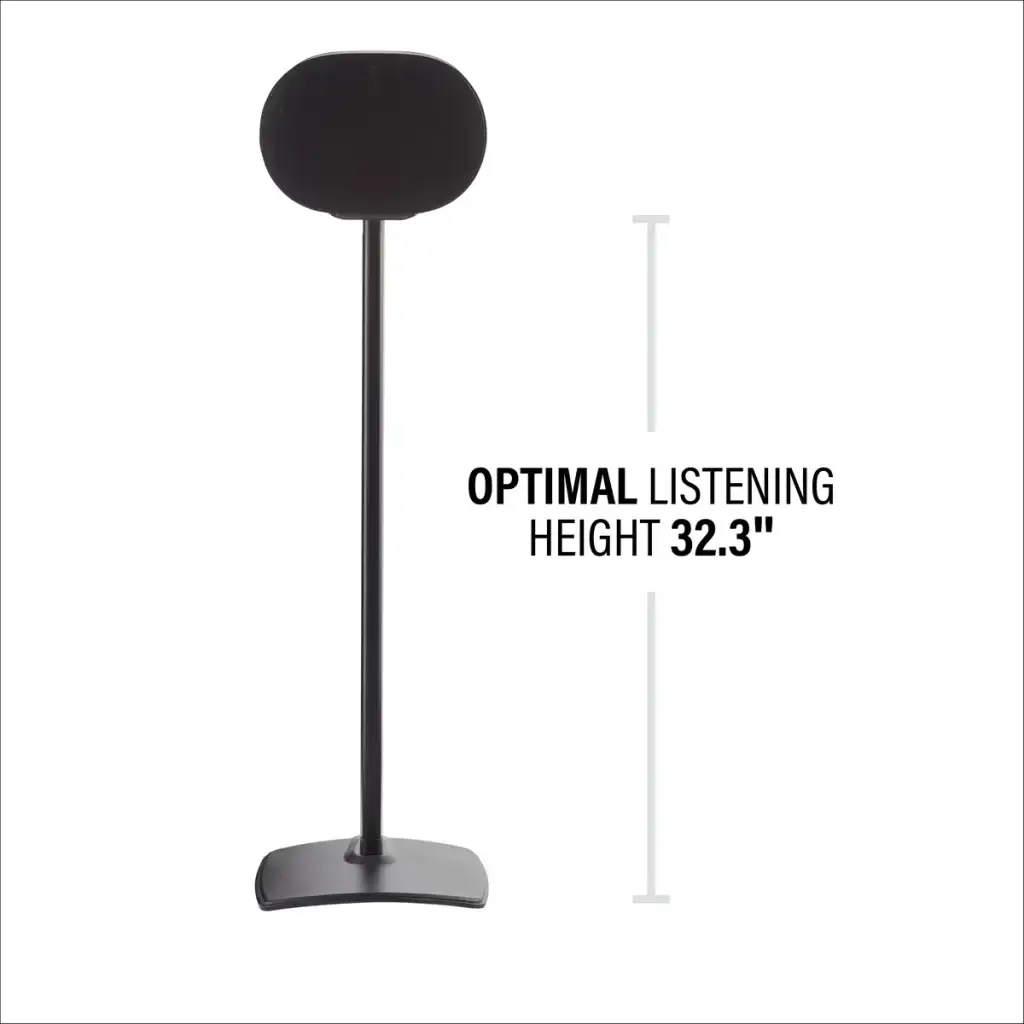
The fixed-height Sanus WSSE31 spec states a 32" stand height, described as “optimal listening height.” Some buyers echo the “just right” sentiment even when they’re talking about non-adjustable models. A verified Best Buy reviewer “miaka” said: “perfect height,” and “vault dweller” added: “it is at the correct height for the majority of cases.”
Yet the same dataset includes a buyer who needed more. A verified Best Buy reviewer “dona” noted: “the only negative is they are fixed and not adjustable i could use about another 2 inches but it’s ok.” For taller seating, higher couches, or surround placements where you’re chasing a specific Atmos effect, this highlights why the adjustable version is appealing—assuming you trust the mechanism to hold.
Claim 3: “Clean design + cable management”
Across the retail reviews, aesthetics are not a side note—they’re central. A verified Best Buy reviewer “xman” said: “I like the clean design and small footprint,” while “will” framed it as “sleek and functional.” These comments align with the marketing promise of a “sleek, seamless look,” and they point to a specific buyer persona: anyone who refuses to run visible cords in a living room.
The Sonos Community thread also reveals a broader market reality: “the size, weight, and shape of the speakers makes it almost impossible to use a generic speaker stand.” That context helps explain why buyers tolerate premium pricing for something that looks “made perfect for the Era 300,” as a verified Best Buy reviewer “dahon” put it.
Cross-Platform Consensus
Universally Praised
A recurring pattern emerged around Sanus Height Adjustable Speaker Stand for Sonos Era 300 - White (and closely related Era 300 Sanus stand listings): people keep circling back to sturdiness, finish quality, and how “purpose-built” the stands feel. The stands aren’t treated like generic furniture; they’re described as part of the Sonos system’s aesthetic.
On Best Buy, one verified reviewer “fox is bubba” distilled that premium impression into: “fit and finish is top notch,” pairing it with “easy assembly.” That combination matters for a practical buyer who wants a clean install without calling in help: fewer frustrations assembling, and a result that looks intentional rather than improvised.
Stability shows up as a trust signal. Verified reviewer “danielr” said: “solid and stable,” and others echoed “very sturdy and built well,” like “dahon,” who wrote: “easy to setup… very sturdy and built well.” For families, renters, or anyone placing Era 300s in a walkway-adjacent spot, stability isn’t just about sound—it’s about reducing “tipping” anxiety.
Design and integration with Era 300 also come through as a repeatable theme. Verified reviewer “xman” said the stand is “designed specifically to work with them including hardware that secures the speaker to the stand creating one piece that you can move easily.” That “one piece” detail is a real-world convenience: if you rearrange the room for entertaining or vacuuming, a secured speaker-and-stand combo feels safer to reposition than balancing a heavy speaker on a generic plate.
After those narratives, the praise clusters into a clear set of repeat themes:
- Premium finish and aesthetics (“fit and finish,” “clean design”)
- Straightforward assembly (“easy to setup,” “easy assembly”)
- Stability (“solid and stable,” “very sturdy”)
- Era 300-specific fit (“match the contour,” “designed specifically”)
Common Complaints
The loudest complaint in the dataset isn’t about scratches or missing parts—it’s about height flexibility and trust in adjustment. But it’s complicated by the fact that multiple Sanus models appear across sources, and some reviews are clearly about fixed-height stands. That confusion itself becomes a consumer pain point: people want adjustability and discover they bought a fixed-height stand, or they read reviews that don’t match the product variant.
For example, verified reviewer “dona” said: “good stand just not adjustable… i could use about another 2 inches.” That’s a very specific complaint: the stand works, but the room demands slightly more height. For buyers with higher seating or those aiming for a precise surround bubble, “another 2 inches” is the difference between “good enough” and “dialed in.”
Then there’s the more serious community report about the adjustable mechanism’s holding power. In the Sonos Community thread comparing stand options, one poster wrote: “having purchased a set i’m not impressed; as they failed to support the weight… the slide mechanism didn’t lock into place firmly.” For a buyer choosing adjustable specifically to fine-tune height, this is the nightmare scenario: a stand that creeps downward undermines both placement and confidence.
Even so, the retail dataset doesn’t show a wave of similar complaints in the provided excerpts; in fact, Best Buy’s summary notes “cons mentioned: there aren’t enough negative mentions yet.” That contrast suggests the issue may not be widespread—or it may show up more in enthusiast forums where users push max height settings and notice subtle drift.
Common complaint themes, grounded in the provided stories:
- Ensuring you’re buying the adjustable model (fixed-height frustration: “not adjustable”)
- Height not quite enough for some rooms (“could use about another 2 inches”)
- Locking/slide confidence questioned by at least one Sonos Community user (“would slip below”)
Divisive Features
Adjustability itself is the divisive feature—less because people dislike the idea, and more because expectations differ. Some buyers value “set it once and forget it” stability and are perfectly happy with a fixed height they consider “correct… for the majority of cases,” as “vault dweller” put it. Others specifically buy the adjustable version to match a seated ear level or to optimize Atmos surround placement.
The community commentary also frames a broader divisive tension: Sonos-branded stands versus third-party (even “Designed for Sonos”) stands. One Sonos Community poster called the Sonos stand “an engineering marvel” and described Sanus options as “a non-starter” for surrounds due to height and the sliding mechanism experience. Meanwhile, retail reviewers of Sanus stands describe them as “the perfect pairing,” with “excellent in appearance and sturdiness,” as verified reviewer “davidb” wrote.
Trust & Reliability
Digging deeper into the “Trustpilot (Verified)” source, the provided data mirrors Best Buy review content and includes a branded support reply, rather than independent complaint patterns about scams or fake listings. The most relevant trust signal here is consistency: many verified retail comments converge on the same basics—“sturdy,” “easy to assemble,” and visually clean—suggesting predictable day-one satisfaction for typical installs.
For longer-term reliability, the Sonos Community thread is the most instructive in the dataset because it spotlights a mechanical concern over time or under load: “the slide mechanism didn’t lock into place firmly… would slip below the adjusted height.” While it’s not a “six months later” diary, it reads like a real-use failure observation rather than unboxing enthusiasm, and it’s worth weighing if you expect to run the stands near maximum height or frequently adjust them.
Alternatives
Only a few true alternatives are explicitly mentioned in the data, and they’re mostly adjacent rather than direct clones. The Sonos Community post compares “sonos era 300 stand vs. sanus era 300 stands,” and the poster strongly favored the Sonos stand, calling it “an engineering marvel” with a height they felt was “perfect… for the vast majority of installations” for surrounds.
Another alternative referenced indirectly is Flexson, mentioned by a community member waiting for compatibility: “flexson has yet to respond my query if they plan on a release to support the new era speakers.” That’s not a product recommendation in the data so much as evidence of limited stand options—an important context point if you’re shopping: some buyers feel pushed toward Sanus or Sonos simply because the Era 300’s “size, weight, and shape” don’t play nicely with generic stands.
If you’re choosing between Sanus Height Adjustable Speaker Stand for Sonos Era 300 - White and the Sonos-branded stand, the decision hinges on your tolerance for fixed height versus the appeal (and risk) of adjustment. The community poster’s critique was blunt about Sanus adjustables; retail reviewers were broadly positive about Sanus stands and their integration. The data supports one practical takeaway: the “right” choice depends on your room height needs and how much you value a “set height” design.
Price & Value
The adjustable Sanus stand is listed at $199.99 for a single (WSSE3A1-W2) on Standsandmounts, and the adjustable pair appears at higher price points in official listings (with a discontinued pair model WSSE3A2 referenced elsewhere). That pricing repeatedly triggers value math in reviews: verified reviewer “ej alvara 2” said it’s “a little high on price but worth it,” while “hek 1286” acknowledged it’s “a bit pricier compared to generic speaker stands” but argued the “dedicated solution tailored specifically for the sonos era 300” helps justify it.
Resale and deal-hunting also show up through marketplace context. eBay listings for “sanus - wireless speaker stands for sonos era 300 (pair)” appear around the mid-$100s in the provided snapshot, suggesting that patient buyers can sometimes undercut retail—especially if they’re comfortable with open-box or secondhand purchasing and verifying model numbers.
Buying tips that emerge from the user discussions:
- Confirm you’re purchasing the adjustable model (some reviews explicitly complain about “not adjustable”).
- If you find a sale, buyers cite it as meaningfully improving value; “moviefan” said: “the fact that i bought them on sale makes it an even better deal.”
- If your setup demands precise surround height, weigh the community report about the slide lock carefully.
FAQ
Q: Is the Sanus height-adjustable stand easy to assemble?
A: Yes—assembly is commonly described as straightforward. A verified Best Buy reviewer “fox is bubba” said the “fit and finish is top notch” along with “easy assembly,” and another verified reviewer “dahon” noted: “easy to setup.” Multiple listings also reference assembly in minutes with a Phillips screwdriver.
Q: Does the adjustable height mechanism stay locked in place?
A: Mixed. A Sonos Community poster reported: “the slide mechanism didn’t lock into place firmly… would slip below the adjusted height.” However, retail feedback in the provided Best Buy excerpts praises adjustability without repeating that issue, with “hek 1286” highlighting the ability to “find the optimal listening position.”
Q: Are these stands stable enough for the Era 300’s weight?
A: Many buyers say yes. A verified Best Buy reviewer “danielr” described them as “solid and stable,” and “dahon” said they’re “very sturdy and built well.” But one Sonos Community report claimed the adjustable stands “failed to support the weight,” which directly conflicts with the broader retail sentiment.
Q: Do the stands look like they match the Sonos Era 300 design?
A: Generally yes. Multiple reviewers emphasize the aesthetic fit. A verified Best Buy reviewer “xman” said they’re “designed specifically to work with them,” and “musical” added they “match the contour of this particular sonos era 300 speaker.” This is repeatedly framed as part of the value.
Q: Should you buy adjustable or fixed-height Sanus stands?
A: It depends on your room and tolerance for tradeoffs. Some buyers of fixed-height versions said they were at the “perfect height,” but “dona” wanted “another 2 inches” and disliked that it was “not adjustable.” Adjustable versions add flexibility, but a Sonos Community user questioned the locking reliability.
Final Verdict
Buy Sanus Height Adjustable Speaker Stand for Sonos Era 300 - White if you’re the kind of Sonos owner who cares about a tailored look, tidy cable routing, and the ability to fine-tune surround placement—especially if you can grab it on sale like “moviefan,” who said that made it “an even better deal.”
Avoid it if your setup demands maximum height and you can’t tolerate any possibility of height drift; the Sonos Community warning—“the slide mechanism didn’t lock into place firmly”—is the clearest red flag in the provided data.
Pro tip from the community: given how awkward the Era 300 can be to mount, one Sonos Community poster suggested using your bed or sofa as a “soft landing spot” during install to avoid damage if you fumble the speaker while attaching it.