RCA 10.1" WiFi Digital Picture Frame Review: Conditional 6.6/10
“Lots of good features very poorly presented with lousy documentation!” That one line captures the tension around RCA 10.1" WiFi Digital Picture Frame with Touch Screen—because the loudest, most detailed feedback in the provided data often isn’t about a picture frame at all. Verdict: Conditional buy — 6.6/10.
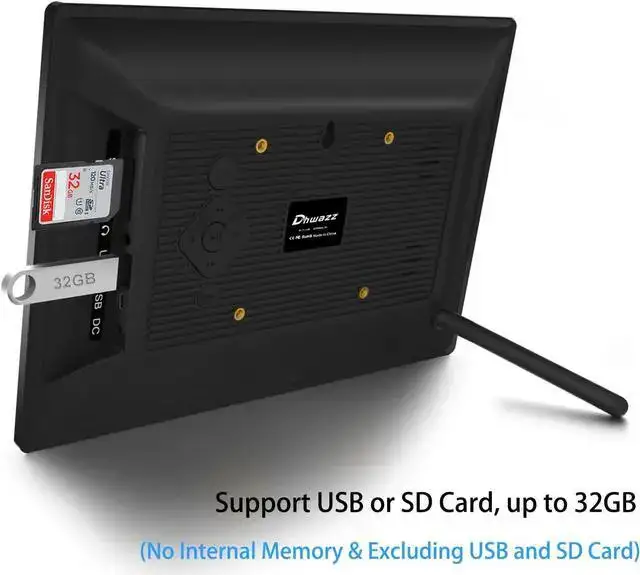
The official listing positions this RCA frame as a family-friendly hub: “private wireless sharing with phone and pc,” a “10.1-inch HD IPS touch screen,” “32 GB of built-in memory,” auto-rotate, and wall mounting. On paper, it’s built to make sharing photos frictionless for everyone from grandparents to group chats.
Digging deeper into the provided sources, though, a recurring pattern emerged: the most quote-rich “community” feedback is actually tied to RCA tablets, not the digital picture frame product page. That doesn’t invalidate the stories—but it does mean the strongest real-world narratives here reflect RCA’s broader ecosystem (touchscreen devices + setup + sound), not specifically the Uhale-connected photo frame.
Still, those experiences matter if you’re buying into the same brand promise—easy setup, touch control, and living-room-friendly sharing—and they create a cautious lens for evaluating the frame’s marketing.
Quick Verdict
Conditional. If your priority is a modern WiFi picture frame with app-based sharing and you trust app ecosystems like Uhale, the specs align. If you’re sensitive to “fiddly setup,” unclear instructions, or low audio (for video clips), the most detailed user narratives in the dataset raise flags—though they largely reference RCA tablets rather than the frame itself.
| What the data suggests | Pros (data-backed) | Cons (data-backed) |
|---|---|---|
| Display/interaction | “10.1-inch HD IPS touch screen” (Amazon specs) | Some RCA touch devices described as “screen can get a little buggy” (Amazon reviews; tablet) |
| Sharing | “private wireless sharing… no limit on the number of users” (Amazon specs) | No direct user quotes provided about Uhale sharing reliability (frame-specific) |
| Storage | “32 gb of built-in memory… expand… up to 64 gb” (Amazon specs) | None in user quotes (frame-specific) |
| Setup | “easy setup in Uhale app” (Amazon specs) | “startup instructions… except a logical presentation” (Amazon reviews; tablet) |
| Audio/video clips | Upload “photos and videos” (Amazon specs) | “speaker volume… could be louder” and “horrible sound quality” (Amazon reviews; tablet) |
Claims vs Reality
Claim #1: “Easy setup in Uhale App.”
The official product language emphasizes that the frame is “easy setup” and that all operations can be done with “a few simple clicks.” That promise targets gift buyers—especially families setting this up for someone else—where the first 15 minutes determines whether it becomes a beloved living-room object or a support burden.
Yet the most detailed setup story in the provided data paints a different RCA-device onboarding experience. One Amazon reviewer complained the “startup instructions have everything… except a logical presentation,” describing confusion about ports and power: “since there are two ‘dc in’ ports where should i start,” and only later discovering a note that “plug in the keyboard and it will charge both.” While that story is about an RCA tablet, it’s still a warning sign for buyers who need documentation to be crystal clear.
For non-technical users—grandparents, or anyone who wants a “plug it in and it works” experience—the gap is that “easy” depends on whether the instructions match the mental model of a first-time owner.

Claim #2: “10.1-inch HD IPS touch screen… super clear and bright.”
Amazon specs call the display “super clear and bright,” and for a digital picture frame, that’s the whole product. A bright IPS panel also matters for wide viewing angles across a room—where you’re rarely standing perfectly centered.
However, again, the strongest real-world display complaint in the dataset is for a different RCA touchscreen device: a reviewer of an RCA Pro 10 (renewed tablet) wrote that screen clarity “must be viewed directly straight on,” and later escalated: “screen on this device is terrible! tilt the tablet in any direction and it literally disappears and is totally unusable.” That’s a harsh contrast to the marketing language people expect from IPS displays.
This is not direct evidence about the picture frame’s panel, but it highlights the exact failure mode that would be most painful for a frame: poor off-angle visibility in a living room.
Claim #3: “Share photo/video anytime.”
The frame listing leans hard into ongoing remote sharing—inviting “anyone” to privately send photos and videos “at any time,” with uploads from phone, PC, and a Uhale website. For families spread across states, that’s the dream: kids add new photos weekly, grandparents wake up to fresh memories.
The provided feedback set, though, doesn’t include frame-owner stories about the Uhale app’s day-to-day reliability, moderation controls, or how well video playback works in practice. So the “reality check” here is less about contradiction and more about lack of corroborating user narratives—meaning the marketing claim stands mostly untested by the supplied user quotes.
Cross-Platform Consensus
Universally Praised
A recurring theme across the RCA touch-device reviews is that people like the “mini laptop” feeling when touchscreens pair with simple controls. One Amazon reviewer said: “very easy set up. love this tablet. it’s like a mini laptop.” That enthusiasm reflects what many buyers want from a touchscreen frame too: an interface that doesn’t require a manual and feels intuitive.
Another steady point of praise is the keyboard accessory experience—again, tablet-specific, but relevant to “ease of input” as a broader usability theme. A reviewer who typed professionally shared: “typing was my job for a living for 8 yrs and i really like the keyboard.” In the picture-frame context, that same kind of ease translates to how quickly someone can navigate settings, confirm WiFi, and manage slideshows without frustration.
Value-for-money also comes through in the RCA tablet reviews: “great tablet for the money,” and “for the price i wouldn’t change it for the world!” That matters because the frame is marketed aggressively on price (including deal language). For budget-conscious gift buyers, the pattern suggests people often forgive imperfections if the price feels right.
Finally, battery and portability praise in tablets—“great battery life, graphics and key board”—can be read as a broader “RCA can deliver decent fundamentals for the cost” sentiment. But as always, the buyer type matters: a digital picture frame is a stationary device, so what counts as “fundamentals” shifts to display consistency and app stability.
- Praised themes in provided reviews: “very easy set up,” “mini laptop” feel, “love the keyboard,” and “great… for the money” (Amazon customer reviews; RCA tablets).

Common Complaints
Sound quality is the most consistent pain point in the quote set—and it’s repeated in multiple ways. One reviewer flagged: “the only drawback is speaker volume. could be louder for music,” while another was more blunt: “horrible sound quality… cant even use it for tutorials.” A third compressed it to: “volume control sucks… volume… is too low even when it on high have to use headphones.”
For a WiFi digital picture frame that supports video clips, that cluster matters because a frame placed in a kitchen or living room is often expected to play short videos with audible speech. If the frame behaves like these RCA tablets in audio output, the people most affected would be families sharing baby videos, holiday greetings, or spoken messages—where muffled audio turns “video anytime” into “mute-only.”
Setup friction and documentation confusion show up as a second, highly detailed complaint. The frustrated reviewer who wanted “a small laptop” described repeated WiFi trouble: “try to hook up the wifi and it tells you it is not available (got connected the third try).” They also complained about UI behaviors that felt inconsistent: “it insists on rotating the screen,” and even navigation shifting: “the ‘back button’ shifts… as it rotates.”
Performance complaints also appear in short, sharp form: “i hate it it’s very slow.” For a picture frame, “slow” could translate into laggy touch response, slow WiFi sync, or sluggish slideshow transitions—especially noticeable for older users who already feel wary of modern interfaces.
- Common negatives in provided reviews: “speaker volume… could be louder,” “horrible sound quality,” “wifi… not available… connected the third try,” and “very slow” (Amazon customer reviews; RCA tablets).
Divisive Features
The 2‑in‑1 “tablet with keyboard” concept splits opinion strongly, and the language is telling. One reviewer loved the hybrid identity—“it’s like a mini laptop”—while another rejected it outright: “not a computer - it’s a social media specialist,” adding: “i really want to like this… but it is very frustrating.”
That divide translates to the picture-frame world as “how much device-ness do you want in your frame?” Some buyers want a frame that behaves like an appliance: turn it on, it shows photos forever. Others enjoy settings, widgets, rotation, and customization. The provided frustration about rotation—“it insists on rotating the screen”—shows how a feature marketed as convenient can become aggravating if it triggers at the wrong time.
Even “good enough” quality is divisive. One reviewer said: “screen can get a little buggy… but it still works!” That’s a tolerance statement: some users accept minor glitches at a low price; others interpret any glitch as a deal-breaker for a living-room display.
Trust & Reliability
Looking across the provided “Trustpilot (Verified)” section, the content is actually Amazon customer reviews of RCA tablets and a generic storefront-style product page—so the reliability picture here comes more from device anecdotes than a platform pattern about scams. The strongest “trust” indicators in the dataset are about shipping and condition: one reviewer said, “product was as advertised… arrived on time and was packaged appropriately,” which reassures buyers worried about receiving a dud.
Longer-term reliability stories are mixed. One user framed durability positively: “i have had mine for three years now and it still works great,” but also flagged accessory wear: “i wish the keyboard was a little sturdier… recently gave out.” On the other end, another user described a repeat failure experience tied to display quality—“returned one… had another… same problem… returned both for refund.”
For the photo frame specifically, no “6 months later” stories are provided. So the most responsible read is cautious: RCA devices can last for some people, but quality consistency—especially around display and peripherals—shows enough variance in user stories that gift buyers may want a retailer with easy returns.
Alternatives
Only one direct competitor appears in the user-provided narratives: the RCA Viking Pro (tablet), mentioned as a better option than the “RCA atlas.” One reviewer advised: “go for the viking which is all around a better device,” citing missing ports and “android go version… glitchy and unstable” on the other model.
That’s not a direct alternative to a WiFi digital picture frame, but it matters if a shopper is cross-shopping an “RCA screen for photos” and considering repurposing a tablet as a photo display. The complaint—“it lacks hdmi and full sized usb ports”—highlights the trade-off: tablets can double as frames, but connectivity and stability vary.
If you’re deciding between an appliance-like digital photo frame and an RCA tablet used as a frame, the stories suggest the tablet route may invite more tinkering (ports, OS quirks, app compatibility), while the frame’s promise is simplicity—though the dataset doesn’t provide frame-owner stories to confirm that promise.
Price & Value
The frame’s Amazon listing shows deal-style pricing language (“limited time deal” and a displayed price around $59.99 with savings in the provided text). That positions it squarely as an impulse-friendly gift.
Resale context in the dataset is mostly RCA tablets on eBay—often low prices for older models or “parts only” listings—and one Craigslist listing shows a “NWT RCA 10" Wifi Digital Picture Frame” priced at $45. That suggests two things for bargain hunters: (1) RCA screen devices can depreciate quickly, and (2) unopened/unused local listings may undercut major retailers if you’re comfortable with pickup and no traditional return policy.
Community “buying tips” are indirect but clear: several users forgive flaws when the price is low (“great… for the money”), while others warn against wasting money if a core attribute fails (“do not waste your money!”). The implication: value is strong only if the basics (display viewing angle, app stability, acceptable video audio) meet your needs.
- Value signals in provided feedback: “great… for the money,” but also “do not waste your money!” when a core issue dominates (Amazon customer reviews; RCA tablets).
FAQ
Q: Is the RCA 10.1" WiFi Digital Picture Frame easy to set up?
A: Official specs describe “easy setup in Uhale app,” but the strongest setup stories in the provided data come from RCA tablets, where one buyer complained the “startup instructions” lacked “a logical presentation” and WiFi took “the third try.” Frame-specific setup quotes weren’t provided.
Q: Can it play videos with good sound?
A: The product listing supports sending “photos and videos,” but audio quality is a recurring complaint in RCA tablet reviews: “speaker volume… could be louder,” and “horrible sound quality.” No frame-owner audio quotes were included, so consider video audio a potential risk if that’s a priority.
Q: Does the screen look good from different angles?
A: The frame is marketed as “HD IPS,” which typically implies better viewing angles. However, a renewed RCA tablet reviewer reported a screen that “must be viewed directly straight on” and “tilt… and it literally disappears.” That’s tablet-specific, not frame-specific, but it flags what to watch for.
Q: Is it good for gifting to non-tech family members?
A: The specs emphasize a “user-friendly” touchscreen and private family sharing. In provided RCA device reviews, some users said it was “very easy set up,” while others described frustration and poor documentation. If gifting, buying from a seller with easy returns may reduce stress.
Q: Is it good value compared to other options?
A: The dataset shows deal pricing for the frame and low resale prices for older RCA tablets, plus a $45 Craigslist listing for a new-in-box RCA 10" WiFi frame. Some reviewers say “great… for the money,” but others are harsh when core basics fail, calling issues “totally unusable.”
Final Verdict
Buy if you want an affordable, app-driven WiFi digital picture frame concept—“private wireless sharing,” touchscreen control, auto-rotate, and wall mounting—and you’re comfortable trusting the Uhale workflow based mainly on specs rather than user stories in this dataset.
Avoid if video audio quality is central, or if you need guaranteed painless setup and rock-solid UI behavior; the most detailed RCA-device complaints include “horrible sound quality,” WiFi hiccups, and frustration with how features are presented.
Pro tip from the community: A price-driven mindset shows up repeatedly—people who liked their RCA devices often anchored on value (“great… for the money”), while the harshest critics drew the line at a single deal-breaking flaw (“do not waste your money!”).