Pioneer TS-G6930F Review: Budget Upgrade, Caveats (7.6/10)
A Yandex Market buyer didn’t mince words after six months: “one speaker died.” That single line captures what makes the Pioneer G-Series TS-G6930F 6x9 3-Way Speakers (Pair) so debated—big “OEM replacement” promises, real-world installs that often sound better than stock, and durability/build concerns that show up once the honeymoon ends. Verdict: a strong budget upgrade with caveats, 7.6/10.
Quick Verdict
The Pioneer G-Series TS-G6930F 6x9 3-Way Speakers (Pair) is a Conditional Yes: great if you want an affordable factory-speaker replacement with easy DIY installation and noticeably clearer sound, but less ideal if you expect subwoofer-style bass or premium build.
| What the data suggests | Pros (evidence) | Cons (evidence) |
|---|---|---|
| Sound upgrade vs stock | Yandex Market buyers describe “sound just fire. loud, quality” and “clean sound and deep bass” | Some users report distortion/limitations at high volume without help (Trustpilot summary: “additional amplification may be necessary”) |
| DIY friendliness | “installed everything in a couple hours, easy and simple” (Yandex Market) | Fitment can require extra parts: “had to buy a podium… without it would be hacky” (Yandex Market) |
| Price-driven appeal | “for such a price the sound is excellent” (Yandex Market) | Build feels cheap to some: “sticky plastic… thin grille… flimsy корпус” (Yandex Market) |
| Bass expectations | Several buyers say bass is “good” or “present even from head unit” (Yandex Market) | Bass heads may be disappointed (Trustpilot summary: “bass… lacking… especially at higher volumes”) |
| Longevity | Some report years of use: “after 3 years started to rasp” (Yandex Market) | Others report early failure: “one speaker died after half a year” (Yandex Market) |
Claims vs Reality
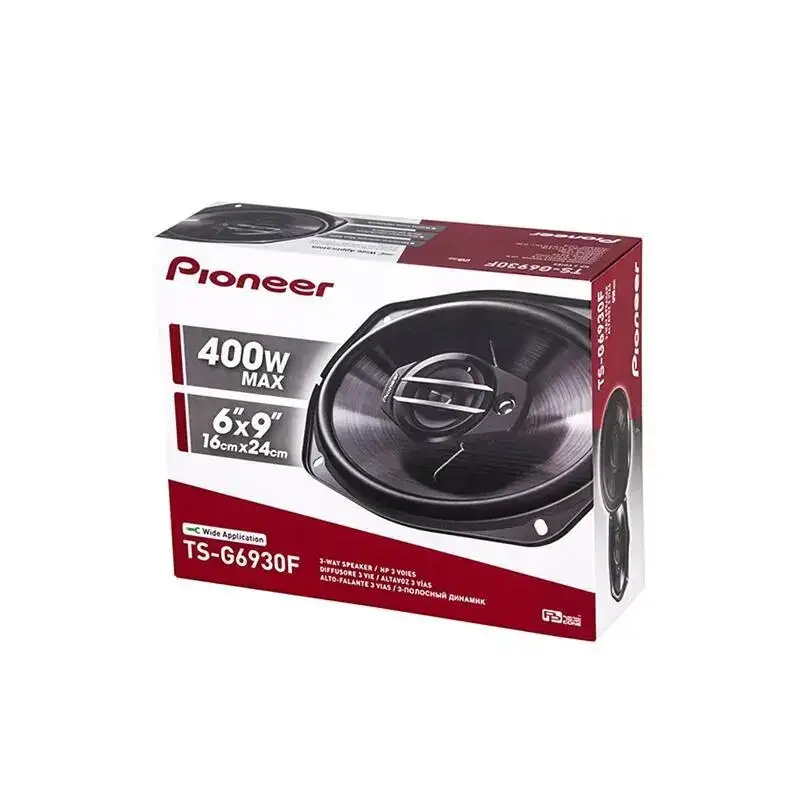
Pioneer positions the Pioneer G-Series TS-G6930F as “excellent choices to replace a bad set of factory 6x9 speakers,” emphasizing easy installation and “deeper bass” with a 400W max / 45W nominal rating. Digging deeper into user reports, the “replacement” angle is where this model earns the most consistent praise. A Yandex Market buyer who came from older dashboard speakers said: “they sounded fresher… for the price the sound is excellent,” framing it as a clear step up from worn factory gear rather than a quest for audiophile perfection.
At the same time, the marketing language around bass can collide with what bass-first listeners expect. Multiple user summaries on Trustpilot-style aggregation emphasize that “for the best bass response, an additional amplifier may be needed,” and that without it, low-end satisfaction can drop at higher volume. That gap matters most for listeners of bass-heavy genres; the speakers can feel “good enough” as a stock upgrade, but not a sub replacement.
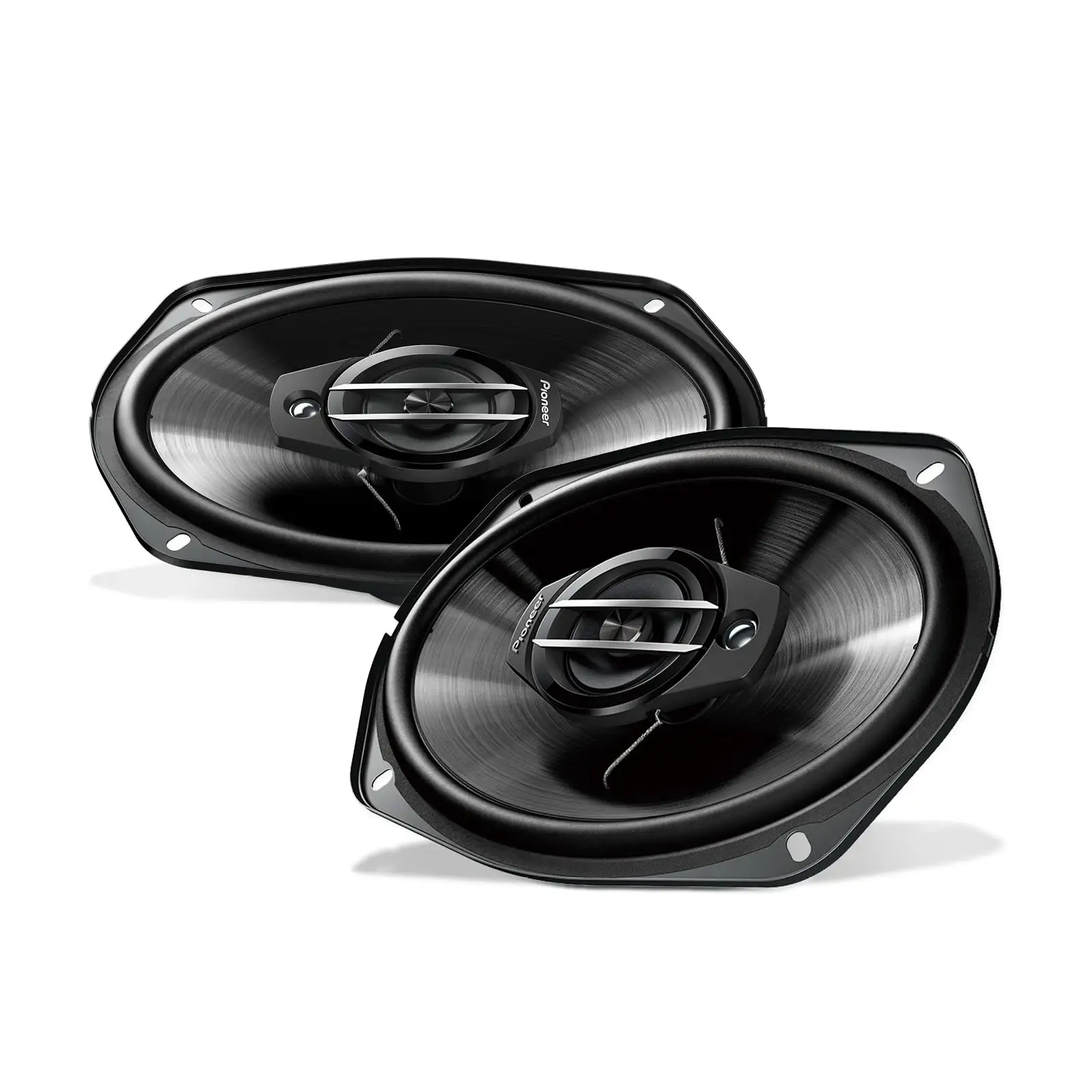
Another claim-adjacent reality check is construction and accessories. Official materials highlight shallow mounting depth and fitment across many vehicles; some product pages also differ on whether grilles are included. Meanwhile, real buyers talk about the tactile side: one Yandex Market reviewer criticized “sticky plastic… thin grille… flimsy корпус,” while another complained that “to mount you need to remove the grille… putting it back was hard… there were defects.” The story here isn’t that the speakers can’t be installed—it’s that “easy” may still include fiddly hardware and fragile-feeling parts depending on the car and installer patience.
Cross-Platform Consensus
Universally Praised
A recurring pattern emerged across Yandex Market and Trustpilot-style summaries: as an OEM speaker replacement, the Pioneer G-Series TS-G6930F often delivers an immediate, noticeable improvement in clarity for everyday drivers. For commuters who just want music back after a factory speaker fails, one Yandex Market buyer described the upgrade arc plainly: “one stopped playing… I decided to replace… the sound pleased… good coaxials.” That’s not a lab measurement—it’s a “my car is enjoyable again” story.
For DIY installers, the appeal is less about chasing perfect tuning and more about speed-to-results. A Yandex Market buyer who rebuilt a minimal system in an older car said: “I installed everything in a couple hours, easy and simple,” emphasizing quick installation and adequate performance “without fanaticism.” Another framed it in beginner terms: “can install with your own hands even as a novice… only my second time,” suggesting these are approachable for first-time door-shelf or rear-deck swaps.
Value for money is the third praise thread, and it’s especially strong among buyers who kept expectations aligned with budget gear. One Yandex Market reviewer summed it up as: “for such a price the sound is excellent,” while another called it “price and quality excellent.” Even when users don’t use audiophile language, they reinforce the same point: for the cost, the upgrade feels “worth it.”
Common Complaints
Build quality complaints show up with sharper language, and they’re often written by people who expected more physical robustness. One Yandex Market buyer didn’t focus on frequency response at all; they focused on materials: “sticky plastic… thin grille… flimsy корпус.” That kind of critique matters most for installers who regularly remove grilles, mount and remount speakers, or load cargo near rear-deck installations.
Installation can also be “easy” in the big picture but annoying in the details. A Yandex Market buyer who liked the sound still reported a practical problem: “during assembly you need to remove the grille… inserting it back was difficult… there were some defects.” For someone doing a quick afternoon install, that’s the kind of friction that turns a budget upgrade into a mildly frustrating project.
Then there’s durability—where opinions range from “fine for years” to “failed fast.” A particularly negative Yandex Market story claimed: “one speaker died after half a year,” and the same reviewer contextualized it with warnings they’d heard from friends about cheap Pioneer speakers. On the other end, another buyer reported gradual decline rather than sudden death: “after 3 years started to rasp.” Taken together, the complaint isn’t that failures are universal; it’s that longevity can be uncertain, especially for users pushing volume or running budget amplification.
Divisive Features
Bass is the most divisive attribute because listeners define “good bass” differently. Several Yandex Market buyers praise low-end output even without a subwoofer: one wrote, “bass is present even on the stock shelf… plays from the head unit… was very surprised.” Another claimed, “good bass… without amp and sub… replaces [it],” describing it as sufficient for casual listening.
But the Trustpilot-style aggregation repeatedly warns that bass lovers may want more: “additional amplification may be necessary” and “bass performance may be lacking… especially at higher volumes.” This split makes sense: for a daily driver replacing dead factory speakers, “present” bass can feel like a win; for someone expecting chest-thump at high volume, the same output can feel thin.
Trust & Reliability
Digging deeper into the “trust” angle, the most useful signals in the provided data come from the Trustpilot-style aggregation and Yandex Market long-term comments. The aggregated Trustpilot data emphasizes high-level satisfaction (strong sound quality and installation scores) but also repeatedly flags amplification dependence and high-volume limits—warning signs for buyers who equate “400W max” with subwoofer-grade output.
Long-term reliability is where the narratives get more personal and more polarized. A Yandex Market buyer described a hard failure: “one speaker died after half a year,” while another described gradual wear: “after 3 years started to rasp.” For shoppers who plan to install once and forget, those stories suggest a simple strategy: treat these as value OEM replacements, not “buy once, keep forever” hardware—especially if you’ll drive them hard.
Alternatives
Only a few alternatives are explicitly mentioned in the data, and they’re mostly in the form of “what users compared against.”
One Yandex Market buyer compared the Pioneer G-Series TS-G6930F to old Panasonic speakers: “I drove all the time with old Panasonics… these sounded fresher.” In that context, the Pioneer set reads as a clear “refresh” path for aging systems.
Amplification brands also appear in user stories. A Yandex Market reviewer mentioned using a “budget Blaupunkt GTA-275” amplifier and still experiencing a failure after half a year. That doesn’t prove the amp caused it—but it does show that “I used an amp” isn’t automatically a guarantee of long-term durability, especially with budget components.
Price & Value
Across official listings and market pricing in the data, the Pioneer G-Series TS-G6930F commonly sits around $70 (Pioneer USA pricing shown as $70) with other regions or retailers listing higher (Pioneer Canada shows $99.99). On eBay, listings show $59 for a new pair (plus shipping in one example), and another listing uses headline numbers like “800W peak” while clarifying in the description “90W rms per pair / 45W each.” That inconsistency is exactly where buyers can get misled by peak-power marketing.
From a value perspective, the strongest “buy” stories come from people who wanted inexpensive improvement without major system rebuilding. A Yandex Market buyer described replacing a minimal setup and said for non-obsessive listening “it’s enough with your head,” while another framed it as a straightforward Subaru Forester stock replacement: “sounds excellent for a stock head unit.” The practical tip embedded in those stories: match expectations to OEM power and you’ll likely feel the value; expect premium materials and nightclub bass and you may not.
FAQ
Q: Do the Pioneer TS-G6930F speakers sound better than factory speakers?
A: Yes, many buyers describe an immediate upgrade over stock or worn speakers. A Yandex Market buyer said: “they sounded fresher,” and another wrote “clean sound and deep bass.” Trustpilot-style summaries also describe “a noticeable improvement in sound clarity compared to factory-installed speakers.”
Q: Do I need an amplifier for good bass on the TS-G6930F?
A: Not always, but it depends on your expectations. Some Yandex Market buyers said bass is “present even from the head unit,” but Trustpilot-style summaries note “additional amplification may be necessary” for stronger bass—especially at higher volumes or for bass-heavy music.
Q: Is installation actually easy for beginners?
A: Often yes, but small hassles come up. One Yandex Market reviewer said they installed everything “in a couple hours, easy and simple,” and another said a novice can install it. However, another buyer warned that removing/reinstalling the grille during mounting was difficult.
Q: Are these speakers durable long-term?
A: Reports vary. One Yandex Market buyer claimed “one speaker died after half a year,” while another said “after 3 years started to rasp.” These stories suggest longevity can depend on usage, volume, and installation conditions rather than being uniform for everyone.
Q: What power numbers matter most—400W max or 45W nominal?
A: User-facing listings emphasize “400W max,” but multiple sources state “45W nominal.” Even an eBay listing clarifies “90W rms per pair / 45W each.” For real-world expectations, the nominal/RMS-style figures align more closely with typical head-unit output and sustained listening.
Final Verdict
Buy the Pioneer G-Series TS-G6930F if you’re a budget-focused driver replacing blown factory 6x9s and you want a quick clarity upgrade—especially if you relate to comments like “for such a price the sound is excellent” and “installed… easy and simple.” Avoid it if you demand premium materials or expect subwoofer-level bass at high volume without extra gear.
Pro tip from the community: if fitment isn’t perfect, plan for adapters—one Yandex Market buyer said they “had to buy a podium” to avoid a “hacky” install, but still concluded “the sound is excellent.”