Philips HF3520/60 Wake-Up Light Review: Mixed Verdict
The surprising thing about the Philips SmartSleep Wake-up Light HF3520/60 is how consistently users report it changing their mornings — but also how often they complain about its longevity. Across Amazon, Reddit, Best Buy, and Trustpilot, its average score lands around 7.6/10, reflecting strong satisfaction with the light simulation and sound options, but tempered by concerns over build quality, fiddly controls, and price.
Quick Verdict: Conditional — highly effective for light sleepers and winter mornings, but heavy sleepers and those seeking long-term durability should be cautious.
| Pros | Cons |
|---|---|
| Gentle sunrise simulation reduces grogginess | Reports of device failure within 1-2 years |
| Adjustable brightness and color for personalization | Buttons difficult to locate/use in dark |
| Sunset mode helps with winding down at night | No backup battery or USB charging |
| Doubles as bedside lamp with strong illumination | Price considered high for limited lifespan |
| Multiple natural sound and FM radio options | Sound quality not impressively rich |
| Sleek, modern design fits varied décor | Bulky footprint on nightstand |
| Positive impact on mood during dark winter months | Not always effective for heavy sleepers |
Claims vs Reality
Philips markets the HF3520/60 as “clinically proven” to improve wake-up mood with a colored sunrise simulation transitioning from deep red to bright yellow over 20-40 minutes. While many users confirm this effect, some note it’s not a standalone solution. A Reddit user explained: “It’s far less jarring to wake up to…the light being on helps me not fall back asleep,” but also admitted they still set a backup alarm.
Another claim is that the sunset simulation aids relaxation before bed. This feature resonated with those trying to curb late-night phone use. One reviewer from Reviewed.com described hitting the dimmer for 20 minutes, reading until the light faded, and avoiding blue-light stimulation. But others found the novelty faded: “My sleep specialist laughed…said it’s nothing more than a novelty,” one Reddit comment reported.
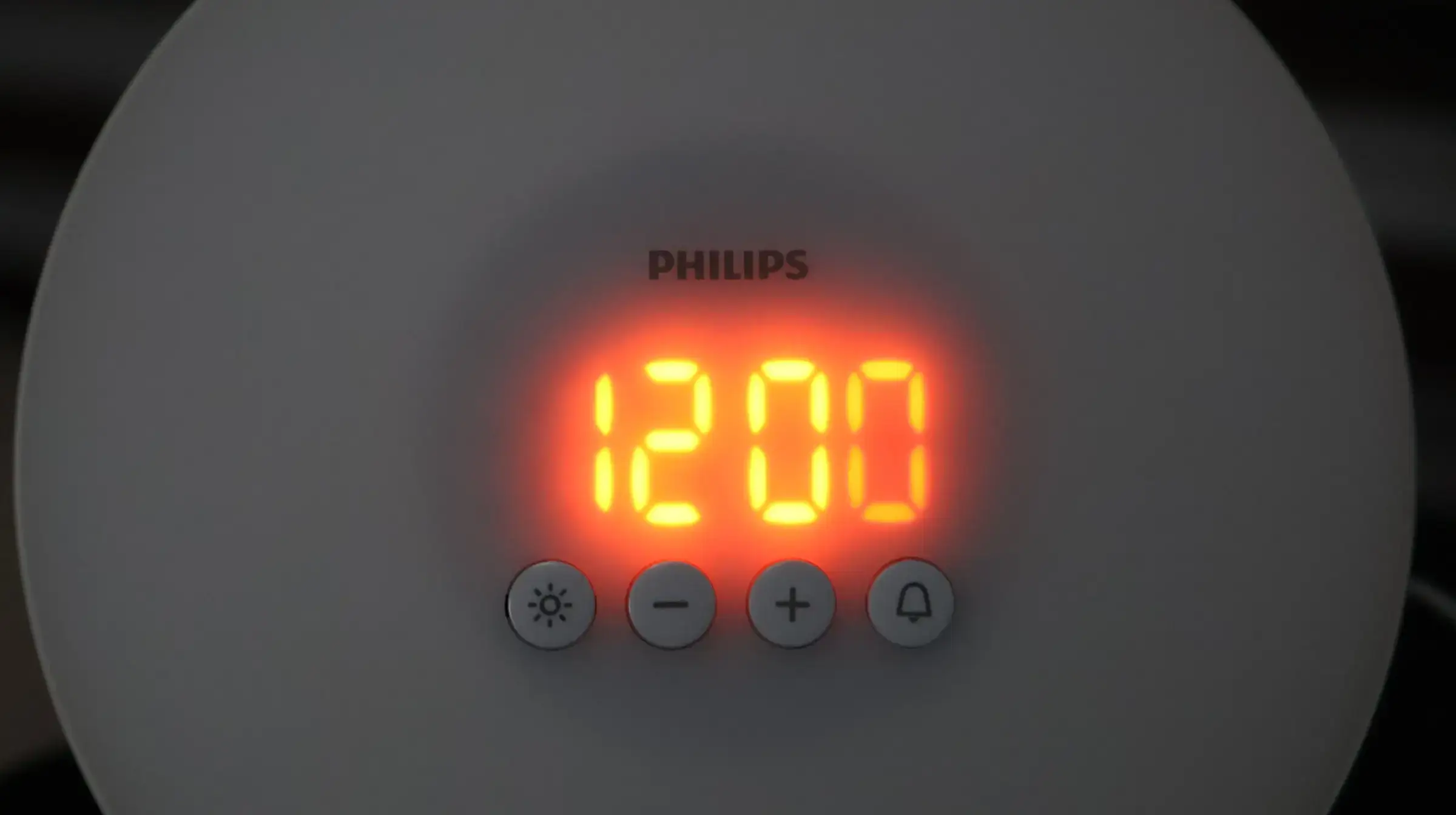
Philips emphasizes ease of use and customization. While setup is straightforward for some, Trustpilot entries reveal frustration: “Buttons to set the alarm have stopped working and I can’t use it anymore.” The sleek rim buttons that blend into the design make for a clean look but are tough to locate half-asleep, especially in dark rooms.
Cross-Platform Consensus
Universally Praised
The most celebrated aspect is the gradual light progression in the morning, easing users into wakefulness. Light sleepers and those in dark climates benefit most. Best Buy customers called it “life-changing…perfect for those people who have a hard time waking up early.” Light intensity adjustments (up to 20 levels) mean it can serve as a bright reading lamp or a subtle night light.
The dual functionality — lamp plus alarm — is another plus. A ShopSavvy review confirmed it works “great as a bedside lamp that fits right into your daily routine.” Users in small apartments without overhead lighting found it practical.
The sunset mode earns praise for bedtime routines. Couples reported it as a calming alternative to phone scrolling, and parents used it for children’s wind-down schedules. “Best way to get my almost teenage son out of bed!” wrote one reviewer, noting both wake-up and sleep functions integrated well into family life.
Common Complaints
Durability is the loudest complaint. Trustpilot shows repeated reports of units failing in under two years: “2 years for a very expensive item…bad,” “Stopped working in less than a year.” These failures range from total power loss to random clicking noises and unresponsive controls.
Control usability is another sore point. The touch-sensitive rim buttons look sleek but frustrate in practice. Best Buy reviewers said “buttons are hard to find on the top edges while in bed,” and Trustpilot users noted “no way to turn down the sound of clicks” during setup.
Heavy sleepers often find it insufficient as a sole alarm. One Best Buy customer explained: “It always goes off, but doesn’t always wake me up at that time…I still have to set a second alarm.” Those sharing beds with different wake times also risk disturbing partners.
Divisive Features
Sound options — five natural alarms plus FM radio — split opinion. Light sleepers enjoy birdsong or waves, but others find sound quality “frankly annoying” and prefer light-only wake-up.
The design wins aesthetic points for minimalism, but its bulk is divisive. Some say it’s a “statement piece” on the nightstand; others complain it “takes a good amount” of space.
Price triggers debate. Many call it “worth every penny” for improved mornings, while others label it “overpriced” given lack of backup battery and reliability concerns.
Trust & Reliability
Trustpilot entries reveal a pattern: satisfaction in the first months, followed by unexpected breakdowns. Reports of unresponsive buttons, persistent clicking sounds, and complete device failure appear frequently. Several users returned units multiple times, while others were stuck past warranty windows.
Long-term owners on Reddit offer mixed views. One noted three years of trouble-free use, another had two units — the first replaced by Philips after malfunction. The combination of positive short-term impact and questionable long-term durability puts it in a “try if you can afford replacement risk” category.
Alternatives
Reddit discussions mention cheaper Philips models around $50, with fewer features and less brightness. Users caution that off-brand sunrise clocks may lack gradual intensity, reducing effectiveness. Some suggest combining Hue smart bulbs with Alexa routines for similar wake-up lighting and more versatility.
A Redditor compared the HF3520/60 to the HF310, finding the latter “wasn’t as bright or as nice,” returning it to buy the HF3520 second-hand for $60.
Price & Value
Current Amazon listings hover around $98–$109, with Walmart higher at $142. eBay resale varies: new units fetch ~$105, used around $35–$60. Given mixed durability reports, second-hand buying is viable if condition is verified.
Community tips include watching for Philips’ “deal of the day” and considering older models if budget is tight. Long-time owners calculate cost per year of use (~$20/year) when factoring in longevity.
FAQ
Q: Is the Philips HF3520/60 effective for heavy sleepers?
A: It can help, but many heavy sleepers still require a backup alarm. The light and sound may not be strong enough alone, especially for deep sleep cycles.
Q: Can it be used purely as a bedside lamp?
A: Yes. Brightness up to 300 lux and adjustable levels make it suitable for reading or ambient lighting, with many users praising its dual function.
Q: What alarm sounds are available?
A: Five natural options — birdsong, birds in forest, zen garden, gentle piano, seaside — plus FM radio. All gradually increase in volume.
Q: Does it have a backup battery?
A: No. Users must reset after power outages, which some find inconvenient.
Q: How easy is setup?
A: Most find initial setup straightforward, but the flat rim buttons can be tricky to locate in the dark.
Final Verdict
Buy if you’re a light sleeper in a dark climate, or someone seeking a calmer wake-up and wind-down routine. Avoid if you’re a heavy sleeper relying solely on alarms or need guaranteed multi-year durability.
Pro tip from community: Pair it with blackout curtains for maximum sunrise simulation effect, and keep a second alarm for critical wake times.