Peak Design Slide Lite Review: Comfort vs Flaws Verdict
A surprising pattern emerged when analyzing feedback for the Peak Design Slide Lite Camera Strap, Black — while many users rate it among the best camera straps ever made, a notable minority find it awkward in certain configurations. Overall verdict: 8.2/10, with especially high marks for comfort, build quality, and quick adjustability, but complaints about strap loops and potential scratching in tight camera bags.
Quick Verdict: Conditional Buy
| Pros | Cons |
|---|---|
| Strong, seatbelt-style nylon webbing with grippy side for stability | Some users report awkward loops when worn cross-body at short length |
| Quick-adjust buckles allow fast length changes | Aluminum clips can scratch lenses/bodies if packed together |
| Anchor link system enables rapid strap removal and swapping | Base plate can block battery/SD card doors on some cameras |
| Comfortable for long shoots, even with heavier gear | Anchors may be too thick for some strap eyelets |
| Versatile wear: sling, neck, or shoulder | Price higher than many alternatives |
| Supports up to 200 lbs — secure for pro rigs | Slight bulk compared to minimalist straps |
Claims vs Reality
Peak Design markets the Slide Lite as “the most versatile pro camera strap in the world,” promising comfort, instant reconfiguration between sling, neck, and shoulder modes, and stability for even the heaviest rigs. On paper, the slimmed-down 1.25-inch width should make it ideal for mirrorless and light DSLRs.
Digging deeper into user reports, the comfort claim largely holds true. A Best Buy reviewer wrote: “Comfort is out of this world with this thinner strap that can be either worn cross body or around the neck.” Outdoor photographers praise the all-day wearability — one Trustpilot user noted, “The strap material is strong but comfortable around the neck.”
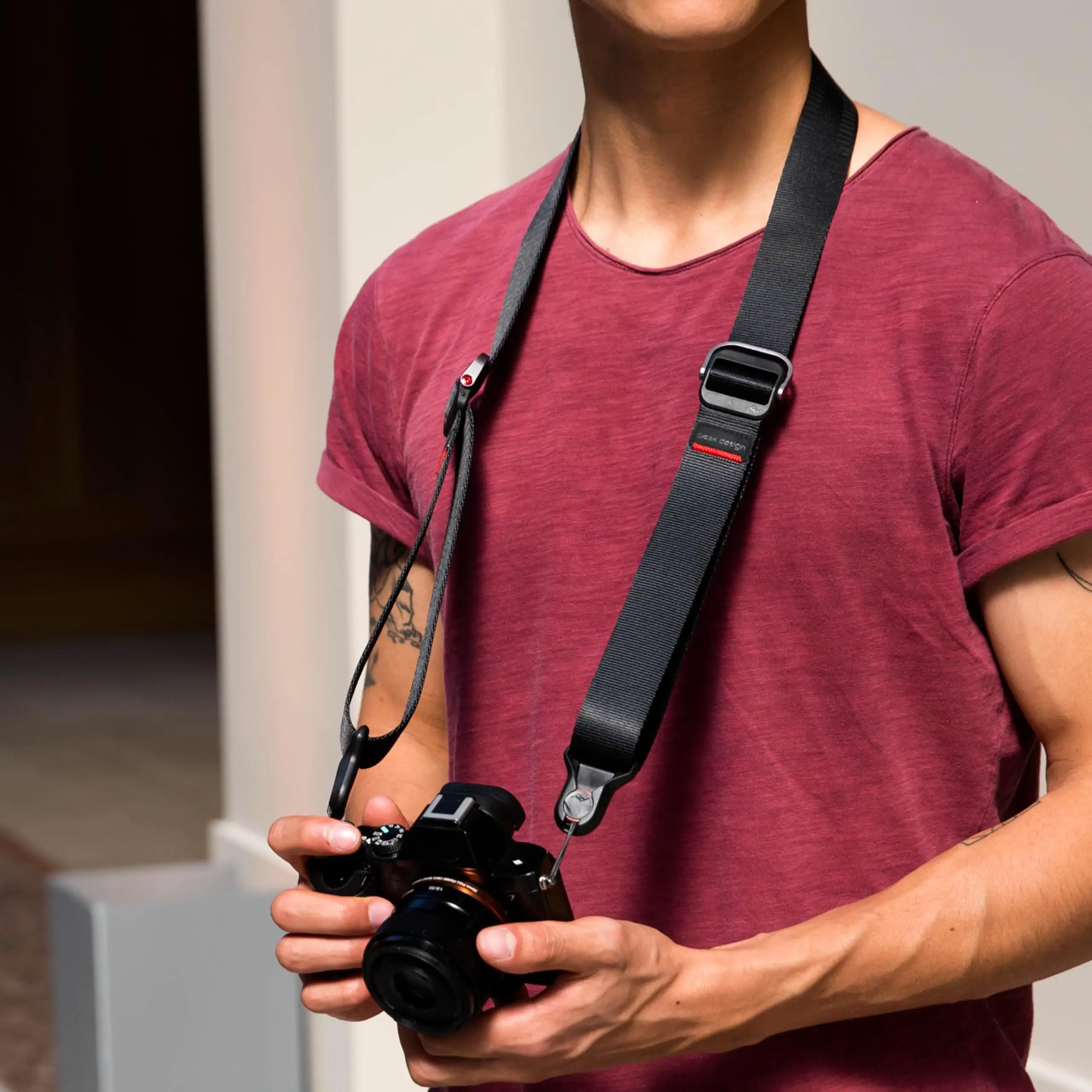
However, the “instant reconfiguration” claim meets resistance from some. Reddit user feedback reveals frustration: “Anytime you bring the camera up to take a photo it creates these huge annoying loops… an $80 strap should work out of the box.” This looping issue appears most often in shorter users wearing the strap cross-body at chest height, suggesting a design limitation for certain body types.
As for stability, most confirm the dual anchor system works as advertised. Amazon reviewers say the strap “keeps my camera as close to my body as I prefer” and “hangs without bouncing all over when you walk.” But a few caution that the included tripod plate can block access to battery compartments, making field changes cumbersome.
Cross-Platform Consensus
Universally Praised
Users across Amazon, Best Buy, and Trustpilot consistently highlight the Slide Lite’s comfort during extended shoots. A verified Best Buy buyer shared: “I wore this for the entire day; about 7 hours… not once did my shoulder cramp up or feel fatigued.” This makes it particularly appealing for event and travel photographers who carry gear for long stretches.
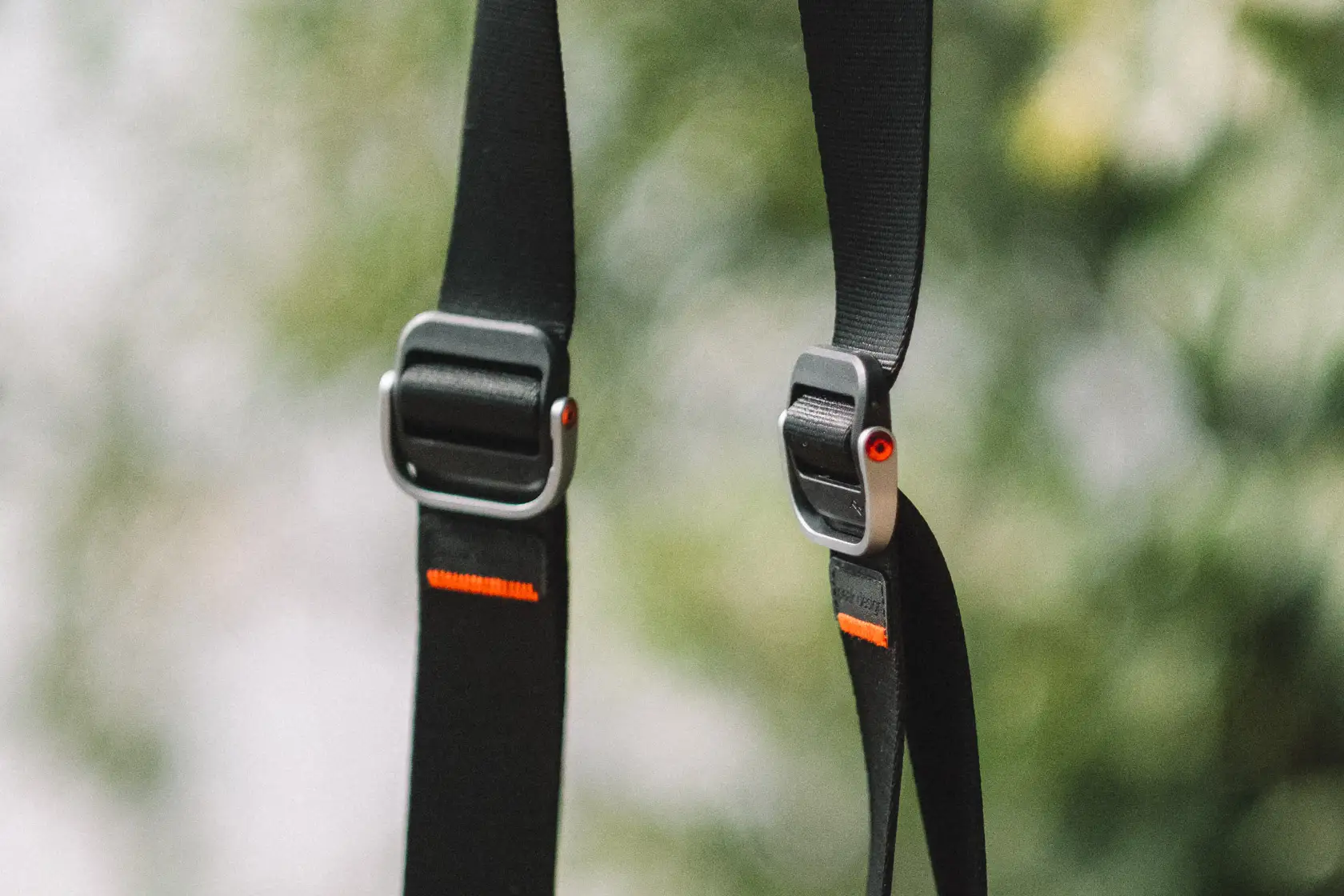
The quick-adjust buckles earn special praise from professionals switching between shooting positions. A wedding photographer on Trustpilot said, “The twin adjustable buckles are… much smoother/easier to adjust than any webbing/buckle combination I have ever used.” For sports shooters, the ability to cinch the camera tight during movement and loosen instantly for shooting is a workflow upgrade.
Durability is another strong point. The strap’s seatbelt-style nylon and upgraded silicone grip are repeatedly described as “rugged” and “built to last.” Multiple users report using it for over a year with no visible wear, even in harsh outdoor conditions. One Best Buy reviewer noted, “It has a wear indicator that allows you to know when it is time to make a change… still in perfect condition after more than a year.”
Common Complaints
The most frequent frustration is the strap loop issue when worn cross-body at short lengths. Shorter photographers, especially those keeping the camera high on the torso, report excess slack forming when raising the camera to eye level. A Reddit user at 5'4" explained, “I like to wear it cross-body and close to the body… that probably is the issue.”
Another recurring complaint is the potential for aluminum clips to scratch lenses or camera bodies when stored together in a bag. One Best Buy customer warned: “It will leave scratches on your lens barrel or body if you put them together in the bag… detach the strap every time you put your camera back in the bag.”
Compatibility quirks also surface. Some Sony A7 IV owners found the anchors too thick for their strap eyelets, forcing workarounds with triangle rings. And while the anchor mount offers stability, users with certain mirrorless bodies complain that it obstructs battery or SD doors, requiring tools to remove.
Divisive Features
The strap’s width — 32mm — splits opinion. For mirrorless users, it’s “wide enough to spread out the weight comfortably” without bulk. But DSLR owners with heavy telephoto lenses sometimes wish for the thicker Pro Slide version. As one Best Buy reviewer put it, “If I planned on keeping the strap on me all day… a thicker and wider strap would be useful.”
The price is another point of debate. Some consider it “worth every penny” for the quality and versatility, while others suggest cheaper alternatives like the Peak Design Leash or PGY Tech straps offer similar functionality for less.
Trust & Reliability
Trustpilot data shows high confidence in Peak Design’s build quality and customer service. Long-term owners report minimal wear even after daily use. One user described swapping between wrist and neck straps “in about three seconds” thanks to the anchor system, adding that it’s “wonderful reassurance when you’re dangling $2k in camera gear.”
Scam concerns are virtually nonexistent; buyers across multiple platforms receive genuine, well-packaged products. The lifetime warranty is seen as credible, with Peak Design replacing worn anchors without hassle.
Alternatives
Two main alternatives emerge from user discussions: the Peak Design Leash and PGY Tech straps. The Leash is slimmer and lighter, better suited for compact mirrorless bodies or those who dislike bulk. Several Reddit users swapped from the Slide Lite to the Leash after experiencing loop issues. PGY Tech straps are praised for comfort and price, though they lack Peak Design’s anchor ecosystem.
For heavy DSLR or long lens setups, the full-size Peak Design Slide offers wider padding and more support, at the cost of increased bulk.
Price & Value
Current retail prices hover around $59.95–$78.81 depending on color and region, with occasional clearance drops to $48.99 at Best Buy. eBay listings show strong resale value, often near retail for lightly used straps. Community buying tips emphasize watching for bundle deals with extra anchors or plates, and avoiding paying full price if patient — discounts appear regularly.
FAQ
Q: Will the Slide Lite work with heavy DSLR setups?
A: Yes, the anchors support up to 200 lbs, but some DSLR users prefer the wider Pro Slide for added comfort during long shoots.
Q: Can I use this strap with my tripod plate attached?
A: Often yes, but some plates block battery/SD access. Many users recommend Arca-Swiss plates with dedicated anchor holes.
Q: Does the strap scratch camera gear?
A: If packed tightly with lenses, the aluminum clips can cause marks. Detaching before storage prevents this.
Q: Is it compatible with all camera brands?
A: The anchors fit most strap loops, but certain models (e.g., Sony A7 IV) may require using included triangle rings.
Q: How fast can I switch between cameras?
A: With extra anchors installed, swapping straps between bodies takes seconds — a key advantage of the Peak Design system.
Final Verdict
Buy if you’re a travel, event, or street photographer seeking comfort, quick adjustability, and a secure connection system that works across multiple cameras. Avoid if you’re shorter and plan to wear it cross-body at high chest height, or if you often pack your camera tightly with lenses in a bag. Community pro tip: invest in extra anchors and compatible tripod plates to unlock the full flexibility of the Peak Design ecosystem.





