Peak Design Slide Lite Strap Review: Worth It? 8.8/10
A Best Buy reviewer didn’t mince words: “the only strap you’ll ever need.” That kind of confidence shows up across platforms for the Peak Design Slide Lite Camera Strap, Black, which lands an overall verdict of 8.8/10 based purely on aggregated user sentiment. The through‑line is clear: people feel safer carrying expensive gear and like how quickly the system adapts to different shooting styles, even if a few practical annoyances keep it from perfection.
Quick Verdict
Yes — especially for mirrorless and light DSLR shooters who want a fast‑switching, secure sling/neck/shoulder strap.
| What users like | What users don’t like |
|---|---|
| Fast quick‑release anchors and easy reconfiguration | Price feels high for “just a strap” |
| Comfort even without heavy padding | Some find it bulky or wider than expected |
| Two‑point carry reduces bounce and improves stability | Metal adjusters/clips can scratch gear in a bag |
| Strong, premium build quality inspires trust | Tripod plate/Allen key setup is inconvenient |
| Grippy/smooth dual‑sided webbing works as advertised | Keepers or strap can slip in niche use cases |
Claims vs Reality
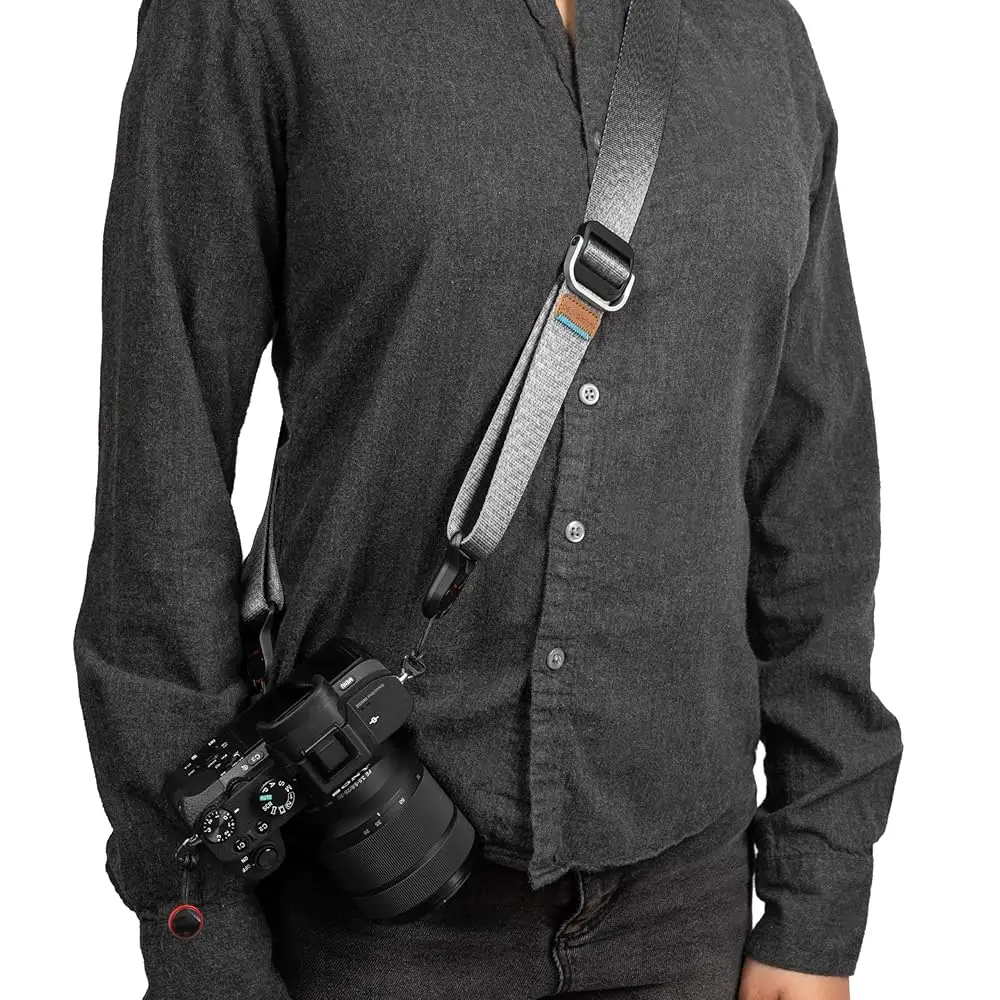
Peak Design markets Slide Lite as “3 straps in 1,” able to switch between sling, neck, and shoulder carry. Digging deeper into user reports, that flexibility isn’t just theoretical. A verified buyer on Amazon wrote that the strap’s “versatility and thoughtful design features have made it an indispensable tool,” and highlighted being able to switch styles “in a matter of seconds.” Best Buy reviewer Greg echoed the lived experience, saying it’s “very comfortable, easy to install and I love the fact I can easily separate my camera from the strap and reattach on the fly thanks to the clips.” For event shooters or travelers who alternate between walking with a sling and raising the camera quickly, users consistently describe the reconfiguration as a daily‑use advantage rather than a gimmick.
Another big claim is total stability from dual anchor points and a 200‑lb strength rating. Users rarely talk in numbers, but they talk in trust. Best Buy reviewer Wayne said Peak Design’s reputation “makes me feel comfortable in trusting the weight of my nikon z8 and mounted glass to be suspended from their products.” Similarly, a verified buyer on Amazon described the anchors as “wonderful reassurance when you’re dangling $2k in camera gear.” The stability benefit shows up in more practical terms too. A ReviewIndex quote notes that “when connected at side and to the included tripod mount on the bottom of the camera, the camera does rest snugly and bounce free as advertised.” While officially rated to hold over 200 lbs, users focus less on maximum load and more on how much safer a two‑point system feels versus a single‑lug sling.
Peak Design also leans on comfort from seatbelt‑style webbing with a smooth glide side and a grippy silicone side. Users broadly validate this, but with nuance. A ReviewIndex reviewer explained the dual‑texture benefit in detail: the strap “has a rubberized texture… so you can flip the strap over to make it ‘grab’ your shoulder more securely,” yet also slides smoothly for quick access. Best Buy reviewer KB 4 MTO gave a long wear story: after “about 7 hours of wear time… not once did my shoulder cramp up or feel fatigued.” Still, comfort isn’t universal in every scenario; one ReviewIndex user who rides motorcycles said “the keepers slip, even with my little mirrorless camera,” suggesting that in high‑motion contexts the grippy side or strap keepers may not fully lock things down.
Cross‑Platform Consensus
Universally Praised
The quick‑release anchor system is the most repeated point of enthusiasm, and users talk about it like workflow liberation. A ReviewIndex quote captures the appeal: “I can swap a wrist strap for the neck strap in about three seconds.” That matters for photographers who alternate between street shooting and stowing gear. Best Buy reviewer AddisonP kept it simple: “love the quick release feature.” Another Best Buy buyer noted it’s “secure and easy to remove with a pinch.” The common implication is speed without anxiety: users can detach before packing or switch bodies mid‑shoot without threading straps through lugs.
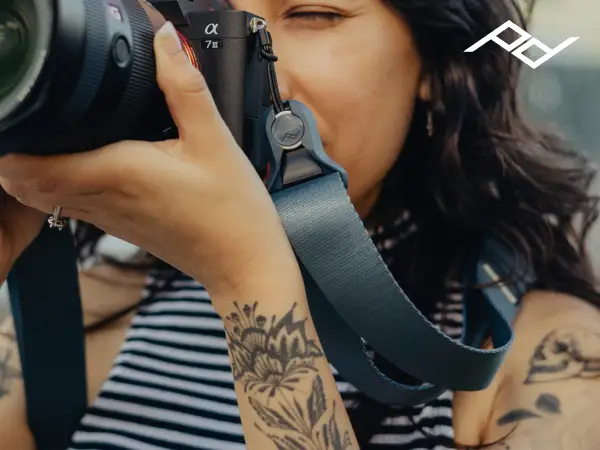
Comfort for long sessions is another recurring pattern, especially among mirrorless users who feared an unpadded strap might dig in. A verified buyer on Amazon wrote they were “worried about the lack of padding, but the strap is wide enough that it doesn’t need it,” even when carried cross‑body for hours with a 100–400mm lens. ReviewIndex users consistently describe the material as “strong but comfortable around the neck.” For trade‑show photographers, travel shooters, or anyone walking all day, these stories signal that the Slide Lite’s width hits a sweet spot: supportive without the bulk of Peak Design’s wider Slide strap.
Build quality and perceived security come through with almost visceral language. Best Buy reviewer Jiga Photo Studio praised “excellent quality in materials and manufacturing” and noted the wear indicator on anchors helps you know “when it is time to make a change.” Another Best Buy reviewer called it “stylish and easy to use, with way higher quality than any other camera strap I’ve ever used.” ReviewIndex users described Peak Design’s “design and manufacturing quality as top‑notch.” For owners of costly bodies and telephotos, that premium feel translates into confidence rather than just aesthetics.
The sliding adjusters get consistent love for being smoother than typical webbing straps. A ReviewIndex user said the twin adjustable buckles are “much smoother/easier to adjust than any webbing/buckle combination I have ever used.” Best Buy reviewer MarkL highlighted that quick adjustment allows “seamless transitions between different shooting positions.” This is particularly valuable for wildlife and sports shooters who cinch the camera tight while moving, then loosen quickly to shoot. One Amazon reviewer even framed it as letting them keep gear “securely close to my body… no matter how I prefer to carry it.”
Common Complaints
Price is the dominant drawback, repeated across Amazon and Best Buy. Best Buy reviewer Crusty Navy Dude called the price the “only drawback.” Another Best Buy buyer said it’s “a little pricey for a strap but nothing comes close in terms of ease of use and durable construction.” Amazon reviewers similarly note “it’s a lot of money for a strap,” though often add “you get what you pay for.” The practical takeaway is that users justify the cost through security and convenience, but budget‑minded photographers may still hesitate.
Bulk and width perceptions vary, but enough people mention it to form a consistent complaint thread. ReviewIndex includes the line “a little bulky for my taste,” and another reviewer said “all folded up the strap was about as big as the camera body.” Best Buy’s summary notes some customers worry about “strap width and bulk.” This tends to affect minimalist street shooters or those used to thin OEM neck straps. The Slide Lite is narrower than Peak Design’s flagship Slide, yet some still feel it’s more substantial than expected.
A more specific recurring issue involves hardware rubbing or scratching gear when packed. Best Buy reviewer NickyU warned that the “aluminum clips… will leave scratches on your lens barrel or body if you put them together in the bag,” describing visible dents on a Sony 35mm f/1.4 after two weeks. Their workaround was to detach the strap before bagging, but they called that “an inconvenience.” For photographers who pack quickly between locations, this complaint highlights a trade‑off between robust metal parts and pack‑friendly softness.
Tripod compatibility is praised in marketing, but user stories show friction around the included plate and Allen key. Best Buy reviewer Larry said the bottom connector is “most worthless… you have to totally remove it with an allen wrench… not likely to have in the field.” They ended up using an Arca‑Swiss plate with an opening for the anchor, avoiding Peak Design’s plate. The implication is that while the anchor system can coexist with tripod setups, users who frequently swap between hand‑carry and tripod work may need to refine their own workflow.
Divisive Features
The seatbelt‑style webbing and dual smooth/grippy sides are loved by most, but not everyone’s environment agrees. Many call it “exactly like a seatbelt” in a positive way. ReviewIndex users say the smooth side glides for fast access while the grippy side “actually works.” Yet one motorcycle‑riding reviewer found that “the keepers slip,” suggesting the system may be less locked‑in under vibration or fast movement. So for casual walking and normal shooting, the fabric behavior is a win; for extreme motion, some users see limits.
A smaller split shows up around the included anchor mount size. A ReviewIndex user noted Peak Design’s slimmer Leash comes with a smaller plate, and they “prefer the sturdier strap, so will have to buy the anchor mount separately to use with this strap for more convenience.” That signals a niche compatibility/design preference rather than a widespread flaw, but it affects users who want the Slide Lite strap with smaller plates across multiple bodies.
Trust & Reliability
No real scam or authenticity concerns appear in the provided Trustpilot‑style review analysis; instead, trust is mostly about whether users believe the anchors will hold over time. Long‑term owners repeatedly say yes. Best Buy reviewer Jiga Photo Studio said their main Slide Lite has been used for over a year and is “still in perfect condition,” emphasizing the wear indicator as reassurance. Another Best Buy buyer described never feeling like the camera “is in danger.” ReviewIndex users talk about the anchor system as “wonderful reassurance,” framing the durability in terms of emotional security rather than just material toughness.
Durability stories also include replacing weaker straps after failures. Best Buy reviewer Nikond810user93 recounted a previous strap that “came off the camera & the body hit the ground hard,” prompting them to ditch OEM straps permanently. With the Slide Lite, they wrote, “I will never have to worry about my camera falling ever again.” That sort of trauma‑to‑trust narrative explains why people accept the premium price: they view it as insurance against gear damage.
Alternatives
Competitors only show up indirectly through user comparison to other Peak Design straps and generic OEM straps. Multiple users mention the full‑size Peak Design Slide and the lighter Leash. A ReviewIndex user said the Slide Lite “fits the size better than my full size peak design camera slide straps,” implying that photographers with mirrorless bodies find the Slide too wide. Best Buy reviewer Jeff tried the Leash first but felt their Canon R‑series was “a little too heavy for that one,” calling Slide Lite “perfect for it.” For buyers in the Peak ecosystem, the crowd view is: Leash for very small bodies, Slide Lite for mirrorless and modest full‑frame kits, Slide for heavier pro rigs.
Price & Value
Current prices in the data hover around $59.85 on Amazon for the black Slide Lite, with Best Buy listing $69.99. Users repeatedly call it expensive but often defend value through longevity and convenience. Best Buy reviewer Timothyl summed it up: “a little pricey for a strap but nothing comes close in terms of ease of use and durable construction.” Amazon reviewers echo “you get what you pay for.” Resale value isn’t directly discussed in user feedback, but eBay listings show new Slide straps around $55–$79, suggesting stable secondary‑market demand for Peak Design straps overall. Community buying tips mostly revolve around committing to the system: once you have extra anchors, one strap can serve multiple bodies, as Best Buy reviewer Sigma Jeep noted: “with the attachments you can use one strap for all your cameras.”
FAQ
Q: Is the Slide Lite comfortable without padding?
A: Most users say yes. Amazon buyers report it’s “super comfortable to wear crossbody for hours,” and ReviewIndex notes the width avoids “hot spots.” Long‑wear stories like a Best Buy user’s 7‑hour trade‑show day suggest the seatbelt webbing spreads weight well.
Q: Will the anchors feel secure for heavy gear?
A: Users consistently trust them. Best Buy reviewers say they’re comfortable suspending cameras like a Nikon Z8, and Amazon buyers call the anchors “wonderful reassurance.” While officially rated over 200 lbs, feedback focuses on real‑world stability, especially from two‑point carry.
Q: Does the quick‑release system actually save time?
A: Yes, according to repeated stories. ReviewIndex users describe swapping straps in “about three seconds,” and Best Buy reviewers like the ability to “separate my camera from the strap and reattach on the fly.” It’s most helpful for multi‑camera owners and travelers.
Q: Are there any downsides for packing the strap in a bag?
A: Some users warn about scratches. A Best Buy reviewer said aluminum clips left dents on a Sony lens when packed together, recommending detaching before bagging. Others don’t mention this, but it’s a notable concern for tight, fast‑moving workflows.
Q: How does it compare to Peak Design Slide or Leash?
A: Users position Slide Lite in the middle. ReviewIndex and Best Buy buyers say it’s narrower and better sized than the Slide for mirrorless, while more supportive than the Leash for heavier full‑frame bodies. Choice depends on camera weight and preference for width.
Final Verdict
Buy if you shoot mirrorless or a light DSLR kit, want a secure two‑point sling that adjusts quickly, and plan to use Peak Design anchors across multiple cameras. Avoid if you’re highly price‑sensitive, dislike any strap bulk, or pack gear tightly without detaching hardware. Pro tip from the community: detach the strap before bagging to avoid clip scratches, and consider extra anchors to make one strap serve every body you own.