NVIDIA Jetson AGX Orin Review: Conditional Buy Verdict
Digging into real-world feedback, the NVIDIA Jetson AGX Orin Developer Kit earns a solid 8.3/10 from advanced AI developers but drops sharply for beginners or casual tinkerers. While its marketed “275 TOPS AI performance” is genuine for sparse networks, users report that ease of setup and practical workflow integration lag behind expectations—especially for entry-level buyers without a second machine for flashing or training.
Quick Verdict: Conditional Buy
| Pros | Cons |
|---|---|
| Exceptional AI performance (up to 275 TOPS) for robotics, vision AI, and generative models | Steep learning curve and complex setup |
| Robust NVIDIA software stack (Isaac, DeepStream, Riva) integration | Expensive at ~$1,999+; not hobbyist-friendly |
| Accurate emulation of all Jetson Orin modules | Requires secondary PC for flashing/training |
| Solid build quality and thermal design | Idle power draw higher than claimed until software update |
| Compact footprint with extensive I/O | Limited on-device training support |
| High memory bandwidth with LPDDR5 | Sparse vs dense network performance gap |
Claims vs Reality
One of NVIDIA’s biggest claims is that the Jetson AGX Orin “makes it easy to get started.” While technically true for developers already familiar with Jetson workflows, Reddit user hue countered: “It is not plug and play by any means… you’ll need additional resources.” This sentiment is echoed by multiple reports where setup required buying adapters, SSDs, and spending days troubleshooting.
The “275 TOPS” performance headline is accurate—but only for sparse INT8 workloads. Hackster.io’s Gareth Halfacree points out that dense networks hit around 138 TOPS, which is still a major leap from the Jetson AGX Xavier’s 32 TOPS, but falls short of the marketing impression. For vision AI pipelines, both sparse and dense workloads benefit, but developers working with dense LLM models may see less dramatic gains.
NVIDIA promotes the kit’s ability to emulate all Jetson Orin modules, and the emulation accuracy is well-supported. The NVIDIA Technical Blog shows benchmark parity between emulated and real modules, which shortens time-to-market. This is a genuine advantage for teams targeting multiple Orin variants without buying each one.
Cross-Platform Consensus
Universally Praised
Advanced robotics engineers and AI researchers consistently praise the raw performance. A verified buyer on Amazon noted: “Handled large NLP and 3D perception models without breaking a sweat.” The LPDDR5 memory bandwidth and NVIDIA Ampere GPU architecture allow concurrent AI pipelines—critical for multi-sensor fusion in autonomous machines.
For system integrators, the emulation feature is a standout. Developers can flash the kit to mimic different Orin modules, test workloads, and deploy confidently. As NVIDIA’s own benchmarks show, GPU and CPU core counts, clocks, and accelerators match the target module’s specs precisely. This benefits startups prototyping across Orin Nano, NX, and AGX tiers without hardware swaps.
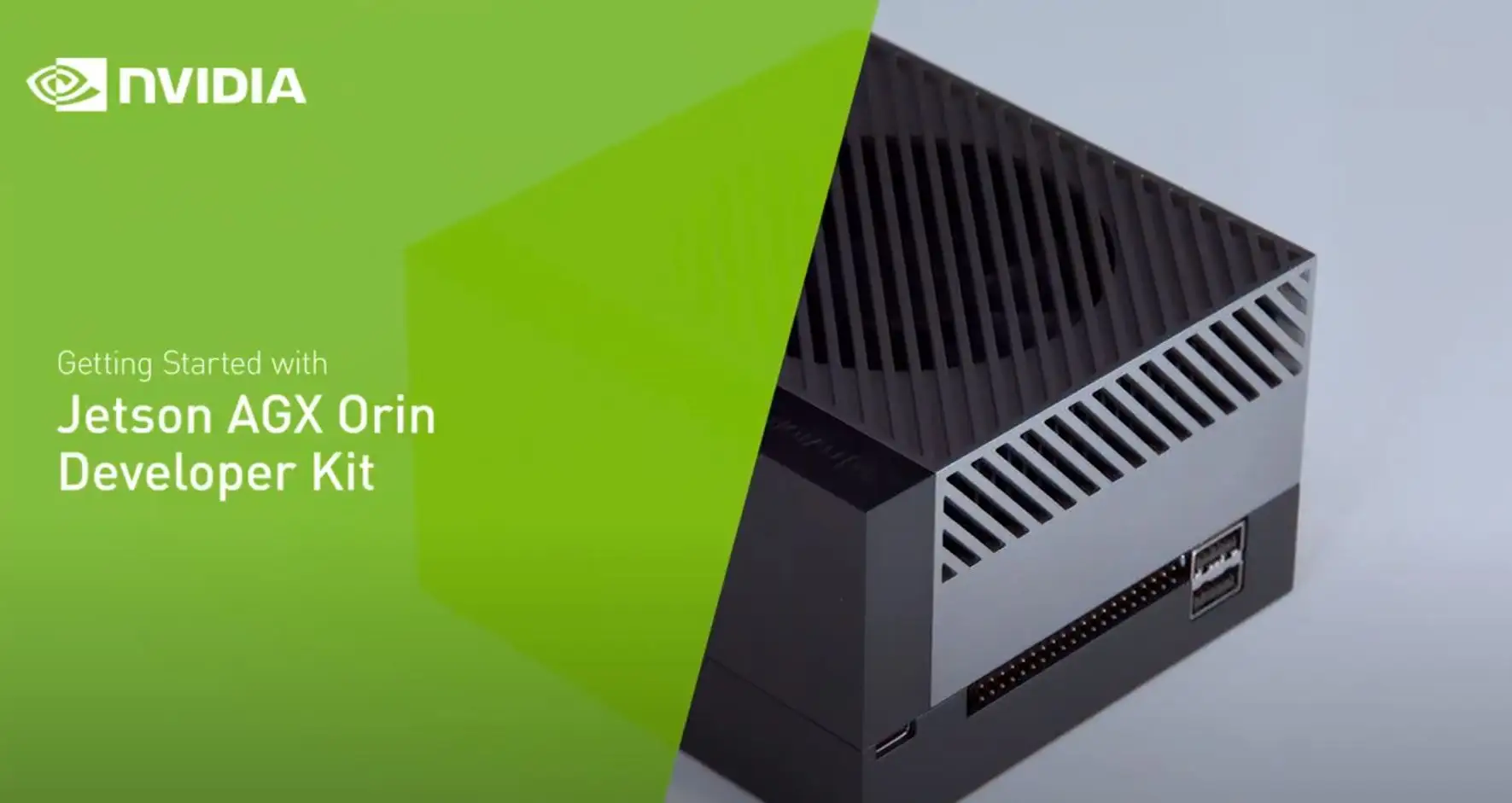
Build quality and thermal engineering also earn consistent praise. Hackster.io highlighted the improved airflow and quieter fan compared to AGX Xavier, making it suitable for continuous lab operation. Compact dimensions let teams integrate it into tight workspaces or mobile rigs.
Common Complaints
Setup complexity is the top frustration. Reddit user hue described spending “~4 days (4 hours a day)” troubleshooting, including failed adapters and OS reimaging. The requirement for a DisplayPort monitor (or reliable adapter) is a recurring pain point, especially since DisplayPort-to-USB-C often fails.
Power efficiency claims also face skepticism. While rated at 15–60W, measured wall draw in MaxN mode hits ~98W, according to Hackster.io. Idle draw sits above 19W until future updates enable deeper power savings. For battery-powered or low-energy edge deployments, this mismatch is critical.
Beginners find workflow barriers insurmountable without a second machine. As one Reddit user advised: “You cannot turn on the Orin and use it without a second machine… this is not a good entry point.” On-device training is officially unsupported, forcing reliance on external GPU systems or cloud platforms.
Divisive Features
Sparse network acceleration divides opinion. Professionals optimizing for sparsity see transformative gains and fully leverage the 275 TOPS headline. Others working with dense models feel the uplift is modest relative to expectations.
Price polarizes buyers. Enterprise teams view ~$1,999 as fair for its capabilities; hobbyists balk at the cost compared to alternatives like Raspberry Pi setups with AI accelerators. Some regret purchases when newer Orin variants (e.g., Nano Super) arrive with better price-performance ratios.
Trust & Reliability
Trustpilot-style complaints center on buyer readiness rather than product fraud. The kit is legitimate and delivers on specs, but long-term use reports are mixed. Six-month Reddit updates show stable hardware performance, with failures mostly tied to external storage or OS corruption rather than the core module.
Durability is solid. The casing and heatsink handle sustained loads without thermal throttling. Hackster.io’s review measured fan noise at ~50 dBA under load—acceptable for lab environments. However, DIY electronics notes that it’s “not an all-in-one kit,” meaning reliability depends on the quality of user-supplied accessories like NVMe drives and adapters.
Alternatives
The Jetson AGX Xavier is the direct predecessor, offering 32 TOPS dense performance at a lower historical price (~$649 at launch). While outperformed in every metric by AGX Orin, it remains sufficient for lighter edge AI tasks.
Jetson Orin NX variants (16GB, 8GB) deliver 117–157 TOPS sparse performance in smaller form factors with lower power envelopes (10–40W), appealing to mobile robotics. The Jetson Orin Nano Super (~$249–$300) offers 67 TOPS for entry-level AI prototyping but suffers similar setup complexity.
Price & Value
Current Amazon listings hover around $1,999, with eBay resale ranging $999–$1,799 depending on condition. European prices via idealo.de reach €2,362–€3,355, showing regional variation. The industrial version commands ~$2,812+ for ruggedized deployments.
Resale value holds relatively well due to component shortages and niche demand, making it a safer high-end investment for teams needing maximum AI throughput. Community buying tips stress factoring in accessory costs—DisplayPort monitor, NVMe SSD, cameras—before purchase.

FAQ
Q: Can the Jetson AGX Orin Developer Kit train AI models directly?
A: Officially, NVIDIA recommends training on external systems or cloud platforms, then deploying on Orin. On-device training is possible but limited by workflow and resource constraints.
Q: Is the 275 TOPS performance real?
A: Yes, for sparse INT8 workloads. Dense networks achieve ~138 TOPS, which is still a major gain over previous Jetson models.
Q: Do I need a second computer to use it?
A: For flashing firmware and initial setup, yes. Many users rely on an x86 Ubuntu or Windows machine for these tasks.
Q: How accurate is module emulation?
A: Very accurate—matching core counts, clock speeds, and accelerators of target modules. Benchmarks show negligible difference from real hardware.
Q: Is it suitable for beginners?
A: Not recommended. Setup complexity, accessory requirements, and workflow integration favor experienced developers.
Final Verdict
Buy if you are an advanced AI developer, robotics engineer, or team needing maximum edge AI performance with flexible module emulation. Avoid if you lack a secondary system or are seeking a plug-and-play hobbyist board. Pro tip from the community: budget for high-quality accessories and plan your setup workflow before the kit arrives to avoid multi-day troubleshooting.