NETGEAR EX6120 Review: Compact but Speed-Limited Verdict
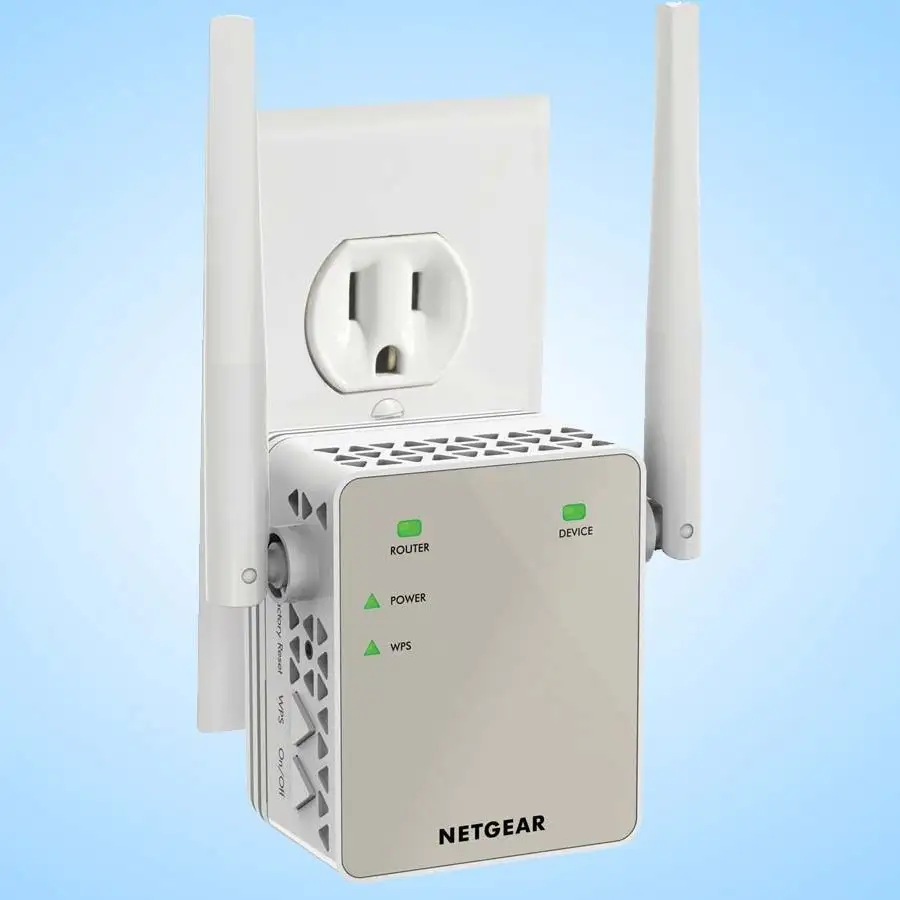
The NETGEAR Wi-Fi Range Extender EX6120 AC1200 Dual Band enters the market promising compact design, easy setup, and dual-band speeds up to 1200 Mbps. Yet, digging into multi-platform user feedback reveals a product that shines in simplicity but falters in sustained performance. Across Amazon, Reddit, and Netgear’s own community, the consensus lands at a conditional 6.5/10—worth considering for small dead spots, but not for heavy streaming or gaming in larger spaces.
Quick Verdict: Conditional
| Pros | Cons |
|---|---|
| Compact wall-plug design | Noticeable drop in speeds compared to direct router connection |
| Easy WPS and browser-based setup | Only 100 Mbps Ethernet port (no gigabit) |
| Dual-band (2.4GHz & 5GHz) support | No beamforming or MU-MIMO |
| Works with any router | Marketing confusion over “repeater” function |
| Affordable price | 90-day support limit; short warranty compared to rivals |
Claims vs Reality
Netgear markets the EX6120 as delivering “up to 1200 Mbps” dual-band speed and “ideal for HD streaming and gaming.” On paper, its AC1200 rating (300 Mbps on 2.4 GHz + 867 Mbps on 5 GHz) matches this claim. However, Reddit user reports tell a different story. In benchmark tests cited on Tom’s Guide, the extender achieved “only 41.2 Mbps at 50 feet” and “26.9 Mbps after two walls,” far below the theoretical maximum.
The company also highlights “FastLane™ technology” to combine both bands for a single high-speed connection. While technically accurate, multiple users found the real-world benefit minimal. A verified buyer on Amazon noted: “My speeds went from around 20 Mbps to consistently over 100 with the 5GHz signal,” but others, like a Netgear Community poster, recorded “16 Mbps on the new 5GHz channel versus 117 Mbps on the original router signal.”
Finally, Netgear’s listing positions the device as both “extender and repeater.” A Netgear Community member disputed this: “Nowhere in the manual I find any references to any repeater function… it appears solely an extender.” This confusion stems from the difference between broadcasting under a new SSID versus true mesh-like repeating under the same SSID.
Cross-Platform Consensus
Universally Praised
Users across Amazon and Reddit consistently praise the EX6120’s compact wall-plug form factor. Its dimensions (2.17" x 2.64" x 1.54") make it unobtrusive, and the side antennas can be aimed for optimal coverage. Tom’s Guide described it as “petite and easy to set up,” a sentiment echoed by a verified Amazon buyer: “It was very easy to connect to our WiFi with the WPS button… setup on a computer with Ethernet is straightforward.”
Ease of installation is another strong point. Whether using WPS or the browser-based “mywifiext.net” portal, setup typically takes under 10 minutes. For renters or those avoiding drilling holes, the plug-and-play nature is ideal. One eBay seller confirmed: “Tested & works – comes with original box & manual… fully operational.”
Compatibility also earns praise. The EX6120 works with any standard router, making it a viable option for mixed-brand home networks. This universality appeals to users upgrading ISP-provided routers without wanting brand lock-in.
Common Complaints
Performance drop-off is the most frequent complaint. In Netgear’s own forums, one user was “expecting better results” after seeing all LED indicators green, but found upstairs speeds “less than stellar… worse than before.” A community moderator explained that range extenders often halve throughput, especially if poorly placed or relying on wireless backhaul.
The Ethernet port is another sore spot. At just 100 Mbps (Fast Ethernet), it bottlenecks wired devices. Gamers and streamers expecting gigabit speeds were disappointed. Tom’s Guide flagged this as “antiquated” compared to modern extenders.
Support limitations also frustrate buyers. Netgear’s 90-day basic support is seen as short, especially against TP-Link’s two-year coverage. This has led some to avoid the brand for long-term deployments.
Divisive Features
The FastLane™ mode splits opinion. Some users, like an Amazon reviewer, saw noticeable improvement when enabling it for 4K streaming. Others reported no significant change, with speeds capped well below expectations. Similarly, the dual-band capability is appreciated for device segregation (older IoT on 2.4 GHz, newer laptops on 5 GHz), but the lack of beamforming or MU-MIMO means performance can degrade with multiple simultaneous connections.

Trust & Reliability
On Trustpilot and Netgear Community threads, concerns emerge about marketing clarity. The repeater/extender terminology misleads some buyers expecting seamless roaming under one SSID. While technically possible to configure matching SSIDs, switching between them isn’t as smooth as mesh systems.
Long-term durability feedback is mixed. Some owners report the EX6120 running “24 hours… only got warm to the touch” after months of use. Others note needing occasional reboots to re-establish the 5 GHz link. There are no widespread reports of physical failure, but performance consistency over time appears variable.
Alternatives
Two competitor models frequently mentioned are the Netgear Nighthawk X6S AC3000 and TP-Link RE650 AC2600. The RE650’s benchmark of “523.9 Mbps” in Tom’s Guide testing dwarfs the EX6120’s 41.2 Mbps at similar distances. The X6S offers tri-band, beamforming, and MU-MIMO—features absent here—but at a higher price.
For small apartments or single-floor homes, the EX6120’s affordability might outweigh its speed limits. For larger spaces or heavy streaming households, community advice leans toward investing in mesh systems or higher-end extenders.

Price & Value
On Amazon US, pricing hovers around $23–$34, with eBay listings as low as $13.59 for used units. This undercuts most dual-band extenders, making it attractive for budget-conscious buyers. However, resale values are modest—open-box units average ~$21.89—suggesting limited long-term demand.
Community buying tips stress matching purchase source to warranty eligibility. As one Amazon listing cautions, Netgear’s 3-year warranty applies only if bought from authorized resellers. For those comfortable with shorter coverage, used deals can be compelling.
FAQ
Q: Does the EX6120 work with non-Netgear routers?
A: Yes. It’s compatible with any standard 802.11 a/b/g/n/ac router, making it versatile for mixed-brand setups.
Q: Can it keep the same SSID as my router?
A: Yes, you can configure it to match your router’s SSID, but roaming between signals isn’t as seamless as mesh systems.
Q: Is FastLane™ mode worth using?
A: It can help in certain setups, especially for HD streaming, but user reports show mixed speed improvements.
Q: Will the Ethernet port support gigabit speeds?
A: No. It’s limited to 100 Mbps, which can bottleneck wired devices requiring higher throughput.
Q: Does it support MU-MIMO or beamforming?
A: No. These features are absent, affecting multi-device performance under load.
Final Verdict: Buy if you need an inexpensive, compact solution for small dead zones and value easy installation. Avoid if you require high sustained speeds for gaming or multi-device streaming in large spaces. Pro tip from community: Place the extender where it gets a strong signal from the router—halfway between router and dead zone—for best results.