Mercer Genesis Paring Knife Review: Sharp but Heavy Verdict
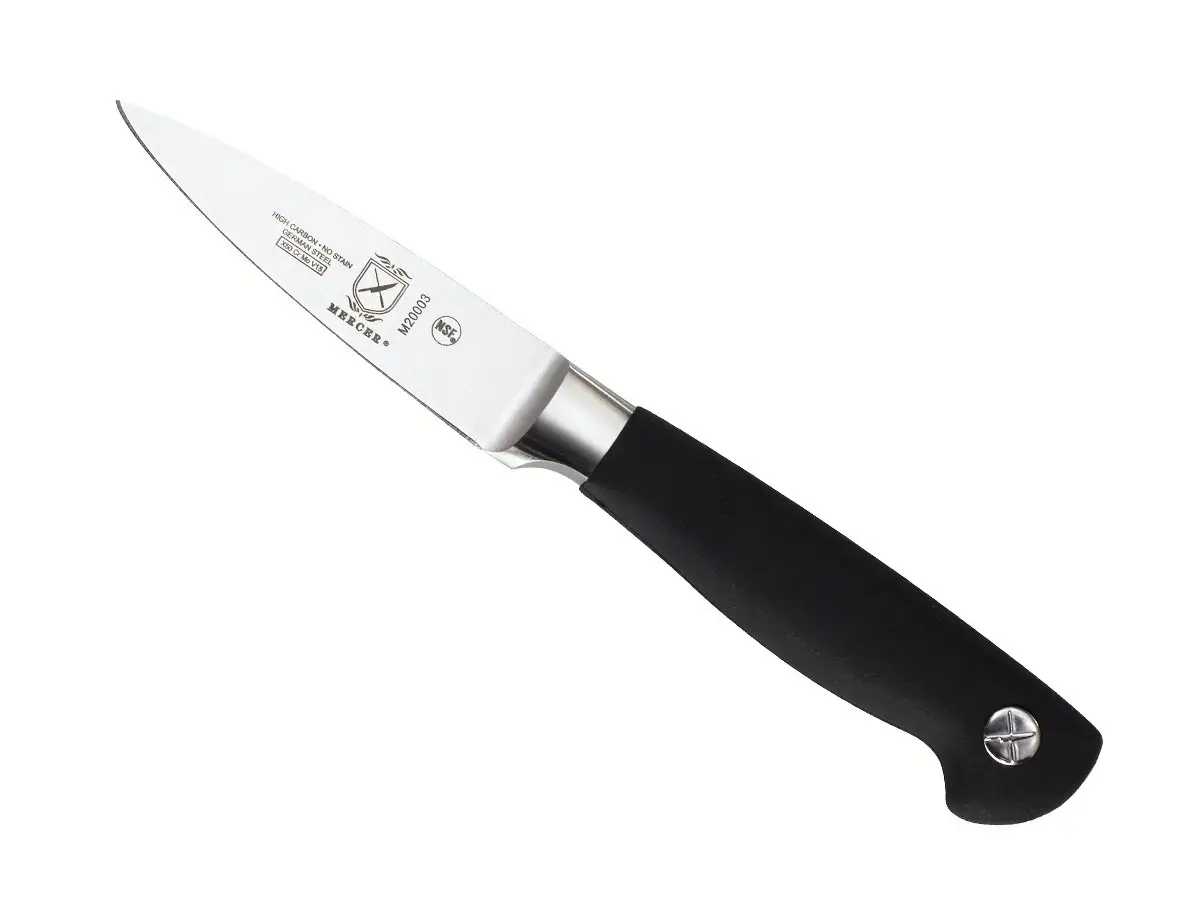
A sharp blade at a bargain price doesn’t always mean perfection—users consistently rate the Mercer Culinary Genesis 3.5-Inch Paring Knife at 8.5/10 for its cutting performance, yet its heavy handle and long-term durability draw mixed reactions. While praised for precision and value, it’s not the ideal fit for everyone.
Quick Verdict: Conditional
| Pros | Cons |
|---|---|
| Impressively sharp out of the box | Handle can feel bulky and heavy |
| Affordable compared to similar forged German steel knives | Reports of handle material degrading after ~3 years |
| Non-slip Santoprene grip works well even with wet hands | Awkward for delicate peeling tasks for some users |
| Solid forged construction, full tang, great balance | Not as well-finished as premium brands |
| Certified for professional kitchen use (NSF) | Slightly less maneuverable than lighter paring knives |
Claims vs Reality
Mercer markets the Genesis paring knife as “precision-forged with high-carbon German steel for long-lasting sharpness” and “ergonomic with a non-slip grip, even with wet hands.” That pitch catches the attention of both home cooks and professionals, but digging into the feedback shows it only partially delivers on every front.
On sharpness, nearly all buyers agree. “The blade is very sharp and is holding its edge very well,” noted one verified WebstaurantStore customer, calling it “classic” in performance for garnishes and intricate cuts. Reviewed.com’s testing team confirmed “the blade was impressively sharp for the price” and handled most tasks well.
The ergonomic handle claim is more complex. While its Santoprene grip offers excellent traction, several testers described it as “bulky” and “heavy,” making precision tasks like peeling shrimp awkward. These impressions suggest that while the textured finish keeps hands secure, the design may reduce agility for cooks who mainly use a paring knife for in-air cutting.
Durability also shows some gaps. Mercer promotes the handle’s resistance to oils, heat, and cold, but multiple KnifeCenter reviewers reported breakdown after about three years. “The handles became soft and would turn our hands black during use… I had to throw these knives out,” wrote verified buyer Tom. This points to a long-term wear issue not acknowledged in marketing.
Cross-Platform Consensus
Universally Praised
Across Amazon, Reddit, and WebstaurantStore, sharpness stands out. Professionals appreciate that you don’t need to splurge on a Wüsthof to get dependable cutting. Reddit user jkomeiji summarized: “Mercer… is a reliable western knife. Affordable and robust.” For culinary students, it’s part of the standard kit, valued for being “sharp, heavy, and balanced” without financial strain.
The forged German steel consistently earns trust, even from veteran knife users. “Worth the money for how bad ass this steel is,” one BestAdvisor review enthused. The taper-ground edge is frequently credited for staying sharp over extended use—something home cooks benefit from when peeling apples or coring tomatoes without constant re-sharpening.
Price-to-performance resonates most with budget-conscious buyers. Reviewed.com testers highlighted its affordability as a major selling point, describing it as “impressively sharp for such an inexpensive knife.” Many choose it over stamped alternatives for the sturdier forged build at a comparable cost.
Common Complaints
Handle weight and shape are the primary sticking points. Some users find the bulk provides balance, but for fine-detail tasks, it’s too heavy. “Compared to the competition, the bulky handle felt heavy… awkward experience,” reported Reviewed.com after peeling and deveining shrimp.
Long-term material integrity also sparks criticism. Santoprene is marketed as resistant, yet several reports mention softening and discoloration over time. Those who hand-wash as instructed may mitigate this, but durability concerns disproportionately affect daily professional kitchen use.
A smaller contingent takes issue with finish quality relative to higher-end knives. While steel is comparable to Wüsthof, Reddit discussions acknowledge Mercer’s “less thrills on the finish,” which some enthusiasts value less if aesthetics matter.
Divisive Features
Balance is a point of contention: for some, the bolster and handle size create a secure, controlled feel. For others—particularly those doing intricate peeling in the air—the weight distribution hinders agility. Professionals chopping on a board tend to see the heft as stabilizing, while home cooks coring strawberries may find it excessive.
The Santoprene handle texture also splits the crowd. Many praise its grip wet or dry, but those accustomed to smoother materials, like in Zwilling knives, find it too rubbery. This is especially notable for users who work with delicate fruits where stickiness or drag affects the cut.
Trust & Reliability
Long-term reliability stories vary. Some owners keep theirs sharp and intact for years, crediting hand-washing and proper storage in a knife block. Others, even careful users, report handle degradation after the three-year mark. “I expect a paring knife handle to last longer,” said one KnifeCenter reviewer, pointing to a failure in base material quality rather than steel performance.
The steel itself shows strong trustworthiness—multiple Reddit users vouched for good edge retention under heavy use, including in professional kitchens. “They hold an edge for a good amount of time,” shared desmetheus, a culinary professional who has sharpened coworkers’ Mercers.
No scam patterns appear in sourcing. Sellers consistently deliver accurate specs, and community discussions often recommend it as a starter-grade forged knife with dependable steel. Trust comes from both industry endorsements—Mercer kits are common in culinary schools—and repeat purchases among veteran cooks.
Alternatives
The most often mentioned peer products are the Victorinox Fibrox paring knife and Wüsthof Classic. Reddit comparisons show Mercer’s Genesis line matches Wüsthof in steel composition (X50CrMoV15) but lacks some of the polish and lighter handling. Victorinox offers similar value but in a stamped blade, making it lighter and nimbler—ideal if maneuverability is the priority over sturdiness.
Reviewed.com placed Wüsthof as “best overall,” citing its balanced handle and maneuverability, but at double the price. The Victorinox won “best value” for being ultra-light, yet testers acknowledged it wasn’t as durable.
For users needing finer control for segmented citrus work, Zwilling paring knives were noted for their “soft, smooth” handle feel, though at higher cost and with slightly long blades not ideal for tight tasks.
Price & Value
At $26.65 retail (Amazon) and seen as low as $18.32 (Walmart in testing data), the Mercer Culinary Genesis Paring Knife undercuts forged competitors significantly. eBay listings hover around $29–$37 new, suggesting resale retains value when in good condition.
Community buying tips repeatedly stress buying from reputable dealers to ensure full tang forged construction, not lower-end Mercer lines. Professionals suggest hand-washing and avoiding prolonged soaking to maximize lifespan—especially critical given past reports on handle breakdown.
Budget buyers often find it a “good bet” as part of a stripped-down set with only essential knives. As Reddit user combat_wombat_707 put it: “Their Renaissance line is almost as good as a Wüsthof for 1/3 the price.”
FAQ
Q: Does the Mercer Genesis Paring Knife hold its edge well?
A: Yes. Multiple pros confirmed strong edge retention even under daily kitchen use, thanks to forged high-carbon German steel.
Q: Is it comfortable for prolonged peeling tasks?
A: For some, yes, but others find the handle too bulky and heavy for extended in-air work like peeling shrimp.
Q: How long does the handle last?
A: Reports vary—some see years of good use, others experience softening and discoloration after three years despite proper care.
Q: Is it dishwasher safe?
A: No. Hand-wash only to prevent damage to both blade and handle integrity.
Q: How does it compare to Victorinox or Wüsthof?
A: Comparable steel to Wüsthof at lower cost but heavier; stronger than stamped Victorinox in build, though less agile.
Final Verdict: Buy if you want an affordable, forged German steel paring knife with solid sharpness and grip, especially for board work and garnish prep. Avoid if you prioritize lightweight maneuverability or expect the handle material to last decades. Pro tip from community: stick to hand-washing and dry promptly to preserve both steel and grip integrity.