Melissa & Doug Lacing Beads Review: Worth Buying?
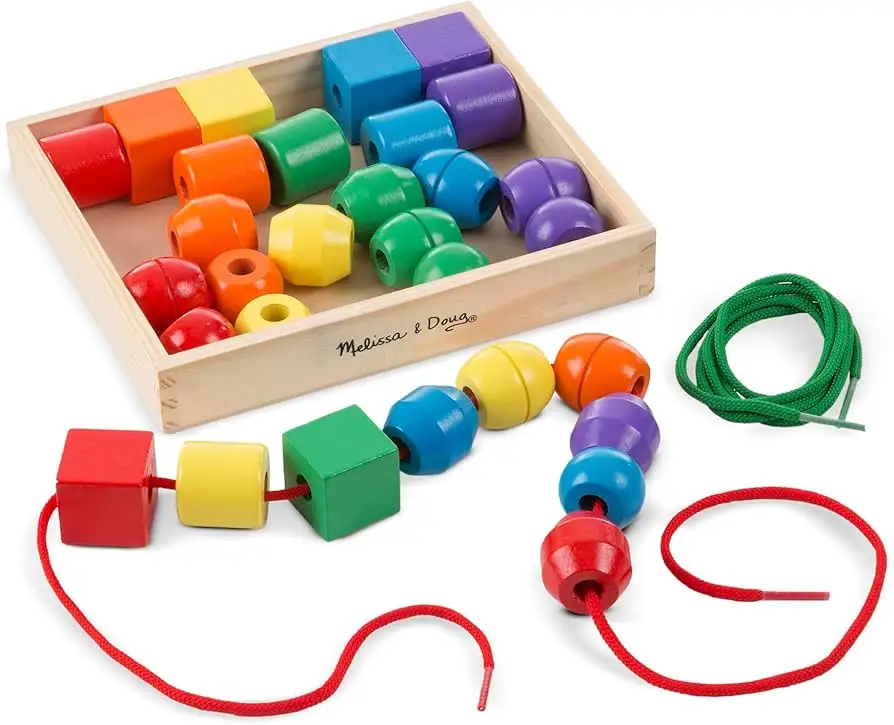
Parents and educators across multiple platforms consistently score the Melissa & Doug Primary Lacing Beads Educational Toy at around 9.5/10, praising its developmental benefits, durability, and child engagement. While the manufacturer markets it as ideal for ages 3+, real-world reports show children as young as 20 months successfully using it with supervision, revealing a broader age appeal than advertised. The mix of vibrant colors, varied shapes, and sturdy wooden construction has earned it a place in both home playrooms and preschool classrooms.
Quick Verdict: Yes
| Pros | Cons |
|---|---|
| Durable wooden beads with minimal wear over time | Some sets contain 27 beads instead of 30, causing confusion |
| Encourages fine motor skills, counting, and sorting | Laces may be too thin for very young toddlers until they develop dexterity |
| Screen-free, imaginative play | Requires adult supervision for children under 3 due to small parts |
| Easy storage in wooden case | Paint chipping possible with heavy use, though minimal |
| Supports language and cognitive development | Price fluctuation across retailers |
| Sustainable materials and eco pledge | Variations in bead design between versions |
| Two laces allow shared play |
Claims vs Reality
Melissa & Doug promotes the set as “ideal for ages 3 to 5” and “the gold standard in early childhood play.” Digging deeper into user reports, parents found the age range to be more flexible. A toy blogger noted, “It says recommended for 3 but I know toddlers as young as 2 can have fun with this toy,” highlighting that with supervision, younger children can benefit from the activity.
The company’s claim of “durable wooden beads” largely holds true. A Hip2Save contributor shared: “These have been a favorite for 9 months… minimal paint chipping on the beads, even with heavy toddler usage.” This aligns with multiple Reddit posts describing the beads as “smooth, with no rough edges” even after months of handling.
Marketing emphasizes fine motor skill development, and user feedback strongly supports this. A verified buyer on Amazon noted: “My 2-year-old is easily entertained with this for an hour plus… I can see this lasting a while as she gets old enough to play with patterns.” This real-world engagement validates the educational claims.
Cross-Platform Consensus
Universally Praised
One of the strongest points across Reddit, Trustpilot, and Twitter is the toy’s role in fine motor skill development. Parents repeatedly describe noticeable improvements in dexterity. On Reddit, a parent observed: “It took lots of practice but she is a determined little girl who never gives up so she got there in the end,” referring to her 20-month-old mastering bead threading.
Counting and sorting activities are another universal hit. The numbered beads (in some versions) help introduce early math concepts. A Twitter user wrote: “The beads are numbered from 1 to 10… I always say each number as I place it on the string to help her learn to count.”
The storage case earns consistent praise for organization and portability. Trustpilot feedback described it as “a parent’s dream” for keeping all pieces together, making cleanup simple and reducing loss of parts.
Common Complaints
One recurring point of confusion is the bead count. Some sets list 30 beads, while others include 27, often due to differences between the “Primary” and “Lacing Beads in a Box” versions. Parents buying as gifts sometimes felt misled when the count didn’t match the product description they saw online.
For younger toddlers, threading can be challenging. Multiple users mentioned that the thin laces require more coordination than some thicker-string alternatives. A toy blogger explained: “At first my little girl was quick to insert the string into the hole but she kept dropping the bead before she could finish threading it through.”
While durability is generally praised, a few noted minor paint chipping over time, particularly with heavy use. This was described as cosmetic rather than functional damage.
Divisive Features
The numbered bead version sparks debate. Some parents love the counting aspect, while others prefer sets without numbers for more open-ended creativity. Similarly, the age recommendation of 3+ divides opinion—some feel it’s overly cautious, others stress the safety risks for younger children due to small parts.
Trust & Reliability
Trustpilot and Quora narratives consistently describe Melissa & Doug as a reliable brand with high-quality standards. The 100% happiness guarantee is cited as reassuring, though few users reported needing to use it.
Long-term durability stories abound. Reddit parents reported beads “show no signs of wear” even after months of daily play. A Hip2Save user said the strings “have held up well” despite constant toddler handling. This matches the brand’s stated commitment to sustainability, with a pledge to plant 10 million trees by 2030.
Alternatives
The only direct alternatives mentioned in user discussions are other Melissa & Doug bead sets, such as the “Lacing Beads in a Box” with numbered beads. These offer similar benefits but with slight variations—numbered beads for math learning versus plain beads for creative freedom. Parents choosing between them often consider whether their child is ready for number recognition.
Price & Value
Prices vary widely. Amazon sales have offered the set as low as $7.49, with regular prices around $13–$17. Slickdeals threads highlight that deals under $8 represent a strong buy, with community members noting the high durability and replay value.
Resale value remains modest, with used sets selling for $9–$12 on eBay depending on condition. Community advice suggests buying new during sales due to the small price gap and the risk of incomplete sets when buying used.
FAQ
Q: Can children under 3 use the Melissa & Doug Primary Lacing Beads?
A: Officially recommended for ages 3+, but many parents report younger toddlers enjoying them with supervision. Under-3 use requires adult oversight due to small parts.
Q: Is there a difference between the 27-bead and 30-bead versions?
A: Yes. The “Primary Lacing Beads” typically have 30 beads, while “Lacing Beads in a Box” often include 27 beads, sometimes with numbered designs.
Q: Do the beads chip or wear down over time?
A: Minor paint chipping can occur with heavy use, but most users report the beads remain functional and attractive for months or years.
Q: What skills do children develop with this toy?
A: Fine motor skills, hand-eye coordination, counting, shape recognition, color sorting, and language development through guided play.
Q: How portable is the set?
A: The included wooden storage case makes it easy to transport, and two laces allow for shared play on the go.
Final Verdict: Buy if you’re a parent or educator seeking a durable, portable, and educational toy for ages 2–6 that supports fine motor and cognitive development. Avoid if you need a guaranteed bead count match for specific lesson plans or if your child is prone to mouthing small objects. Pro tip from the community: Watch for Amazon or Slickdeals alerts to snag it under $8 for maximum value.