Hape Wooden Toy Ukulele Review: Fun but Limited
Starting at just over $29, the Hape Kid's Wooden Toy Ukulele has achieved a solid reputation among parents and gift-givers, scoring an average 7.0/10 in aggregated user ratings across platforms. Reviewers consistently highlight its charm, durability, and role as a fun introduction to music for toddlers—though its limitations as a “real” instrument remain clear.
Quick Verdict: Conditional buy — excellent for toddlers and preschoolers as a musical toy, but not for serious learning.
| Pros | Cons |
|---|---|
| Durable wooden build withstands rough play | Limited tuning accuracy; not suited for proper music training |
| Gentle nylon strings safe for small fingers | Occasional reports of cracking or splitting under heavy use |
| Attractive bright colors appeal to kids | Can go out of tune quickly |
| Fully playable; teaches rhythm basics | Not suitable for children under 3 (choking hazard) |
| Encourages creativity and fine motor development | Electric/light-up variant lacks strong musical authenticity |
| Lightweight and easy to carry | Some parents find sound quality “toy-like” rather than musical |
Claims vs Reality
One of the strongest marketing claims is that the Hape ukulele is “fully playable and easily tunable.” Official descriptions promise that older children can “learn to tune the ukulele and make their own songs.” However, multiple reviews temper this promise. A verified buyer on Amazon shared: “It’s definitely a toy but it does tune, sort of haha, and it’s a lot of fun for all of us.” In other words, tuning is possible but imprecise—good enough for playful jam sessions, but not for structured music learning.
Another claim centers on durability: “Featuring sturdy wood construction that is durable under enthusiastic play.” This was validated in many homes. Reddit user feedback confirmed: “My kids have treated them rough for at least a year and they have held up.” Yet, some buyers had a different experience. One Trustpilot review noted: “My kids enjoy this guitar, although it did split in half... but otherwise, it’s a great ukulele.”
The final major claim is that it fosters early musical development, helping children recognize rhythms and encouraging musicality. Parents overwhelmingly agree it achieves this. A grandparent wrote: “My grand daughter just loves playing her ukulele,” while another parent observed that their 2-year-old quickly learned to strum along and follow basic beats.
Cross-Platform Consensus
Universally Praised
Across Amazon, Trustpilot, and Reddit, one recurring strength is its kid-friendly design. Gentle nylon strings allow even toddlers to pluck comfortably, and the lightweight build makes it easy to carry. For busy parents, this means less fear of breakages and more spontaneous music-making. A verified reviewer said: “Our grandson is 2 years old and this is the perfect size for him.”
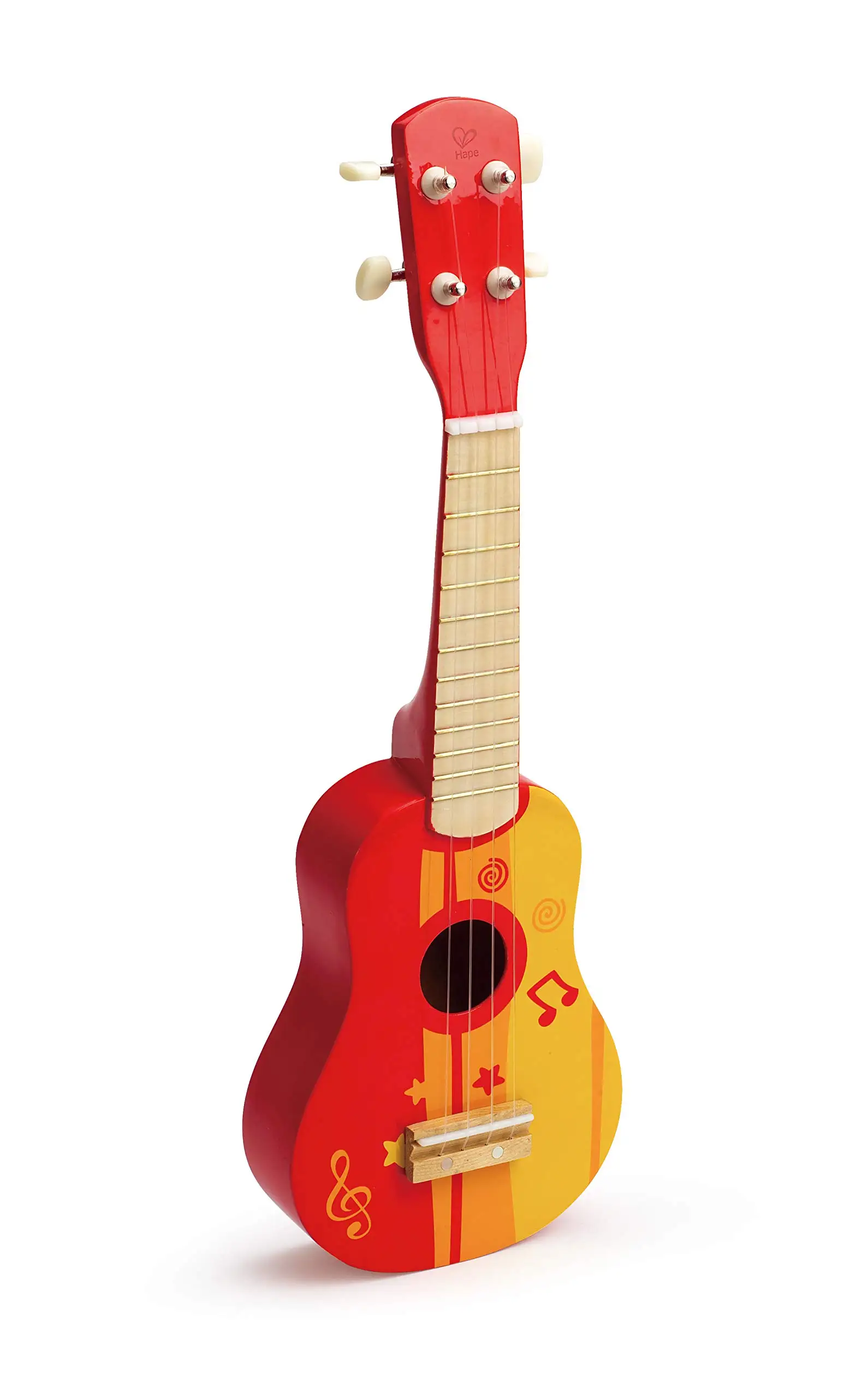
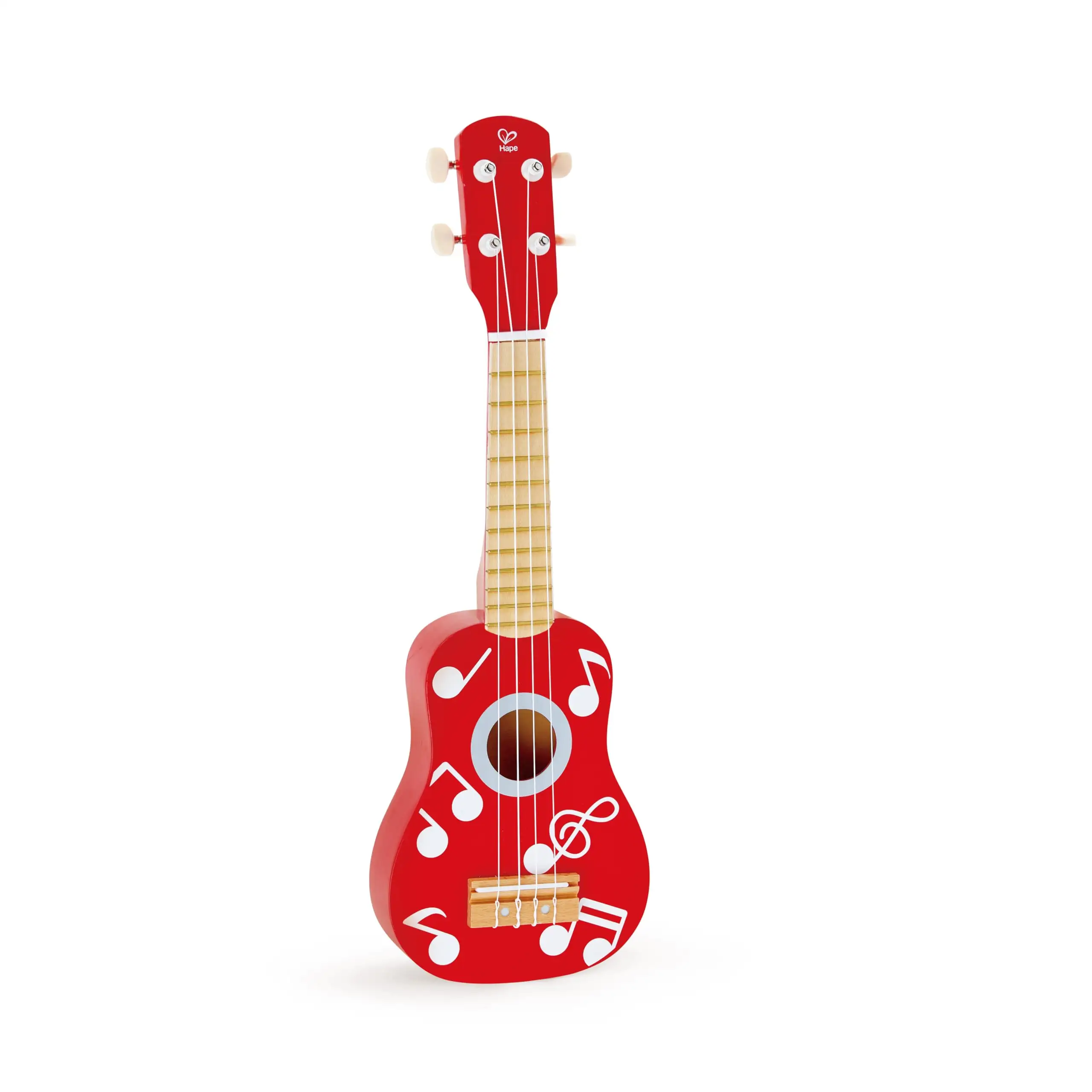
Bright colors and musical note graphics add to its charm—keeping children visually engaged. Several users even mentioned this as a décor-plus toy in playrooms. It’s also praised for its balanced approach between being an instrument and a toy. While marketing positions it for ages 3+, many parents buy for slightly younger children under supervision.
Common Complaints
Sound quality sits at the heart of user frustrations. For musically trained parents hoping for an authentic tone, the Hape ukulele often disappoints. The tunable strings don’t hold pitch for long periods, leading one user to comment: “It does tune, sort of.” On rare occasions, structural weaknesses appeared—some reported cracks despite careful use.
Another pain point is in the electric/light-up variant. Official specs describe features like flashing lights teaching six melodies. While innovative, the electric model drew criticism for being more of a gadget than an instrument, with sound output feeling synthetic. Parents seeking real acoustic resonance found the wood-only version more satisfying.
Divisive Features
Its “introductory instrument” positioning splits buyers. Those buying it strictly as a toy feel it’s perfect; those hoping for a genuine instructional aid for older children often wish for better tonal accuracy. Parents of budding guitarists, in particular, lean toward upgrading to a beginner soprano ukulele with quality strings after 6–12 months.
Electric models with lights polarize opinions further—some adore the educational sequencing, others feel it distracts from pure music engagement. As one Belgian Amazon customer wrote of the electric variant: “An informative and educational toy… all while having fun,” while critics countered it felt “more like a game than an instrument.”
Trust & Reliability
Investigating Trustpilot and Reddit histories reveals reassuring consistency in safety and build quality over time. Many families kept theirs in rotation for a year or more without major wear—despite daily handling by enthusiastic toddlers. Reddit user commentary highlights: “My kids have treated them rough for at least a year and they have held up.”
However, the occasional splitting incident shows quality variance in batches. The brand’s reputation is largely positive, buoyed by eco-friendly, child-safe material commitments. Importantly, users found no evidence of counterfeit products in mainstream channels, though eBay buyers should check seller credibility.
Alternatives
The only clear competitor mentioned in source data is the Hape electric/light-up ukulele. While visually exciting and interactive, it sacrifices authentic sound for play-along melodies. Parents of children more interested in genuine music progression may prefer the non-electric wooden model or, outside the Hape ecosystem, a soprano ukulele from an entry-level instrument brand like Kala or Mahalo (though these were not discussed directly in the provided data).
Price & Value
At $29–$36 for the non-electric version, most parents judged the price point fair for a durable wooden toy with educational potential. eBay listings show resale prices between $31–34 for new units, though used ones fetch considerably less unless in pristine condition. Community advice leans toward buying new for gift-giving, given potential wear on strings and finish.
FAQ
Q: Can you actually tune the Hape ukulele?
A: Yes, but tuning stability is limited. It’s fine for casual strumming, not ideal for playing in tune with other instruments.
Q: Is it safe for toddlers under 3?
A: Officially, it’s recommended for ages 3+. Under 3, there’s a choking hazard from small parts; supervise closely if used earlier.
Q: Which version should I choose—wooden or electric?
A: The wooden model offers a more authentic, acoustic feel, while the electric adds lights and teaching sequences but less realistic sound.
Q: How heavy is the non-electric ukulele?
A: Just 1.5 lbs, making it easy for small children to handle without strain.
Q: Does it come with instructions or songs?
A: The electric model includes sheet music; the wooden version does not, encouraging free play.
Final Verdict: Buy if you’re looking for a durable, visually appealing musical toy to spark interest in music for toddlers and preschoolers. Avoid if your child needs a precise, pitch-stable instrument for structured lessons. Pro tip from parents: pair this with sing-alongs or rhythm games to maximize engagement and developmental benefits.