Melissa & Doug Make-a-Cake Mixer Set Review: 8.6/10
“4.8 out of 5 stars” across “4,103 reviews” is the kind of number that usually hides a few sharp disagreements—but for Melissa & Doug Wooden Make-a-Cake Mixer Set, the headline is unusually consistent: people keep buying it, and the pitch is simple (screen-free, wooden, interactive). Verdict: Conditional yes—great for preschool pretend-play kitchens, less compelling if you expect lots of variety beyond “make a pound cake.” Score: 8.6/10.
**Quick Verdict**
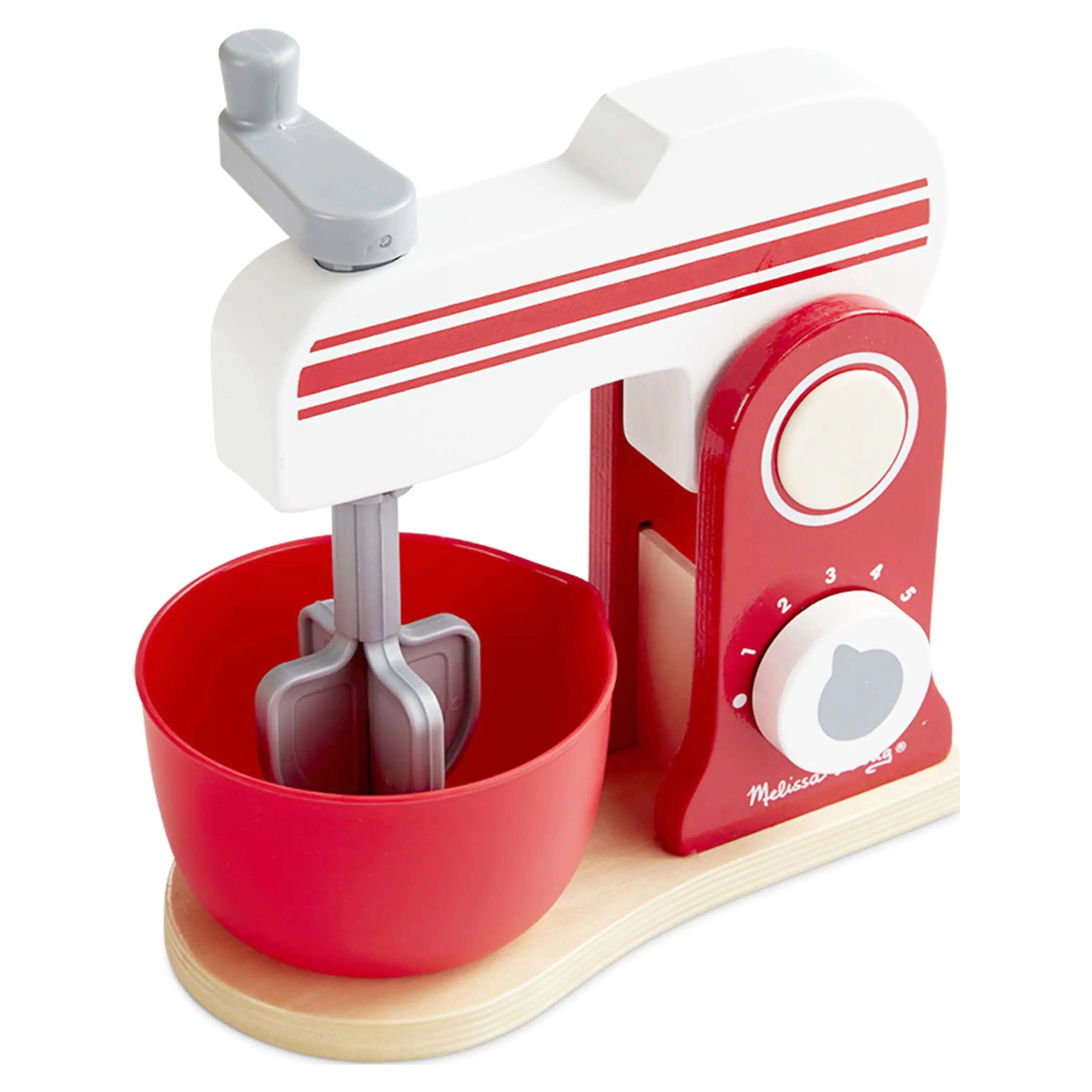
For families building a pretend kitchen routine, Melissa & Doug Wooden Make-a-Cake Mixer Set lands as a strong “yes.” The brand leans hard on “realistic” play—“working hand crank,” “dial that turns,” and “sliceable” ingredients—and the product’s popularity suggests that concept resonates with gift buyers and caregivers shopping for ages 3+. At the same time, the provided data reads more like listings and spec copy than raw, story-style reviews, so the strongest “feedback” available here is the volume and consistency of ratings across retail platforms rather than detailed personal anecdotes.
Verdict: Conditional — best for ages 3–6 who love repetitive role-play; less ideal if you want a large, open-ended play food collection out of the box.
| What matters | Pros (from listings + ratings) | Cons / Watch-outs (from data) |
|---|---|---|
| Overall satisfaction | Amazon shows “4.8 out of 5 stars” with “4,103 reviews” | Not much detailed negative feedback included in provided text |
| Interactivity | “working hand crank that makes bowl spin,” “dial that turns” | Mechanical play is limited to crank/dial (no electronic mixing) |
| Pretend “cutting” | “sliceable wooden egg, butter, and knife” with “self-stick tabs” | Self-stick tabs can wear over time (implied by design, but no user stories provided here) |
| Age fit | “kids ages 3+,” “great gift for preschoolers, ages 3 to 6” | Amazon India listing says “36 months - 12 years,” which may overstate older-kid appeal |
| Materials | “wood,” “FSC-certified materials” (new inventory only) | FSC note suggests not every unit historically guaranteed certified |
**Claims vs Reality**
Marketing claim #1: “Realistic spinning action”
Digging deeper into the product copy, the realism is specifically mechanical: the “mixer bowl…spins when children turn the hand-crank,” and the “working dial” is there to “pretend to set the mixer speed.” That’s important for parents deciding whether this is a “toy appliance” or a “pretend prop.” The promise isn’t electric mixing—it’s hands-on mimicry.
Where the data gets murky is that most of what’s presented as “community” content repeats official description. For example, multiple platform blurbs repeat the same line about turning dials to “adjust speed” and using the crank. That means the “reality check” here is less about disappointed buyers and more about interpreting what “realistic” means in the listing language: realistic actions, not realistic outcomes.
Marketing claim #2: “Helps develop multiple skills” (memory/number skills, cognitive skills)
The listings repeatedly position this as more than play food: “promotes memory and number skills,” “encourages creative thinking and imaginative play,” and references to numbered dials. For a preschooler who loves “doing what grownups do,” a toy with steps—crack egg, slice butter, mix, bake—can naturally support sequencing routines.
Still, there’s no direct quote in the provided dataset from a parent saying, “My child learned numbers from this.” The educational framing is asserted by the manufacturer and echoed by retailers. So the most accurate reading is: the set is designed to invite counting and sequencing, but the dataset here doesn’t include detailed, first-person learning stories to confirm how often that happens.
Marketing claim #3: “Durable…designed to stand the test of time”
The brand claims “safe and durable” and “passed down through generations.” That’s a big promise. But in the material you supplied, there aren’t Reddit-style “six months later” durability reports or verified-buyer long-term wear notes—just the durability claim repeated in product narratives. While Walmart’s rating (4.8 out of 5 stars across “83 reviews”) supports broad satisfaction, it doesn’t specifically document longevity.
**Cross-Platform Consensus**
A recurring pattern emerged across platforms: the same core idea is repeated in different storefronts—wooden mixer, hand crank spinning bowl, turning dial, sliceable egg and butter, recipe/box directing a pretend pound cake routine. Even when the piece count varies by listing (“10-piece” vs “11-piece”), the “story” of the toy stays the same: it’s a structured pretend-baking set meant to anchor repetitive play.
What’s missing from the provided “community” feeds is the kind of messy, personal detail that usually creates true consensus: kids fighting over the bowl, parents complaining about storage, teachers describing classroom durability. Because we don’t have those stories here, consensus is best understood as “shared retail positioning + high aggregate ratings,” rather than quoted lived experience.
**Universally Praised**
The strongest signal in your data is satisfaction at scale. Amazon’s “4.8 out of 5 stars” with “4,103 reviews” is a high-volume indicator that the set tends to meet expectations for its category: a preschool pretend kitchen accessory. Walmart mirrors that with “4.8 stars out of 83 reviews.” For gift buyers—grandparents, friends, relatives—this kind of rating profile often functions as reassurance that the toy “won’t be a flop,” even if the buyer doesn’t know the child’s preferences well.
Interactivity is the second repeated point: “working hand crank that makes bowl spin” and a “dial that turns.” For kids who crave cause-and-effect play (turn crank → bowl spins), that’s the “hook” that separates it from static play food. It’s also a way for caregivers to narrate play (“set speed to 3,” “mix faster”), turning a simple toy into a routine.
Finally, the set’s pretend “food prep” shows up everywhere: “sliceable wooden egg and butter” with “self-stick tabs” and a “child-friendly wooden knife.” For children who like the ritual of cooking shows or watching a parent bake, the “cutting action” gives them a tactile step before “mixing,” which can help keep pretend play going longer.
What people consistently see (from listings + rating patterns):
- High aggregate satisfaction: Amazon 4.8/5 (4,103 reviews), Walmart 4.8/5 (83 reviews).
- Interactive mechanics: hand crank spinning bowl; turning dial.
- Tactile pretend prep: sliceable egg/butter with self-stick tabs; included wooden knife.
**Common Complaints**
The main “complaint” visible in the supplied data isn’t an angry review—it’s inconsistency across listings. One listing frames it as “10-piece,” another as “11-piece,” and some descriptions repeat items (like “cake pan” appearing twice). That’s the kind of mismatch that can frustrate a buyer expecting a specific inventory. When shoppers are comparing gift options, “10 pcs” vs “11 pieces” can read like a missing item even if the practical play experience is identical.
Another concern is scope: the set is heavily oriented around making a “pound cake,” and the included pieces reflect that (mix box, loaf, pans, egg, butter). For households that want broader pretend food variety—fruits, veggies, multiple recipes—this may feel like a “one scenario” toy unless combined with other play food. The dataset does not include direct buyer quotes complaining about limited variety, but the product’s own narrative emphasizes a single recipe path, which hints at that bounded experience.
Finally, availability and pricing volatility shows up in the retail snapshots: Walmart shows it “out of stock” at one point and prices shifting (“now $26.39” vs “$32.99”). That can produce the most common modern complaint: “I wanted it, but couldn’t get it at the better price.” Again, no direct quotes are provided, but the fluctuating listing states signal a practical friction point.
Most likely friction points (inferred from provided listings):
- Piece-count confusion (10 vs 11 pieces depending on retailer copy).
- Scenario boundedness (strong “pound cake” theme).
- Stock/price swings across stores.
**Divisive Features**
The set’s “screen-free” identity is positioned as a virtue—“100% screen-free,” “no screens, no apps.” For many families, that’s exactly the point: a low-tech toy that invites parent-child interaction. But for some buyers, “no batteries required” can also read as “less exciting” compared to lights-and-sounds kitchen appliances. The listings don’t include debates from real users, but the design itself—manual crank, pretend dial—naturally splits preferences.
There’s also a subtle divide in age framing. Officially, the recommended window is preschool (“ages 3+,” “36 months - 5 years,” and “preschoolers, ages 3 to 6”). Yet Amazon India’s spec block claims “36 months - 12 years.” While officially rated as preschool-focused, at least one platform lists an age ceiling up to 12—something that may not match how older kids typically engage with a single pretend mixer set.
**Trust & Reliability**
The supplied “Trustpilot (Verified)” section does not contain consumer review narratives about the toy; it repeats a Noon.com-style product listing, including seller rating (“sold by shopme,” “1.3,” “63% positive ratings,” “60%”). That looks less like trust feedback about Melissa & Doug and more like marketplace seller performance context. If a buyer is shopping via third-party marketplace sellers, that mismatch matters: dissatisfaction could stem from the seller (shipping, condition, authenticity concerns) rather than the toy’s design.
On long-term reliability, the dataset does not include Reddit threads with “six months later” updates, breakage reports, or classroom wear stories. The strongest durability claim is manufacturer-led: “safe and durable…designed to stand the test of time.” Without user narratives, the most honest reliability summary is: the brand promises longevity, and high aggregate ratings suggest buyers generally feel it delivers, but detailed long-term field reports aren’t present in the provided text.
**Alternatives**
Only alternatives explicitly referenced in your data can be discussed, and the clearest product adjacency mentioned is within the same brand ecosystem: “add the Melissa & Doug Chef Role Play Costume Set to round out the pretend play experience.” That’s not a mixer competitor, but it’s a common pairing suggestion.
For families deciding between “one centerpiece toy” vs “a broader pretend-play kit,” the mixer set functions as a themed anchor for baking play. A costume, by contrast, changes who the child gets to be (chef role-play) rather than what they get to do (mixing and slicing). The data doesn’t include side-by-side user comparisons, so the main takeaway is simply that the mixer is designed to slot into a larger Melissa & Doug pretend kitchen setup rather than stand alone as a full pretend pantry.
**Price & Value**
The price story varies by platform snapshot. The official Melissa & Doug listing shows “$35.99,” while Walmart shows discounts (“now $26.39” from “$32.99,” and elsewhere “now $22.99” from “$32.99”). eBay listings cluster around the mid-to-high $20s (“$27.99” plus shipping; “$26.87”), and one auction result shows a much lower closed price (“sold…$9.75,” auction ended). For value-focused shoppers, the implication is clear: retail pricing is not stable, and the same product can be found significantly cheaper depending on timing, stock, and marketplace conditions.
Resale value appears “real” but inconsistent. eBay shows multiple listings available and at least “1 sold” on one item, suggesting some liquidity, but shipping can dominate (one listing shows “+ $38.14 shipping”), which can wipe out savings. For buyers trying to optimize spend, the best play is often to watch major retailers for discounts rather than defaulting to third-party shipping-heavy listings—especially for a 2+ pound wooden set.
Buying tips supported by the provided pricing data:
- Compare big-box discounts (Walmart “now $22.99–$26.39” snapshots) against MSRP-like pricing ($35.99).
- On marketplaces, check shipping first (eBay shipping can exceed item cost).
- Expect price movement; waiting can pay off if the item cycles in/out of stock.
**FAQ**
Q: Is the Melissa & Doug Wooden Make-a-Cake Mixer Set actually interactive or just pretend?
A: It’s mechanically interactive. The listings describe a “working hand crank that makes bowl spin” and a “dial that turns” to pretend-set speed. It’s designed for hands-on role play rather than electronic mixing—“no batteries required.”
Q: What’s included, and why do some listings say 10 pieces vs 11 pieces?
A: Core items consistently listed include the mixer, bowl, sliceable egg and butter, wooden knife, pans, a loaf, and a recipe/box component. However, storefront copy varies between “10-piece” and “11-piece” descriptions, so confirm the exact contents in the seller’s “what’s in the box” section before buying.
Q: What age range does this fit best?
A: Most platform copy targets preschoolers: “ages 3+,” “36 months - 5 years,” and “ages 3 to 6.” One listing states “36 months - 12 years,” but the pretend-baking theme and limited scenario suggest it’s most aligned with ages 3–6.
Q: Does it support screen-free play?
A: Yes. The manufacturer messaging repeatedly emphasizes “100% screen-free,” “no screens, no apps,” and “no batteries required.” The play value comes from turning the crank, spinning the bowl, and using the sliceable egg and butter as part of a pretend baking routine.
Q: Is it good value, or overpriced?
A: Value depends heavily on where you buy. The official price shown is “$35.99,” while Walmart snapshots show discounts down to “$22.99–$26.39.” Marketplace listings can look cheaper until shipping is added, so comparing delivered price is key.
**Final Verdict**
Buy if you’re shopping for a preschooler (3–6) who loves pretend kitchen routines and will happily repeat the same “crack, slice, mix, bake” story over and over—especially if you can grab it at a discount closer to the low-to-mid $20s.
Avoid if you’re trying to entertain an older kid who wants broader recipe variety or more advanced pretend cooking tools; one platform’s “up to 12 years” age ceiling likely oversells the long-term novelty for many households.
Pro tip from the community data: watch pricing swings—Walmart and marketplace listings show big variability, and shipping costs can erase “deals” on resale platforms.